Health + Wellness

‘Last Mountain’ panel led by Urban Appalachian Council

From the cresting mountain ridges of Appalachia to the rolling hills of Cincinnati, the story of one small community’s fight against big coal corporations resonates with a message of environmental justice. That story will be told during a screening of the documentary, “The Last Mountain,” and a panel discussion afterward, moderated by the executive director of the Urban Appalachian Council, Greg Howard. The free public events kick off the Passport to the World Series Appalachian Culturefest at the Cincinnati Museum Center. The panel includes University of Cincinnati biological sciences professor Eric Maurer; Shanon Rice, photographer and curator of “A Coal Story,” a photographic exhibit now at the Museum Center that delves into the lives of coal miners; coal miner Claude Stamper; Richard Durtsche, Northern Kentucky University biology professor; and associate journalism professor (and SoapboxMedia managing editor) Elissa Yancey. The documentary “Last Mountain” takes an intense look at how the townspeople of Coal River Valley, W.Va., battled to protect a mountaintop from destruction at the hands of big coal corporations. Many Cincinnatians have deep family roots in Appalachia, which led to the formation of the Urban Appalachian Council in the early 1970s. UAC is a service and advocacy organization working to improve the quality of life for urban Appalachians in the Greater Cincinnati area. Families who migrated to Cincinnati generations ago note interesting parallels between what’s taking place in Coal River Valley and the streets of the Queen City. The close-knit Appalachian culture, where complaints are few and publicity shied away from, does not make advocacy a natural path for them. The results have not served the people, or the land upon which they depend, well. In many ways, Coal River Valley sets out a new vision for Appalachians willing to stand up for their own health and well-being, for their own futures. Do Good: • See the movie; hear the panel. The Insights Lecture series event will be held at 6 p.m. Feb. 17 at the Cincinnati Museum Center. Click here for more information. • Like the Urban Appalachian Council on Facebook. • Make a donation to support the work of this local nonprofit.

Latest in Health + Wellness
Leukemia, Lypmphoma Society collects spare change for good

It’s not every day that a principal, masquerading as multiplying cancer cells, attempts to attack healthy blood and platelets in front of the entire school. Rob Hartman, principal of Walton-Verona Elementary School, was good-humoredly assisting the Leukemia & Lymphoma Society of Cincinnati last week in a student skit demonstrating how cancer affects the body. In the six years that the school has participated in this fundraiser, it has raised more than $15,500, all in loose change, in a program called “Pennies for Pasta.” Walton-Verona is just one of more than local 330 schools that participate in this Leukemia & Lymphoma Society outreach program. By partnering with the Mayerson Service Learning Initiative and Children, Inc., the local Leukemia & Lymphoma Society visits almost a third of area schools to spread the message about cancer, its causes and treatment, and how school children can help with its cure. “Children, Inc. comes up with the curriculum connections between service learning so that the kids aren’t just dong community service [through fund-raising], they are learning classroom knowledge, too,” says Annette Zottoli of Children, Inc. By providing books, videos and interactive role playing, even very young students gain a better understanding of the science behind cancer. They are already aware of it personally. “At the assembly, when the kids were asked if they knew someone who had cancer, almost all the hands went up,” recollects Zottoli. “I was shocked.” “It’s a service learning project in a box,” says Betsy Ruwe, school and youth senior campaign manager for the local Leukemia & Lymphoma Society. The society provides everything from collection boxes and posters to DVDs and lesson plans that can work with a school’s health curriculum. The program is raising almost a half-million dollars yearly, but just as importantly, “the biggest thing we’re after is creating an awareness that we exist.” Do Good: • Investigate: how to bring this program to your local school by contacting the society, 800-955-4572. • Discover: what other else the Mayerson Service Learning Program is supporting. • Donate: your spare change at a local school fundraiser; contact the Leukemia and Lymphoma Society tri-state chapter to find a participating school near you. By Becky Johnson

Student-designed compactor heads to finals of Acara challenge

Four University of Cincinnati students won the bronze at the Acara Challenge in Minnesota on Feb. 3, advancing the team to the final round in India this summer. They were awarded two paid scholarships, as well as up to $1,000 in matching funds to attend the final round. The four students, all enrolled in a multidisciplinary course at UC, proposed the “Renew Trash Compactor,” a new product and service that reduces trash, increases recycling, improves sanitation and generates income for the Padli Gujar village in India. Read the full story of their journey to the finals here.

SpringBoard diary: taking an inventory

It's week three of SpringBoard, and fledgling entrepreneur Megan McAuley is taking stock of what it will take to turn her dream of creating a rock-climbing gym in downtown Cincinnati a reality.

Cincinnati cracks top 5 in ‘romantic city’ list

When it comes to romance, Cincinnati places among the top five cities in the country, according to a new survey released just in time for Valentine's Day. Read the full story here.

CoreChange looks to enhance urban core

What will change the most challenged neighborhood – one racked by poverty, crime, and the disintegration of lives –into a “learning organization,” a place that nurtures expansive ideas and encourages all of its residents to see the whole picture, together? CoreChange wants to be part of the solution. The community-wide effort aims to pull together partners of all types in order to co-create solutions that will enhance the best parts of the city's core. Co-chaired by Victor Garcia and Byron P. White, with help from its steering committee and design team, CoreChange is working in coordination with the Community Building Institute. This institute focuses on community development that is driven by the community itself, not by outside organizations. In its planning, it looks first at the community’s physical assets and the energy and needs of its residents, rather than just building a structure or fixing a problem. CoreChange wants to bring community members together to strengthen that development process. It hopes to compliment regional planning efforts by addressing three issues that are difficult to sustain in urban renewal: systemic solutions to poverty; effective public investment in those solutions; and the engagement of people who live outside the urban core. The message is clear: no neighborhood alone can heal itself. CoreChange’s primary strategy for accomplishing these changes is the CoreChange Summit, a three-day gathering of hundreds of residents and leaders over President’s Day weekend, Feb. 17-19. Titled “Igniting Strengths to Invent the New American City,” the sessions will allow participants to share ideas and hopes. Do Good: • Attend: the CoreChange Summit, “Igniting Strengths to Invent the New American City,” is Feb. 17-19, 2012, at the Millennium Hotel. Call 513-745-3896 for registration or details. • Learn: about CoreChange and its mission at www.corechangecincy.com. • Donate: to CoreChange and join a growing network of supporters who believe in the effort to improve the quality of life in Cincinnati. By Becky Johnson

UC students create trash compactor for environmental competition

As part of a global environmental concern about trash, a University of Cincinnati team proposed the “Renew Trash Compactor,” a new product and service that reduces trash, increases recycling, improves sanitation and generates income for the Padli Gujar village in India.   Mark Schutte, Carmen Ostermann, Morgen Schroeder and Autumn Utley, all University of Cincinnati students, headed to Minnesota to present their compactor in the next round of the Acara Challenge.   The competition is organized by the Acara Institute and administered by the University of Minnesota’s Institute on the Environment, with the mission to mold students into a new generation of leaders by providing them with insight into global issues and how to influence change.   The environmental challenge given to students came through “Take The Challenge for Sustainable Design and Development,” a multidisciplinary course offered as part of the University Honors Program at UC. The course is taught by Rajan Kamath, associate professor of management, and Ratee Apana, associate professor-educator of management/international business.   “The course encourages students to think boldly and break with convention and rules,” Apana says.   First-round winners from all competing universities are fine-tuning business plans in the second-round of the competition, where four winning teams will be awarded a $5,000 scholarship and the opportunity to attend the University of Minnesota Acara Summer Institute in Bangalore, India.   The UC team, one of six in the country from colleges such as Duke University, Cornell University, Arizona State University, is paired with industry mentors to create business plans for their ideas.   “The compactor was designed to be simple and affordable,” Utley says.“The waste collection service, which accompanies the compactor, will generate 29 well-paying jobs for the community and additional household income.”   If the team makes it to the summer institute in India, members will meet with top entrepreneurs and capitalists to further develop their idea and help secure funding.   By Evan Wallis

Mercy Health employee named national innovation advisor

In December 2011, the Center for Medicare and Medicaid Services selected 73 individuals, including Margaret Namie, of Mercy Health, to the Innovation Advisors Program. Namie works as divisional vice president of quality for Mercy Health, a network of  more than 80 hospitals, senior living communities, outpatient centers and physician practices based in Cincinnati. Mercy will receive $20,000 to help support Namie’s work as an advisor. Candidates range from physicians to nurses to allied health professionals to instructors. The CMS, created by the Affordable Care Act, looks at criteria, such as career achievements, the organization's commitment to their work and skill sets. “I have long advocated finding and sharing best practices in patient care as a way for healthcare providers to improve the health of the communities they serve,” Namie says. “The opportunity to learn from and share ideas with healthcare leaders from across the country will help us improve the health of men, women and children throughout the United States and right here in Cincinnati.” The program is part of CMS’s wider effort to transform the healthcare system both financially and operationally. Chosen from 920 applicants from around the country, advisors will go through an intensive orientation then test new models of care and build partnerships to share ideas and outcomes both locally and nationally. By attending in-person meetings as well as remote sessions, advisors can deepen their knowledge in health care economics and finance, population health, systems analysis and operations research. In its first year, the Innovation Advisors Program hopes to appoint 200 people to create a network of healthcare professionals and organizations working towards the same goals. By Evan Wallis

SpringBoard diary: an entrepreneurial journey

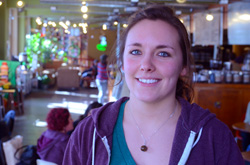
I am a 24-year-old political science graduate from the University of Cincinnati. I live in Over-the-Rhine and work at Coffee Emporium. In college, I wanted to leave the country and save the world, but somewhere between there and here, I fell in love with OTR and decided it needed some saving, too.

Video The Bright Ride

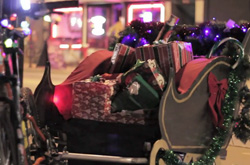
If you didn't catch this on downtown streets last month, here's your chance to revive some holiday cheer. Cincinnati cyclists don their sparkliest sparkles for a ride to remember. Video courtesy ArtsWave.

Our Partners

Taft Museum of Art
Warsaw Federal

Don't miss out!

Everything Cincinnati, in your inbox every week.

Close the CTA

Already a subscriber? Enter your email to hide this popup in the future.