Health + Wellness

Stepping Stones’ program builds confidence, hope for autistic youth

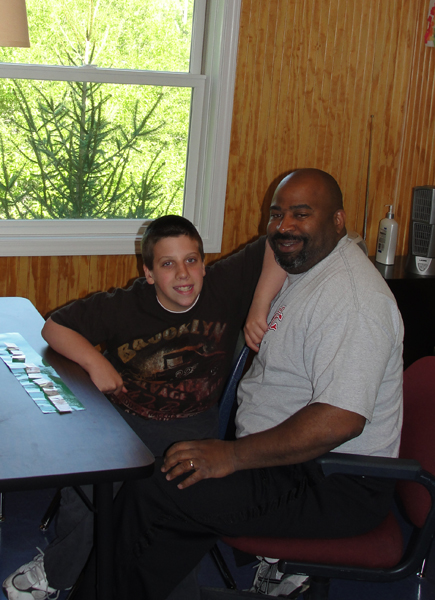
In 2004, the first student of a new program at Stepping Stones Center in Indian Hill arrived. In an ambulance.Chloe had been kicked out of school, taken to court and physically restrained because of her inability to control herself. Her autism led to outbursts of profanity and physical violence. She had nowhere to turn but the 23-acre center, a pastoral setting where Step-Up, a new program targeting youth with autism, was looking for its first student.With one-on-one support, a personal aide, a warm water pool and a serene wooded setting, Chloe settled into new routines. She learned to work with others. She made her own meals. She learned to read and communicate with others in compete sentences.Eventually, she joined her classmates on field trips to restaurants and shopping malls. By the time she completed 12th grade, she could walk through a crowded room to applause, music and a television camera. For young adults like Chloe, Step-Up, one of a range of programs for people with disabilities offered at Stepping Stones Center, success can be measured in hours without meltdowns and accomplishments like cooking a meal or applauding for a friend. Another success? A gym class in which 14 autistic youth run an obstacle course, play musical chairs and toss balls back and forth to each other."Just being with somebody else in a room is an accomplishment," says Pam Schimweg, manager of education services for Stepping Stones Center. The 19 students currently in the program come from 12 school districts. The youngest is in sixth grade; the oldest is 22. None could function in the school setting; some had been hospitalized. "They are all at different levels."Schimweg credits the one-on-one attention and the constant patience and appreciation offered by staff for Step-Up's success. Two students in the program have returned to traditional schools, two have graduated and live at Safe Haven Farm, two are living in group homes and one has lost 100 pounds through a combination of healthier eating habits and workouts at the YMCA.Do Good:• Join the list. Sign up to receive Stepping Stones' email updates and find out how to donate to support its programs.• Get the scoop on summer camp. Download information about camps for ages 18 years and under.• Get friendly. Like Stepping Stones Center on Facebook.By Elissa YanceyPhoto courtesy Stepping Stones Center

Latest in Health + Wellness
CincyTech portfolio company eMerge builds on health IT movement

Three entrepreneurial minded doctors, along with their tech partners, are building on the health IT explosion with a new tool designed to cut down on both surgical and billing errors.eMerge Health Solutions is the latest CincyTech portfolio company, formed in 2006 by three Cincinnati area gastroenterologists, a healthcare provider and IT specialist. Their first product is a voice-driven tool that allows surgeons to make documentation and notes during operations and other medical procedures. The software creates a database from those notes that a doctor can refer to and cross-reference with similar procedures.The software is designed to improve patient outcomes through more accurate procedure documentation."We will be offering a first-of-its-kind-product, the ability to document during a procedure using voice command and control," said eMerge CEO Alex Vidas. "This allows the clinician to gain productivity benefits without taking focus away from the patient's care."The company was created through collaboration of its founders Dr. Alan Safdi, Dr. Michael Safdi, Dr. Pradeep Bekal and Dan Walker of the Ohio GI & Liver Institute, and Bharat Saini, a former GE Aviation technology manager.The patent-pending technology has been thoroughly tested in 30,000 procedures since its development. It's now being used in three ambulatory surgery centers and at The Jewish Hospital in Cincinnati. The product is initially targeted for self-contained GI units within ambulatory surgical centers and hospitals."We are calculating that gastroenterology represents a $250 million-$300 million market and the total addressable market is $500 million-$700 million across all medical specialty areas. This is a tremendous opportunity," said CincyTech executive-in-residence and eMerge board member Phil Huff.Writer: Feoshia HendersonSource: CincyTechYou can follow Feoshia on Twitter @feoshiawrites

Lessons transcend language in Village Life Outreach Project

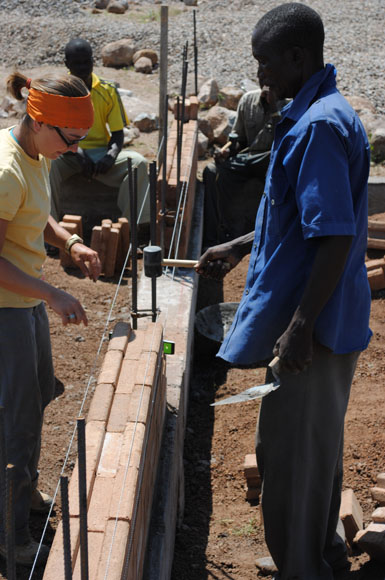
Emily Roush was worried. As a graduate student in the University of Cincinnati's architecture program, she had the chance to work on one of two projects over the course of her second and final year of study. One of the options involved staying in Cincinnati. The other had the potential, the slimmest hope, that she might travel to Tanzania to help build a health center in the remote villages of the country's Rorya district. Surely, in her class of 30 students, there would be stiff competition for what Roush saw as the adventure of a lifetime. As it turned out, just six of her classmates chose to work on the African project, a part of the non-profit Village Life Outreach's work to provide life, health and education, in particular those underserved in East Africa. Of those, she was the only architecture student interested in working on the ground in Tanzania. So the Hillsboro native and Arizona State graduate got busy. She made a two-week visit to the health center site in the fall, not long after choosing the project, to do field research and assessments to bring back to Cincinnati. Roush, 26, traveled alone and worked with villagers and others already on site, using translators to sift her way through Swahili and Luo, the two main languages of the region.Her first thought when she saw the sweeping vistas and wide open spaces of Africa? "It's real," she says. She returned to Cincinnati even more determined to bring the health center to life.By spring 2010, she was ready to start her six-month journey. Back in Tanzania in March, she lived with a Tanzanian family, built relationships with villagers and got hands-on construction experience. "I was impressed with the people of the villages," she says. "They really banded together."After three months, she came back to the States for a family wedding and a funeral, then returned to Africa with her now-fiancee, and Village Life Outreach Project executive director, Richard Elliott. When she returned to Cincinnati to start school in September, Elliott stayed behind, helping with construction and coordination.The Roche Health Center is just one of a series of Village Life Outreach efforts. From mobile health care to a range of education projects, the non-profit focuses on new approaches to improving and sustaining community health and well-being.Roush hopes to return to Tanzania after she graduates and marries Elliott. She wants people to know that there is more to Village Life's mission than providing support for villagers."The most meaningful thing for me are the relationships I built with people," she says. "We have a lot to learn from them."Do good:• Limit malaria's reach. For $25, you can sponsor a mosquito net for a family of four.• Do lunch. For $50, you can buy school lunches for six children in Tanzania—for an entire year!• Drink coffee. Visit Coffee Emporium on Central Parkway to buy  Village Life Outreach Project-branded Peaberry coffee from Tanzania. A portion of the proceeds support Village Life's work. You can also order the coffee online.By Elissa Yancey Photo courtesy Village Life Outreach Project

All ages find tolerance, fun at GLSEN prom

It happened when a local CEO called Brooke MacDonald looking to buy prom tickets for his son. The co-chair of Cincinnati's Gay, Lesbian and Straight Education Network (GLSEN) felt like the event had turned a corner. The GLSEN prom, a night where young adults can bring whomever they want to their prom, has long been an important GLSEN effort. Spring 2011 marks the third year that the Contemporary Arts Center downtown hosts the event, which a party for the over-21 crowd upstairs and a chaperoned affair downstairs for guests 21 and under."The kids are so excited," says MacDonald, 32, who grew up in Chicago and moved to Cincinnati almost five years ago. The May 7 prom, while free for the underage crowd, acts as GLSEN's biggest annual fundraiser. Adults pay $50 for a chance to relive happy prom memories or create brand new ones. "A lot of adults never had an opportunity to bring who they wanted to bring to prom," MacDonald says. As for the under-21 prom-goers, the theme is simple: "Bring who you want. Dress how you want. Love as you want.""We've had tons of parents emailing us about tickets," says MacDonald, who adds that funds raised at the event support GLSEN's Healing our Homeroom kits. The kits, like GLSEN, promote "basic tolerance of anybody that is different from you."Key findings from the 2009 national GLSEN's School Climate Survey illustrate that tolerance remains a critical issue for young people. National data showed that nearly 85 percent of LGBT students had been verbally abused and 40 percent had been physically harassed because of their sexual orientation. As GLSEN plans its hip and popular prom, it also continues an innovative story project, collecting video oral histories about school experiences involving sexual orientation and gender identity. A preview of the documentary is slated to be shown at the prom.Do good:• Get your groove on. Get your tickets today for the prom, Saturday, May 7, from 7 p.m. until midnight at the Contemporary Arts Center.• Make a gift. Donate to Cincinnati's GLSEN online.• Find out more. Make a friend of the GSLEN on Facebook to hear what the group is doing next.By Elissa YanceyProm photo courtesy of GLSEN Cincinnati

Awards Program names Cincinnati businesses and organizations “Bike Friendly Destinations”

 Nearly 40 Cincinnati area businesses, organizations, and institutions were awarded as "Bike Friendly Destinations." Developed by Queen City Bike, this program encourages more people to travel by bicycle, benefitting the individual, destination, community and all of Cincinnati.Read the full story here.

Nonprofit grows, empowers pre-teen girls

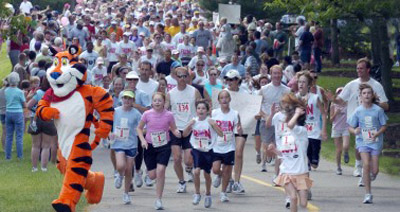
When Erin Hamilton became the executive director of Girls on the Run (GotR) in the spring of 2005, there were only 12 participants in the program. During its first three years, Hamilton was the only employee and operated the organization out of her home.Six years after the local nonprofit and independent chapter of GotR International was re-established in Greater Cincinnati, participation has grown - more than 1,800 pre-teen girls are involved in its program this year.GotR uses health and fitness as ways to teach girls of diverse shapes, sizes and economic levels from the third to eighth grade. More than 50 percent of GotR's current participants need help outside support to cover the cost of the curriculum, running shoes, T-shirts and race registrations.The 12-week programs are offered in fall and spring every year. They teach pre-teen girls about emotional, social, mental, spiritual and physical development while combining each topic with a physical activity. Teams meet twice each week for one hour after school. Girls learn how to eat healthy, feel good about themselves, improve their body images, combat peer pressure and work cooperatively in teams. "We're giving each girl the self-esteem to try new things, believe in themselves and the tools to succeed," Hamilton says. Coaches build relationships with the girls through positive reinforcement and encouragement. Their goals are critical: reduce teenage pregnancies, eating disorders, depression and suicide attempts, as well as lower the number of substance/alcohol abuse problems and confrontations with the juvenile justice system.The program culminates in a non-competitive 5K race Saturday, May 7, at Paul Brown Stadium, which gives all the girls in the local program a chance to get together and share their skills. "It's very rewarding to see the girls really come out of their shells," Hamilton says. "We see a change in self-confidence and the way they articulate their thoughts in front of a group. They almost don't recognize how different they are."Do good:•    Become a sponsor. More than half the girls need extra support in the form of funding to participate.•    Become a coach. Coaches are the backbone of the organization.•    Make a wish come true. Check out the organization's wish list and see what wishes you can grant.By Jayna Barker?Follow Jayna on Twitter @jaynabarker.?http://www.jaynabarker.com?

Cincinnati ranks #1 for best emergency care

 HealthGrades ranked the Top 10 Cities for Emergency Medicine, ranking Cincinnati as the number one place for the best emergency care. HealthGrades analyzed patient volumes, quality ratings, and range of services provided at each hospital.Read the full story here.

Goodall-inspired Ambassadors plant roots in city

When primatologist and environmentalist Dr. Jane Goodall visited the Cincinnati Zoo last month, she spent time talking to young "ambassadors" who she hopes will act as the solid foundation, or roots, for conservation, preservation and ultimately transformation around the world. Goodall's international efforts, known as Roots & Shoots, has several local groups, most school-based operations with one exception: a new community-based model taking shape in Northside this spring. "We want to help kids and help the environment at the same time," says neighborhood activist Maureen Wood, who founded the Green Ambassadors earlier this year. Ambassadors, aged 18 years and younger, visited with Goodall at the zoo, where they got to ask the legendary researcher questions about her work and hear her hopes for nurturing global change through fun, educational programs for young people. Roots & Shoots programs have three areas of focus: the human community, the environment and animals. The principle behind the name is a natural one, best summed up by a Goodall quote:"Roots creep underground everywhere and make a firm foundation. Shoots seem very weak, but to reach the light, they can break open brick walls. Imagine that the brick walls are all the problems we have inflicted on our planet. Hundreds of thousands of roots & shoots, hundreds of thousands of young people around the world, can break through these walls. We CAN change the world."                 This summer, the Green Ambassadors Roots & Shoots group will host two day-camps, from June 20 to July 10 and from July 18 to August 5. Fee scales will depend on ongoing fundraising efforts to provide scholarships for children who need them.Do Good:• Tweet all about it. Find out environmental news and more via the official Roots & Shoots Twitter account.• Start a group. Roots & Shoots provides ideas and inspiration to start your own group in your school or community.• Go to camp. Email and sign your child up for a camp slot today.By Elissa YanceyPhoto by Owen Hunter-Linville

Tender Mercies gives hope to homeless

When Harold lived on the streets of Cincinnati, he dreamed of a childhood he never had. One with presents under the tree and a smiling Santa bursting with holiday cheer. After illness tore apart his professional life and his family, those dreams never seemed further away from reality. At 42, Harold found help at Tender Mercies, a nonprofit that provides transitional, permanent and quick access housing, as well as outreach and resource coordination for people with mental illness. "More than anything else, Tender Mercies has given me back my dignity and self-respect," says Harold, who now has his own apartment and his own truck. He also works at Crayons to Computers, the local nonprofit that provides resources to area teachers.Born of an effort to do just that, Tender Mercies has come a long way since its founding in 1985. Initially, the organization, which was formed by three clergymen, focused on providing safe housing. Two women with mental illness who had been living in temporary housing had been attacked; one of them was killed. After that act of violence, Tender Mercies took shape. Now the organization provides housing in six buildings, five of which are more than 100 years old. Workers' outreach efforts spill into the streets to connect those with mental illness with resources and opportunities to live safe and productive lives. Every year, fundraising accounts for a major part of the nonprofit's funding. Every year, staff works to raise $500,000 just to cover the gaps in government and grant funds that allow programs to continue. And in cases like Harold's, the success stories offer proof that building security and self-confidence has a wide range of benefits. Harold's current volunteerism includes a turn playing Santa for children who are hungry or living on the streets. Do Good:• Find the latest news. Friend Tender Mercies on Facebook.• Supply snacks. The Tender Mercies Snack Shack, run by residents, can always use crackers, coffee, microwaveable foods and more. • Make a donation. Check to see if your employer will match your tax-deductible gift.By Elissa YanceyPhoto courtesy Tender Mercies

Cincinnati Streetcar Project gets an environmental assessment

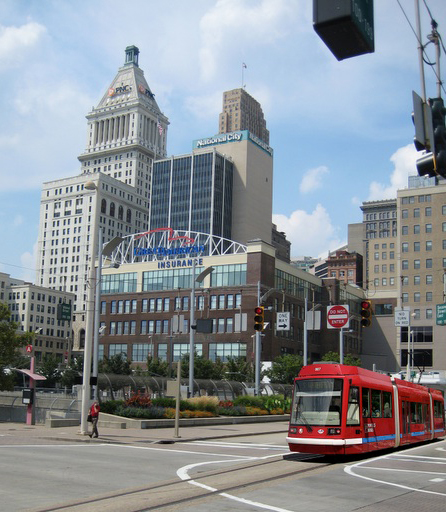
 Despite the state removing $51.8 million intended for it, the Cincinnati Streetcar project is driving forward, thanks to anenvironmental assessment prepared by Parsons Brinckerhoff (PB) and HDR. Backed by the City of Cincinnati and the Federal Transit Administration (FTA), the downtown and Blue Ash firms, respectively, presented their study at public hearings held at Cincinnati City Hall last week. They're gathering public comments through April 21 in order to comply with federal laws, offering copies of the study via the city's website and public libraries and community centers. Councilman Cecil Thomas spoke at the 5:30 p.m. public hearing last Wednesday. He was one of two audience speakers, both of whom supported the study. "I truly believe that we should continue to march forward with the project," he said. "Unfortunately, the state has chosen to do what they did, but that shouldn't be disappointing … we need to continue on." After filing those comments, PB and HDR will submit the study to the FTA. Discussions of funding come later, says PB's streetcar project manager Fred Craig. "This is simply to quantify the environmental impact of the project so that the feds can actually put money into the project." The study began soon after the FTA awarded the city approximately $25 million through an Urban Circulator Grant. It reports that the streetcar system, encompassing the riverfront, Over-the-Rhine and the University of Cincinnati area ("Uptown"), would present minimal or no impacts to the air quality, water resources, noise and visuals of the aforementioned areas. The community impact, it reports, would be limited to the displacement of Volunteers of America's halfway house, located at 115. W. McMicken Ave, one proposed site for a streetcar maintenance and storage facility. "This is a critical turning point," Craig says, "because what it says is that the environmental impacts of the project are positive and that it shouldn't have an adverse impact on the community." The Cincinnati Streetcar Project timeline includes construction of a maintenance and storage facility and streetcar tracks beginning this Fall, 2011, with an opening in 2013.Writer: Rich Shivener

Our Partners

Taft Museum of Art
Warsaw Federal

Don't miss out!

Everything Cincinnati, in your inbox every week.

Close the CTA

Already a subscriber? Enter your email to hide this popup in the future.