Author

Evan Wallis

Evan Wallis's Latest Articles

Wasson Way Project could co-exist with light rail

For the past year, the Wasson Way Project has been a point of contention between advocators of public transit and those who want to transform the six and a half mile railroad track into a public bike path.  The railroad, which is owned by Norfolk Southern, runs from Newtown to the heart of downtown Cincinnati and would give the city a nearly uninterrupted trail running through much of the city's urban core. Many think it should be saved for potential light rail in the future, but Eric Oberg, of the Rails to Trails Conservancy, thinks the two can work in unison.  Last week, the Wasson Way Project presented their plans to the city's Strategic Growth Committee to illustrate why the project is beneficial and why it should be a next step for the city. Oberg said they also wanted to show that many trains coexist with recreational trails.  "We wanted to make sure Council knew this wasn't a case of either or," Oberg says. "We also wanted to impress upon them that every supporter of the Wasson Way Project is happy to sign whatever needs to be signed so that in the future, if light rail becomes a reality, the trail won't stop it from happening."  The Wasson Way Project is planning meetings with those who oppose the trail to discuss plans. Rather than work against each other, Oberg wants to work together to find a middle ground.  Oberg says the next step for the Wasson Way to move forward is to meet with Norfolk Southern to discuss purchasing the old section of track. This is an important step, because, as of now, the trail is in good condition, but if it sits unused, tracks and bridges could fall into disrepair, making a recreational trail, and light rail, harder to build.  "No matter what, transit will happen there, if and when a transit project gets off the ground," Oberg says. "The long-term vision is transit, but what we don't want to see is a six and a half mile corridor sit there and deteriorate."  By Evan Wallis

Workshop gives companies tips on government grants

The Environmental Protection Agency, CincyTech and Dayton Development Coalition are teaming up to host a workshop to inform small businesses how to apply and obtain Small Business Innovation Research grants.  The SBIR is a government-wide organization, coordinated by the Small Business Administration, that has more than $2 billion in funds to assist small business to stimulate innovation and increase small businesses in federal research and development through the SBIR grants.  The SBIR grants come in two phases. The first phase is the Proof of Concept, which gives companies $80,000 to prove the feasibility of their approach or concept over a six-month period. Successful phase one companies can then apply for phase two grants, which are grants of up to $300,000 for up to two years. Phase two looks to continue research and development and ultimately, commercialization of the environmental technology.  The workshop will be held March 26 and is geared toward businesses that are creating environmental technologies that address high-priority EPA needs. Those needs range from water to green building, to waste monitoring. A new area being added this year is a Sensor App for air pollution control, which could come in the form of an app that can monitor air quality and send data back to be studied.  The workshop gives companies the opportunity to discuss their proposals and improve their chances of obtaining SBIR grants. Companies will also learn from the review process and past vendor experiences. Last year, the EPA's SBIR gave out 25 grants to a pool of more than 400 applications -- three were to companies in Greater Cincinnati, all of which attended the workshop.  "This is a huge opportunity for small businesses," says April Richards, program manager of the EPA's SBIR program. "It's a fairly complicated application process, and this workshop can help people not make silly mistakes."  Applications for grants open after March 15 and typically close around two months after. The applications are normally accepted once each year.  More information on the workshop can be found here. By Evan Wallis

Pinstripes’ member redefines working remotely

Most graphic designers might consider a job offer from Adobe in San Francisco wish fulfillment. Not musician/artist Matt Kursmark. The Pinstripes guitarist and Blue Ash native still took the West Coast gig, but he soon began working to find a way back to the Queen City. Today, he's busy creating digital interfaces, and making music, from his apartment in OTR.

Burnell’s set to open in old Mayberry space

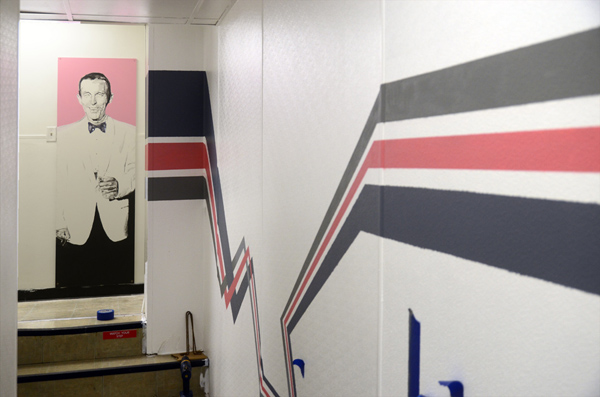
Walk in to 915 Vine Street, look down the hall and you will see a man in a white suit painted onto the back wall of a new restaurant in a familiar space. The man is Nathan Jolley's grandfather, Burnell Sutton, who serves as the nameske of the new restaurant opening Monday in the old Mayberry location. Jolley, the former executive chef of Teller's in Hyde Park, started renovating the restaurant the day after Mayberry moved out. With the help of Higher Level Art, the space is cleaned, decorated and ready for customers.  Burnell's, a modern cafe and diner, will be open for lunch Monday through Friday and for dinner Thursday through Saturday. The menu consists mainly of sandwiches and salads, including the Challah Cuban, roasted pork loin with cottage ham on grilled challah bread and the Tooner Salad, lemon chive tuna salad with greens, tomato and croustade.  Jolley will feature specials with locally sourced ingredients for dinner and Burnell's will have the same BYOB policy as Mayberry.  "We'll do smaller plates and prix-fixe meals for dinner," Jolley says. "We want to give people good food in a casual atmosphere." Jolley has been dreaming of opening his own restaurant for years, even before he had the job as executive chef at Teller's. After working at Sysco and Stepping Stones where he didn't have free reign in the kitchen, Jolley wanted to be able to be creative in the kitchen. He talked with Josh Campbell of Mayberry, and knew he could open up the place quickly and not lose pedestrian traffic when Cambell moved out. He had to make the decision quickly so someone else didn't take the space. "He was taking some of the larger equipment, but left a lot of the necessities to open a restaurant," Jolley says. "I walked in the door and only needed to purchase a few things to open up."  By Evan Wallis 

Pike Street lounge unites Covington artists, activists

A team of activists, artists and Covingtonians teamed up to renovate the old Blue Bar in Covington and open up Pike Street Lounge.  After seeing the possibility for a viable business after the closing of the Blue Bar last year, Katie Meyer, Bonnie McGinnis, Bret Schulte, Jon Meyer and Chris Meyer set their sights on opening up a coffee shop/bar hybrid. Saturday at 8 am, the doors of Pike Street Lounge will open to the public. Pike Street will be open from 8 am to 1 am Monday through Friday, and 11 am to 1 am on Saturday and Sunday.  The team behind Pike Street is made up of Covington residents and Katie Meyer serves as director for Renaissance Covington, a non-profit that works to revitalize the city's urban core. Pike Street will feature a Pike Street mural painted by Schulte; a handmade metal phoenix, created by Chris Meyer, will serve as the lounge's sign and logo. Pike Street will also openly host community and activist groups' events and fundraisers on a pro-bono basis.  "Because of the team we have, we want to focus on creativity, community and progressive social values," says Meyer, business manager of Pike Street Lounge. "We are making sure we are bike friendly, we are non-smoking, and we are reaching out to the gay community as a gay-friendly bar."  The Pike Street location was chosen because of the Blue Bar's strong reach into the community. Meyer hopes their investment, and presence, will fan the flames of a burgeoning renaissance.  "The area has so much potential," Meyer says. "Hopefully we can bring some energy."  As artistically talented as the group may be, no one had experience running a business, so Katie Meyer enrolled in ArtWorks' SpringBoard class in Cincinnati to learn the basics of running a startup. "I was familiar with the SpringBoard class and needed a quick way to learn things like startup costs and price points," Meyer says. "If we want to serve as a community hub, we need to know how to run a successful business." By Evan Wallis 

Migrate mag looks to grow global brand

Richard Inman has been booking bands at local venues since he was 17. His love of music eventually transformed into a event production company and online publication, Migrate.  The online publication, Migrate Music News, supplies visitors with music reviews, interviews, show listings and downloadable songs. Migrate focuses on underground music in genres from rap to classical, but it started as an event production company. The event production side of the business was Inman's main goal, but after seeing his long-time friend, Matthew Dickson, post the articles and reviews he wrote about lesser-known bands, the publication side of Migrate was born. Inman approached Dickson about working with Migrate, and the publication was soon launched with Dickson as the editor. With goals of launching additional websites, print publications and creating events around the country and beyond, Inman needed a business partner. He ran into high-school friend, Brandon Walker and discussed his plans for Migrate. Walker joined the team a few days later.  After only a few months, Inman and Walker were receiving press releases and albums from bands around the world. Now, they employ a web developer, an editor and six writers. With the interest they received, the pair decided a print publication was a realistic option. The plans are to print two publications, Migrate Music News, which will feature information similar to the website, and Migrate, a magazine that will have feature articles in areas from fashion to music to lifestyle. Migrate is also working with venues such as the Emery Theater to bring live entertainment to Cincinnati. "We chose the name Migrate because we won't just be based out of Cincinnati," Inman says. "We are building relationships in Colorado and even Europe to grow our brand worldwide." Inman and Walker have their eyes on an OTR office space, which will serve as a headquarters once their printing gets started, which they expect to be before the year's end. They will distribute the magazine in Ohio and surrounding states and expect it to expand into other states once they build momentum.  "It sounds chaotic when we say we are going to be doing all these things so soon," Inman says. "But we have everything balanced and have a good plan behind it." By Evan Wallis

Greener Chase Elementary re-opens in Northside

The new Chase Elementary School in Northside, which replaces a school that held many classes in a basement with no windows or outside light, opened for students Feb. 18. The 66,925-square-foot building can house 450 students from Pre-K through eighth grade and serve as an educational and recreational hub for Northside. It replaces the 33-year-old, 96,000-square-foot elementary that bore the same name. With undersized classrooms, minimal security and no capacity for ADA accessibility, the old school was in sore need of a replacement. “There were a lot of rooms that had absolutely no daylight coming in,” Mike Boron, project manager at C+R Architecture. “There were also many water problems, they had to run a sump-pump 24 hours a day.” Designed by CR architecture + design in association with Fanning Howey Associates and Moody Nolan, Inc., the new Chase features 21 classrooms with large windows, extended learning areas, a media center, computer and science labs and improved art, music and reading areas. The new school is designed to achieve LEED silver certification with extras like daylight harvesting and occupation sensors—features that conserve energy in new, creative ways. The new school campus has limited car access to help promote more walking. Located on a nine-acre site next to the McKie Recreation Center, the school can share resources and expand its reach into the neighborhood. While C+R has renovated other Cincinnati Public Schools, Chase was a plum new construction job. The new school was planned to help bring more children from the community back to school in Northside, since many children leave the neighborhood for private schools or more highly rated CPS alternatives. In a story Soapbox featured on the pending construction of the school in 2010, then president of the Northside Business Association, Bruce Demske, said, “I’d love to put my kids back into neighborhood schools.” By Evan Wallis

Asian Food Festival to hit the Banks

The Asian Food Festival, which was founded in 2010 and has been held at the Kolping Center near Mt. Healthy until now, will celebrate its third anniversary with a move to The Banks in downtown Cincinnati. The AFF serves as a fundraising event for Care 2 Share, a non-profit organization of Vietnamese-American volunteers who work to provide funding, ideas and the human touch to the people of Vietnam. The festival has drawn crowds of 4,000 attendees who enjoy the food, performances and live bands. The move downtown is just one of several changes for the AFF this year. In its attempt to highlight the cultural diversity in Cincinnati, the group hopes to reach a broader, and larger, audience. “The move to downtown Cincinnati marks the start of what we hope to be an ongoing relationship with the urban core of this city.” says Rome Ntukogu, marketing director of the Asian Food Festival. “We want to contribute to the growth of the Banks.” Leading up to the festival on May 19 and 20, the AFF hosts a four-week cook-off series at Findlay Market. Every Sunday in March, a free cook-off will include prizes for audience and judge favorites. Each week will feature a different Asian item, from fried rice, congee and curry to Asian barbeque. Each cook-off is limited to 30 entrants. In May, the festival will be held on West Freedom Way between Elm and Rosa Parks Street, just east of Paul Brown Stadium. More than 30 vendors will be present, including sponsoring beer Mt. Carmel, so attendees can expect a mix of Cincinnati beer and Korean barbeque. Entertainment will include a children’s play park. By Evan Wallis

OTR townhouses sold out before completion

Twelve new townhouses being built in the 1400 block of Pleasant Street in Over-The-Rhine, as the final phase of City Home Cincinnati are already sold out, and the company behind the transformation has left its surburban roots to build new ones in the city's urban core. The new townhouses are the final phase of the development by Schickel Design Company. The block's renovation began in 2006, and when finished it will blend historic OTR architecture with modern living, complete with private yards. The new homes also include parking. Seven houses are registered to be LEED-certified and the other five, built during the project's initial phase, have received Energy Star’s highest rating. “This is a testament to the value design provides," says Schickel Design principal Martha Schickel Dorff. "The new construction meets the requirements of an upscale modern buyer, yet capitalizes on the beautiful fabric of small lots, alleys and pocket green spaces of this historic walkable neighborhood.” Dorff designed City Home Cincinnati to appeal to young families and older buyers. Once finished, the project will have added 25 new homes to an area better known for blight than beauty. The project accomplishes its goals while using 100 percent of the existing historic shells of buildings. The new homes, which extend continued development in OTR westward toward Findlay Market and Music Hall, have already received plenty of praise. In 2009, they were named Greater Cincinnati’s Most Outstanding Collaborative Effort, and in the same year Cincinnati Magazine dubbed the area the city's "Best Street Makeover." Further kudos have come from Urban Land Magazine and Over-the-Rhine Chamber of Commerce. To top it all off, Schickel Design itself is making an investment in the neighborhood. They recently moved from their Loveland location, which has been the companies’ home since being founded in 1948, to OTR. By Evan Wallis

Local startup bridges gaps between tech, business

Beth Robeson and Sharon Hall have been working on a business that drives innovation in Cincinnati since last year. In January, they launched Bridge2Tec. Pairing their experience in both IT and consulting, Robeson and Hall plan on helping businesses use the technology they already have while finding technology to give them the highest return on investments. “We run into situations where companies aren’t taking full advantage of the technologies they have,” Robeson says. “Business can be harmed, in terms of opportunities and wasted resources, because the pace of technology is changing so rapidly.” Bridge2Tec is designed to help businesses by first finding out what kinds of challenges they face when adapting to new technologies. The company plans on establishing a resource portal to help create and support collaborations, while also hosting inspirational and educational events. The TecTuneUp on April 17 will bring together local tech companies such as Boot Camp Digital and Mindbox Studios, as well as global companies like IBM and Microsoft, so businesses can hear about the most up to date technological trends and ideas. “What we are most passionate about is helping businesses to adopt more agile business models,” Hall says. “The only way to stay on top of those trends is to have the technology community involved in the conversation.” Bridge2Tec will also serve as a conduit between the businesses and the tech world to help tech companies understand what businesses need. A perfect example is a recent conversation Hall had with a data center company that helps startup incubators and their companies have a place to store and transfer data. Hall asked the data center if they take the time to inform the startups they work with exactly why and how the data center is beneficial to their companies. The idea never occurred to them. “That’s exactly what we want to do for both communities,” Hall says. “We have to help find gaps that can be filled and benefit both the technology industry in the region and give businesses a chance to find technologies that suit their needs at the lowest possible cost.” By Evan Wallis

Our Partners

Taft Museum of Art
Warsaw Federal

Don't miss out!

Everything Cincinnati, in your inbox every week.

Close the CTA

Already a subscriber? Enter your email to hide this popup in the future.