
Joseph Nicéphore Niépce created what’s been recorded as the first photograph when he captured his Burgundy estate in either 1826 or 1827. The image, now known as “View from the Window at Le Gras,” was created using a technique called heliography, which entailed coating a pewter plate with a light-sensitive compound, required several hours, if not days, of exposure to create the image. Now, whether using a Polaroid or a smartphone, a photo can be captured and distributed in moments.
The timeline and tech used to create photography has evolved, but its impact remains constant. Whether the subject matter is heroic, horrific, or horribly ordinary, photography tells the story of our world and our lives. Gordan Parks intrepidly documented the Civil Rights era and the poverty of inequality during the Civil Rights Era. Margaret Bourke-White plumbed the depths of Nazi depravity with her published images of horrors prisoners endured at the Buchenwald concentration camp. Even your well-meaning uncle who cut off the top of your head with his shot of your birthday party. It all matters; both the meta and the micro that shape our world gain impact thanks to the photos that trap the moment.
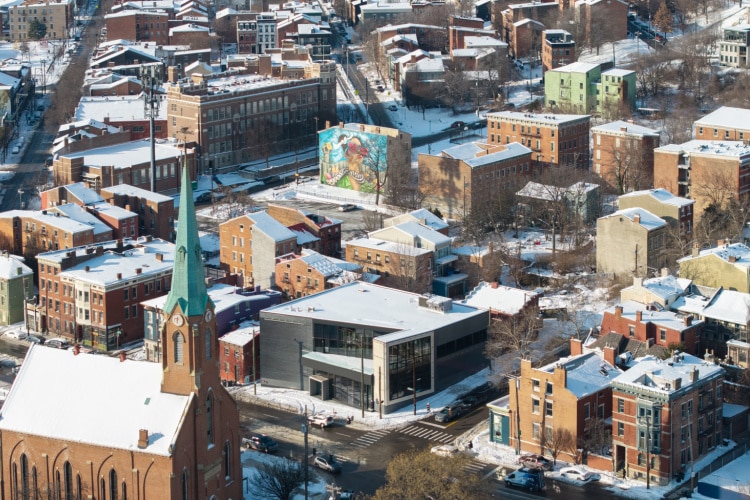
The FotoFocus Center, a 14,700-sq.-ft. structure on the northwest corner of Liberty and Sycamore Streets with 4,500 sq. ft. of gallery space, will open on May 29. The postmodern center’s unveiling is the culmination of the FotoFocus evolution, which manifested the vision of co-founders Tom Schiff and Mary Ellen Goeke. According to the organization’s website, the vision is to “celebrate and champion photography as the medium of our time through programming that ignites a dialogue between contemporary lens-based art and the history of photography.” The FotoFocus even-year Biennial has hosted month-long exhibits from Columbus to Northern Kentucky, spotlighting more than 3,000 artists. Its series of artists talks and keynote lectures have assembled artists and educators to discuss issues pertinent to photography and the world at large.
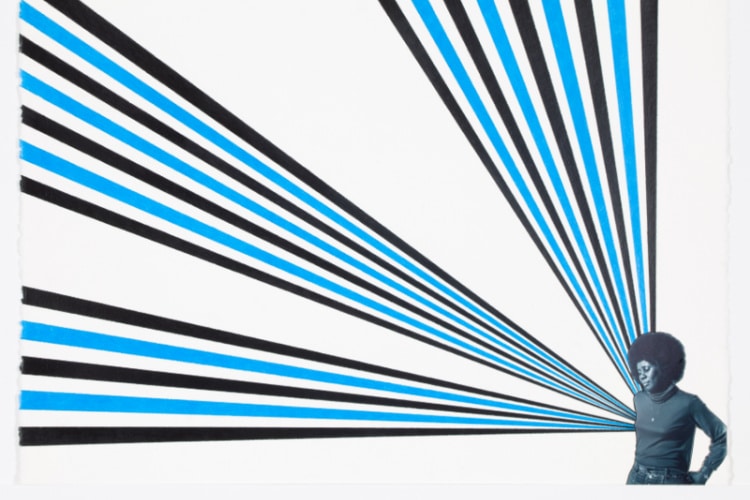
The inaugural exhibit, “Big Tent,” will feature the work of more than 50 artists. The exhibit’s theme is inspired by a poem by Amanda Gorman, who rose to prominence for her poem “The Hill We Climb,” read at the inauguration of President Biden. Gorman’s poem “In This Place (an American Lyric)”, dispenses shout-outs to numerous vulnerable U.S. populations, its ethos encapsulated in the quatrain “a poet in every American/who rewrites this nation, who tells/a story worthy of being told on this minnow of an earth/to breathe hope into a palimpsest of time.”
Kevin Moore, FotoFocus artistic director, noted that photography has always been relevant to cultural storytelling, but the appreciation for tangible visuals may have increased as our virtual lives are continually burdened by social media and AI.
“The Big Tent” as the exhibit’s moniker both references the quest for inclusivity, as well as a reference to the 2014 FotoFocus Biennial, which featured FotoGram@ArtHub, an Instagram-inspired exhibit that took place underneath an actual tent at Washington Park.
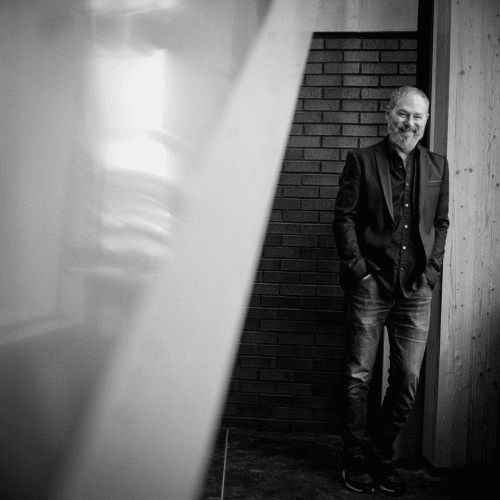
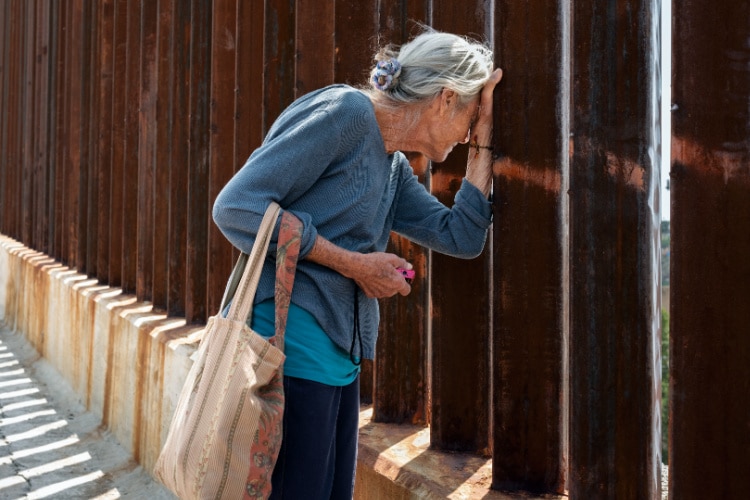
As the exhibit’s curator, Moore emphasized choosing art that would cultivate a welcoming exhibition through presenting a milieu of images that reflect the diverse, impactful events that convey what’s meaningful in our world. He said more than 50 artists will be highlighted, and that the imagery reflects the width and breadth of the American experience.
“Our nation is in such a fractured state, and the exhibit is a reflection on both the diversity of our culture, and our common thread,” Moore said. “It’s an art exhibit, there’s a limit to the impact it can make, but we want to present a wide spectrum of perspectives that reflect a broad coalition that welcomes the viewer.”
Artists featured in “Big Tent” span photography from 1920s to the present day, and include the aforementioned Parks; Robert Mapplethorpe, whose 1990 Contemporary Art Center exhibit triggered controversy; and, among scores of others, local photographer Tina Gutierrez, whose work highlights the ostensibly divergent themes of underwater imagery, fashion, social justice, and protest photography.
Katherine Ryckman Siegwarth, who has served as the FotoFocus executive director since 2023, noted that “Big Tent’s” compilation required striking a balance between national, local, and regional photography, as well as between artistic, photojournalistic, and conceptual-art photography.
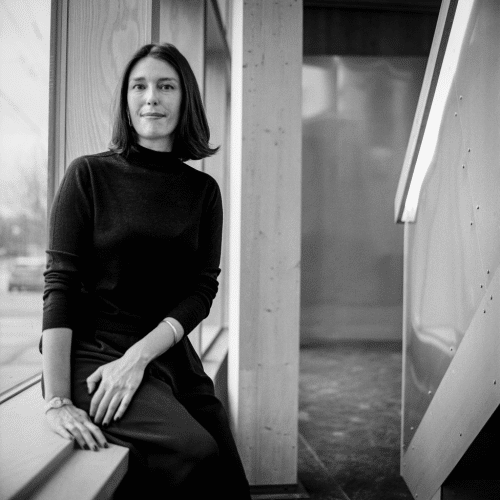
“Photography has undergone such an evolution that it was important to capture all the different facets of it and how they impact our lives,” she said.
The gallery space includes a 3,000 sq. ft. space on the first floor and 1,500 sq. ft. on the second floor. “Big Tent” will encompass both floors; future exhibits will split between floors, offering greater exposure opportunities for local and regional shutterbugs. Siegwarth noted that lighting and sound represent key elements in optimizing the photos’ impact. Tech-forward imagery required darker surroundings to properly present them. Some images that depict the Civil Rights era are accompanied by a jazz soundtrack, and Gorman’s poem is accessible by a QR code that allows the viewer to access the poem on their phones to underscore its spiritual inspiration for the exhibit.
The building’s design by Jose Garcia makes the new cultural hub feel deeply connected to the neighborhood around it. Garcia’s Cincinnati-based firm, Jose Garcia Design + Construction, is primarily known for its work devising institutional and high-end-residential structures. He built a relationship with Schiff after drafting blueprints for his home during the early 2000s.
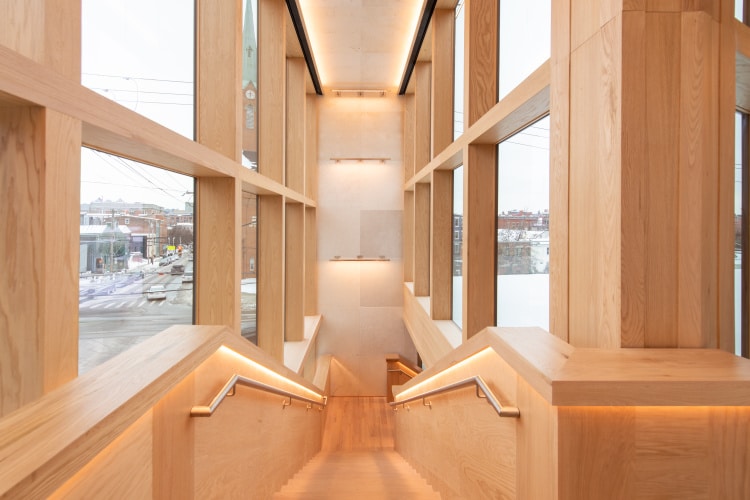
Although this type of destination differs from most of Garcia’s other projects, he transferred many of the same throughlines of his firm’s work, most notably edifices with ample ambient light and an emphasis on natural materials.
“An emphasis on natural light and materials is important in creating a structure that is organic, relatable and unpretentious,” he said.
Initially, there was the directive to use steel in FotoFocus’ interior construction, but as its cost soared, the decision was made to build using cross-laminated timber (CLT), a prefabricated, engineered-wood panel system that’s constructed at 90-degree angles and bonded with structural adhesive. The material shift is serendipitous because it adds an aura of warmth and realism that creates a tone and personality that synergizes well with how photographs connect us to their messages.
Facing Sycamore St., the horizontal, symmetrical east-facing windows evoke a camera viewfinder or roll of film, and the dark brick evokes the history of photography, in particular the stark beauty and impact of black-and-white photography.
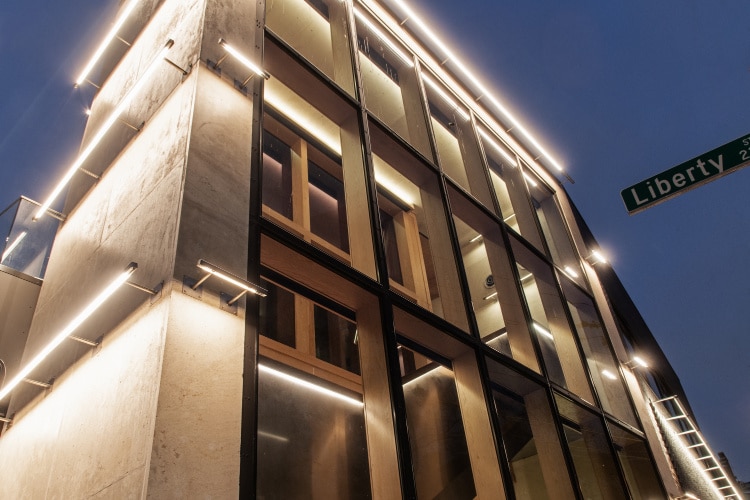
“The German and Italian masons who built this neighborhood in the mid-19th century created such a distinctive architectural style that you don’t see in many other places,” Garcia said. “The brick architecture in Over-the-Rhine is simple, but it’s also beautiful and elegant, and even if the color varies a bit, we wanted to stay in character with the surrounding community.”
Being located within a historic district entailed the FotoFocus center’s many stakeholders to collaborate with the city and historic-preservation organizations, and the collaboration yielded an unqualified success. The synthesis of many visions is an apt analogy for photography, which may be perceived as a solitary pursuit. In truth, images are the distillation of many visions; the photographer, the subject, sometimes the author or client who has a stake in the images being captured; and, ultimately, the viewer, whose life experience, worldview, or even mood on a given day may impact what they take away when regarding an exhibit.
Cincinnati has a proud tradition of supporting the arts, and for collaboration between its myriad organizations. FotoFocus provides yet another exciting opportunity to be inspired and fortified to navigate our complex world.
What: FotoFocus Announces “Big Tent” and the Opening of FotoFocus Center, the organization’s first permanent home in Cincinnati
Where: FotoFocus Center, 228 East Liberty Street, Cincinnati
When: The building and exhibition open on May 29, 2026.
For more details: Visit the “Big Tent” FotoFocus exhibition page.
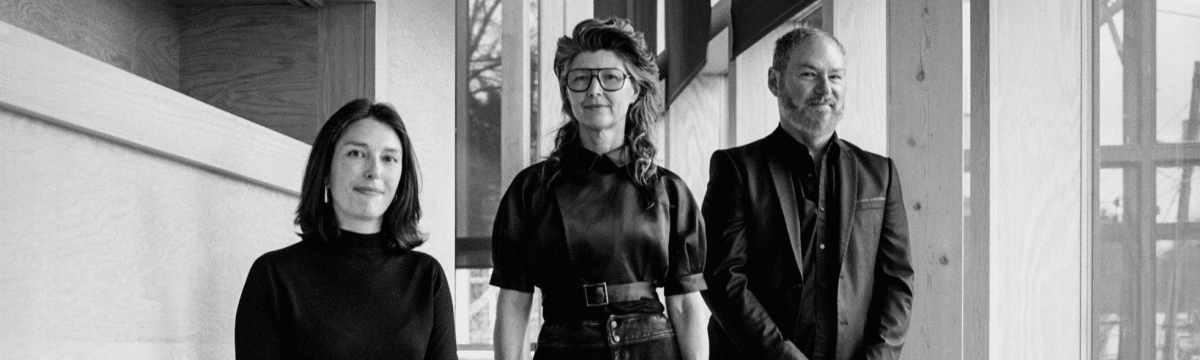
Editor’s note: (pictured in the masthead at the top of this story) The FotoFocus executive team (l to r) Katherine Ryckman Siegwarth, Executive Director; Carissa Barnard, Director of Curatorial Strategy, and Kevin Moore, Artistic Director and Curator. Photo Michael Wilson.
Author

Related Articles
In search of the inaugural cultural journalism fellow
Wave Pool and Soapbox partner to support innovative journalistic coverage of culture in Cincinnati.
Partner Partner Content Architecture Matters panel discussion: Good design is good for people
Your invitation from AIA Cincinnati and Soapbox to join a thoughtful community conversation about good design.
Partner Partner Content The weekend I recommend in Wabash County
Historic charm, live entertainment, and time to reconnect make our Indiana community an inviting getaway from Cincinnati.