Citywide ideas highlight casino district study presentation
Attendees at a city council subcommittee meeting Tuesday got a comprehensive view of proposed development plans that could tie the under-construction Horseshoe Casino into the city neighborhoods that line its borders. But along with the proposals, the meeting offered a glimpse of the concerns some stakeholders have regarding the plan.The non-profit study group Bridging Broadway presented its Broadway Commons District Study Plan at Cincinnati City Council’s Major Transportation and Infrastructure Projects Subcommittee Meeting Tuesday. The $7 million package of proposed improvements ranged from art and recreation to utility and infrastructure projects spidering off from the casino location into downtown, Over-the-Rhine and Pendleton. The plan’s goal, explained Bridging Broadway founder Stephen Samuels, is to present a community development plan that balances the desires of community stakeholders – business owners, residents and property owners near the casino – with the city’s infrastructure budget and the casino developers’ plans.Bridging Broadway showed council members an extensive series of data collected in partnership with the University of Cincinnati: occupancy and best-use maps of the Pendleton neighborhood, crime and building condition statistics, and both current and proposed pedestrian traffic flow patterns around the casino district that highlight areas ripe for targeted enhancement. Those proposed enhancements included suggestions for street and streetscape improvements, and recommendations for which parts of the city would be ripe for redevelopment into connectors between the casino, Pendleton and Main Street districts.But as the presentation wound its way through plans for Pendleton’s pocket parks, council members began asking questions – not about lighting fixtures, roundabouts or storefront redesigns, but about another key topic: stakeholder collaboration.Bridging Broadway has held a series of charettes and stakeholder roundtable meetings to collect public input on the casino plan. But council member Laure Quinlivan noted Tuesday that she had been contacted by Pendleton residents who felt that the non-profit was not paying adequate heed to their concerns. Likewise, council member Roxanne Qualls raised a salient point: the proposed storefront development Bridging Broadway’s plan recommends involves property owners, not just civic plans.”Do you anticipate developers actually doing something with their properties,” she asked, referring to a number of parking lots along the stretch of Reading Road/Central Parkway that ties the casino to the Main Street district. “You can put in street trees and lamp posts, but they’re still parking lots in the end; it doesn’t help the flow of people.””This is the 800-pound gorilla no one’s addressed yet,” Samuels acknowledged. He explained that, although Bridging Broadway has identified the primary property owners in Pendleton (the city, Verding Bell Company, Model Group, and Joseph and Arnold Levine), it has not had substantial discussions with them about how – or if – they plan to redevelop their properties.”Unless this is a project just about prettification, these four property owners need to be at the table,” Qualls said.Samuels did indicate that Bridging Broadway has worked with casino developer Rock Gaming in an effort to mesh the casino’s design and development plans with those of its neighbors. Rock Gaming spokesperson Jennifer Kulczycki confirmed that the developer has been in communication with the non-profit since the project’s announcement.”We’ve been supportive of their mission from the get-go, and endorse making the surrounding area mesh with this $400 million investment and structure,” she said.Rock Gaming, however, is but one of many developers who have stakes in the area surrounding the casino. And the developers, in turn, are a small but powerful part of a bigger group of stakeholders – tenants, businesses and individual homeowners – who will all be affected by the casino when it opens. The Bridging Broadway plan was scheduled to go before the city’s Urban Design Review Board meeting Wednesday. And as Bridging Broadway responds to recommendations from this board, the subcommittee and the many stakeholders raising their voices about the development, it will be interesting to see how its plan evolves.You can view the District Study Plan here.Writer: Matt Cunningham
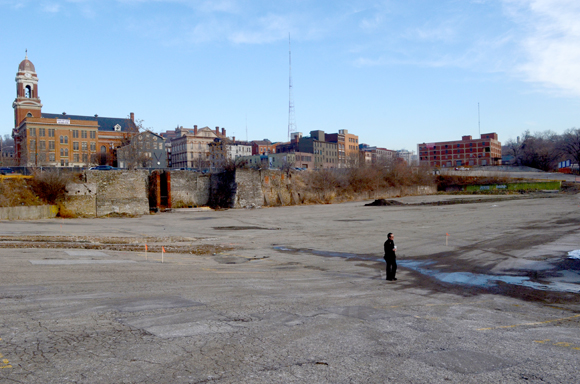
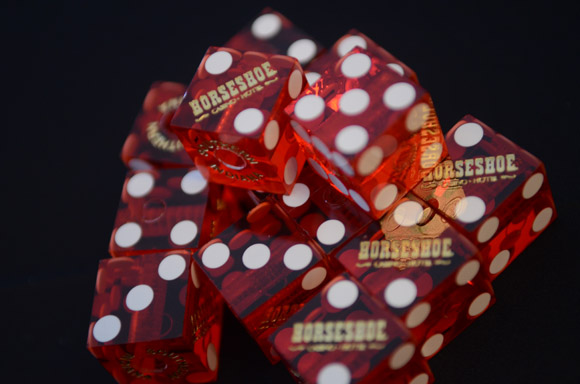
Attendees at a city council subcommittee meeting Tuesday got a comprehensive view of proposed development plans that could tie the under-construction Horseshoe Casino into the city neighborhoods that line its borders. But along with the proposals, the meeting offered a glimpse of the concerns some stakeholders have regarding the plan.
The non-profit study group Bridging Broadway presented its Broadway Commons District Study Plan at Cincinnati City Council’s Major Transportation and Infrastructure Projects Subcommittee Meeting this past Tuesday. The $7 million package of proposed improvements ranged from art and recreation to utility and infrastructure projects spidering off from the casino location into downtown, Over-the-Rhine and Pendleton. The plan’s goal, explained Bridging Broadway founder Stephen Samuels, is to present a community development plan that balances the desires of community stakeholders – business owners, residents and property owners near the casino – with the city’s infrastructure budget and the casino developer’s plans.
Bridging Broadway showed council members an extensive series of data collected in partnership with the University of Cincinnati: occupancy and best-use maps of the Pendleton neighborhood, crime and building condition statistics, and both current and proposed pedestrian traffic flow patterns around the casino district that highlight areas ripe for targeted enhancement. Those proposed enhancements included suggestions for street and streetscape improvements, and recommendations for which parts of the city would be ripe for redevelopment into connectors between the casino, Pendleton and Main Street districts.
But as the presentation wound its way through plans for Pendleton’s pocket parks, council members began asking questions – not about lighting fixtures, roundabouts or storefront redesigns, but about another key topic: stakeholder collaboration.
Bridging Broadway has held a series of charettes and stakeholder roundtable meetings to collect public input on the casino plan. But council member Laure Quinlivan noted Tuesday that she had been contacted by Pendleton residents who felt that the non-profit was not paying adequate heed to their concerns. Likewise, council member Roxanne Qualls raised a salient point: the proposed storefront development Bridging Broadway’s plan recommends involves property owners, not just civic plans.
“Do you anticipate developers actually doing something with their properties,” she asked, referring to a number of parking lots along the stretch of Reading Road/Central Parkway that ties the casino to the Main Street district. “You can put in street trees and lamp posts, but they’re still parking lots in the end; it doesn’t help the flow of people.”
“This is the 800-pound gorilla no one’s addressed yet,” Samuels acknowledged. He explained that, although Bridging Broadway has identified the primary property owners in Pendleton (the city, Verding Bell Company, Model Group, and Joseph and Arnold Levine), it has not had substantial discussions with them about how – or if – they plan to redevelop their properties.
“Unless this is a project just about prettification, these four property owners need to be at the table,” Qualls said.
Samuels did indicate that Bridging Broadway has worked with casino developer Rock Gaming in an effort to mesh the casino’s design and development plans with those of its neighbors. Rock Gaming spokesperson Jennifer Kulczycki confirmed that the developer has been in communication with the non-profit since the project’s announcement.
“We’ve been supportive of their mission from the get-go, and endorse making the surrounding area mesh with this $400 million investment and structure,” she said.
Rock Gaming, however, is but one of many developers who have stakes in the area surrounding the casino. And the developers, in turn, are a small but powerful part of a bigger group of stakeholders – tenants, businesses and individual homeowners – who will all be affected by the casino when it opens. The Bridging Broadway plan was scheduled to go before the city’s Urban Design Review Board meeting Wednesday. And as Bridging Broadway responds to recommendations from this board, the subcommittee and the many stakeholders raising their voices about the development, it will be interesting to see how its plan evolves.
You can view the District Study Plan here.
Writer: Matt Cunningham
Related Articles
Fewer options, fuller ERs: The behavioral health fallout of Medicaid cuts
MHA advocates for state funding that preserves behavioral health care and keeps rural hospitals open.

What does the new childhood vaccine schedule actually mean for your family?
Officials say not much will change. Experts aren’t so sure.

New platform to share ‘Common Ground’ from community ideas and solutions
Issue Media Group, a multilocal network of solutions-based, issues-focused digital publications, has launched a new national platform for increasing the reach and impact of its journalism.