
The lines between us
Gerrymandering shapes everything: who funds your schools, which neighborhoods share resources, and whether your community gets heard at all.
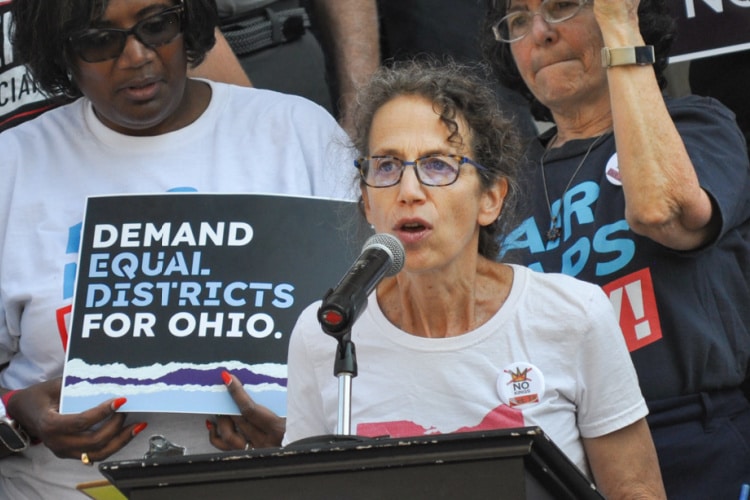
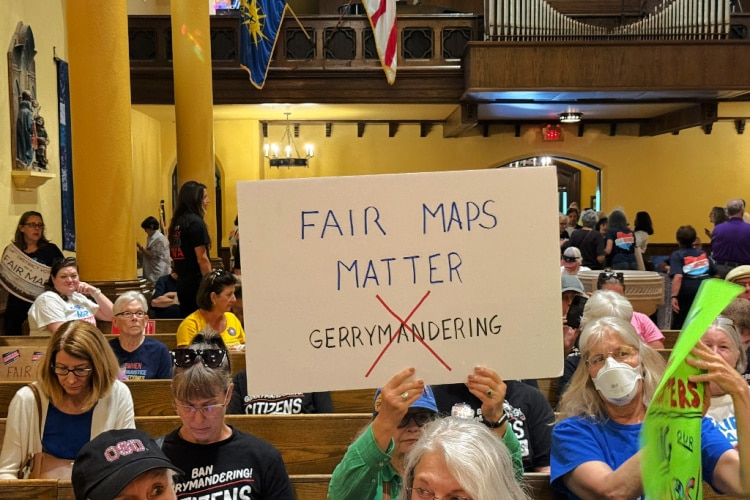
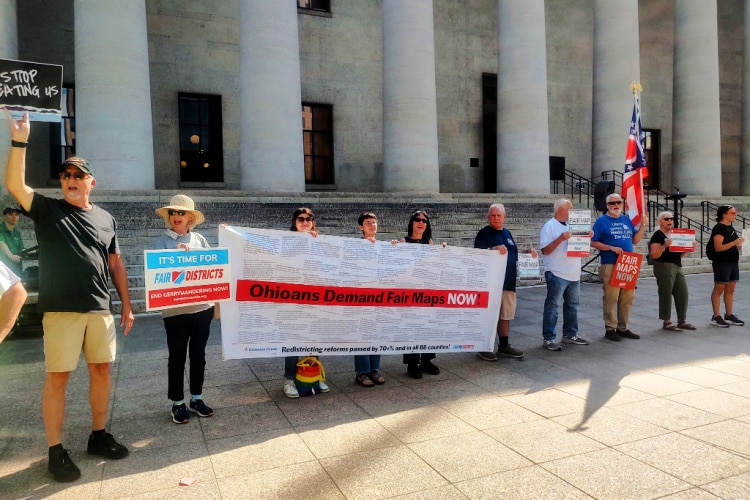
Sometimes Washington feels like another planet, its noise so far away that it’s easy to forget how much it shapes life right here at home. People get lost in the theater of national politics while the real power plays out closer to the ground, in city halls and statehouses. Those quiet decisions are the ones that hit hardest.
As Ohio heads into another election season, the state faces yet another round of congressional redistricting, a process that has become less about representation and more about control.
Gerrymandering in Ohio isn’t abstract. It is engineered power theft. Since 2011, Ohio’s maps have been widely criticized as aggressive partisan designs. The ACLU described the 2011 congressional plan as an “aggressive redistricting operation” engineered to lock in disproportionate seats. Meanwhile, national analyses such as the Brennan Center’s Extreme Maps report show how data and modeling have become central tools in modern mapmaking to entrench partisan advantages. Per the Brennan Center map, Ohio, as one of the seven extreme states, is noted for consistent and high partisan bias under one measure.
In 2022, the Ohio Supreme Court struck down five versions of these maps as unconstitutional partisan gerrymanders. The legislature defied the rulings, and elections went forward under maps the Court had already invalidated.
Most voters stay fixated on presidential races, the political spectacle that fills feeds, but that obsession hides where real change happens. Gerrymandering shapes everything: who funds your schools, which neighborhoods share resources, and whether your community gets heard at all.
It might feel distant – another layer of government far removed from daily life – but it touches nearly every decision that affects local citizens. It determines how communities split their budgets, which neighborhoods get infrastructure dollars, and which schools or hospitals receive the most support. It dictates whose roads get repaired, which voices are amplified, and whose needs are ignored.
Cincinnati is a case study in dilution. Hamilton County leans blue, yet its dense, diverse neighborhoods are carved into multiple districts that stretch deep into rural, conservative territory. Urban voters are blended with suburban and rural blocs until their collective power disappears. It is not just about who represents districts one and two in Washington; it is about whose needs define daily life.
Even when Democrats win a majority of votes statewide, they still hold only a third of legislative seats. That imbalance buries priorities like housing, public transit, and healthcare access under agendas that do not match city realities. When a district’s shape makes reelection guaranteed, accountability dies. Representatives stop answering calls, skip public forums, and trade local interests for national donors.
It can be felt in the cracks: funding gaps between Cincinnati Public Schools and suburban districts, infrastructure that stops where city lines end, broadband that skips working-class neighborhoods, and health systems that draw invisible borders around pre-dominantly Black communities.
“These aren’t side effects,” said Mia Lewis, Associate Director at Common Cause Ohio and a leader with Fair Districts Ohio. “They are design.”
Lewis explained that when politicians draw lines to choose their voters, democracy becomes performance. “If the outcomes are already decided, voters stop showing up and politicians stop listening,” she said.
The result is a slow unraveling of public faith. “When districts are less competitive, there’s less incentive for politicians to listen to their constituents,” Lewis said. “And when voters know who will win in November, they check out. That’s how people lose faith in the system.”
She described the ripple effect. “If the real competition happens in the primaries, and only a small, older, whiter, wealthier group votes, then candidates are pushed to the extremes. Moderates who can actually govern lose out. You end up with officials who aren’t interested in solving problems, only in performing for their base.”
Ohio’s imbalance proves her point. “We’re roughly a forty-five to fifty-five state,” Lewis said. “In a fair system, that would mean eight Republican and seven Democratic seats. But our current delegation is ten to five, and some are pushing for twelve to three or worse. That’s not representation.”
She broke down the tactics. “There are two ways to gerrymander, packing and cracking. You either pack certain voters into one district so their influence is confined or crack them across several districts, so their power disappears. What’s wild is that it’s easier to make a fair map than a gerrymandered one. You have to work harder to manipulate it.”
The harm, she said, is measurable. “You end up with policies the majority of people don’t support, hospitals closing, cuts to SNAP and Medicaid, because the people making those decisions don’t represent the whole state.”
The latest redraw stems from lawmakers’ failure to pass a bipartisan map in 2021, a violation of the 2018 voter-approved rules. The clock is ticking with deadlines in September, October and November, but little has been shared publicly. “They’re letting the clock run out again,” Lewis said. “The constitution calls for public hearings, but the public is shut out.”
The challenge wasn’t just the quiet hearings; it was the wording itself. Lewis said the ballot language misled voters, twisting reform into something that sounded like more gerrymandering, not less. The Ohio Supreme Court struck parts of the summary but let most stand, prompting reformers to call it biased and confusing.
For her, this fight is not about party. “This isn’t Democrats versus Republicans,” she said. “It’s about whether people’s voices count at all.”
That reality extends beyond numbers. Gerrymandering, she said, “decides which communities are heard and which are divided. It’s not just political geometry; it’s about power, race, and whose story is erased from the map.”
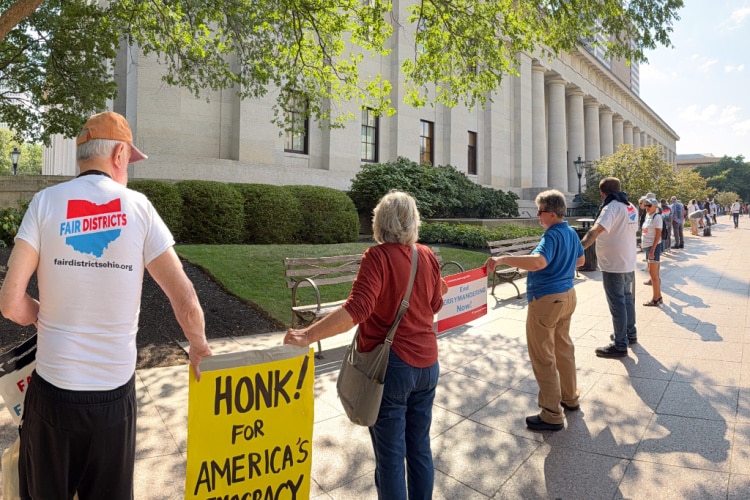
Across the country, experts echo that warning. Michael Li, senior counsel at the Brennan Center for Justice, put it plainly:
“Voters are supposed to choose politicians, but gerrymandering means it’s politicians who instead are choosing voters, with election results often all but locked in before a single vote is cast. By slicing and dicing communities and neighborhoods, gerrymandering makes it harder for communities to make their shared needs and concerns heard in the halls of Congress and state legislatures, especially if your community isn’t one favored by those in power. Gerrymandering also drives cynicism and distrust by adding to the sense that many voters have that everything is rigged.”
His words echo what Lewis described at the state level; democracy reduced to choreography, not choice. The map becomes a mirror of privilege, deciding who counts and who disappears.
Civil-rights educator Dr. Khalid el-Hakim, founder of the Black History 101 Mobile Museum, calls gerrymandering “a modern artifact of segregation.”
“It redraws the boundaries of power the same way Jim Crow once redrew the boundaries of opportunity.” he said. “The map may look different, but the intent to silence and marginalize communities of color remains the same.”
That history still shapes Ohio’s landscape. Highways once cut through Black neighborhoods to isolate them from white suburbs; today, district lines perform the same function with political ink.
Lewis believes the only way to fight back is by showing up. “Transparency, education, and persistence,” she said. “People have to understand that these lines decide more than elections, they decide how we live.”
Lewis argues that local participation is the real antidote. “Even if you can’t redraw the map yourself, you can demand hearings, attend meetings, ask your local candidates where they stand. Every conversation chips away at the silence.”
In times when democracy feels at its weakest, there are still those who refuse to give up on it. They do not see democracy as a partisan banner but as a shared responsibility. These are the people who stay up late drafting ballot language, who show up to public hearings, who believe that fairness is worth fighting for even when the odds are uneven. They work tirelessly to make sure we understand what is at stake. Our job, as voters and constituents, is to pay attention.
That idea echoes what Congressman Greg Landsman told Soapbox earlier this year: “Lock into your community. That’s where fixing what’s broken begins.”
Whether it’s voting in city council races, showing up at school board meetings, or asking how district lines are drawn, the repair begins in proximity.
Democracy, after all, isn’t saved in Washington. It’s rebuilt in neighborhoods, classrooms, and town halls, in every room where people decide to draw themselves back in.
Author

Related Articles
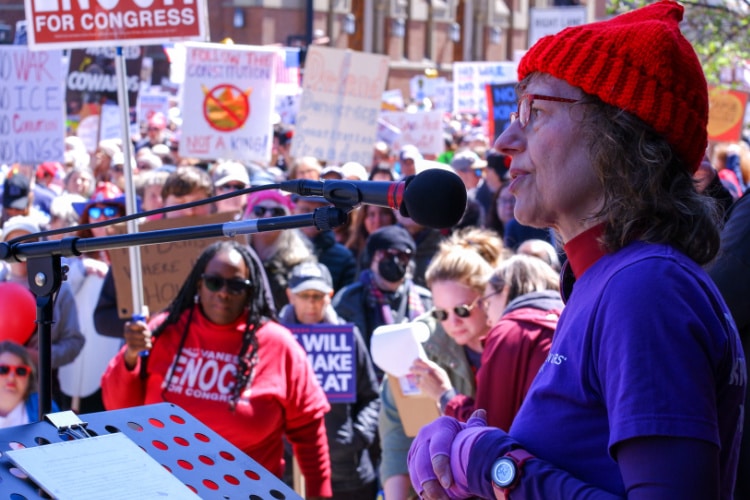
No Kings, no party lines: A different crowd takes shape in the Queen City
Speakers addressed the fragility of democracy and authoritarianism. Civic organizations recruited people for voter registration, mutual aid, nonviolent disruption, strikes, boycotts and other coordinated-action efforts.
Fewer options, fuller ERs: The behavioral health fallout of Medicaid cuts
MHA advocates for state funding that preserves behavioral health care and keeps rural hospitals open.
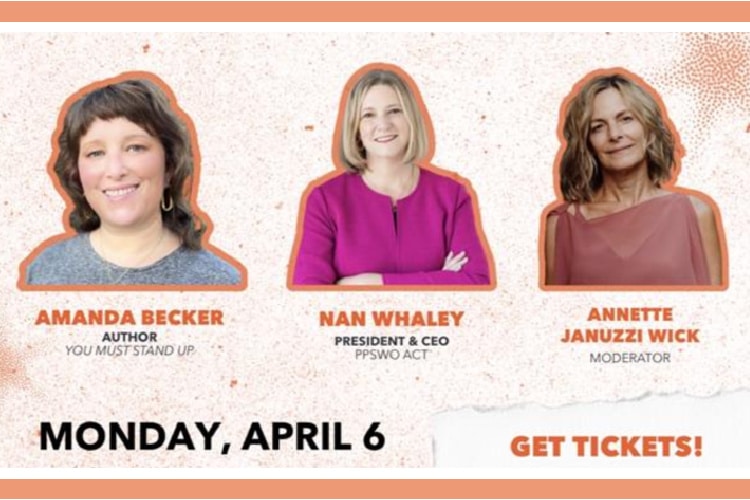
From constitutional amendment to access
A conversation with journalist Amanda Becker and PPSWO ACT’s Nan Whaley about the forces influencing reproductive rights today.