Non-Profit

Urban Appalachian Council works to bridge cultural, educational gaps

Amanda sits with her pen between her teeth. Her brow is scrunched more tightly than the ponytail that contains her long black hair. The 20-year-old high school drop-out has been working at the Urban Appalachian Council's East Price Hill GED Center for just a couple of months, but her patience is wearing thin.She looks at a page from an English practice test. Compound words and contractions. She learned this stuff years ago. "Why do I have to keep doing the same things over and over again?" she asks, shaking her head. Then she looks at the next section of words that must be joined to form compounds that fit into a series of sentences about boats in a harbor. The first sentence stops her cold."What type of object would pull slowly into a harbor?" her tutor asks.Amanda looks up from the page and scans the room filled with long tables and thick study guides. Some of her peers at the end of the table are swapping stories, and Amanda has found an easy distraction. "Hey, Amanda, let's just get this section done," her tutor says. The words "tug" and "boat" sit just a few centimeters above the blank in the sentence. "I bet you can guess. What would pull in a harbor?""I can't guess," Amanda finally says, taking a deep breath. "I don't know what that word, harbor, means."Like many of her classmates on this damp March day, Amanda faces a series of hurdles beyond showing up for class each morning and barreling through page after page of study guides in an effort to earn her Graduation Equivalency Diploma. Cultural gaps, not in intelligence but in exposure, seep into the room like fog into a harbor, slow and stifling.The national average age for people who take the GED is 24. In 2009, Ohio ranked 23rd among the 50 states for the number GED test-takers who passed all components, with 76 percent. Nationally, 69 percent of people taking the GED passed it. But the statistics can be deceptive. Some students in East Price Hill are making their third, fourth or even fifth trip back to GED books. While Cincinnati Public Schools has raised its overall graduation rate to just more than 80 percent, that is not the case at Amanda's neighborhood school, Oyler, where nearly nine of 10 students are economically disadvantaged and nearly one in three students has a disability. Oyler's current 50 percent graduation rate marks a steady improvement in many areas of study, but that doesn't change the fact that prospects for half of the school's students remain dim.Oblivious to the statistics that might give her pause, Amanda chews her gum and dreams of day when she can have a regular job, nothing fancy, just a chance to bring home a paycheck and take care of herself. Do Good:• It's simple as A-B-C to volunteer to help GED students. Call the East Price Hill GED Center, 513-557-2546, to find out how you can help. Fill out a volunteer application online.• Find out the latest. Join the UAC email list today.• Make a donation using Paypal. Support UAC's efforts without leaving the comfort of your laptop.By Elissa YanceyPhoto courtesy Urban Appalachian Council
Latest in Non-Profit
Teens bring creative touch to Art Museum programs

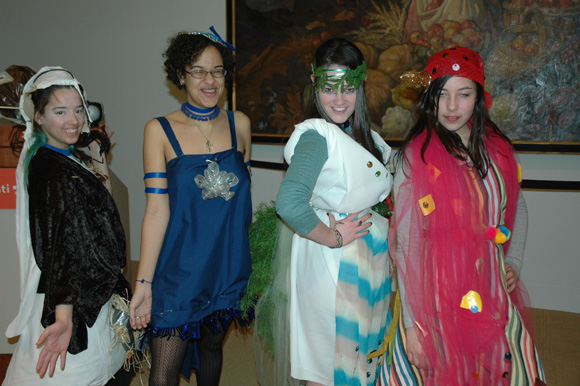
In a scene straight out of Project Runway, the teens had two hours to create a piece of clothing inspired by one of five artworks at the Cincinnati Art Museum. They worked with bubble wrap, duct tape, acetate, paint and other found materials. They sewed, they stapled, and they pinned. Then, they hit the runway. "It was a great way for teens to get to know the collection and interpret works," says Kristine Donnelly, coordinator for Family Learning at the Cincinnati Art Museum in Eden Park and leader of the museum's 12-member Teen Advisory Board. Teen Board Members range in age from 14 to 19. They plan quarterly events that are open to any teen from the region. Donnelly says between 25 and 50 teens typically participate in the programs, which range for studio nights to movie nights to writing workshops. Teen Advisory Board members have created teen guides to the museum and special tours. They even made a video trailer for an exhibit. "They are always willing to go the extra mile to make a teen event successful," Donnelly says. What started in 2004 as a museum-driven initiative to engage young visitors and encourage their future patronage has evolved into an opportunity for teens to take ownership of their own art-inspired projects. Teens involved in the Advisory Board this year represent 12 high schools: Anderson, St. Xavier, McAuley, Mt. Notre Dame, William Mason, Walnut Hills, Highlands, Sycamore, Seton, Moeller, Summit Country Day School and Seven Hills. Their project for this spring follows the Project Runway theme, but expands it to new, original works of art by youth throughout the region. "Inspiration in Eden Park" is a high-school student art show that will showcase work created by teens and inspired by pieces of art on display at the CAM. Do Good: • Enter the art show. If you are or know a teen aged 14 to 18, visit the CAM's website to download an entry form. Entries are due March 18 for the April 15 show. • Like the TAB. Keep up with the latest TAB news on Facebook. • Join the circus contest. Know a child aged 6 to 13? Find out how a coloring contest could lead to a clowning gig with the Ringling Brothers Barnum and Bailey Circus. Seriously. By Elissa Yancey Photo of teens modeling their art-inspired couture courtesy Cincinnati Art Museum

Community partnership makes way for green growth in Avondale

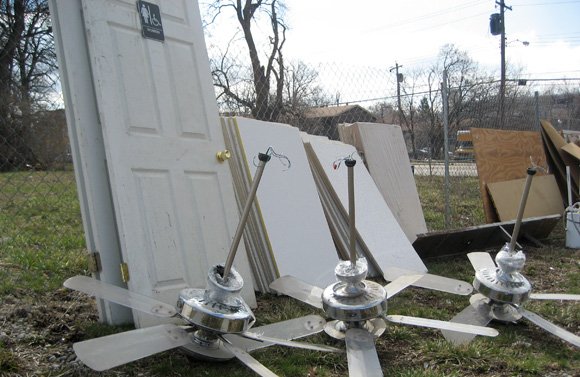
 The Uptown Consortium is working with a local recycling and job training program to demolish a building at 3500 Burnet in Avondale and make way for a new mixed use project that will play a key role in the group's master plan to revitalize Burnet Avenue in Avondale.This past weekend the Partnership for Green Building worked to remove decorative sandstone features, fans and other fixtures from the building at 3500 Burnet. The brick and concrete will be ground up and used for gravel and underlay, and the wood will be shredded and composted. Lisa Doxsee, communications manager for Building Value, said that up to 90 percent of the mass of the building would be recycled or repurposed during the project.The Uptown Consortium is currently working with two developers on potential development plans for a mixed use building on the site, and the developers will be encouraged to aim for LEED certification, Uptown's executive director Beth Robinson said.The building was purchased by the Uptown Consortium three years ago during an $11 million campaign to purchase land and buildings on or near Burnet Ave, with the intent of attracting new development to the area. Other projects built on that land include a new medical center and parking garage for Children's hospital and a low income housing project built by Model Group."We've redeveloped a lot of the street and now [3500 Burnet] is a major corner, a major site that's really underutilized." Robinson said. "We're trying to get some commercial activity on Burnet and that's a logical site for it."She said working with the Partnership will help them achieve two of their goals, to be more sustainable and provide better employment opportunities for residents of the Uptown neighborhoods. Building Value, ACT Recycling and Rumpke Recycling created A Partnership for Greener Building about two years ago as an extension of job training programs Building Value had already implemented. In the partnership, Building Value trains unemployed or underemployed residents to deconstruct buildings and salvage usable materials like lumber and fixtures to be sold in Building Value's retail store. Rumpke and ACT recycle the materials that can't be salvaged.Most of the program's graduates receive employment upon graduation, and any building constructed on the site can earn points toward LEED certification.Writer: Henry Sweets

Emmy-nominated Books Alive expands with online, at-home options

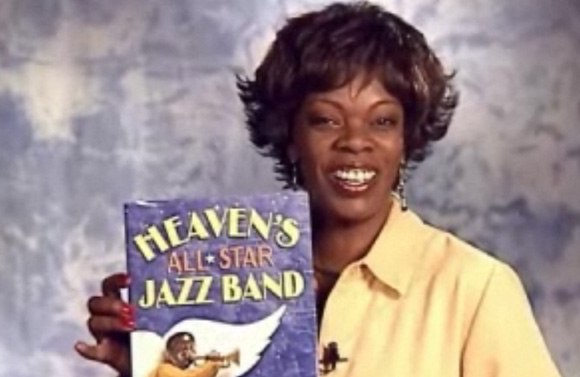
If "Reading Rainbow" met a live music concert, its inspired educational offspring would look a lot like the locally produced, nationally praised program, Books Alive. The Emmy-nominated, award-winning literary performing arts program is the brainchild of local jazz legend Kathy Wade.Wade, founder and director of the non-profit Learning Through Art, started the Books Alive curriculum 15 years ago as a way to increase literacy, and fun, in elementary schools around the region. "The connectedness between literacy, visual art and performing art is powerful tool for teaching," Wade says. "It allows integrating the arts through every curriculum topic in a classroom."Books Alive, designed for students from Kindergarten through third grade, includes elements of sight, sound and touch: participants read the book, watch of a performance based on the book and make a related craft. Teachers and administrators of Bond Hill Academy praise Books Alive for helping increase students' literacy between 20 and 40 percent since 1998. Teachers in Connecticut who use Books Alive report literacy gains as well. In all, Books Alive has touched the lives of more than 7,000 children so far, reaching from Cincinnati to the East Coast and anywhere there is an Internet connection, thanks to online versions.After hearing from teachers how much the program helped students, how it encouraged them to connect with books in new and exciting ways, Wade determined to expand. Today, the Books Alive program includes an Educational Edition, Home Edition, Birthday in a Box and Holiday in a Box--all of which are available to purchase online.Just one of many Learning Through Art programs, Books Alive embodies Wade's approach to learning that lasts. "It's about taking your creativity and teaching with it to it and for it," she says.Do Good:• Read all about it. Follow LTA's work on Facebook.• Go to the Zoo! LTA's annual Zoo Day, which includes greatly reduced admission,  July 20, 2011. ?• Support the cause. Contact LTA and donate your time or money to keep connecting more kids to the arts and learning.By Elissa YanceyPhoto courtesy of Learning Through Art

OTR Brewery district master plan comes into focus

Registration opens March 15 for an April 9 workshop that will identify ideas for enhancing and preserving Over-the-Rhine's Brewery District, a significant facet of Cincinnati's brewing history. (Check here for details on the workshop. Space is limited.) The Brewery District includes Over-the-Rhine, home to 12 brewery structures, including that of Christian Moerlein Brewing Co.Leading the small-group workshop is the Brewery District Community Urban Redevelopment Corporation, a nonprofit organization aiming to make the area an economic tour-de-force. It's developing a master plan that will focus on more public and private developments and consider potential developers. The organization is building on its 2006 master plan, which called for residential redevelopments in the Findlay Market area and a streetcar system, among others. "Our goal is to refine the work that's already been done," said Steven Hampton, executive director of the Brewery District, and "build upon the great successes that are already happening, develop these key projects, and identify the partners and finances to do that." An upcoming workshop will shape the master plan, according to Jeff Raser. Raser is a principal with the architecture firm Glaserworks, hired to do pre-development planning for the Brewery District. "We want to hear from people, especially those who live and work and own businesses in the Brewery District," Raser said in reference to the April 9 workshop. "What do they really want to see in the next five years or even 20 years? What is their vision?"Carl Solway has some early ideas. At the press conference announcing the Brewery District's plans, the owner of Carl Solway Gallery asked if the district's boundaries could expand to the West End neighborhood, west of Over-the-Rhine. That's where Samuel Adams Brewery Co. operates, and where Solway owns a 40,000-square foot building, housing exhibitions and artists spaces."I see the potential of taking the concept much further by including what has the potential to be a very serious and important arts neighborhood," he said.Hampton acknowledged that idea and says the upcoming workshop will help flesh that out."Historically, the Brewery District really consisted of Over-the-Rhine and the West End. We've been very careful in the past not to lock ourselves into a specific boundary to respect that."Writer: Rich Shivener

Targeted donations put workers Back on Track

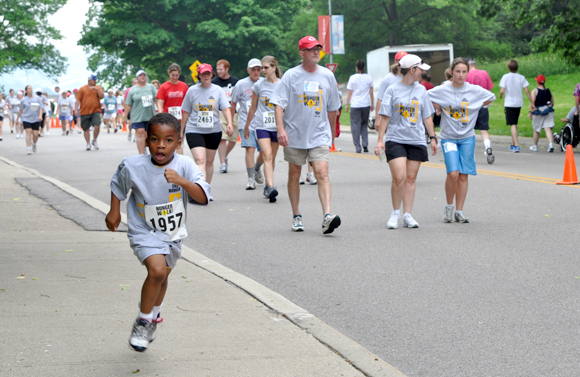
In its Liberty Street location, past the Freestore/Foodbank's lime and pumpkin walls, its cheery plant-laden offices, spic and span floors and smiling faces sits a needy rack of men's shoes. The FSFB's massive capital campaign leaves footprints as solid as the steelcase filing cabinets that buffer cubicles on every floor. It marks the welcome/waiting area, the portal of social services, the food pantry that resembles a tiny-scale Jungle Jim's, and more private office areas for clients in need of homelessness prevention and money management help. Friendly staff members, sometimes only distinguishable by their green and yellow lanyards and nametags, add to the feeling that the agency has constructed an ideal setting for maximum effectiveness and respectful service delivery.FSFB renovation's decorator/client services manager Bernice Cooper first mentions the Back on Track program - home of the aforementioned shoes - as she begins a new tour. She explains the program is an on-site endeavor to provide donated clothing to all qualified comers for no cost. In order to visit the shop, clients must have completed a job training or work-readiness program and be on their way back to employment. They can visit two times a year, with at least six months between visits.Donations must be clearly tagged for the program; otherwise, they will be sold at low prices through the St. Vincent DePaul Society, which collects drive-by donations at the FSFB Liberty Street warehouse.Back on Track volunteers staff the one-and-a-half room space filled with neatly stocked racks that line the perimeter, and divide the room into clear-cut departments - men's, women's and children's. Tall cardboard boxes filled with donations yet to be sorted sit tucked away in corners and behind the makeshift counter.Despite the large quantity of merchandise in the room, it's hard not to notice the shoes. During one visit, there were 12 pair, neatly displayed on a wire rack that could have held at least four times as many loafers, sneakers and boots. They were all men's shoes, all in good condition, mostly gym shoes. Men's suits hang neatly just a few feet away, but which lucky suit-wearers will be able to find acceptable shoes to dress for a job interview or church? How many men will find a barely worn suit, carefully measured and labeled by a retired Procter & Gamble chemist-turned-volunteer, then be left grateful to snag a pair of sneakers? In the Back on Track store, the shoes tell a powerful story through worn laces, scuffed heels and a stretch of empty wire that conveys, in a very concrete way, the depth of gaps in services for those in need throughout the community. Do Good:• Give some goods. Back on Track donations must be clearly labeled, clean and in good enough condition to be helpful to a hopeful job-seeker.• Get the news. Sign up for the FSFB's email newsletters.• Join the Hunger Walk and 5K. Create a team today for the Memorial Day events.By Elissa Yancey

Music breaks barriers with Melodic Connections

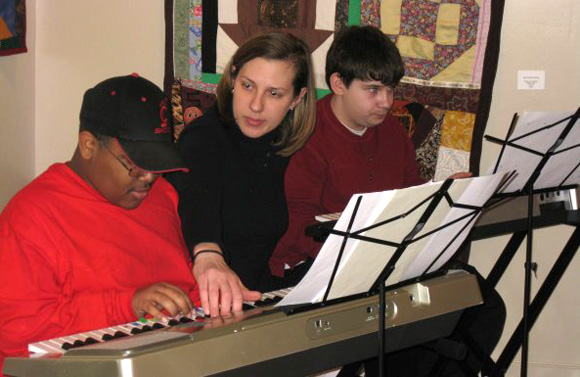
Audience members sing along to Journey and Bruno Mars. They sway to B.B. King and traditional jazz standards. Concerts by the students of Melodic Connections defy stereotypes and create bonds through rhythm and joy."It's about the enjoyment of the experience," says Betsey Zenk Nuseibeh, founder and executive director of the non-profit. She says the best part of the shows, which highlight the talents of students with a wide range of disabilities, is the expression of excitement, of accomplishment, on students' faces. "I try to make it an interactive experience."Some of the guitars have stickers under the strings that guide student fingers. Others have the aptly named easy chord adaptive device. Keyboards have color-coded keys. Students use color-coded sheet music. Nuseibeh, a music therapist and special education teacher, started Melodic Connections in 2008 after watching the dramatic transformation of one of her students with autism, Latron Dodd, at the keys of a piano. Dodd, a piano prodigy, received a scholarship to the University of Cincinnati, where he now takes private lessons at the College Conservatory of Music. Other students learn typing skills after learning color coding on keyboards. A silent student began to sing. Another stubborn eater began to take bites to the beat of a drum. Music, Nuseibeh knows, offers a gateway to more than just melodies. She founded Melodic Connections to provide an affordable way to give anyone who needed it access to music therapy-based services. She now teaches more than 40 students aged 7 through 65 and has watched them perform at the Blue Wisp Jazz Club downtown, the Southgate House in Newport and Union Terminal, along with other art galleries, clubs and museums.While the lessons move students forward in musical and practical ways, the performances bring students and their parents a different kind of satisfaction, Nuseibeh says. As performers throw their hands in the air and say, "rock and roll," their parents watch, breathing in the sweetness of success in a space where their children always get a standing ovation.Do Good:• Give a guitar. Melodic Connections accepts donations of guitars and keyboards for students.• Join the email list. Get the scoop on the latest concert information and more. A Blue Wisp show in April and a Cincinnati Art Museum show in May are already in the works!• Like Melodic Connections on Facebook. Watch videos, scroll scrapbooks and find out more about the organization online. By Elissa YanceyPhoto of Betsey Zenk Nuseibeh working with students courtesy of Melodic Connections.

Dennison Hotel gets new life as historic Ironworks Apartments

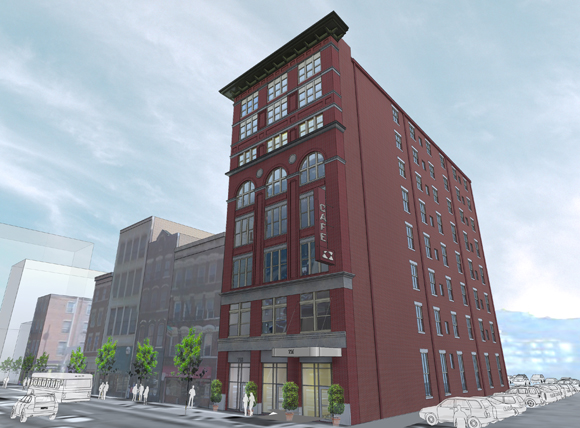
  A downtown building that served as a turn of the century manufacturing plant and later, a run-down hotel, will get a new life and provide much needed housing and services for low income downtown dwellers. The Dennison Hotel owes its transformation to another downtown hotel's recently scheduled makeover into a boutique hotel. The Model Group was brought in by 3CDC to assist with the resident relocation process for the Metropole on Walnut Street, which is being remodeled into a boutique hotel operated by Louisville's 21C. Model senior vice president Bobby Maly said that relocation process heightened an unmet need downtown for low income residents."It became obvious that there was a real need for affordable housing in the central business district with services, and there wasn't really anything like that," Maly said.For years the Dennison had been operated as a low income hotel with daily, weekly and monthly rentals, but no needed services attached. "We started looking at possibilities downtown, and Dennison was an obvious choice because it was already operating as a place for low income housing. It was in terrible shape inside and out though," Maly said. Model bought the building for $700,000 with a loan from 3CDC and began conversations with Talbert House to provide the services the building's new residents will need. Built in 1890, the building was originally an ironworks for a carriage maker. It was later converted to a hotel with 114 single resident units and common baths and kitchens (a faded sign painted on the upper quarter of the hotel still advertises "105 rooms, 60 baths.") Maly said there hasn't been a physical renovation of the space in decades, other than bricking up the original two over two windows. Model will take the single room units down to 63 units of studio apartments, each with their own kitchen, bathroom, and high quality finishes. The exterior and façade will get a complete historic renovation including restoring the windows to their original size. Maly said Model hopes to have financing wrapped up in the next three months and will use a 4% tax credit, loans and historic tax credits to fund the development. Construction should start this fall. Once completed, Talbert House will own the building and provide supportive services for its residents including 24 hour staffing by the entrance. Long vacant storefront space will also be renovated into a deli/café operated by Talbert House's social enterprise program which will put Ironwork's residents to work in the space. Writer: Sean Rhiney

Boys find help through horses at Campbell Lodge

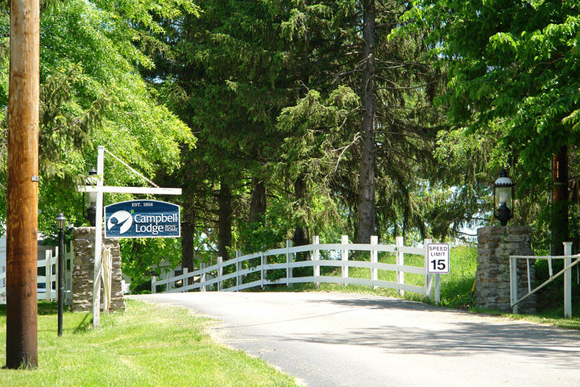
Steven was 11 years old when his emotional outbursts at school and at home led to a stay at Campbell Lodge Boys' Home, a 115-acre, year-round, residential treatment facility in Northern Kentucky. "He came in not able to trust adults or peers," says Barry Jones, executive director. Before he could learn to trust anyone else, Jones knew, Steven needed to trust himself. So, like every other young man at Campbell Lodge, Steven went to the stables. There, he encountered 1,200-pound horses, integral members of the facility's equine-assisted counseling program. After seven months, Steven learned to lead, ride and groom horses. At the same time, he learned to trust himself and his family. Now back home with his parents, Steven is one of hundreds of young men learning how to relate to people by working with other herding animals, horses. "It's experiential," Jones says. "Your feelings and thoughts come out within the exercises." As they lead horses through obstacle courses, young men deal with fear, frustration and issues of personal space. Working through problems with horses provides a model for working through problems in life outside the lodge's boundaries. Jones explains that equine therapy has been the primary focus at Campbell Lodge for six years, though last summer marked the groundbreaking of the equine center, which allows for year-round interaction between youth and horses. Residents learn quickly which of the six horses is most laid-back--that would be Buddy--and which is prone to bite--usually Scooter. "Traditional talk therapy was not always as effective as we wanted it to be," Jones says. Horses provide powerful physical metaphors for many problems that face residents, many of whom must confront a variety of mental health issues during their stay. Residents have to communicate with the horses and with each other to be successful at the Lodge, whether they are in equine therapy sessions, learning grooming techniques or volunteering to help children with disabilities enjoy time with the horses. Jones says the experiential therapy builds confidence and skills that residents carry with them once they leave the lodge. Do Good: • Fill a need. Whether you have a spare pool table no longer in use or the ability to donate lots of personal care items, Campbell Lodge will put items on its wish list to good use. • Have dinner out. The Lodge's annual Springfest, a fundraiser dinner and silent auction, happens March 5, 2011. • Donate online or join the e-mail list. Find out how you can best support this 53-year-old regional resource that now serves up to 25 young men at a time.

Peaslee Center spreads peace in Over-the-Rhine

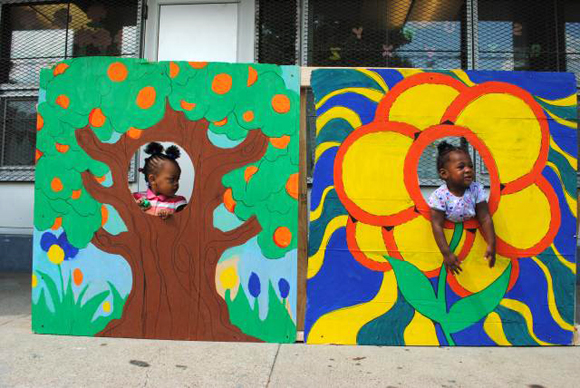
Eight years ago, Miss June arrived in Cincinnati with nothing but a copy of her teaching certificate and a few papers her mother had given her before she died. She had been sick. She had been threatened. And she was fleeing for her life. "I did not look like the polished person I was," says June, 50, who received her master's degree in art education and worked as a teacher in Alabama before she left the South for Cincinnati. After brief stints in local women's shelters, she landed in Over-the-Rhine. She marveled at the lack of self-respect she saw around her and bristled at the violence and disrespect. "I have spent so much time with stereotypes thrown at me," she says, her gravelly Southern drawl loosening as she relaxes into conversation. The daughter of a teacher and a preacher, June has a quick wit and low tolerance for bad behavior. She soon attracted the attention, and admiration, of Sister Mary, an outreach worker who suggested June visit the Peaslee Neighborhood Center. When June first walked inside Peaslee, she felt at home for the first time since her father was killed when she was just 9 years old. "It's more sacred than any church I've been in," she says. Peaslee, a former Cincinnati Public School building purchased by a group of female neighborhood activists in 1984, remains a valuable educational and cultural resource in the community. Neighbors and visitors sense the peacefulness of the space, where childcare, education and arts programs co-exist with the upstairs office space for a consortium of non-profits focused on social justice and human rights. June soon found a niche teaching in Peaslee's summer youth art program. Today, the artist who reveres the beauty of the Harlem Renaissance as well as the Renaissance Baroque has a lot to say about re-birth. She teaches art to infants and pre-schoolers. When they are too young to use fingerpaints, her tiniest students use food to express themselves. For the last three years, June has also been taking piano lessons at Peaslee, where students at the keys range in age from 7 to 70. For June, playing is about more than keeping her brain alive. "This is another voice I have to speak for those who cannot speak for themselves." Now a fixture at the center, June composed "The Peaslee Song" and performed it at a recent fundraiser for the non-profit. She looks forward to a spring of new programs, new faces and new ways to spread her message of personal empowerment and peace to all who will listen. Do Good: • Get your hands dirty. Email to help prepare Peaslee's Edible Schoolyard Garden for spring the morning of Saturday, March 12. • Connect on Facebook. Join Peaslee's page to keep up with the latest news and events. • Be creative. You can donate funds online, or look through Peaslee's wish list for some creative options, like glue sticks, gardening tools and paint brushes.

Our Partners

Taft Museum of Art

We want to know what's on your mind.

Close the CTA

Don't miss out!

Everything Cincinnati, in your inbox every week.

Close the CTA

Already a subscriber? Enter your email to hide this popup in the future.