Non-Profit

Stepping Stones’ program builds confidence, hope for autistic youth

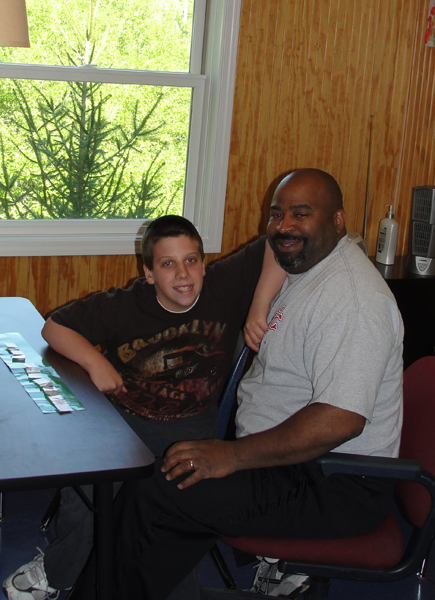
In 2004, the first student of a new program at Stepping Stones Center in Indian Hill arrived. In an ambulance.Chloe had been kicked out of school, taken to court and physically restrained because of her inability to control herself. Her autism led to outbursts of profanity and physical violence. She had nowhere to turn but the 23-acre center, a pastoral setting where Step-Up, a new program targeting youth with autism, was looking for its first student.With one-on-one support, a personal aide, a warm water pool and a serene wooded setting, Chloe settled into new routines. She learned to work with others. She made her own meals. She learned to read and communicate with others in compete sentences.Eventually, she joined her classmates on field trips to restaurants and shopping malls. By the time she completed 12th grade, she could walk through a crowded room to applause, music and a television camera. For young adults like Chloe, Step-Up, one of a range of programs for people with disabilities offered at Stepping Stones Center, success can be measured in hours without meltdowns and accomplishments like cooking a meal or applauding for a friend. Another success? A gym class in which 14 autistic youth run an obstacle course, play musical chairs and toss balls back and forth to each other."Just being with somebody else in a room is an accomplishment," says Pam Schimweg, manager of education services for Stepping Stones Center. The 19 students currently in the program come from 12 school districts. The youngest is in sixth grade; the oldest is 22. None could function in the school setting; some had been hospitalized. "They are all at different levels."Schimweg credits the one-on-one attention and the constant patience and appreciation offered by staff for Step-Up's success. Two students in the program have returned to traditional schools, two have graduated and live at Safe Haven Farm, two are living in group homes and one has lost 100 pounds through a combination of healthier eating habits and workouts at the YMCA.Do Good:• Join the list. Sign up to receive Stepping Stones' email updates and find out how to donate to support its programs.• Get the scoop on summer camp. Download information about camps for ages 18 years and under.• Get friendly. Like Stepping Stones Center on Facebook.By Elissa YanceyPhoto courtesy Stepping Stones Center

Latest in Non-Profit
Lessons transcend language in Village Life Outreach Project

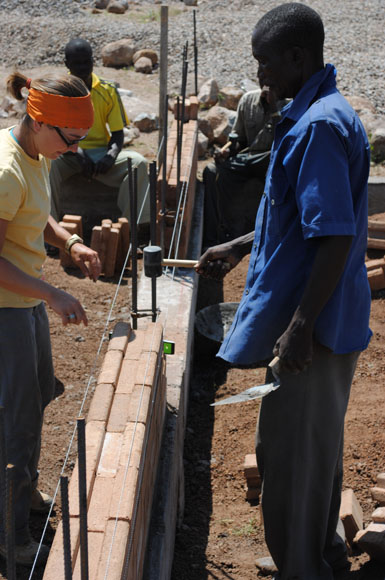
Emily Roush was worried. As a graduate student in the University of Cincinnati's architecture program, she had the chance to work on one of two projects over the course of her second and final year of study. One of the options involved staying in Cincinnati. The other had the potential, the slimmest hope, that she might travel to Tanzania to help build a health center in the remote villages of the country's Rorya district. Surely, in her class of 30 students, there would be stiff competition for what Roush saw as the adventure of a lifetime. As it turned out, just six of her classmates chose to work on the African project, a part of the non-profit Village Life Outreach's work to provide life, health and education, in particular those underserved in East Africa. Of those, she was the only architecture student interested in working on the ground in Tanzania. So the Hillsboro native and Arizona State graduate got busy. She made a two-week visit to the health center site in the fall, not long after choosing the project, to do field research and assessments to bring back to Cincinnati. Roush, 26, traveled alone and worked with villagers and others already on site, using translators to sift her way through Swahili and Luo, the two main languages of the region.Her first thought when she saw the sweeping vistas and wide open spaces of Africa? "It's real," she says. She returned to Cincinnati even more determined to bring the health center to life.By spring 2010, she was ready to start her six-month journey. Back in Tanzania in March, she lived with a Tanzanian family, built relationships with villagers and got hands-on construction experience. "I was impressed with the people of the villages," she says. "They really banded together."After three months, she came back to the States for a family wedding and a funeral, then returned to Africa with her now-fiancee, and Village Life Outreach Project executive director, Richard Elliott. When she returned to Cincinnati to start school in September, Elliott stayed behind, helping with construction and coordination.The Roche Health Center is just one of a series of Village Life Outreach efforts. From mobile health care to a range of education projects, the non-profit focuses on new approaches to improving and sustaining community health and well-being.Roush hopes to return to Tanzania after she graduates and marries Elliott. She wants people to know that there is more to Village Life's mission than providing support for villagers."The most meaningful thing for me are the relationships I built with people," she says. "We have a lot to learn from them."Do good:• Limit malaria's reach. For $25, you can sponsor a mosquito net for a family of four.• Do lunch. For $50, you can buy school lunches for six children in Tanzania—for an entire year!• Drink coffee. Visit Coffee Emporium on Central Parkway to buy  Village Life Outreach Project-branded Peaberry coffee from Tanzania. A portion of the proceeds support Village Life's work. You can also order the coffee online.By Elissa Yancey Photo courtesy Village Life Outreach Project

Hughes students learn retail ropes at Macy’s

The Macy's boardroom, with sweeping views of downtown and the riverfront, was all atwitter. Not with social media messaging, but with nearly 30 female teenagers, all students from Hughes STEM High School presenting final projects as part of an intercession project they'll never forget.In its second year, the program offered high schoolers a chance to spend a week immersed in the world of retail planning and development as they worked in teams to create a new juniors department for Macy's. Their final presentations, judged by a panel of Macy's experts, included research, merchandising, store design and construction, marketing and financial plans."I learned a lot more than expected," says ninth-grader Makennah Searles. "I learned what the design, construction, area research and human resource areas do and how they work. We were given time to talk to them and ask questions."Cecilia Matos, vice president and head of area research for Macy's, coordinated the program, which was created as a diversity outreach project. She explains that the benefits of the program go both ways. Macy's employees can help Hughes students learn about business strategies and making professional presentations while the students offer insights into their young customers' mindsets.?After the groups presented their findings and proposals, judges awarded a winning team while other Macy's staff compiled a list of ideas to consider for potential future implementation. Do good:• Get involved with Hughes. Opportunities include mentoring and helping with a creative intercession program.• Learn more about what's going on at Hughes.• Join the Hughes recruiting class on Facebook.By Elissa YanceyPhoto courtesy of Macy's

All ages find tolerance, fun at GLSEN prom

It happened when a local CEO called Brooke MacDonald looking to buy prom tickets for his son. The co-chair of Cincinnati's Gay, Lesbian and Straight Education Network (GLSEN) felt like the event had turned a corner. The GLSEN prom, a night where young adults can bring whomever they want to their prom, has long been an important GLSEN effort. Spring 2011 marks the third year that the Contemporary Arts Center downtown hosts the event, which a party for the over-21 crowd upstairs and a chaperoned affair downstairs for guests 21 and under."The kids are so excited," says MacDonald, 32, who grew up in Chicago and moved to Cincinnati almost five years ago. The May 7 prom, while free for the underage crowd, acts as GLSEN's biggest annual fundraiser. Adults pay $50 for a chance to relive happy prom memories or create brand new ones. "A lot of adults never had an opportunity to bring who they wanted to bring to prom," MacDonald says. As for the under-21 prom-goers, the theme is simple: "Bring who you want. Dress how you want. Love as you want.""We've had tons of parents emailing us about tickets," says MacDonald, who adds that funds raised at the event support GLSEN's Healing our Homeroom kits. The kits, like GLSEN, promote "basic tolerance of anybody that is different from you."Key findings from the 2009 national GLSEN's School Climate Survey illustrate that tolerance remains a critical issue for young people. National data showed that nearly 85 percent of LGBT students had been verbally abused and 40 percent had been physically harassed because of their sexual orientation. As GLSEN plans its hip and popular prom, it also continues an innovative story project, collecting video oral histories about school experiences involving sexual orientation and gender identity. A preview of the documentary is slated to be shown at the prom.Do good:• Get your groove on. Get your tickets today for the prom, Saturday, May 7, from 7 p.m. until midnight at the Contemporary Arts Center.• Make a gift. Donate to Cincinnati's GLSEN online.• Find out more. Make a friend of the GSLEN on Facebook to hear what the group is doing next.By Elissa YanceyProm photo courtesy of GLSEN Cincinnati

Opera Idol gives new life to neglected dreams

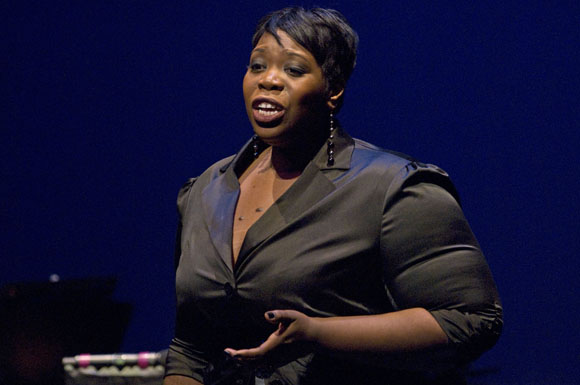
Jenny Smith was on her way to her oldest daughter's high school graduation. It was a stressful day. And the mother of four, a college opera performance drop out, needed to sing for somebody.A friend had emailed her a link to the first-ever Opera Idol auditions downtown. She made a split-second decision, a turn down Elm Street and wound up on stage at Music Hall. She offered judges a rendition of the Spanish "Triste" mixed with "Sometimes I Feel Like a Motherless Child." She walked out the door and headed back into her real life.A year later, a friend suggested that Melissa Eppinger put her pipes to the test at the second Opera Idol auditions. With limited formal vocal training—they lyric soprano doesn't read music—the Language Arts teacher had three days to prepare . The Central State University Choir alumna sang "The Lord's Prayer." She, too, expected nothing beyond the audition.Both women not only made that first cut, but were named finalists in the 2009 and 2010 competitions, respectively. Each year, the public votes for a single Idol, who wins $3,500 and a chance to work with the Cincinnati Opera.But Jenny Smith didn't need that check to change her life. "I got encouraged," says Smith, who turns 49 this year. "It reignited my desire to sing." She will earn her B.A. in music from Northern Kentucky University on Mother's Day, two weeks before her oldest child graduates from college."My goal was to get a degree as fast as possible," says Smith, whose deep speaking voice belies her soprano status. She hopes to someday sing in a Cincinnati Opera chorus, but for now she's just happy to prove to herself, and her kids, that it's never too late to follow your heart. "A dream deferred is still a dream," she says.As for Eppinger, being an Idol finalist gave her opportunities to take master classes as well as a renewed sense of purpose in singing. The Cleveland native, 30, now works at Central State, and is earning her Master's degree in urban education at Antioch College. "Opera Idol made me feel like I need to step up my game," Eppinger says. Do good:• Sing your heart out. This year's Opera Idol auditions are May 7. What are you waiting for?• Relieve Opera Idol excitement. Watch the competitive performances by Smith and Eppinger.• Make summer plans. Buy your Opera season tickets so you won't miss a performance. The season runs June through the end of July and includes two new productions, "The Magic Flute" and "A Flowering Tree."By Elissa YanceyPhotos courtesy Cincinnati Opera/Philip Groshong

Covington, nonprofit partners use grant to boost urban home ownership

The City of Covington is using eleven rehabilitated and three newly constructed homes to attract new residents. Using a federal Neighborhood Stabilization Program Grant from the Kentucky Department for Local Government, Covington and two local nonprofit housing developers, The Center for Great Neighborhoods of Covington and Housing Opportunities of Northern Kentucky, have partnered to transform formerly foreclosed or abandoned properties into vibrant, affordable, and livable houses. Covington was selected from several Kentucky cities that applied for this competitive funding program, and was awarded $5 million dollars. The grant is designed to invest in neighborhoods that have older or vacant housing stock in need of rehabilitation."The Neighborhood Stabilization takes a problem property that got hit by the foreclosure crisis to rehab and reoccupy in order to make it a better neighborhood. Most of our properties are grouped closely together, transforming an entire block to make Covington more beautiful," said Jeremy Wallace of the Covington Community Development Department. "Covington has been always a preservation community with a high concentration of historic buildings," Wallace explained. "We renovated eleven existing homes, but had to tear down three because those properties were beyond repair. As long as it is cost effective, we as a community think it's important to preserve and renovate first."Each rehabiliated or newly constructed home will incorporate green building techniques and will contain energy star appliances, energy efficient insulation, and high-energy efficient windows to reduce utility and energy costs. Prospective homebuyers are required to obtain an approved first mortgage from a lender of their choice, acquire a certain amount of income and credit, and attend an approved free homeownership educational course. Wallace explained that while Covington has been successful attracting young, single individuals, these home ownership opportunities will appeal to a wide range of individuals with different income requirements ranging from $58,400 for a single-person household to $96,750 for a six-person household. Buyers will also receive financial incentives to assist with purchase to ensure that homes are affordable, making this a more attractive opportunity for those wanting to live in the urban core.Writer: Lisa Ensminger

Fuel Cincinnati brainstorm event asks: What is Cincinnati? What could it be?

In the grind of day-to-day life and responsibilities it can seem frivolous to spend time thinking about what could be. But without vision, goal-setting and planning, our lives - and our city - will grow stale. Fuel Cincinnati, the innovation arm of the volunteer organization Give Back Cincinnati, is helping move forward the envisioning conversation with its first brainstorming event. Noted local brainstorming facilitator Joel Kashuba, author of the BlissProject, will lead the Fuel Brainstorm Idea Generation session. The free, open event will be April 30, 10 a.m. to 1 p.m. at Cincy Coworks, 2400 Gilbert Ave. in Walnut Hills. Lunch will be provided. You can register for the event here. Kashuba, principal of design innovation at Procter & Gamble, wrote and created the BlissProject, a book and seminar series designed to help people "build a sense of purpose, influence, and control" in their careers through "inspiration, action, and influence." He's been published in Innovations magazine and has spoken at design conferences across the U.S. "Joel approached us wanting to help Cincinnati, using skills from his professional career to give back," said Beth Gottfried, Fuel board member and communications director. Fuel provides small grants to help young professionals launch projects that impact the region. Past projects include Cincinnati Coworks, a bike trail into Devou Park from the nearby Lewisburg Neighborhood and Kicks for Hope, a nonprofit that builds kids' leadership skills through soccer. "There are a lot of people who have ideas, and lot of people who are implementers of ideas. We introduce them to one another so we can get things moving," Gottfried said of Fuel. "We want to channel some of that into community building." Brainstorming participants will be asked what Cincinnati is today, and what it can offer in the future. "When we see some common themes about where people want (the city) to go, we'll talk about those images and what needs to happen to make it a reality," Gottfried said. Participants will leave the session with concrete action steps, and will partner with leaders who can start the process to push forward action. Writer: Feoshia Henderson Source: Beth Gottfried, Fuel board member and communications director You can follow Feoshia on Twitter @feoshiawrites

Nonprofit grows, empowers pre-teen girls

When Erin Hamilton became the executive director of Girls on the Run (GotR) in the spring of 2005, there were only 12 participants in the program. During its first three years, Hamilton was the only employee and operated the organization out of her home.Six years after the local nonprofit and independent chapter of GotR International was re-established in Greater Cincinnati, participation has grown - more than 1,800 pre-teen girls are involved in its program this year.GotR uses health and fitness as ways to teach girls of diverse shapes, sizes and economic levels from the third to eighth grade. More than 50 percent of GotR's current participants need help outside support to cover the cost of the curriculum, running shoes, T-shirts and race registrations.The 12-week programs are offered in fall and spring every year. They teach pre-teen girls about emotional, social, mental, spiritual and physical development while combining each topic with a physical activity. Teams meet twice each week for one hour after school. Girls learn how to eat healthy, feel good about themselves, improve their body images, combat peer pressure and work cooperatively in teams. "We're giving each girl the self-esteem to try new things, believe in themselves and the tools to succeed," Hamilton says. Coaches build relationships with the girls through positive reinforcement and encouragement. Their goals are critical: reduce teenage pregnancies, eating disorders, depression and suicide attempts, as well as lower the number of substance/alcohol abuse problems and confrontations with the juvenile justice system.The program culminates in a non-competitive 5K race Saturday, May 7, at Paul Brown Stadium, which gives all the girls in the local program a chance to get together and share their skills. "It's very rewarding to see the girls really come out of their shells," Hamilton says. "We see a change in self-confidence and the way they articulate their thoughts in front of a group. They almost don't recognize how different they are."Do good:•    Become a sponsor. More than half the girls need extra support in the form of funding to participate.•    Become a coach. Coaches are the backbone of the organization.•    Make a wish come true. Check out the organization's wish list and see what wishes you can grant.By Jayna Barker?Follow Jayna on Twitter @jaynabarker.?http://www.jaynabarker.com?

Artifacts teach powerful lessons at Center for Holocaust and Humanity Education

When Leo Willich was having a really bad day, he pulled out a box he had protected for decades. Inside was a clean uniform with hauntingly familiar vertical stripes and sewn-on tags. He would put on the garment he wore every day at Auschwitz and look in the mirror. From the safety of his home in Cincinnati, he would have hope for a better day."That teaches a lesson in itself," says Sarah Weiss, 29, executive director of The Center for the Holocaust and Humanity Education in Kenwood, where Willich's uniform is displayed in the Mapping Our Tears exhibit.The collection of artifacts from Holocaust survivors who settled in Cincinnati connects the past with the present, and the future, in a powerful way. A pair of battered gold earrings tells the story of a teen girl's determination to keep her connection to her family alive. A potato peeler serves as a reminder of those who risked their lives to hide Jewish families from Nazi soldiers.Along with a theater that looks and feels like an attic, where visitors watch video testimonies from local survivors, the artifacts reflect the Center's founders, a group of Holocaust survivors who met regularly beginning in the 1950s. They gathered for support and for connection. "It was more like family," Weiss says.From 2000 until 2006, the Center was housed at Hebrew Union College in Clifton. A desire for more space and an independent identity converged when the Center became a distinct non-profit and moved to the campus of Rockwern Academy on Montgomery Road.Weiss explains that the Center's mission reaches beyond honoring the memories of the Holocaust. "We want to teach everyone who comes to be critical thinkers," she says. "That is equally important."With just three full-time staff and one Public Ally, the Center provides programming for and education to more than 40,000 people each year. In 10 years, its programs have touched a half million lives. Do good:• Visit the Center. Find a place of deep knowledge and even deeper respect for humanity between 9 a.m. and 5 p.m. weekdays and 11 a.m. till 3 p.m. Sundays. Entrance cost is a $5 donation per person, but Weiss adds that no visitor will be turned away.• Remember May 1. Designated Yom Hashoah, it is the date on which all who died during the Holocaust—most of whom left little evidence of their lives, much less their death date--are remembered and honored.• Be a friend. "Like" The Center for Holocaust and Humanity Education on Facebook.  ?• Run The Great Human Race. Lace up your shoes for the May 15 fundraiser at Lunken Airport Playfield.By Elissa YanceyPhoto courtesy The Center for Holocaust and Humanity Education  

Dress for Success provides clothes, advice and more for clients

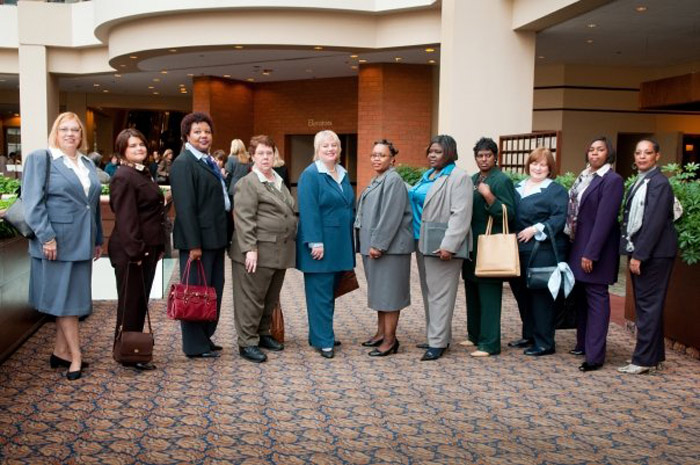
Women enter through a narrow door on Fourth Street. Everything is beige. And old. They head toward the cramped elevator, step inside, and their guide presses the number three. She makes a point of touching it just at the right spot, "about 11 o'clock," to make sure the creaking door closes. As the elevator lurches upward, the number on the display reads "six." "It's an old building," Lisa McDaniel Brown, advancement director for Dress for Success, explains the idiosyncrasy as she welcomes visitors to the third floor. When the door opens, there is a sort of "Wizard of Oz" moment, when the grayness of the city street morphs into a Technicolor field of oranges and greens, colorful, spring-inspired cushions on window seats and stylish women's clothes hanging on the wall like artwork.Women who have been referred by social service agencies and other organizations sit on the window seats. They fill out paperwork and chat with the staff of mostly volunteers who will gather sizing information and then help each guest find a suit and the proper accessories needed for a job interview. They will not pay a dime.In the suiting area, racks of matching dress suits and shoes line the walls. Dressing rooms designed by California Closets are spacious and bright. Earrings, bracelets and necklaces create a sparkling jewelry counter. Colorful scarves, the signature Dress for Success accessories, hang up and down a pillar. "By the time they leave, their heads are higher," says McDaniel Brown. Since Mary Ivers founded the local Dress for Success non-profit as only the 20th affiliate in the country, much has changed. Now there are nearly 300 locations around the country. The Cincinnati operation has moved twice, but always stayed on Fourth Street, making it convenient for women to donate as well as shop in the Fourth Street Boutique.The Boutique, a resale shop that offers bargain prices to every shopper, stocks a wide range of women's clothing, shoes and accessories. Its sales, along with grants and donations, fund the Dress for Success operation, which may "suit" more than 30 women per week. "These women have nothing," says McDaniel Brown. "They are coming out of prison, halfway houses, homeless shelters and running from abuse." They know, first-hand, that in order to move forward, there is literally no going back.At Dress for Success, they get more than an appropriate interview outfit. Once they land jobs, women can come back for a week's worth of work clothes, all free, and join the Professional Women's Group, which offers professional development seminars every month.  Do good:• Host a party. Whether you invite friends and co-workers to the Fourth Street Boutique for a night of shopping and hors d'oeuvres or host your own party, make the price of admission a fresh accessory or suit. • Share your talents. Volunteer to be a personal shopper or give an informational talk to the Professional Women's Group.• Go shopping. You can't beat the prices at the Fourth Street Boutique. Don't forget to visit the basement, where clothing items sell for between $1 and $5.By Elissa YanceyPhoto courtesy Dress for Success Cincinnati

Our Partners

Taft Museum of Art

We want to know what's on your mind.

Close the CTA

Don't miss out!

Everything Cincinnati, in your inbox every week.

Close the CTA

Already a subscriber? Enter your email to hide this popup in the future.