Research + Innovation

Airway Therapeutics helps premature infants with healthy lung development

 In 2008, more than 530,000 babies were born prematurely in the U.S. That's about one in eight babies, according to the March of Dimes. Many have lungs that are not yet fully developed. That's where Airway Therapeutics comes in - the local business was created to help premature infants with their lung development and even survival rates.Based on 10 years of research at Cincinnati Children's Hospital Medical Center, Airway Therapeutics was created to develop a surfactant protein that lines the surface and airways of babies' lungs to help inflate them and keep their air sacs from collapsing. Airway's initial focus will be on the prevention of bronchopulmonary dysplasia (BPD) and also the prevention and treatment of neonatal respiratory distress syndrome (nRDS) in very premature infants. Normally, lungs mature to produce surfactant in the seventh month of gestation. Very premature infants (before 32 weeks gestation) have generally not developed lung surfactant to make the transition during birth from fluid-filled lungs to lungs that can easily expand to handle air movement. Administering surfactant to these very premature infants shortly after birth allows them to breathe. Airway's product, rhSP-D, would be added to existing surfactant prior to treating a premature newborn, and has been shown in the lab of Dr. Jeffrey Whitsett to be useful in reducing lung inflammation, a condition associated with BPD. Dr. Whitsett is chief of the Section of Neonatology, and Perinatal and Pulmonary Biology at Children's. Bringing his research into the market is CEO Steve Linberg, Ph.D., who has more than 30 years of clinical research, drug development and biologic development experience. The company recently received a seed-stage investment by CincyTech - a Cincinnati-based venture development firm that invests in technology-based startup companies - and the Cincinnati Children's Tomorrow Fund. Each has invested $250,000 as part of a projected $1.2 million seed-stage funding round led by CincyTech. The company is headquartered at BioStart, the Cincinnati bioscience startup center located in Clifton, which is a previous investor in Airway.The new investment will allow Airway to meet with the Food and Drug Administration within a few months to confirm their plans to begin developing rhSP-D in combination with an already-available surfactant, and then file an Investigational New Drug (IND) application within 15 months. Linberg estimates a total estimated cost of $25 million to bring the drug to market."This drug will save babies that don't survive today and radically improve the lives of millions of others," says CincyTech Executive-in-Residence Mike Venerable.Writer: Sarah Blazak

Latest in Research + Innovation
Northern Kentucky ezone taking applications for varied funding opportunities

Northern Kentucky tech, science and medical entrepreneurs have a chance to tap one of three state funds for seed capital through the end of this month. The Kentucky Enterprise Fund, Rural Innovation Fund and Kentucky New Energy Ventures Fund are accepting applications for funding through June 23 at 4 p.m. These three targeted funds are geared toward high-growth potential businesses in five sectors: Biosciences, Environmental & Energy Technologies, Human Health & Development, Information Technology & Communication and Materials Science & Advanced Manufacturing. In the last round of funding more than $600,000 was awarded statewide to companies. Past recipients in Northern Kentucky include Jacobs Automation, Zoomessence, Bexion Pharma, ASAP Analytical, and TodayForward.Northern Kentucky businesses can submit applications through Northern Kentucky ezone, a division of Northern Kentucky Tri-ED that has a mission of accelerating start-up, emerging and existing high-tech businesses."This is open to early stage companies from an idea to a company that is running and looking to grow," said ezone commercialization director T. Keith Schneider.Companies can apply for a combination of direct funding (that must be repaid) or matching grants. To find out more or to apply, contact Schneider at (859) 292-7785 or tks@northernkentuckyusa.com.  Following are the basics on each fund: Kentucky Enterprise Fund Eligible Companies: Must be Kentucky-based and have 150 or fewer employees. Must be operating in one of the following industries: Biosciences, Environmental & Energy Technologies, Human Health & Development, Information Technology & Communication or Materials Science & Advanced Manufacturing. Funding: Grant: $30,000. Company must match the grant 1:1 through cash or in-kind services.Funds must be used for approved business development activities. Investment: Up to $250,000, $500,000, and $750,000, must be repaid. Rural Innovation Fund Eligible Companies: Must be Small, Rural (located outside Fayette/Jefferson Counties), Kentucky-based company and have 50 or fewer employees. Must be operating in one of the following industries: Biosciences, Environmental & Energy Technologies, Human Health & Development, Information Technology & Communication or Materials Science & Advanced Manufacturing Funding: Grant: $30,000. Rural funds must be spent with independent third-party partners/consultants. Grants must be repaid upon receipt of follow-on award from Rural Innovation Fund or Kentucky Enterprise Fund. Funds must be used for approved business development activities. Investment: $100,000 must be repaid Kentucky New Energy Ventures Eligible Companies: KNEV will provide support for companies developing and commercializing products in the following areas: Alternative transportation fuels produced from coal, waste coal, biomass or extract oil from oil shale, synthetic natural gas, Ethanol produced from food crops or cellulosic ethanol, any other fuel that is produced from a renewable or sustainable source. Must be Kentucky-based and have 150 or fewer employees. Must be developing/commercializing alternative fuel and renewable energy products, processes, and services. Funding: Grant: $30,000. Company must match the grant 1:1 through cash or in-kind services. Funds must be used for approved business development activities.Investment: Any amount over $30,000. Companies must match the fund's investment on a 1:1 dollar ratio. Funds may be invested via convertible note or through direct stock.Investments can only be made in a company organized as a C Corp. or as an LLC Writer: Feoshia HendersonSources: ezone commercialization director T. Keith Schneider and Start-Up Kentucky You can follow Feoshia on Twitter @feoshiawrites

Energy assessments offer layers of savings for homeowners

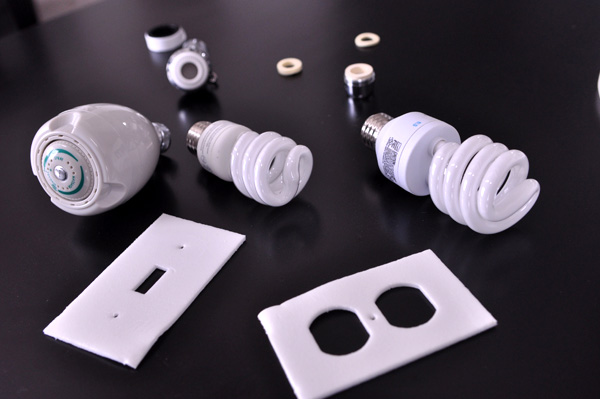
For a limited time, homeowners in Hamilton, Boone, Campbell and Kenton counties can spend just $50 for a $400 to $500 review of potential energy inefficiencies in their homes, and then apply that $50 toward improvements that will help lower their energy bills.An initiative of the non-profit Greater Cincinnati Energy Alliance, the discounted three to five-hour energy assessment includes an in-depth examination of how well your home's heating and air conditioning are working, as well as trouble-shooting for potential leaks and gaps in insulation. "It doesn't matter if a home is five years old or 105 years old, there are cost effective energy upgrades in almost every home we've ever looked at," says Andy Holzhauser, GCEA's executive director. "It's our job to make the process easy and affordable for everyone in our community."Holzhauser believes connecting homeowners with local contractors who have been trained to find affordable, environmentally sustainable ways to retrofit homes creates a powerful motivation for living green. So, after the energy assessment, the GCEA will discount up to 35 percent of the cost of projects that assessors recommend. "We make the retrofit more affordable," Holzhauser says. "In the case of a $5,000 retrofit, we will put $1,700 to $1,800 of our dollars on the table right alongside the homeowner's investment."Best of all, there are no income restrictions on the discounted assessments and retrofit projects, both of which can lead to lower monthly living costs and better environmental stewardship. "The notion of an investment on a home actually generating a cash return back to you is something that is new," Holzhauser says. "It's at the heart of what we do."Do Good:• Watch a home energy assessment in action.• Find out how much you could save. Sign up to learn your potential savings and request an audit of your own.• Tweet and learn. Follow GCEA on Twitter.By Elissa Yancey Photo by Scott Beseler

New research could shift cities to emulate

We have issues. Specifically, health, social and economic issues in Greater Cincinnati that local researchers explore and write about on the Community Research Collaborative Blog.Monthly entries feature content from researchers at the United Way of Greater Cincinnati and the University of Cincinnati http://uc.edu . On the blog, three 2011 Community Research Collaborative fellows, along with other community contributors, work to describe the socio-economic health of our community.Each month a new post offers a new analysis. The May 2011 post, for example, compares the 1999 and 2009 data about Cincinnati's income growth, which is a measure of all sources of personal income, including wages, health insurance and a wide range of other benefits. The results showed significant progress as well as sobering realities. While the metropolitan area moved from 58th to 24th place out of 366 areas around the country, Cincinnati, along with many of its regional peers, grew slower than the national average. But Cincinnati wasn't alone. Nearly all of the regional competitors that the CRC uses to track our region's progress posted slowed growth. Those cities include: Austin, TX, Louisville, Charlotte, NC, Cleveland, Columbus, Denver, Indianapolis, Minneapolis, Pittsburgh, Raleigh, NC and St. Louis. CRC fellow Janet Harrah, who serves as the senior director of Northern Kentucky University's Center for Economic Analysis and Development, suggests that it may be time to examine similarly sized cities that are managing to beat the national averages when it comes to personal income. Those include Oklahoma City, Virginia Beach, Baltimore and Washington, D.C.Do Good:• Educate yourself. Read about 2010 Census data for our region and see what you could do to make a difference.• Subscribe to CRC's newsletter so you will get the latest news and updates from the researchers.• Check more data. You can download the 64-page report online.By Elissa YanceyPhoto by Scott Beseler

Medpace moving toward physical, financial growth this summer

Cincinnati-based clinical research organization Medpace is having a year of notable changes, thanks to the continuation of a long-laid plan, and a recently announced partial acquisition.In 2010, Medpace began the relocation of its operations to a new facility on Red Bank and Madison roads in Madisonville. The move, supported in part by a 15-year, 75 percent LEED tax abatement on the first of three planned buildings, a 132,000 square-foot office building.The company has planned from the beginning to construct two additional buildings to house research labs. Construction manager Al Neyer, Inc. recently closed the bidding process for subcontractors for the new buildings, and on May 25 Cincinnati City Council approved a pair of 15-year tax exemptions for the new buildings, which are planned to be built to LEED certified standards. "Originally, when we built the headquarters, we had two labs in Norwood," said company spokesperson Mary Kuramoto. "The plan has always been to move them to the new location."But Medpace's latest news has little to do with its brick-and-mortar developments: the company announced May 23 that affiliates of the global private equity firm CCMP Capital Advisors, LLC, are in talks with the company to acquire an 80-percent ownership share. The acquisitions will allow Medpace to expand its global reach and enhance its ability to conduct phase I-IV clinical studies, said Medpace CEO August Troendle in a press release announcing the move.A spokesperson for CCMP Capital Advisors' New York City office declined to comment on the deal, but noted - as did Medpace via press release - that more news on the deal may be released in June.Writer: Matt CunninghamPhotography by Matt Cunningham

Couple puts life on the line to find expert care at Ronald McDonald House

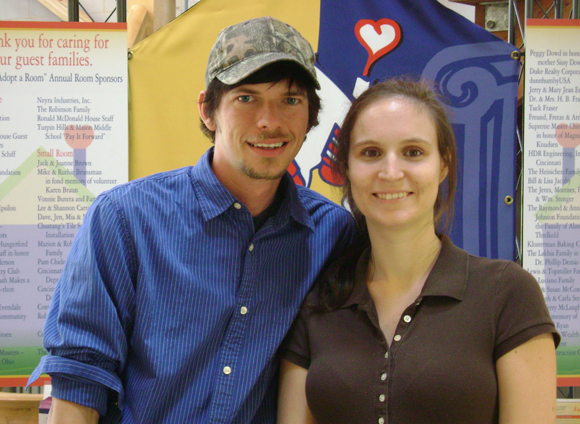
Angeline is still weeks away from being born, but she is already a miracle for her mother, LaDonna Thompson, and her father, Jared Litke. The young couple from Biloxi learned in April that their daughter-to-be had spina bifida - her spinal cord was literally growing outside of her back. They researched, consulted with experts and weighed heavy options.They could wait until her birth, then face a dangerous operation and growing odds that she might need to have a shunt inserted into her brain or spine to help drain spinal fluid. Or, they could try a risky but promising procedure available at only a handful of hospitals in the country. Fetal surgery to enclose their baby daughter's spinal cord before her birth offered the best chance that she might live a more normal life. "Only four hospitals in the country do it," says Litke, 24. "Vanderbilt and Cincinnati Children's are the top two."So Litke and Thompson, 19, who met while working at Petsmart in Mississippi, made plans to travel north. "We lost our jobs, we lost our home coming up here," Litke says. Though engaged, they don't qualify for the Family Medical Leave Act. They relied on family and friends to do what they could to help.They had three weeks to clear out their belongings and head north. It was a daunting task, but Litke and Thompson didn't hesitate. "Kids always come first," Litke says.Their stay at the Ronald McDonald House in Avondale started this spring. Thompson underwent a three-hour surgery in May to close Angeline's spine. Results looks promising so far, but because of the risks, the parents-to-be will stay in Cincinnati until Angeline's birth in September. The couple settled on the name Angeline early on, Litke explains. The word for "angel" has strong Irish and Italian roots, as do the parents.The Ronald McDonald House never withholds treatment because families can't afford it, but Thompson and Litke wanted to contribute something to offset the cost of treatment. In 2010, the facility housed more than 1,200 families from 49 states and 28 countries. Providing a room costs the agency $90 per day, but the suggested donation amount for families is just $25. Thompson and Litke could scarcely afford any additional expenses, so they decided to start a non-profit, Angeline's Hope, to raise funds for other families in similar conditions. They started collecting pull tabs from canned drinks, mostly via Facebook and friends in Mississippi, to donate to the Ronald McDonald House as well as to raise awareness of the organization's never-ending needs.Just 13 percent of its annual budget actually comes from McDonald's, explains ?Colleen Weinkam, communications manager of the Ronald McDonald House Charities of Greater Cincinnati. Cincinnati Children's Hospital Medical Center contributes 1 percent of the annual budget. But the lion's share of the funding, 84 percent, comes from donations and contributions. Last year, the organization raised more than $16,000 by cashing in hundreds of thousands of pull-tabs. Though it takes more than 300,000 pull-tabs to support a single night's stay in the house, Litke and Thompson were inspired by the House's existing pull-tab donation program. Plus, they wanted to give something back to show their appreciation and support of the people who became their family away from home. So far, they have collected more than 100,000 pull tabs. Their goal is to hit 400,000 before Angeline's birth. "It really does feel great knowing there is that there is all that support there," says Litke. "It's important to know that we are giving our little girl a better shot at living more of a normal life." Do Good:• Become a friend. Get the latest news on Angeline and fundraising on Facebook.• Sponsor a family. Pay for as little as one night for $25 or three months for $2,325 to cover costs for a family that is fighting for its life.• Be a Hero. Pick from more than a dozen options that package donations into categories including a "Basic Baker's" pack, a "Comfort" pack and a "Kitchen" pack.By Elissa YanceyPhoto courtesy Ronald McDonald House Charities of Greater Cincinnati


My Soapbox: Bill Cunningham

In the startup community, Bill Cunningham is known as a man of action. The founder of five startups has spent the past 20 years as an advocate, teacher and mentor to budding entrepreneurs. Soapbox asked next generation startup leader, Elizabeth Edwards, to talk with Cunningham about his past and offer advice for future entrepreneurs.

Read more about Ohio innovation in hiVelocity

hiVelocity tells the story of the new economy in Ohio. It's a narrative of creative people and businesses and what they are doing to create jobs for today and tomorrow. It's the story of a state on the move.Every other Thursday, hiVelocity will present original stories, video and photography to tell that story, from Cleveland to Cincinnati, Marietta to Maumee and parts in between.Read more about Ohio innovation in hiVelocity.

Cincinnati and Northern Kentucky companies rank on the 2011 Fortune 500 list

 Ten Cincinnati and Northern Kentucky companies ranked on the "2011 Fortune 500 list." Topping out the local list, Kroger was ranked 25th and Procter & Gamble 26th. Other companies included Macy's, Fifth Third, Omnicare, Ashland Inc., AK Steel Holding Corp, Western & Southern Financial Group, General Cable, and American Financial Group.Read the full story here.

Chinese Global BioChem Technology opens first overseas office in Cincinnati

Global BioChem Technology Group, China's largest corn processor, is expanding across the West by opening its first overseas office in the Cincinnati area.The company opened an office in Blue Ash in March with four employees including COO Jeff Mahaffey, a longtime Cincinnati area resident who joined Global Bio-Chem two years ago. Among Mahaffey's duties are introducing the company to American and European markets and promoting the company brand."We're building the commercial organization, branding and marketing and sales distribution," Mahaffey said. "We also want to get better connected to our customers so they (personally) know who we are."Cincinnati is an ideal location for the company, which offers alternatives to petroleum based products, he said. It processes corn for use in products ranging from plastics and animal feed to sweeteners. The region is centrally located among its traditional customer base, which includes the polyester, resins, heat transfer fluids and consumer goods industries, among other reasons he said. "It's centrally located, and it's a good place to live," he said. As business grows, the company expects to hire more people. About 6,000 people are employed by the company in China where its manufacturing processes takes place. In addition, Cincinnati is located near large agricultural areas across the Midwest."It's in the agricultural belt of the country. We're the largest corn processor in China, and the big feed mills here are in the Midwest," he said.The company's manufacturing facilities are exclusively in China, but that could someday change. "We think the technology is good enough to actually bring it to the Western world at some point," Mahaffey said.Global Bio-Chem Technology was founded in 1994; in China it's known as Dacheng Industry Group. Its facilities are in industrial parks in five Chinese provinces: Changchun, Dehui, Jinzhou, Shanghai, and Xinglongshan.The company processed 3 million tons of corn in 2010. Its 2010 revenues were $1.2 billion and the company was ranked 46 among the 50 most innovative companies in the world in 2011 by Fast Company Magazine.Writer: Feoshia HendersonSource: Global Bio-Chem Technology Group COO Jeff MahaffeyYou can follow Feoshia on Twitter @feoshiawrites

Our Partners

Taft Museum of Art
Warsaw Federal

Don't miss out!

Everything Cincinnati, in your inbox every week.

Close the CTA

Already a subscriber? Enter your email to hide this popup in the future.