Westwood

Cincinnati's largest neighborhood, Westwood, houses more than 30,000 residents in a six-mile area just west of downtown. With tree-lined streets and architecturally appealing homes, many parts of the neighborhood offer beautiful walking views. Westwood maintains its historic buildings as renovations, new businesses and diverse young residents continue to be drawn to the west side. The community was featured in the Soapbox On The Ground series where we connected with Westwood community members and their many, ongoing initiatives. Want to learn more about Westwood? Check out On The Ground Westwood.

City wins ‘Oscar’ of community development for Village at Roll Hill project

Last week, the City of Cincinnati was awarded one of 10 annual Audrey Nelson Community Development Awards for its contributions to the renovations of the Villages at Roll Hill, formerly called Fay Apartments. The development was in need of renovations because it had fallen into disrepair, and was known as a police hotspot.   “It’s a very prestigious award within the community development profession,” says Cincinnati’s Department of Community Development Director Michael Cervay. “We consider it the ‘Oscar’ of community development.”   The development is the largest LEED-certified renovation of affordable housing in the country. Though there are other affordable housing developments in need of renovation, construction work hasn’t begun and the U.S. Green Building Council hasn’t certified these projects as meeting LEED standards, Cervay says.   The City contributed $3.19 million in HOME loan money to the project; additional financing included $31 million from a HUD-insured first mortgage and $1 million in equity from the developer, Wallick Hendy. The project totaled out at about $35 million.   The Audrey Nelson Community Development Achievement Award is a national community development award that is presented by the National Community Development Association. The award recognizes exemplary uses of the Community Development Block Grant program and the partnerships between local government and nonprofits to assist low- and moderate-income households.   Construction began on the Roll Hill development in Oct. 2010. It’s considered the largest green renovation of an affordable housing development in the country, Cervay says.   Renovations included reducing the total number of units from 893 to 703, demolishing 17 buildings, adding new landscaping, planting trees and installing new playgrounds. On top of that, police personnel from District 3 added recommendations to the plans that increased the cost of the project by about $800,000, Cervay says.   These recommendations included perimeter fencing, extra security lighting, surveillance cameras, first-floor window bars, rear doors that open out and additional security personnel. In addition, the Villages at Roll Hill purchased a license plate reader that will notify police in real time if a stolen car or a car registered to someone with an outstanding warrant enters the premises.   Audrey Nelson was the first Deputy Executive Secretary of NCDA. She grew up in a neighborhood in inner city Chicago that was a target area for the local Model Cities Program. The award stands for Nelson’s commitment to her neighborhood, local program efforts and service to low-income households. She died of cancer at the age of 29.   By Caitlin Koenig Follow Caitlin on Twitter
School-based Health Centers offer innovative approach to educational barriers

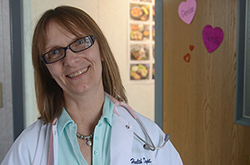
The arithmetic is pretty simple. Medical care plus students equals a boost in attendance and graduates. That's why Cincinnati Public Schools’ school-based health center nurses offer preventive and follow-up healthcare, as well as old-fashioned TLC, to a growing number of students.

ESCC helps nonprofits maximize output

In 1995, a small group of retired business executives came together with the intent of giving back to their community by investing their time and talents in work that would assist nonprofits. Now, nearly 18 years later, Executive Service Corps of Cincinnati is the recipient of an $85,000 award that will help more than 130 volunteers provide low-cost, high-quality strategic thinking, planning, training and coaching to other nonprofits in need.  The recent funding will help the ESCC implement its Community Benefit Business Model, which, according to Andy McCreanor, executive director and CEO of the organization, is a model that has essentially always existed within the nonprofit, but has now been refined and strengthened. The model helps nonprofits maximize results so that they may receive additional funding to better fulfill their missions, which ultimately works to improve the communities they serve. “It enables investors to get more out of the nonprofits that they’re investing in, and secondly, it helps the nonprofits because we’re affordable," says McCreanor. "We’re merely a vehicle so that the community gets the benefit that they’re trying to get." The ESCC has worked on long-term projects with more than 500 nonprofits in Cincinnati, Northern Kentucky and Southeast Indiana since 1995, including most recently the Jewish Federation of Cincinnati. ESCC also offers a 10-month program at its Nonprofit Leadership Institute each year; and at its culmination in June, more than 100 nonprofit leaders from Cincinnati will have graduated.  McCreanor says that because of the recent economic downturn, nonprofits have suffered and organizations are reevaluating and assessing their goals and missions. “We’re here to help,” he says. “If you’re struggling out there, it really doesn’t cost anything to talk about what you’re dealing with, and if in fact there is a way for us to help, it’s going to be done at a very low cost, so it’s kind of the best of all worlds.”  Do Good: • Sign up to attend classes at the Nonprofit Leadership Institute. • Volunteer your business skills and experience to serve other nonprofits. • Reach out to the ESCC if you are a nonprofit that could benefit from its services. By Brittany York  Brittany York is a professor of English composition at the University of Cincinnati and a teacher at the Regional Institute of Torah and Secular Studies. She also edits the For Good section of SoapboxMedia.

Shield gives back to those who give daily

The Shield started in September 2000 during a crisis. A Cincinnati police officer was killed in the line of duty, and his family, which was from out of town, couldn't afford to fly in on short notice. Tom Streicher, who was Cincinnati’s police chief at the time, knew something had to be done; he offered up his credit card to ensure the officer’s family was where they were needed—by the fallen officer’s side.  “It was a leadership issue,” says Satch Coletta, a retired officer and trustee for the nonprofit that was soon to launch. “What are the odds, should something happen? Something should be there.”  In that moment of need, police chiefs came together to make contributions and began to fund a new nonprofit. The organization has continued to operate ever since, thanks to community donations, and in large part, to the willingness of officers who take payroll deductions to contribute.  The organization’s board, which is composed of 10 officers—current and retired—works entirely on a volunteer basis. They meet monthly during lunch breaks to fulfill The Shield’s mission: to assist the families of officers killed or critically injured in the line of duty.  Policing is a dangerous job, and according to Coletta, “It’s not a matter of if we’re going to pay money out, it’s a matter of when and how much.”  The funds are available to families immediately—prior to workers’ compensation or life insurance, says Coletta. “If it happens at one in the afternoon, at 1:01 p.m., there’s a benefit committee that’s ready to spring into action to aid an officer or his family.”   Coletta knows the circumstances surrounding the loss of an officer all too well. In 1978, Officer John Bechtol, next-door neighbor and friend whom Coletta trained with, died after a vehicle struck his police cruiser. There was no immediate support available for the family . “Back then, policemen, not that they make a great fortune now, made even less; and to be able to set funeral arrangements and getting people in and situated—things along that line…” were very difficult, he says. The funds are not just meant for funeral arrangements and families’ transportation, however. “Say he would have survived the crash,” Coletta says, “he would have been in very serious condition, say in ICU for a long time. You would expect the spouse to be there in ICU. If their job doesn’t pay, The Shield would entertain paying the spouse’s wages because they’re already down one. We don’t want them to suffer additionally.”  In times of need, Coletta says people always want to help, but the organization’s goal is to create an emergency fund that can create interest, so that there is enough money available to families, prior to the moment when the unthinkable occurs. “The family knows what’s needed, and we work on the things to try to aid them,” Coletta says. “But it’s one of those things where at the time, that’s one less thing they have to worry about.”  Do Good: • Provide corporate or community support by donating to The Shield. • Contact The Shield about volunteer opportunities and upcoming events. • Connect with The Shield and share the organization's page on Facebook.  By Brittany York  Brittany York is a professor of English Composition at the University of Cincinnati and a teacher at the Regional Institute of Torah and Secular Studies. She also edits the For Good section of SoapboxMedia.  

Twelve neighborhoods receive $1.65 million for projects

The City of Cincinnati Economic Development Division and Cincinnati Neighborhood Business Districts United (CNBDU) recently allocated $1.65 million to 13 projects for the 2013 Neighborhood Business District Improvement Program.   John Price, then-president of the Clifton Business Association, started CNBDU in 1992. He gathered all of the business association presidents in Cincinnati because he wanted to figure out a way to get funding for those neighborhoods that weren’t downtown, says Mike Wagner, president of CNBDU.   Over the years, CNBDU has appropriated about $33 million between federal and city money, and leveraged more $350 million in private money, to support non-downtown neighborhood projects.   CNBDU awards money annually to Cincinnati neighborhoods through the NBDIP, which receives federal money from the City’s Community Development Block Grant and city capital funds. Neighborhoods can use the money for a variety of capital improvements and other uses to promote economic development in their business districts.   Each neighborhood is allowed to apply for one major and one minor ask, says Bill Fischer, division manager of economic development for the City. The maximum amount for a minor ask is $30,000; there isn’t a maximum amount for a major ask. There are generally more minor-ask projects accepted because more projects can get done.   This year's process began in June when 29 neighborhoods submitted their initial proposals, which totaled $3.1 million in requests. A 28-member peer advisory group of community members who had submitted proposals and representatives from neighborhood business districts reviewed the proposals. In September, the reviewers took a bus tour of the project sites.   “There wasn’t much to look at when we first started CNBDU,” says Wagner. “But now we can see what has been accomplished in the past 17 years.”   In October, the peer group made recommendations to the City’s Economic Development Division after hearing presentations from the different neighborhoods. Neighborhood groups were notified at the end of November if their proposals would be turned into a project through NBDIP.   “Each neighborhood has a different approach to the project proposals,” says Fischer. “Some are looking to maintain what’s already there, whereas others are looking to create new business.”     CNBDU funding is in addition to the Focus 52 program, a combination of bond and casino revenues, which will create a pool of $54 million for neighborhood projects throughout the city.   The neighborhood projects that were awarded money through the NBDIP are: Walnut Hills: Park-Kemper Streetscape Design, $30,000West Price Hill: Covedale Center Marquee/Community Message Board, $79,145Roselawn: Business District Feasibility Study, $30,000Clifton: Ludlow Avenue Storefront Improvement Program, $77,500Westwood: Parking Lot Renovation, $30,000Northside: Hoffner St. Garden, $80,000Northside: Dhonau Garden, $30,000Corryville: Façade Improvement Program (continuation), $236,397Bond Hill: Bond Hill Identity Project, $30,000East Price Hill: St. Lawrence Corner Public Square, $107,500Pleasant Ridge: 6025 Montgomery Acquisition & Redevelopment, $150,000Avondale: Reading, Rockdale & Forest Streetscape, $400,000Mt. Adams: Streetscape Completion, $375,000By Caitlin Koenig Follow Caitlin on Twitter

Breaking the cycle of bad eating, one banana at a time

The Nutrition Council of Greater Cincinnati is working to break the cycle of unhealthy eating habits, one banana, one yogurt parfait and one recipe at a time.   And, they are doing it one family at a time.  The Council, in its 35th year, just wrapped up its latest series of "What’s Cooking?" classes for parents and caregivers of kids in Camp Washington and Winton Hills.  The classes, offered each fall and spring, are a four-part series that meet for about an hour after the school day ends at schools with Head Start programs. They are designed to show parents how to make quick, affordable and healthy meals for their families. Each week is themed, and participants receive take-home tools like measuring spoons and grocery cards. Parents also get multiple recipes that encourage cooking at home, rather than relying on packaged and processed foods.  The classes and the Council’s work come at a time when the nation—and Cincinnati—is getting fatter. Childhood obesity has more than tripled in the past 30 years, according to the Centers for Disease Control and Prevention. Currently, one in four Cincinnati Public School kindergarten students is overweight (13.9 percent) or obese (11.7 percent).   “I think what strikes me is that things I am aware of and take for granted, not everyone does,’’ says Tracy Wilking, the nonprofit’s special project manager, who worked at the Winton Hills location this fall.   In 2011, nearly 100 families participated in the cooking sessions. And of those, according to the Council’s web site:  • 85 percent reported they changed one action to improve a targeted health behavior.• 67 percent of families increased their consumption of fruits and vegetables.• 67 percent said they decreased their child’s sweetened beverage intake.  Wilking says it is not uncommon to hear parents share how the instruction really does change cooking habits, from eating as a family to introducing fresh fruits and vegetables at meals. One recent participant told one of the Council workers that she had completely changed how her family was eating.   The Council targets very young children, before habits are established and before they start kindergarten. Wilking says many parents may not have been taught how to eat healthy, and the earlier the Council and others can share information with parents, the more likely the cycle of poor food choices can be broken.   In addition to the cooking series, the Council also visited 38 Early Childhood Education classrooms in the Cincinnati area over 17 days to teach parents and their kids how to make healthy snacks. Recently, they made fruit and yogurt parfaits.   “A little education really can go a long way,’’ says Wilking. “This work is reaching individuals and those with the power to reach someone else.”  Do Good: •  Make a donation •  Volunteer your time or skills. • Like the Council on Facebook.• Follow the Council's news on Twitter.  By Chris GravesChris Graves, assistant vice president of digital and social media at the Powers Agency, is using several of the Council’s recipes at home with her two teens.  

Faces Without Places founder wants to see homeless program expand

Karen Fessler has a message she wants you to hear loud and clear: Faces Without Places is alive, well and kicking.  For years, the nonprofit, grassroots organization that has provided nearly $1.5 million in educational support for homeless children in Greater Cincinnati was affiliated with the Cincinnati Public Schools. But about two years ago--and for a variety of reasons--the organization split with the school system, says Fessler, who is a board member and a founding member of the 17-year-old group.   But its mission remains intact, says Fessler.  “The most important part of the program is that we get kids out of shelters, we get kids off the streets and we show them that education is a way to experience a larger world,’’ says Fessler. “We want to broaden our reach. We want to broaden our horizons.”  Fessler declines to discuss what led to the parting of ways, but adds the founders of the program all left their jobs at CPS as well.   “But none of us lost our passion for the kids and the mission of Faces Without Places,’’ she adds. “I want people to know that we are here, and we are committed to providing services. We are toughing it out through thick and thin--for the kids.”  The nonprofit helps about 3,000 school children annually in Greater Cincinnati. Last year, the group provided 7,702 services to 3,013 children, according to its website. Those services included providing taxi services to school for 112 students, uniform vouchers for 777 students, backpacks and supplies for more than 839 students and Payless gift cards for 320 students so they could get a new pair of shoes, a luxury for many, Fessler says.  The nonprofit is best known for its Yellow Bus Summer Camp, which completed its 15th year this past summer. Last year, 152 children attended the eight-week camp that focuses on reading and day trips.  Earlier this month, the group’s biggest fundraiser--the Yellow Bus Ball--raised more than $23,000, most of which will go to fund the camp.   “The ball is critical because we have to have money to pay teachers and buy supplies,’’ Fessler says. “We can get grant money for field trips, but the fundraiser really helps us be able to put on the camp to the degree we have always done it.”  Fessler has worked with thousands of homeless children over the years, and she readily admits she is biased toward teens.   “A lot of people don’t realize this, but these kids are completely out on their own; they are either staying at friends' or living eight, nine, 10 kids piled up in an apartment,’’ she says. “They are squatting and some are living on the streets trying to negotiate life … they are all living life on the edge. I am most impressed by their sheer tenacity and their desire to find a better life.” Do Good:  • Register for the Mt. Adams Yellow Bus Pub Crawl on Saturday, Nov. 17.  • Attend the 5th annual Chili Taste Off on Dec. 9 at Northside Tavern.  • Contribute to Faces Without Places' wishlist of school and personal hygiene supplies.  • Sign up for the monthly email newsletter.  • Give back while you shop.  By Chris GravesChris Graves is the assistant vice president of digital and social media at Powers Agency

Big plans in the works for Cincinnati

As many areas of Cincinnati are being rejuvenated, including OTR and Washington Park, the City of Cincinnati approved a comprehensive approach to focus on development in the city as a whole, not just targeted neighborhoods.  Last Friday, the City Planning Commission approved and adopted Plan Cincinnati, which was designed with input from residents. The Plan is an opportunity to strengthen what people love about the city, what works and what needs more attention, says Katherine Keough-Jurs, senior city planner and project manager.   The idea is to re-urbanize suburbanized Cincinnati; in a sense, to return to the strengths of the city's beginnings. Cincinnati was established just after the American Revolution in 1788 and grew into an industrial center in the 19th century. Many of those industries no longer exist in the city, which is part of why Cincinnati has become more suburbanized in the past 50 years. One of the long-term goals of the Plan is to bring new industries to Cincinnati.   With a new approach to revitalization, Cincinnati is blazing the trail for other cities. With a focus on building on existing strengths rather than tearing down structures and creating new ones, the Plan aims to capitalize on the city's “good bones” and good infrastructure.   Cinicinnatians had a huge role in developing the Plan. The first public meeting for the Plan was held in September 2009, when residents offered their insights into “what makes a great city?" and "what would make Cincinnati a great city?” A steering committee of 40 people representing businesses, nonprofits, community groups, local institutions, residents and City Council helped develop the Plan. The Plan also got support from a grant from the Partnership for Sustainable Communities, which the City received in 2010. The grant allotted $2.4 million over three years to support the Land Development Code, which combines and simplifies Cincinnati's codes, reviews the development process, implements Form-based Codes and considers more creative uses for land. The grant allowed the city to start implementing some of the ideas voiced in public meetings.   Visionaries included youth, too. City staff worked with community centers and Cincinnati Public Schools to develop an art project for children. They were given clay pots and asked to paint their fears for the city on the inside and their dreams for the city on the outside. The children saw the big issue was quality of life, just like the adults did.   “It was an interesting way to get the kids involved and thinking about the future,” Keough-Jurs says.   The Plan aims to strengthen neighborhood centers—the neighborhoods’ business districts. It maps out areas that people need to get to on a daily basis and found that most are within about a half-mile of the business districts. But in some neighborhoods, residents can’t access their neighborhood centers. The accessibility of a neighborhood center is based on walkability—not just for pedestrians, but also about how structures address walking. For exampke, if a pedestrian can walk from one end of the neighborhood center to the other without breaking his or her pattern (the window shopping effect), the area is walkable; if he or she has been stopped by a parking lot or vacancies, it’s not walkable, Keough-Jurs says.   The neighborhood centers are classified in one of three ways in the Plan: maintain, evolve or transform. Some neighborhoods have goals to maintain levels of walkability, whereas others need to gradually change or evolve. Still others need to completely transform in order to strengthen their business districts.   “Cincinnati is at the heart of the region,” Keough-Jurs says. “If we strengthen Cincinnati, we strengthen a region.” The next step for the Plan is to go before the Cincinnati City Council, specifically the Livable Communities Committee, which is chaired by Vice Mayor Roxanne Qualls.   By Caitlin Koenig Follow Caitlin on Twitter

Westside chef creates ‘the Ben & Jerry’s of hummus’

Ethan Snider has had a love affair with food for nearly a quarter of a century. Raised on Cincinnati’s west side, he worked up through the ranks at Macaroni Grill, and eventually became an executive chef. In short, it was a dream come true. Until he hated it. “The corporate stuff just did not appeal to me,” Snider says. “I was there for less than six months.” He ended up at the Culinary Institute of America in Hyde Park, N.Y., where he graduated with a bachelor’s degree in 2004. After that, Snider moved around a lot. He worked at a tiny Batesville, Ind., restaurant that was run out of a three-car garage and after that, at a fine-dining restaurant in Boca Grande, Fla. Moving around was great for a while, but Snider eventually grew homesick. “I liked it a lot, but I started to miss being here; I always wanted to make a name for myself in Cincinnati because this is where I’m from,” he says. After moving back to Cinicnnati, Snider got started with his own food venture at local farmers’ markets because they have low overhead and a home-grown touch. With an eye toward the need for more locally sourced vegetarian and vegan options, Snider launched Summuh (pronounced “SOU-mah”), a specialty hummus shop, first at a farmer’s market in Madeira and, then in Northside and Hyde Park. Most recently, he joined Findlay Market, where he plans to weather the winter months. Snider calls his wares “the Ben & Jerry’s of hummus,” and promises that “you’ve never had hummus like this.” Two of his core flavors are a chickpea hummus with lemon and rosemary and one spiced with cumin, coriander and cilantro and topped with red onions. There are also 12-15 seasonal flavors, including “Squashbuckler,” which features a butternut squash and navy bean base with ancho chili powder, garlic and a spicy black bean relish on top. Though his hummus is organic and local, Snider says he’s no food evangelist. “I’m not trying to convert anyone to what I believe in or change the world." he says. "I just feel that if I believe in something, other people will start to believe in what I’m doing, too.” By Robin Donovan

Westside chef creates ‘the Ben & Jerry’s of hummus’

Ethan Snider has been carrying out a love affair with food for nearly a quarter of a century. Raised on Cincinnati’s west side, he worked up through the ranks at Macaroni Grill, eventually becoming an executive chef. It was dream come true. Until he hated it. “The corporate stuff just did not appeal to me,” he says. “I was there for less than six months.” He ended up at the Culinary Institute of America in Hyde Park, N.Y., graduating with a bachelor’s degree in 2004. After that, he moved around, working at a tiny Batesville, Ind., restaurant run out of a three-car garage and, later, at a fine-dining restaurant in Boca Grande, Fla. That worked for a while, but Snider grew homesick. “I liked it a lot, but I started to miss being here; I always wanted to have a name for myself in Cincinnati because this is where I’m from,” he says. Local farmers’ markets with low overhead and a home-grown touch seemed like a good way to get started. With an eye toward the need for more locally sourced, vegetarian and vegan options, he launched Summuh (pronounced “SOU-mah”), a specialty hummus shop, first at a farmer’s market in Madeira and, later, in Northside and Hyde Park. Most recently, he joined Findlay Market, where he plans to weather the winter months. Snider calls his wares “The Ben & Jerry’s of hummus,” promising “you’ve never had hummus like this.” Three core flavors include a chickpea hummus with lemon and rosemary and a hummus spiced with cumin, coriander and cilantro, topped with red onions. There are also 12-15 seasonal flavors, including “Squashbuckler,” which features a butternut squash and navy bean base with ancho chili powder, garlic and a spicy black bean relish on top. Though his hummus is organic and local, Snider says he’s no food evangelist. “I’m not trying to convert anyone to what I believe in or change the world." he says. "I just feel that if I believe in something, other people will start to believe in what I’m doing, too.” By Robin Donovan

Our Partners

Taft Museum of Art
Warsaw Federal

Don't miss out!

Everything Cincinnati, in your inbox every week.

Close the CTA

Already a subscriber? Enter your email to hide this popup in the future.