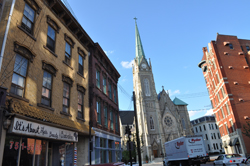
Walnut Hills / E. Walnut Hills

Walnut Hills was the first Cincinnati neighborhood to participate in Soapbox's On the Ground series, an embedded journalism approach to learn what's happening in the underrepresenting neighborhoods that are being transformed. Stories covered everything from business and community development, arts and culture and education to health and wellness, crime and food insecurity. A community newsroom was held at Caffé Vivace hosted by the champion of 45206, Kathryn Gardette. 

Plan, Build, Live encourages community feedback

City and neighborhood leaders, led by Vice Mayor Roxanne Qualls, have been building support for a new approach to development regulations for more than four years. Much of that has been developed through the program Plan, Build, Live. Plan, Build, Live is a program driven by community feedback and discussion, all gathered  via the project's website. The website encourages people to share their ideas about how a city should be designed. This weekend, instead of just online, Cincinnati residents and business leaders will come together to shape our future through a citywide Urban Design Workshop. The Workshop takes place from April 28 to May 2 to help create a "form-based code" that can be used by neighborhoods all over Cincinnati -- and help shape how development happens in Cincinnati in decades to come.    "Traditional zoning focuses on the use of the building and how far the building is off the street or how large the building is," says Della Rucker, public engagement office for Plan, Build, Live. "Form-based code flips that around and focuses on how a property contributes to the experience people have in the area. How it creates a vibrant, walkable community."  Plan Build Live is funded by a $2.4 million grant from the U.S. Department of Housing and Urban Development (HUD). Local funding is provided by the City of Cincinnati, the Metropolitan Sewer District of Greater Cincinnati, the Cincinnati Health Department, and the Mill Creek Restoration Project. One of the Plan Build Live tools, a form-based code, encourages strong neighborhoods, business districts, and downtowns by focusing on the shapes of buildings, streets and sidewalks. Form-based codes can helps maintain or enhance a mixed-use, pedestrian-friendly environment that offers a mix of residential options, transportation methods, workplaces, shopping and more. Traditional zoning codes encourage patches of similar use, forcing long distances between work, home and play. Form-based codes allow different uses to cluster – restaurants, apartments, drug stores and grocery stores, for instance – as long as they stick to rules that address the ways they relate to the neighborhood.   Form-based codes are not planned to replace other types of zoning in Cincinnati, but they are intended to give neighborhoods a more flexibility. A key difference of form-based codes is that even people who are not trained planners help put them together. Participants only need to be willing to share their ideas. During the Workshops, citizens will meet with planners, architects and engineers to talk about what they like and want to see -- both in Cincinnati's neighborhoods and on several "special opportunity" sites.  The preliminary Workshop focuses on creating a city-wide form-based code that will serve as a framework for the fall workshop, which will focus on four neighborhoods: Westwood, College Hill, Madisonville and Walnut Hills.  The estimated completion date is 2013, but feedback and participation from residents and business owners is critical to helping the city implement the program. By Evan Wallis

New Talbert House program turns unused items into monetary donations

One person’s junk is another’s treasure.   With a nod to that adage, Talbert House is launching a new fundraising effort that it hopes will translate treasure into needed funds for its many programs that bring health and productivity to Cincinnati citizens.   Donations2Dollars, a business that helps non-profits organize and capitalize on a donated items drive, is partnering with Talbert House to raise money for the organization. “The concept is so simple,” says Paula Boggs Muething, Talbert House board member. “Individuals can donate items of value that they are no longer using. These items will be purchased by someone else, resulting in a financial contribution to a great cause.”   Donations2Dollars sets up a process of receiving and managing private donations for an organization. Then it uses online auctions like eBay to sell the inventory. “We don’t get hired to raise money,” says Marc Fisher, founder of Donations2Dollars. “Our goal is to help [a nonprofit] raise money--to take things that are sitting around a house or old business inventory and find value in them that can help support an organization.”   Instead of hitting donors’ pocketbooks, an organization is offering supporters another option: donate an item instead. Talbert House donations managed by Donations2Dollars will support the agency’s Fatherhood Project, which helps strengthen a dad’s involvement with his children. Talbert House is committed to this project for at least a year, says Muething. “The Fatherhood Project received a grant through the Talbert House Foundation to fund a position designated to the Donations2Dollars program for one year, using a volunteer from the Church of the Brethren. “ Fisher, a Cincinnati businessman and philanthropist, sees the value of this new fundraising concept in a changing economy. These days, “nonprofits need to be more creative in finding opportunities to fund their programs.” Talbert House agrees and sees this kind of fundraising as a complement to its other social enterprises that help fund its programs, including House Café and Catering, the Talbert House Drug Lab  and the Institute for Training and Development.  Do Good: • Learn: about Donations2Dollars and this new concept of turning donated items into funds for your nonprofit, at www.donations2dollars.com • Support: the Talbert House, a community-wide nonprofit network of social services with 36 community corrections, mental health and substance abuse programs focusing on prevention, assessment, treatment and social reintegration of men, women and children.  By Becky Johnson

Cincinnati neighborhood on cusp of renaissance

People of all ages, both white and black, are moving into newly built houses and condos in Walnut Hills, as well as large, older homes. Crime has dropped in recent years. With encouragement and help from the city, the neighborhood is attracting the interest of commercial and residential developers. Read the full story here.

CoreChange looks to enhance urban core

What will change the most challenged neighborhood – one racked by poverty, crime, and the disintegration of lives –into a “learning organization,” a place that nurtures expansive ideas and encourages all of its residents to see the whole picture, together? CoreChange wants to be part of the solution. The community-wide effort aims to pull together partners of all types in order to co-create solutions that will enhance the best parts of the city's core. Co-chaired by Victor Garcia and Byron P. White, with help from its steering committee and design team, CoreChange is working in coordination with the Community Building Institute. This institute focuses on community development that is driven by the community itself, not by outside organizations. In its planning, it looks first at the community’s physical assets and the energy and needs of its residents, rather than just building a structure or fixing a problem. CoreChange wants to bring community members together to strengthen that development process. It hopes to compliment regional planning efforts by addressing three issues that are difficult to sustain in urban renewal: systemic solutions to poverty; effective public investment in those solutions; and the engagement of people who live outside the urban core. The message is clear: no neighborhood alone can heal itself. CoreChange’s primary strategy for accomplishing these changes is the CoreChange Summit, a three-day gathering of hundreds of residents and leaders over President’s Day weekend, Feb. 17-19. Titled “Igniting Strengths to Invent the New American City,” the sessions will allow participants to share ideas and hopes. Do Good: • Attend: the CoreChange Summit, “Igniting Strengths to Invent the New American City,” is Feb. 17-19, 2012, at the Millennium Hotel. Call 513-745-3896 for registration or details. • Learn: about CoreChange and its mission at www.corechangecincy.com. • Donate: to CoreChange and join a growing network of supporters who believe in the effort to improve the quality of life in Cincinnati. By Becky Johnson

Eduardo (Eddie) Maisonet, III
CABVI celebrates 100 years of service

Within Cincinnati’s diverse community of non-profit organizations, there is one that has been providing important services for more than 100 years to individuals who are blind or otherwise visually impaired. The Cincinnati Association for the Blind and Visually Impaired was founded in 1911 and today serves more than 4,300 individuals in 11 counties each year through counseling, rehabilitation, information and employment services. Recognized as "2011 Non-Profit of the Year" by the Cincinnati USA Regional Chamber, CABVI marked its centennial year with events centered on awareness, program services and community involvement. Executive Director John Mitchell provides a glimpse into what the community can expect in 2012, including greater collaboration with community partners, an emphasis on staff and board development and a focus on technology, which is vital to those with vision loss. The organization’s commitment to community awareness continues through a variety of forums in 2012. Functioning as informational training sessions, these on-site forums are open to the community and reach out to the thousands of individuals living with vision loss. “Our goal is to break 5,000 clients served in 2012,” says Mitchell. CABVI plans to focus on serving children and families, and educating both clients and their communities about ways in which those coping with vision loss can have the same advantages of children with sight. In addition, CABVI will focus on providing services to seniors and an aging population, serving individuals who have entered their 100th year of life. Do Good: • Volunteer. CABVI has more than 550 active volunteers – become one of them and help an individual coping with vision loss. • Donate. Log on to learn how. • Run or Walk. Plan to take part in CABVI’s annual fundraiser in August, a 5K run/walk. By Deidra Wiley Necco

Neighbor dividend pays off for businesses in E. Walnut Hills

In East Walnut Hills, shopkeepers and customers are on a first-name basis. They know that making connections, and keeping them strong, helps attract, and retain, dedicated followers. The same goes for attracting new entrepreneurs to help fill in the empty spaces in the historic, and as yet not fully settled, part of town.

Cincinnati sports blogger ups his game with The Sportsfan Journal

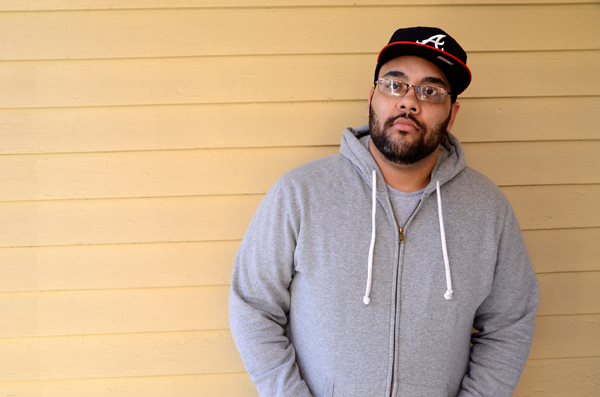
Cincinnati sports enthusiast and blogger Eddie Maisonet has upped his game with The Sportsfan Journal, a website devoted to all sports news. The publication launched about two months ago, and expands on Edthesportsfan.com, Maisonet’s edgy, fast-paced personal sports blog. He maintained (the now dimmed) blog with help of two writing partners. Those partners, Kenny Masenda, of Dallas, and Phil Barnett, of Bakersfield, Calif., have joined Maisonet in this new endeavor, which is updated more frequently and now has a cache of a half-dozen writers. “We are a full online sports and culture publication. The site is updated multiple times a day; it’s more interactive and keeps pace with the changes in the sports news world,” says Maisonet, also a regular contributor to SLAM basketball magazine. The Sportsfan Journal features a mix of news, columns and video revolving around sports as varied as football, basketball, hockey and wrestling. It also features Maisonet’s ongoing, one-hour Unsportsmanlike Conduct show on Blog Talk Radio Wednesdays at 9 p.m. EST. Like Edthesportsfan.com, Maisonet’s describes The Sportsfan Journal as a place where sport is the star, not gossip about athletes' private lives or the latest off-the-field antics. “It’s not salacious like you might see in a lot of other well-read sites. We don’t want to go that route. That might lose us some readers, but that’s not what we’re about,” says Maisonet, whose site had 25,000 unique page views last month. While the site is expanding, it’s also increasingly hitting a little closer to home. Maisonet is planning to write more about Cincinnati’s sports culture and stars. He is also working toward bringing is Blog Talk Show to the Cincinnati airways, as well as pitching the site to potential advertisers. “There are some good sports writers here, but I think there is room for more voices than are currently reflected in the city of Cincinnati,” he says. By Feoshia Henderson Follow Feoshia on Twitter

Kenzie’s CLOSET uses dresses to help girls shine

For some young women, affording a dress for prom night is a much bigger problem than finding a date. Behind all the statistics generated by the current recession – rates on joblessness, bankruptcies, foreclosures – there are young people who look forward to those special “rite of passage” events like high school prom and, yet, cannot afford their cost. Kenzie’s CLOSET aims to provide young women with all they need to shine and sparkle on prom night. For seven years, this non-profit has provided donated dresses to girls in need across the region. A Feb. 1 Kick-Off will be the first of Kenzie’s CLOSET’s 15 shopping days during the year, when hundreds of volunteers will fit movie 550 girls with dresses, shoes and accessories. Girls who have been referred to Kenzie’s CLOSET by teachers, principals and social service agencies get two hours with a personal shopper to select a dress, shoes, jewelry and a wrap. Seamstresses on site make all the alterations that day, and each girl leaves with a complete outfit, a photograph, a rose, a gift bag…“and a hug,” adds Joanne Maly, a media consultant and volunteer for Kenzie’s CLOSET. Maly started helping the non-profit with their media relationships but soon began volunteering, too. “You really get caught up in it; it’s such a neat experience and you see the impact of this experience on these girls’ lives.” Founder Brynne Coletti  started the non-profit when she realized that a girl at her daughter’s high school couldn’t afford a prom dress. Today, “it’s not uncommon that some of the girls we have helped in our earlier years are now back as volunteers helping other girls.” Dress drives and fund-raisers keep Kenzie’s CLOSET operating and expanding its reach, including shopping days for girls with special needs like developmental disabilities or deafness. And for years, Appearance Plus Cleaners has dry-cleaned and pressed every prom dress donated.   Volunteers come away as enriched as the girls they help. “Collectively, we show our girls that no matter their age, occupation or education, a strong group of women working together can accomplish mighty things," says Coletti. Do Good: •    Donate: Your gently-used prom, bridesmaid or cocktail dress to a Kenzie’s CLOSET dress drive. •    Support: Kenzie’s CLOSET with a monetary donation, which can be made on line, www.kenziescloset.org. •    Volunteer: Join a group of women who get to feel like Cinderella’s fairy godmother on a regular basis. By Becky Johnson

Music Resource Center buys E. Walnut Hills building

While research shows that after-school hours can be the most risky times for teens, in East Walnut Hills, the Music Resource Center offers a full menu of creative outlets to help them develop talents while keeping busy. Executive Director Karen D’Agostino got the idea for the center after she learned of the MRC in Charlottesville, VA , which was founded in 1995. D’Agostino contacted the director of the MRC in Charlottesville and created a sister organization here. In 2007, the center found a space in East Walnut Hills, and just this week, the Cincinnati MRC purchased its current location to cement its place in the neighborhood. “Every minute a child is off the streets and in a safe, educational after-school program is a big positive for our community,” says D’Agostino. “Purchasing the building helps to ensure the Music Resource Center will be able to serve students in a consistent location for many years to come.” Hundreds of teens utilize the facilities, which range from practice studios to teaching studios to rehearsal studios. The MRC is funded completely by private donations and the $2 monthly membership fee, which can be offset by scholarships. Kids in grades seven through 12 can attend the center and participate in audio engineering, music lessons and even use rehearsal spaces. Equipment is provided for students who can’t afford their own. Since opening, the MRC has hosted nearly 800 teens, who don’t just pop in for a quick visit. On average, teens spend more than two hours at the center each time they come. They may come for lessons or some studio time, but teens never leave without experiencing a the dedication and energy that makes MRC a popular destination. The purchase of the entire building helps add fuel the center’s potential, including possible hip-hop dance classes in the future. By Evan Wallis Follow Evan on Twitter

Our Partners

Taft Museum of Art

Common Ground Is Brewing

Support local stories and receive our signature roast straight to your door when you join at the Standard level (or above).

Drink Better, Read Local

Close the CTA

Don't miss out!

Everything Cincinnati, in your inbox every week.

Close the CTA

Already a subscriber? Enter your email to hide this popup in the future.