Walnut Hills / E. Walnut Hills

Walnut Hills was the first Cincinnati neighborhood to participate in Soapbox's On the Ground series, an embedded journalism approach to learn what's happening in the underrepresenting neighborhoods that are being transformed. Stories covered everything from business and community development, arts and culture and education to health and wellness, crime and food insecurity. A community newsroom was held at Caffé Vivace hosted by the champion of 45206, Kathryn Gardette. 

Instagram-inspired Booth FX launches in O’Bryonville

“A digital spin on the traditional photo booth” is Kelley Andersen’s super-short explanation of Booth FX Photo Booth Company, which she launched with her partner, Allison Gates, last month. The pair built the idea for their company on a love of photo booths, two creative personalities and their vision for a photo booth that was more than a traditional, space-limited box. “We first looked at the booths you can buy, and they were nice, but not what we were looking for," Andersen says. "We wanted something that was more digital. I love Instagram, and was trying to figure out how we could do that as a photo booth." The booth they custom-built--“with a lot of time and a lot of mistakes,” Andersen adds--measures 1.5 feet by 1.5 feet, is 5.5 feet tall and incorporates software that allows photos to be viewed, edited and shared. Rather than expecting participants to hop inside, the booth houses the photography equipment. Participants gather in the space around the booth to snap a photo in front of customized backdrops the women create for each event with input from hosts. Features of the booth include a wireless remote and a touchscreen for viewing images on the back of the booth. This allows attendees to view photos, use filter effects (much in the same way as one would with Instagram) and upload images to social media immediately. The co-founders provide wireless internet with a mobile hotspot. Booth FX launched last month, and both founders still have full-time day jobs--Gates as a designer and Andersen as an insurance analyst. So far, they’ve been commissioned for fundraising events and they plan to reach out to local brides- and grooms-to-be to expand their business into weddings. By Robin Donovan  

Instagram-inspired Booth FX launches in O’Bryonville

“A digital spin on the traditional photo booth” is Kelley Andersen’s super-short explanation of Booth FX Photo Booth Company, which she launched with her partner, Allison Gates, last month. The pair built the idea for their company on a love of photo booths, two creative personalities and their vision for a photo booth that was more than a traditional, space-limited box. “We first looked at the booths you can buy, and they were nice, but not what we were looking for," Andersen says. "We wanted something that was more digital. I love Instagram, and was trying to figure out how we could do that as a photo booth." The booth they custom-built  – “with a lot of time and a lot of mistakes,” Andersen adds – measures 1.5 ft. by 1.5 ft., is 5.5 feet tall and incorporates software that allows photos to be viewed, edited and shared. Rather expecting participants to hop inside, the booth houses the photography equipment. Participants gather in the space around the booth to snap a photo in front of customized backdrops the women create for each event with input from hosts. Features of the booth include a wireless remote and a touchscreen for viewing images on the back of the booth. That allows attendees to view photos, use filter effects (much in the same way as one would with Instagram) and upload images to social media immediately. The co-founders provide wireless internet with a mobile hotspot. Booth FX launched last month, and both founders still have full-time day jobs, Gates as a designer and Andersen as an insurance analyst. So far, they’ve been commissioned for fundraising events and they plan to reach out to local brides- and grooms-to-be to expand their business into weddings. By Robin Donovan  

Faces Without Places founder wants to see homeless program expand

Karen Fessler has a message she wants you to hear loud and clear: Faces Without Places is alive, well and kicking.  For years, the nonprofit, grassroots organization that has provided nearly $1.5 million in educational support for homeless children in Greater Cincinnati was affiliated with the Cincinnati Public Schools. But about two years ago--and for a variety of reasons--the organization split with the school system, says Fessler, who is a board member and a founding member of the 17-year-old group.   But its mission remains intact, says Fessler.  “The most important part of the program is that we get kids out of shelters, we get kids off the streets and we show them that education is a way to experience a larger world,’’ says Fessler. “We want to broaden our reach. We want to broaden our horizons.”  Fessler declines to discuss what led to the parting of ways, but adds the founders of the program all left their jobs at CPS as well.   “But none of us lost our passion for the kids and the mission of Faces Without Places,’’ she adds. “I want people to know that we are here, and we are committed to providing services. We are toughing it out through thick and thin--for the kids.”  The nonprofit helps about 3,000 school children annually in Greater Cincinnati. Last year, the group provided 7,702 services to 3,013 children, according to its website. Those services included providing taxi services to school for 112 students, uniform vouchers for 777 students, backpacks and supplies for more than 839 students and Payless gift cards for 320 students so they could get a new pair of shoes, a luxury for many, Fessler says.  The nonprofit is best known for its Yellow Bus Summer Camp, which completed its 15th year this past summer. Last year, 152 children attended the eight-week camp that focuses on reading and day trips.  Earlier this month, the group’s biggest fundraiser--the Yellow Bus Ball--raised more than $23,000, most of which will go to fund the camp.   “The ball is critical because we have to have money to pay teachers and buy supplies,’’ Fessler says. “We can get grant money for field trips, but the fundraiser really helps us be able to put on the camp to the degree we have always done it.”  Fessler has worked with thousands of homeless children over the years, and she readily admits she is biased toward teens.   “A lot of people don’t realize this, but these kids are completely out on their own; they are either staying at friends' or living eight, nine, 10 kids piled up in an apartment,’’ she says. “They are squatting and some are living on the streets trying to negotiate life … they are all living life on the edge. I am most impressed by their sheer tenacity and their desire to find a better life.” Do Good:  • Register for the Mt. Adams Yellow Bus Pub Crawl on Saturday, Nov. 17.  • Attend the 5th annual Chili Taste Off on Dec. 9 at Northside Tavern.  • Contribute to Faces Without Places' wishlist of school and personal hygiene supplies.  • Sign up for the monthly email newsletter.  • Give back while you shop.  By Chris GravesChris Graves is the assistant vice president of digital and social media at Powers Agency

Sweet Sistah Splash spices up Sycamore Street

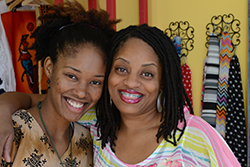
Instead of talking about the kinds of programs they wanted to see more of in Cincinnati, entrepreneurs Nzingha Byrd and Daphney Thomas decided to join forces and feature them. They opened Sweet Sistah Splash in Over-the-Rhine in July.

Big plans in the works for Cincinnati

As many areas of Cincinnati are being rejuvenated, including OTR and Washington Park, the City of Cincinnati approved a comprehensive approach to focus on development in the city as a whole, not just targeted neighborhoods.  Last Friday, the City Planning Commission approved and adopted Plan Cincinnati, which was designed with input from residents. The Plan is an opportunity to strengthen what people love about the city, what works and what needs more attention, says Katherine Keough-Jurs, senior city planner and project manager.   The idea is to re-urbanize suburbanized Cincinnati; in a sense, to return to the strengths of the city's beginnings. Cincinnati was established just after the American Revolution in 1788 and grew into an industrial center in the 19th century. Many of those industries no longer exist in the city, which is part of why Cincinnati has become more suburbanized in the past 50 years. One of the long-term goals of the Plan is to bring new industries to Cincinnati.   With a new approach to revitalization, Cincinnati is blazing the trail for other cities. With a focus on building on existing strengths rather than tearing down structures and creating new ones, the Plan aims to capitalize on the city's “good bones” and good infrastructure.   Cinicinnatians had a huge role in developing the Plan. The first public meeting for the Plan was held in September 2009, when residents offered their insights into “what makes a great city?" and "what would make Cincinnati a great city?” A steering committee of 40 people representing businesses, nonprofits, community groups, local institutions, residents and City Council helped develop the Plan. The Plan also got support from a grant from the Partnership for Sustainable Communities, which the City received in 2010. The grant allotted $2.4 million over three years to support the Land Development Code, which combines and simplifies Cincinnati's codes, reviews the development process, implements Form-based Codes and considers more creative uses for land. The grant allowed the city to start implementing some of the ideas voiced in public meetings.   Visionaries included youth, too. City staff worked with community centers and Cincinnati Public Schools to develop an art project for children. They were given clay pots and asked to paint their fears for the city on the inside and their dreams for the city on the outside. The children saw the big issue was quality of life, just like the adults did.   “It was an interesting way to get the kids involved and thinking about the future,” Keough-Jurs says.   The Plan aims to strengthen neighborhood centers—the neighborhoods’ business districts. It maps out areas that people need to get to on a daily basis and found that most are within about a half-mile of the business districts. But in some neighborhoods, residents can’t access their neighborhood centers. The accessibility of a neighborhood center is based on walkability—not just for pedestrians, but also about how structures address walking. For exampke, if a pedestrian can walk from one end of the neighborhood center to the other without breaking his or her pattern (the window shopping effect), the area is walkable; if he or she has been stopped by a parking lot or vacancies, it’s not walkable, Keough-Jurs says.   The neighborhood centers are classified in one of three ways in the Plan: maintain, evolve or transform. Some neighborhoods have goals to maintain levels of walkability, whereas others need to gradually change or evolve. Still others need to completely transform in order to strengthen their business districts.   “Cincinnati is at the heart of the region,” Keough-Jurs says. “If we strengthen Cincinnati, we strengthen a region.” The next step for the Plan is to go before the Cincinnati City Council, specifically the Livable Communities Committee, which is chaired by Vice Mayor Roxanne Qualls.   By Caitlin Koenig Follow Caitlin on Twitter

My Soapbox: Cedric Michael Cox, artist

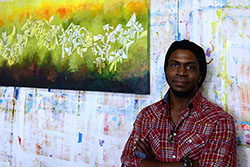
Cedric Michael Cox may be the busiest – and most accessible – artist in Cincinnati. As vibrant as his paintings and as intricate as his drawings, the 36-year-old is also as driven as his rock band is loud. He shares the stories behind his newest PAC Gallery show with Soapbox's Chris Graves.

COR Music Project offers access, seeks diversity in classical music

“We believe that the arts signify and represent the health of the community. Vibrancy in the arts makes a community a more desirable place to live and to work.” That’s the mindset prompted Louisa Shepherd to help found the COR (Cincinnati Out Reach) Music Project in December 2011, a free, after-school orchestra program that provides innovative access to classical music to youth who are typically underserved when it comes to arts programming. The group also wants to give those same students opportunities and inspiration to attend college. COR Executive Director Deron Hall is a French horn player for the University of Cincinnati’s College-Conservatory of Music, and Shepherd herself was able to attend college thanks to a music scholarship.  “We have a passion for music, and it’s taken us from one circumstance to another,” Shepherd says. “We’re very much about giving back and revitalizing the arts in our community.” The approach is two-pronged: COR’s teaching artists lead piano, voice/choir, guitar and electronic music courses at schools that lack arts programs. At the same time, COR works year-round with local communities to form orchestras for youth in grades three and up. The first such effort will launch in Avondale this January.   Purcell Marian High School is currently COR’s sole institutional partner; the goal is to secure partnerships with at least three more area schools next year.  “We like to say we work in the community and not for the community,” says Shepherd. “We’re making it something the community stands behind and sees as valuable. It’s about showing the community the tools we have and finding out what we can do together.” COR’s “all play, none pay” philosophy is supported by ArtsWave grants, outside donations and nominal commitments from partner schools, as well as the group’s organized fundraising efforts.  Do Good: • Watch COR in action online. • Make a tax-deductible donation to support COR.  • Keep up with COR news and events on Facebook.  By Hannah Purnell Follow Hannah on Twitter

Two-way Taft, McMillan aims to change the face of Walnut Hills

Saturday, Oct. 13, marks a big change for the neighborhood of Walnut Hills: Taft and McMillan will be converted back to two-way traffic after four decades as one-way roads.   In the mid-1970s, the City of Cincinnati temporarily converted William H. Taft Road and McMillan Street to one-way traffic during the construction of I-71. After the interstate’s completion, the streets were never converted back. Ever since, Cincinnatians have used the roads through Walnut Hills as a highway to shorten commute time rather than as a way to get around the neighborhood.   Today, there are quite a few businesses in Walnut Hills, but there are vacancies, too. The one-way traffic turns a great location for businesses into one that's hard to get to. There’s a Kroger on McMillan, but drivers can’t make a left at Park Street and McMillan to get to it. Instead of taking the time to travel around the block, they go somewhere else. Neighborhood leaders believe that the two-way conversion will help bring new life to the Walnut Hills’ business district.   “The neighborhood was built around people and public transportation, not around cars,” says Kevin Wright, executive director of the Walnut Hills Redevelopment Foundation.   The effort to bring back the area’s business district has been primarily a grassroots one, says Wright. The property and business owners of Walnut Hills are pushing for the changes. And they’ve been fighting for the two-way conversion for about 30 years.   While there has been talk of lane changes for about fives years, but the physical conversion will take only a weekend. For the past month, crews have been putting up signs and streetlights, says Wright.   After Oct. 13, McMillan will have two lanes that travel east and a lane of parking on the north side of the street. There will only be one lane of traffic traveling west. Taft will be the same, but reversed. There was no physical construction to convert to two-way traffic—crews only had the existing 40 feet of road to work with. In the future, Walnut Hills Redevelopment hopes to gain another lane of parking on each street.   The two-way conversion will turn the Walnut Hills neighborhood from an auto-centric area to a walking neighborhood that focuses on bicycles, walking and public transportation.   By Caitlin Koenig Follow Caitlin on Twitter

Food Truck Festival motors into Walnut Hills

Cincinnati's food truck culture, energetic and scrappy, takes center stage for a change at the first Cincinnati Street Food Festival in Walnut Hills, Oct. 13 from 11 am until 5 pm. Soapbox talked with The City Flea's Nick DeWald, who helped organize the celebration and lent his design skills to the event, to get the scoop: Q: Why is this event important? And why in Walnut Hills? A: Celebrating first-ring suburbs such as Walnut Hills is critical for the future of the city. The urban core is really rolling right now but having livable, vibrant neighborhoods all around it is what will continue to make Cincinnati great. Walnut Hills is an area that is aggressively pushing to be the center of the next culture and development boom.  Q: What makes it different from other events? A: You can find food trucks at many events around town these days, but they are generally accessories to a larger theme. This event will celebrate street food and have a larger lineup of food trucks and trailers than any previous local event.   Q: How long was it in the planning stages?  A: The concept of a food truck festival is one item on a long list of progressive ideas of the Walnut Hills Redevelopment Foundation that have been talked about since Kevin Wright became the director last year. There is a lot of energy in the neighborhood and city right now and ideas are being put into action rapidly and effectively.  Q: Finally, what are you most looking forward to, and will this happen again if all goes well?  A: The hope is that this becomes an annual event in the city. This will be a great opportunity to show the city's food trucks some appreciation. It is a tough business to be in, yet they are all such friendly and energetic people who are making the city more colorful and unique.  The organizers are most looking forward to showing people what Walnut Hills is capable of adding to the city. If all goes to plan, people will see the energy, diversity and proximity to the urban core that Walnut Hills offers. It will also be quite a sight to finally see the ever-growing local community of food trucks all in one place! By Elissa Yancey Follow Elissa on Twitter

Mercy Neighborhood Ministries wins $107,500 grant

What do you get when you combine the needs of vulnerable senior citizens who want to stay in their homes with the needs of undereducated women struggling to find work?   Answer: Mercy Neighborhood Ministries.   The coupling of needs seemed like a no-brainer to Sue Kathman, now executive director of the non-profit agency sponsored by the Sisters of Mercy. The agency, in East Walnut Hills, was formed in 2007 by merging three smaller programs that each served disadvantaged adults, youth and seniors.   "Over 20 years ago, I was working with homeless women, and in the middle of the night I had this a-ha moment. I thought, 'They are homeless because they don’t have skills,' ’’ says Kathman, a critical care nurse by training. “And we have these vulnerable seniors who don’t need nursing, but just need someone to help them with basic needs and activities."  Kathman has worked ever since to merge adult education and workforce readiness training programs with those that teach health care skills to provide care to older adults living in inner-city neighborhoods, who may suffer from poverty, infirmity and loneliness.  A year ago, the health care training program grew exponentially when it took over the Council on Aging Learning Advantages (COALA) program that was founded and operated by Council on Aging of Southwestern Ohio.   “We really had not planned on growing that quickly,’’ Kathman says. “We jumped in, and we more than doubled really quickly, and we’ve been working on our processes ever since.  “As the only home health care training program in southwest Ohio, we get requests for workers from Butler, Clermont and Warren counties. And that is not slowing down anytime soon,’’ she says. “There is a huge crisis staring at us -- with the lack of supply of home care aides and an aging population that is staying in their homes longer.”  Currently, the agency trains about 190 adults - primarily women – annually to become certified home health care aides. The program, through intensive training, begins to break the cycle of poverty and unemployment.   “I have women who were once homeless and on welfare, who now own homes, drive cars and are putting their children through college,’’ she says. “They pay taxes and are consumers who contribute to this economy.”  And she says a $107,500 grant recently awarded to the agency by Impact 100 will enable Mercy Neighborhood Ministries to expand its reach outside of Hamilton County, add extra hours to their workplace training skills program and add a job retention specialist to its roster.  “I am still in awe that we won the grant,’’ she says. “This grant will truly impact and transform many lives, making Cincinnati a stronger community.” Do Good: · Donate. Whether you donate cash or prefer to give in-kind with donations of gift cards and the like, your support will make a difference at Mercy Neighborhood Ministries.  · Volunteer. Deliver food to a senior who needs the help and some company; tutor a GED student; help with a fundraiser. Use your skill, talent and time to further Mercy's mission.  · Like Mercy on Facebook to keep up with the non-profit's latest news. · Keep up with their news on Twitter. By Chris GravesChris Graves is Assistant Vice President for Digital and Social Media at the Powers Agency.

Our Partners

Taft Museum of Art

We want to know what's on your mind.

Close the CTA

Don't miss out!

Everything Cincinnati, in your inbox every week.

Close the CTA

Already a subscriber? Enter your email to hide this popup in the future.