Uptown

Uptown includes all the neighborhoods around the University of Cincinnati including Avondale, Clifton, Clifton Heights, Corryville, Fairview, Mt. Auburn and University Heights, so it's a diverse mix of students and residents in one of the city's most distinct and eclectic group of neighborhoods. Uptown is the home of the Cincinnati Zoo as well as multiple hospitals and the Ludlow shopping district where you can find trendy and unique shops as well as any scent of incense you need. Ethnic restaurants, including a curiously high concentration of Indian eateries, multiple taverns, coffee houses, music venues and the Esquire — one of Cincinnati's finest independent art house movie theaters all make Uptown a one-stop walkable bazaar of exciting entertainment options.  

Cincinnati Zoo unveils cougar cubs

The Cincinnati Zoo welcomed two new baby cougars to its nursery. Considered the largest of the small cats, the cougars plan to reach a weight of 140 to 200 pounds. They will also join the zoo's Cat Ambassador Program to prepare for a Night Hunters exhibit planned for May. Read the full story here.

Future e-readers could be made of paper

With E-books' popularity over hardcover books increasing this past year, engineers at the University of Cincinnati have revealed that paper could be used as a flexible backing for an electronic display. Using paper is a convenient, renewable, flexible, and cheap material that could be used as a platform for electrowetting. Researchers experimented with all sorts of papers, hoping to develop a future device that rolls and feels like paper yet delivers books, news, and video. Read the full story here.

Wind turbine at Zoo about more than just electricity

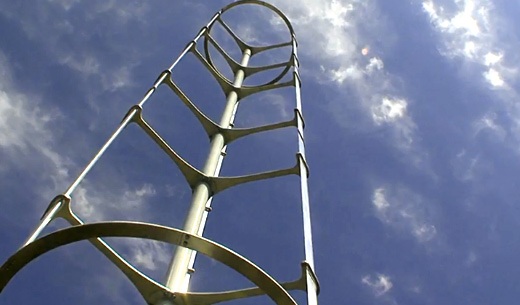
Since June, visitors to the Cincinnati Zoo have had a unique, but non-animal, attraction to see: the zoo's new, 30-foot vertical-axis wind turbine, or VAWT.The turbine, is the first such unit installed at a zoo, and produces an estimated 2000 kilowatts of energy per year - enough to run a typical dishwasher and refrigerator for a year, according to the Zoo.  The turbine and a series of solar panels are providing a third of the power needed to run the Zoo's ticketing building.It's a nifty concept, and an aesthetically interesting one to boot: Rather than the propeller/windmill shape many have come to know as typical for wind turbines, the VAWT looks more like an elongated eggbeater blade, or some type of kinetic sculpture. Videos on the zoo's website show the aerodynamic blades turning slowly in this summer's light breezes, looking more like a child's mobile than an efficient generator.And the videos show another side of the turbine, too. Comments on one, accessed through YouTube, harp on the zoo for spending a significant amount of money on a turbine that produces very little power (the actual cost of the turbine is not listed, but smaller residential units retail for roughly $4,000). In a sense, the comment has a point: why raise a turbine - in an area not known for consistent wind - that can only power a fraction of one building on a very large, very energy-costly campus? Is that really money well spent?A little digging suggests two responses: first, it's not about electricity. Second, in that light it's money very well spent.Visit the Zoo's website and peruse its medial information about the turbine, and it's clear that the installation is less about producing energy than it is about education. There are videos describing the vertical axis design, and showing it at work. There are pdf brochures and pages of information about residential use of wind generators and solar arrays. There is coverage of the Zoo's efforts to save polar bears, whose habitats are at risk due to global warming. And pages throughout the site feature the phrase "what can I do to go green?"The Zoo's turbine is about education. It's a unique eye-catcher, and a touchstone for Zoo media staff to use when connecting visitors to its other, more action- and results-oriented sustainability efforts. The Greenest Zoo in America may not have the most powerful, cost-effective wind turbine on the planet, from a purely numbers standpoint, but taken in larger context, it's a valuable player in a larger effort to produce sustainable, environmentally friendly change in Cincinnati.Writer: Matt CunninghamImages pulled from Cincinnati Zoo video.


Forest Square first LEED project for seniors

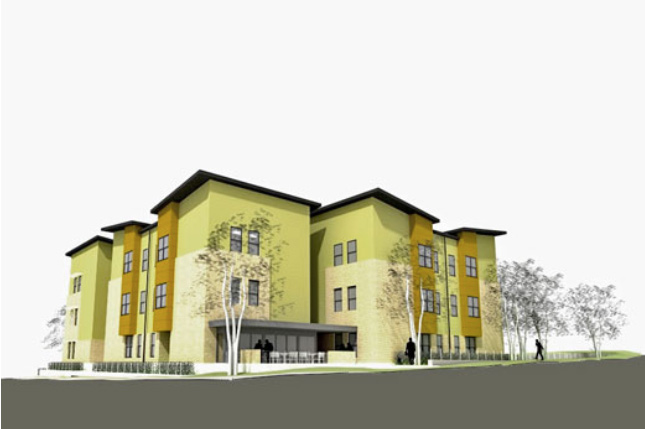
The Forest Square Project, designed by Model Group, is the first LEED certified affordable housing for seniors in Cincinnati. The project embraced the challenge of the Burnet Avenue Revitalization effort to update and restore the historic neighborhood of Avondale. The LEED certified-silver level apartments is a $4.3 million dollar project partnering Model with the Ohio Capital Corporation for Housing, Ohio Housing Finance Agency, the City of Cincinnati, Key Bank, LISC, Uptown Consortium, and Avondale Community Council. Model Group consciously made environmental friendly choices during and after construction. The 21-unit apartment complex's construction site contained one dumpster for garbage and one dumpster for recycling, leaving little for the landfill. For Model Group, sustainability is a business ethic that they embrace. "We are really excited about Forest Square because it transformed a blighted corner in the community into quality housing for local seniors. Forest Square also contributes to neighborhood revitalization in Avondale by implementing a residential portion of the Burnet Avenue Urban Renewal Plan." Jen Walke, Model Group's Project Manager said.Each unit includes energy efficient mechanical, electrical and plumbing systems, high efficiency furnaces and air conditioning, and Energy Star appliances. The units are well insulated and the walls have been painted with low VOC paint. "The LEED amenities will provide a higher indoor air quality which will benefit residents with respiratory illnesses." Walke added. The Forest Square project also include a community room with a fireplace and a kitchenette, lobby areas on each floor, two outdoor patios, and gardening beds for residents.The apartments visibly stand out in the neighborhood with vibrant colors of orange and green, not only adding diversity to the area, but a visible sign of development and progress. An open house will be held on November 12 at 10 a.m. Units range from $566-$625.Writer: Lisa Ensminger

Children’s Hospital research may help explain immune system diseases

Scientists at Cincinnati Children's Hospital Medical Center have found that the regulatory process for T Cells may help explain and develop cures for immune system diseases. T-cells are a type of white blood cell necessary for the body's defense system against diseases and pathogens. Now educated about the communication between T-cells, scientists have a better understanding to create therapeutic or diagnostic approaches of immune diseases. Read the full story here.

UC neurotrauma team awarded $2.1M to test ‘lab on a tube’

Researchers at the University of Cincinnati received a $2.1 million Advanced Technology/Therapeutic Development Award from the U.S. Department of Defense to develop an advanced and improved brain monitor. The role of the design, known as the "small catheter," will monitor the brain of neurological patients and also drain cerebrospinal fluid. This quick and efficient advancement will allow information to be accessible on a single probe in place of using many different devices to gather information. Read the full story here.

Building Value partners with Zoo on deconstruction in Avondale

Construction of a new green space and streetscape in Avondale begins with the deconstruction of three Cincinnati Zoo owned properties in the neighborhood. Thanks to a unique partnership with the Zoo, Building Value, with help from ACT Recycling and Rumpke, will recycle or reuse as much as 85 percent of the material from the houses on the sites. The Zoo selected Building Value to deconstruct the homes at Vine Street and Forest Avenue because of their expertise in salvage and deconstruction work and focus on good green practices.  All of the salvaged material from the deconstruction will be available for purchase at Building Value's retail store located at 4040 Spring Grove Ave. "We'll recycle everything that we can that can't be reused - metal to a recycling center, the wood that can't be used will be ground up by Rumpke for mulch and compost. ACT Recycling will handle the concrete foundations, breaking them up for future construction aggregate," according to Lisa Doxsee, communications manager for Building Value. Building Value's partnership with ACT Recycling and Rumpke began in late 2009 with the goal to increase the amount of building material that can be recycled or reused in a typical demolition project. Since the partnership began, Rumpke has recycled more than 22,000 pounds of wood material and assisted with 23 jobs. The deconstruction process reduces the volume of waste requiring landfill disposal by 19,000 cubic feet, provides enough lumber for 1,485 square feet of affordable housing and the salvage of lumber and panel products avoids the generation of green house gasses equivalent to removing more than six passenger cars from road. The deconstruction process by the Zoo will take approximately 25 days to complete and employ a crew specially trained by Building Value.  Workers who were previously unemployed, underemployed or economically disadvantaged are trained through Building Value's programs including Youth Build, a national program for high school dropouts who want to gain skills while pursuing their high school diploma."To date we've trained close to 100 people through our programs some of whom are now working for companies like Messer Construction, CHC Fabrication and numerous area apprenticeship programs. We can't think of a better way to support the community than to provide people an opportunity to learn new skills that will eventually lead to a new career," says Jerry Janszen, director of Building Value.Once deconstruction is complete and the land cleared, the project at the corner of Forest and Vine Streets will be feature a new green streetscape that will showcase the Avondale community.  "The new green space benefits residents and builds upon collective projects moving the community to be a great place to live, work, worship and play," said Avondale Community Council President Patricia Milton.Writer: Henry SweetsPhotography provided.   

CCM grad’s music featured in new iPod Touch ad

A new iPod Touch Ad from Apple features music by Chris Olsen, a CCM Jazz Studies graduate, and his band Chappo. The two-member band produces an indie space rock sound using unique instruments and objects.Read the full story here.

UC tech promises best of e-readers, LCDs

The Novel Devices Laboratory at the University of Cincinnati, Gamma Dynamics, DuPont, and Sun Chemicals have developed new technology for LCD screens to produce bright screens with little battery power. The e-Design LCD's can be manufactured easily with readily available equipment and will be available within the next three years. Read the full story here.

Cincinnati Children’s Hospital Medical Center named center of excellence for molecular hematology

Cincinnati Children's Hospital Medical Center has been recognized as a center of Excellence for Molecular Hematology. The hospital received a $3.4 million grant from the National Institute of Diabetes, Digestive, & Kidney Disease to establish a multi-disciplinary center in order to find new gene and cell therapies for inherited diseases affecting blood cells. The medical center is incredibly successful with the ability to claim excellence in basic science, expertise in genetic manipulation, and outstanding cell and gene therapies at a single location. Read the full story here.

Our Partners

Taft Museum of Art

Common Ground Is Brewing

Support local stories and receive our signature roast straight to your door when you join at the Standard level (or above).

Drink Better, Read Local

Close the CTA

Don't miss out!

Everything Cincinnati, in your inbox every week.

Close the CTA

Already a subscriber? Enter your email to hide this popup in the future.