O Oprah magazine: Honey Buns
This buttery schnecken. . . is like bacon and waffles times a thousand. Read more here.
For those seeking an urban environment with a funky blend of Victorian homes, eclectic and traditional businesses, a long tradition of community activism and one of the most diverse neighborhoods in Cincinnati, you can't go wrong with Northside. Home to the legendary 4th of July parade, the Northside Farmer's Market, Shake It Records, the Gay and Lesbian Community Center of Cincinnati, popular watering holes like the Comet and Northside Tavern and an active community council, Northside is all about preserving its strong grassroots heritage. One of Cincinnati's most walkable neighborhoods, Northside also features multiple green spaces, including Hoffner Park, the central site of numerous festivals.
This buttery schnecken. . . is like bacon and waffles times a thousand. Read more here.

In 1995, a small group of retired business executives came together with the intent of giving back to their community by investing their time and talents in work that would assist nonprofits. Now, nearly 18 years later, Executive Service Corps of Cincinnati is the recipient of an $85,000 award that will help more than 130 volunteers provide low-cost, high-quality strategic thinking, planning, training and coaching to other nonprofits in need. The recent funding will help the ESCC implement its Community Benefit Business Model, which, according to Andy McCreanor, executive director and CEO of the organization, is a model that has essentially always existed within the nonprofit, but has now been refined and strengthened. The model helps nonprofits maximize results so that they may receive additional funding to better fulfill their missions, which ultimately works to improve the communities they serve. “It enables investors to get more out of the nonprofits that they’re investing in, and secondly, it helps the nonprofits because we’re affordable," says McCreanor. "We’re merely a vehicle so that the community gets the benefit that they’re trying to get." The ESCC has worked on long-term projects with more than 500 nonprofits in Cincinnati, Northern Kentucky and Southeast Indiana since 1995, including most recently the Jewish Federation of Cincinnati. ESCC also offers a 10-month program at its Nonprofit Leadership Institute each year; and at its culmination in June, more than 100 nonprofit leaders from Cincinnati will have graduated. McCreanor says that because of the recent economic downturn, nonprofits have suffered and organizations are reevaluating and assessing their goals and missions. “We’re here to help,” he says. “If you’re struggling out there, it really doesn’t cost anything to talk about what you’re dealing with, and if in fact there is a way for us to help, it’s going to be done at a very low cost, so it’s kind of the best of all worlds.” Do Good: • Sign up to attend classes at the Nonprofit Leadership Institute. • Volunteer your business skills and experience to serve other nonprofits. • Reach out to the ESCC if you are a nonprofit that could benefit from its services. By Brittany York Brittany York is a professor of English composition at the University of Cincinnati and a teacher at the Regional Institute of Torah and Secular Studies. She also edits the For Good section of SoapboxMedia.
The Shield started in September 2000 during a crisis. A Cincinnati police officer was killed in the line of duty, and his family, which was from out of town, couldn't afford to fly in on short notice. Tom Streicher, who was Cincinnati’s police chief at the time, knew something had to be done; he offered up his credit card to ensure the officer’s family was where they were needed—by the fallen officer’s side. “It was a leadership issue,” says Satch Coletta, a retired officer and trustee for the nonprofit that was soon to launch. “What are the odds, should something happen? Something should be there.” In that moment of need, police chiefs came together to make contributions and began to fund a new nonprofit. The organization has continued to operate ever since, thanks to community donations, and in large part, to the willingness of officers who take payroll deductions to contribute. The organization’s board, which is composed of 10 officers—current and retired—works entirely on a volunteer basis. They meet monthly during lunch breaks to fulfill The Shield’s mission: to assist the families of officers killed or critically injured in the line of duty. Policing is a dangerous job, and according to Coletta, “It’s not a matter of if we’re going to pay money out, it’s a matter of when and how much.” The funds are available to families immediately—prior to workers’ compensation or life insurance, says Coletta. “If it happens at one in the afternoon, at 1:01 p.m., there’s a benefit committee that’s ready to spring into action to aid an officer or his family.” Coletta knows the circumstances surrounding the loss of an officer all too well. In 1978, Officer John Bechtol, next-door neighbor and friend whom Coletta trained with, died after a vehicle struck his police cruiser. There was no immediate support available for the family . “Back then, policemen, not that they make a great fortune now, made even less; and to be able to set funeral arrangements and getting people in and situated—things along that line…” were very difficult, he says. The funds are not just meant for funeral arrangements and families’ transportation, however. “Say he would have survived the crash,” Coletta says, “he would have been in very serious condition, say in ICU for a long time. You would expect the spouse to be there in ICU. If their job doesn’t pay, The Shield would entertain paying the spouse’s wages because they’re already down one. We don’t want them to suffer additionally.” In times of need, Coletta says people always want to help, but the organization’s goal is to create an emergency fund that can create interest, so that there is enough money available to families, prior to the moment when the unthinkable occurs. “The family knows what’s needed, and we work on the things to try to aid them,” Coletta says. “But it’s one of those things where at the time, that’s one less thing they have to worry about.” Do Good: • Provide corporate or community support by donating to The Shield. • Contact The Shield about volunteer opportunities and upcoming events. • Connect with The Shield and share the organization's page on Facebook. By Brittany York Brittany York is a professor of English Composition at the University of Cincinnati and a teacher at the Regional Institute of Torah and Secular Studies. She also edits the For Good section of SoapboxMedia.

Last fall, the neighborhood of Northside underwent a transformation thanks to a creative collaborative project known as CoSign. Neighborhood business owners partnered with local artists and the American Sign Museum to reshape the streetscape along Hamilton Avenue. Video courtesy The Queen City Project.
NVISION, an independent retail shop in Northside, recently expanded to make room for its ever-growing inventory. NVISION specializes in vintage, secondhand and handmade goods, including clothing and fashion accessories, original art, vintage décor, collectibles and furniture from the ‘50s to the present. Some of the clothing, jewelry, purses, greeting cards, ceramics and glassware sold at NVISION are handcrafted, redesigned or repurposed by local artists and designers. The shop also offers clothing alterations and repair services, and each piece of clothing comes with a custom fitting, if needed. There’s also has an online store on NVISION’s website that has made merchandise available to customers all over the world. “I’ve sold merchandise from my shop to Sweden, Japan, Canada, Qatar, Turkey and plenty of cities in the United States,” says NVISION’s owner and sole employee Emily Buddendeck. Buddendeck opened NVISION on Leap Day in 2008, but she saw that the store was outgrowing its original space. The tenant next door moved out at the end of November, and a week and many coats of paint later, NVISION unveiled its new space to the public at Northside Second Saturdays. Buddendeck didn’t consider relocating because NVISION’s location, on Hamilton Avenue next to The Comet bar and Thunder-Sky Inc., gallery, allow the three businesses compliment each other, she says. Plus, she enjoys serving her Northside neighbors. The original side of the store is now primarily dedicated to clothing and fashion accessories. The new space houses furniture and housewares, plus NVISION’s rotating art gallery with pieces by local and regional artists; the two spaces are connected by a door. The expansion also allowed Buddendeck to expand NVISION’s menswear and children’s sections. Shoppers can now browse the store more easily and not bump into furniture. “In the next few months, I’ll be fine-tuning the use of the new space as it relates to the whole store, and the ‘grand re-opening’ will be held Feb. 28-March 1 during our fifth anniversary sale,” says Buddendeck. By Caitlin Koenig Follow Caitlin on Twitter
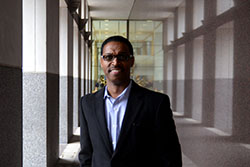
Cincinnati and its corporate giants attract designers from across the globe, but the minority gap still looms large. Read how local black design professionals have adjusted and adapted while working to recruit and retain their peers.
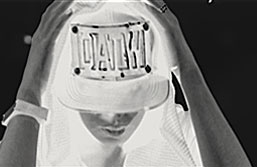
The Rise of the Cool Kids fashion event at the Bertke Electric Warehouse in Northside celebrated local designers and their work. Video courtesy Lightborne.
The Nutrition Council of Greater Cincinnati is working to break the cycle of unhealthy eating habits, one banana, one yogurt parfait and one recipe at a time. And, they are doing it one family at a time. The Council, in its 35th year, just wrapped up its latest series of "What’s Cooking?" classes for parents and caregivers of kids in Camp Washington and Winton Hills. The classes, offered each fall and spring, are a four-part series that meet for about an hour after the school day ends at schools with Head Start programs. They are designed to show parents how to make quick, affordable and healthy meals for their families. Each week is themed, and participants receive take-home tools like measuring spoons and grocery cards. Parents also get multiple recipes that encourage cooking at home, rather than relying on packaged and processed foods. The classes and the Council’s work come at a time when the nation—and Cincinnati—is getting fatter. Childhood obesity has more than tripled in the past 30 years, according to the Centers for Disease Control and Prevention. Currently, one in four Cincinnati Public School kindergarten students is overweight (13.9 percent) or obese (11.7 percent). “I think what strikes me is that things I am aware of and take for granted, not everyone does,’’ says Tracy Wilking, the nonprofit’s special project manager, who worked at the Winton Hills location this fall. In 2011, nearly 100 families participated in the cooking sessions. And of those, according to the Council’s web site: • 85 percent reported they changed one action to improve a targeted health behavior.• 67 percent of families increased their consumption of fruits and vegetables.• 67 percent said they decreased their child’s sweetened beverage intake. Wilking says it is not uncommon to hear parents share how the instruction really does change cooking habits, from eating as a family to introducing fresh fruits and vegetables at meals. One recent participant told one of the Council workers that she had completely changed how her family was eating. The Council targets very young children, before habits are established and before they start kindergarten. Wilking says many parents may not have been taught how to eat healthy, and the earlier the Council and others can share information with parents, the more likely the cycle of poor food choices can be broken. In addition to the cooking series, the Council also visited 38 Early Childhood Education classrooms in the Cincinnati area over 17 days to teach parents and their kids how to make healthy snacks. Recently, they made fruit and yogurt parfaits. “A little education really can go a long way,’’ says Wilking. “This work is reaching individuals and those with the power to reach someone else.” Do Good: • Make a donation • Volunteer your time or skills. • Like the Council on Facebook.• Follow the Council's news on Twitter. By Chris GravesChris Graves, assistant vice president of digital and social media at the Powers Agency, is using several of the Council’s recipes at home with her two teens.
The City of Cincinnati Economic Development Division and Cincinnati Neighborhood Business Districts United (CNBDU) recently allocated $1.65 million to 13 projects for the 2013 Neighborhood Business District Improvement Program. John Price, then-president of the Clifton Business Association, started CNBDU in 1992. He gathered all of the business association presidents in Cincinnati because he wanted to figure out a way to get funding for those neighborhoods that weren’t downtown, says Mike Wagner, president of CNBDU. Over the years, CNBDU has appropriated about $33 million between federal and city money, and leveraged more $350 million in private money, to support non-downtown neighborhood projects. CNBDU awards money annually to Cincinnati neighborhoods through the NBDIP, which receives federal money from the City’s Community Development Block Grant and city capital funds. Neighborhoods can use the money for a variety of capital improvements and other uses to promote economic development in their business districts. Each neighborhood is allowed to apply for one major and one minor ask, says Bill Fischer, division manager of economic development for the City. The maximum amount for a minor ask is $30,000; there isn’t a maximum amount for a major ask. There are generally more minor-ask projects accepted because more projects can get done. This year's process began in June when 29 neighborhoods submitted their initial proposals, which totaled $3.1 million in requests. A 28-member peer advisory group of community members who had submitted proposals and representatives from neighborhood business districts reviewed the proposals. In September, the reviewers took a bus tour of the project sites. “There wasn’t much to look at when we first started CNBDU,” says Wagner. “But now we can see what has been accomplished in the past 17 years.” In October, the peer group made recommendations to the City’s Economic Development Division after hearing presentations from the different neighborhoods. Neighborhood groups were notified at the end of November if their proposals would be turned into a project through NBDIP. “Each neighborhood has a different approach to the project proposals,” says Fischer. “Some are looking to maintain what’s already there, whereas others are looking to create new business.” CNBDU funding is in addition to the Focus 52 program, a combination of bond and casino revenues, which will create a pool of $54 million for neighborhood projects throughout the city. The neighborhood projects that were awarded money through the NBDIP are: Walnut Hills: Park-Kemper Streetscape Design, $30,000West Price Hill: Covedale Center Marquee/Community Message Board, $79,145Roselawn: Business District Feasibility Study, $30,000Clifton: Ludlow Avenue Storefront Improvement Program, $77,500Westwood: Parking Lot Renovation, $30,000Northside: Hoffner St. Garden, $80,000Northside: Dhonau Garden, $30,000Corryville: Façade Improvement Program (continuation), $236,397Bond Hill: Bond Hill Identity Project, $30,000East Price Hill: St. Lawrence Corner Public Square, $107,500Pleasant Ridge: 6025 Montgomery Acquisition & Redevelopment, $150,000Avondale: Reading, Rockdale & Forest Streetscape, $400,000Mt. Adams: Streetscape Completion, $375,000By Caitlin Koenig Follow Caitlin on Twitter
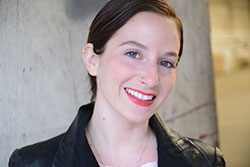
You may know Duru Armagan as the owner of OTR's Sloane Boutique. This month, she styles Rise of the Cool Kids (ROCK), a projection fashion show and performance that highlights streetwear and Cincinnati's growing fashion scene. She shares the details with Soapbox's Robin Donovan.
Our Partners