Norwood

Norwood is surrounded on all sides by Cincinnati and has grown beyond its early industrial roots to become an ideal neighborhood for young professionals to purchase their first homes. Adjacent to neighboring Xavier University in Evanston and Hyde Park to the east, Norwood's revamped older homes and tree-lined streets are complemented by beloved family-owned restaurants like Sorrento's and Quatman Cafe and countless small corner taverns to dive in for a drink. Norwood is also home to Alloy Development Co., which is a marketplace where organizations, businesses and communities can find the resources they need to grow.  

Cincinnati ranks in top 100 communities for youth

In a nation where 7,000 students drop out of high school every day, Cincinnati has been recognized for its collaborative efforts to stem the tide. This month, Cincinnati achieved national recognition as one of the 100 Best Communities for Young People by America’s Promise Alliance and the investment firm, ING. Cincinnati competed with more than 300 large and small communities across the country that have been working to lower student drop-out rates through services and support to youth. The city of Norwood also received the award this year, having lowered its high school dropout rate by 13 percent in the past decade. The award competition, now in its fifth cycle, is part of the Alliance’s Grad Nation campaign, a 10-year initiative to end the high school drop-out crisis and create a healthy, 21st century workforce. One Cincinnati youth, Genine Gray, received a $2,500 scholarship from the Alliance and ING. Gray, the only student to receive this award in the nation, recognized Jobs for Cincinnati Graduates (JCG), Bethany House, Dress for Success and Bridging the Gap for supporting her journey from homelessness to high-school graduation. JCG president Barbara Seibel, in turn, credits the Southwest Ohio Regional Workforce Investment Board for financial support. “Their Workforce Investment Act grant to JCG makes it possible for youth like Genine to be in JCG.” Cincinnati, now a two-time award winner, continues to build on collaborative initiatives, like its Safe Routes to School Initiative, designed and implemented by local residents, the Cincinnati schools, the Department of Transportation and Cincinnati police.    The city’s Strive Partnership, a national model of aligning resources to raise graduation rates, provided help and technical assistance in the application process. But, again, it asks that the honors be shared. “The award itself is really owed to the hard work of our partners, including the Cincinnati Youth Collaborative, ArtsWave and Artworks, among others,” says Strive’s Ben Greenberg. Do Good: • Learn: about what Strive Partnership is doing to align resources to raise graduation rates in Cincinnati. • Volunteer: at one of the many organizations that are helping support Cincinnati youth, like Connect2Success, Jobs for Cincinnati Graduates  and Bridging the Gap • Support: America’s Promise Alliance, founded by former general Colin Powell, to prepare young people for college and promising careers By Becky Johnson          

Resource: TechSolve

Over the past 25 years TechSolve has helped small to mid-sized companies implement business-building process improvement solutions that deliver measurable, top-line and bottom-line results. TechSolve consultants have in-depth business and engineering experience across a wide range of industries (manufacturing, healthcare, aerospace, etc) that enable them to identify and quickly prioritize the best improvement opportunities. TechSolve's work is celebrated by large OEM’s and supply chain programs that have worked closely with TechSolve to optimize their supply chain and we are unique in having an Advanced Machining Lab on site and machining consultants on staff.  TechSolve, formerly the Institute of Advanced Manufacturing Sciences, Inc. (IAMS), was founded in 1982 by the City of Cincinnati, the Greater Cincinnati Chamber of Commerce, the University of Cincinnati and large manufacturers in the region with the objective of assisting local manufacturing suppliers to improve efficiency in the newly competitive global market. TechSolve continues to serve the manufacturing community and has a third party measure the impact of our results ensuring that our results return significant ROI for our clients.  In 2005 the group began offering consulting services to the Healthcare community. Its services continue to be in high demand across a wide range of hospitals who have seen the dramatic results our experts, process and tools can have. Unlike other consulting firms that seek to dominate organizations, TechSolve’s approach is dramatically different-- by working collaboratively and teaching teams how to implement the improvement tools and processes for themselves.

Eyes on the future

In a town the size of Cincinnati, it’s easy to fall into the trap of looking for, and finding, only familiar faces. That’s where this issue of Soapbox comes in.

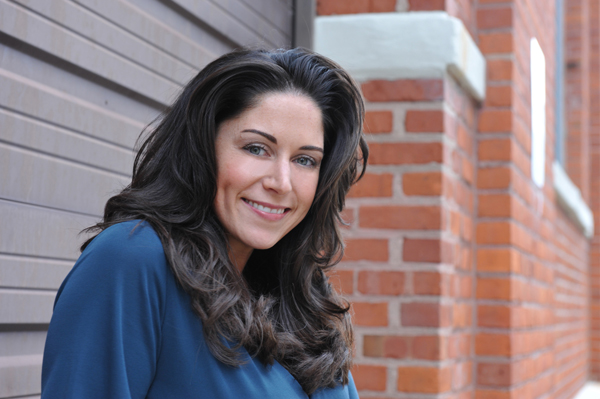
Profile: Stacey Shiring of Bridal Divas Ink

Founder Profile: Stacey Shiring of Bridal Divas Ink Why did you start your business? I wanted to build a company that blends community with commerce to address the $12 billion US stationery market. Bridal Divas Ink allows local stationery stores and graphic artists to bring their designs to the online shopper, without the expense and time to run an ecommerce store. Our only requirement to submit your designs on our site, besides great design, is that each local artist must do volunteer work in the community. What resources here did you take advantage of and how did they help? We moved in the Hamilton County Business Center (HCBC) in July and they have been a great resource for providing business counseling and affordable studio space. There are many different types of companies in the HCBC which gives you a chance to learn from other entrepreneurs outside your market. Each business owner and the mentors at the HCBC are incredibly supportive and open to share their experiences with you. Where did you find your first employee? My degree comes from the University of Cincinnati’s- Design, Architecture, Art and Planning and my co-op experiences were valuable to my career. I knew that I wanted to be able to give a student the opportunities that I was given and have had two talented digital design students from the DAAP program as interns. What advice would you give to someone starting a company here? You must find a good network of people to support you and who you can support. A friend had sent me a link to Bad Girl Ventures and attending their classes was a turning point for my business. Their curriculum, advice and support has improved Bridal Divas Ink's path to success, and I could never thank them enough for helping me turn business challenges into successful opportunities. What’s next for you and your company? I see Bridal Divas Ink as a national brand that will build a community of consumers, artists, local business and charities that realize the importance of buying online from their neighbor. We are excited to be expanding our stationery offerings into holiday cards this month and will be having an Opening Party on Oct. 18 from 5-7:30 p.m. Mark your calendar and we look forward to helping you support your local artists and charities!

Urban Harvest gets support from Xavier

Xavier University will offer a wealth of support to Brad Roger’s start-up company Urban Harvest. Rogers won the Xavier Launch-A-Business (X-LAB) Competition, sponsored by the university’s Williams College of Business and Sedler Center for Entrepreneurship and Innovation. Judges announce the complete list of winners 1:30 p.m. Tuesday, Aug. 30, in the Grand Atrium of Smith Hall. Winners, such as Rogers, will develop a business plan and receive consulting services, networking opportunities and a meeting with possible investors. The competition included a questionnaire submission, and 30- and 60-minute interviews with panels of experts. In a preview interview with Soapbox, Rogers, a project manager for a home remodeling company, explained that Urban Harvest aims to bring more fresh fish and produce, and employment, to area communities. He says the company plans to use an innovative, cost-effective system called aquaponics, a hybrid of aquafarming (fish raising) and hydroponics (growing plants without soil). In this system, when fish are fed, he says, fish waste provides nutrients that are circulated into the planting beds. The plants, in turn, filter the water for the fish. “It’s like a mini eco-system.” “Ideally, with the system I want to setup, ” he adds, “it will produce 10,000 heads of lettuce and some herbs every week, and produce about 10,000 pounds of fish a year.” Rogers was the local expert behind the development of an aquaponics system at H.J. Benken Florist & Garden Center in Blue Ash. Launched in November, it was treated as a beta test for an aquaponics system planned for a village outside Jos, Nigeria. The local, faith-based company Self-Sustaining Enterprises (SSE) helped install the system there in March. Pete West, a Procter & Gamble engineer, was among the locals who traveled to Nigeria. “The idea was twofold,” he says. “To provide gainful employment for people in the village area, and to provide food that village will eat.” Rogers and SSE hope to expand that idea in the Greater Cincinnati area, employing community members and engaging farmers. “The goal is to have a main campus, where I teach people about aquaponics, but then I want to establish other aquaponic centers in neighborhoods,” he says. “Some communities have to hop on three buses to get to a grocery store.” By Rich Shivener

Resource: Morning Mentoring at HCBC

Resource: Morning Mentoring at HCBC Need a mentor for your startup? Help is on the way. Morning Mentoring is an entrepreneurial coaching program that leverages the Queen City Angels, C-Cap, the Hamilton County Business Center and local professional advisors for the benefit of Greater Cincinnati's entrepreneurs. Each month, Morning Mentoring accepts four companies to participate in this networking and mentoring session. The format of the event allows each of the selected companies to make up to a five-minute overview presentation about their company. The angels and professional advisors then have the opportunity to ask clarifying questions about the company's market, product or service, business model, stage of development and management team. After all the presentations are completed, companies have the opportunity to have one-on-one 45-minute mentoring sessions with a participating angel from the Queen City Angels and a knowledgeable business service professional. Each company rotates to visit with two local angel investors from the Queen City Angels. Morning Mentoring is an opportunity to present, network and receive excellent feedback and is open to those seeking equity investment as well as entrepreneurs just looking for a place to get good free advice. Entrepreneurs are also welcome to come watch the company presentations and network.  To apply for one of the four monthly spots, fill out a simple online form.  Upcoming Morning Mentoring dates in 2011:     •    August 26     •    September 23     •    November 4     •    December 1 (Thursday) 

Profile: Joe Sprengard of General Nano

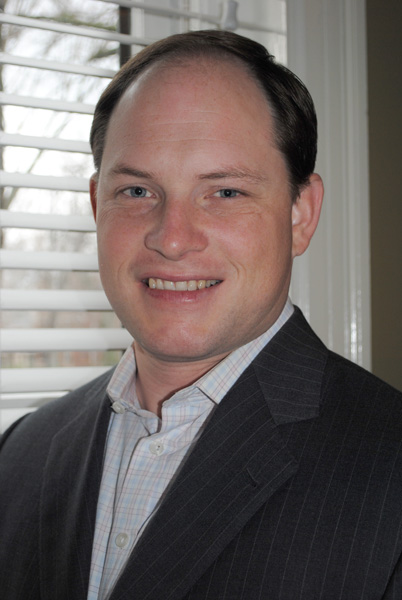
How did you come to be an entrepreneur?  By accident. I met two inventors at the University of Cincinnati who were faced with a decision to either license their nanotechnology to a company in Seattle, or create their own company. Their desire was to keep the technology local, but they needed a business person to help. I happened to be in the right place at the time.  Why did you start your business? Because of the United States Air Force (USAF). They wanted to see if our technology could solve specific aerospace problems, and there was no way of knowing without starting a company and competing daily in the marketplace. The Department of Defense knows that America will be at a competitive disadvantage if we can't manufacture nanomaterials for next generation aerospace applications. For the founders of General Nano, the USAF encouragement was all we needed to make the leap from the 'known' (our current jobs) to start what was, and is, largely 'unknown' – a commercially viable nanomaterial for aero/defense applications. What resources here did you take advantage of and how did they help? 1.    DoD SBIR program - General Nano has secured seven SBIRs in 36 months2.    CincyTech – imagining grant program; helped tremendously in defining our business model and vertical markets. 3.    Ohio Third Frontier – General Nano won $2M from the Advanced Materials Program; $1M allocated to UC to expand the Nanoworld Lab; fosters a fluid pipeline of IP.  4.    Hamilton County Business Center (HCBC) – our home away from home.  Where did you find your first employee? University of Cincinnati. Lucy Ge Li joined our company immediately after graduating from UC, where she studied for three years alongside the inventors of our technology. UC's Nanoworld Lab pipeline of talent is a tremendous asset for General Nano. If not for our company, Cincinnati would have lost Lucy and others to companies not in our region. What advice would you give to someone starting a company here?Surround yourself with the best people. Products and services change – people don't.  Can you share a funny or amazing entrepreneurial experience with our readers?If you're married and have a six-week old son, it's probably not the best time to seek your spouse's blessing to leave your job and start a venture. Thankfully, I have a true companion and a son who reminds me that work does not define my value.What inspires you?Our employees. Management has an obligation to take care of their people. Management eats last; employees eat first.  What companies or founders do you admire and why?Joe Hayden and his son John, both former chairmen and CEOs of The Midland Company, have been my business idols since I was 16 years old, and strangely, it is not because of business. I had the good fortune of benefiting from the youth baseball program they created, sustained, and have grown for 40-plus years. I dream someday of giving back they way the Hayden family does.

Xavier’s Fifth Third Trading Center largest in U.S.

Three years ago, Xavier University business students, faculty and staff first got access to one of the must-have Wall Street trader tools, The Bloomberg Terminal. These terminals, with their dual computer screens, are used by financial services firms across the world. Available at just a few hundred universities nationwide, the terminals give students access to valuable, real-time financial information, including stock market movements, news and price quotes.Within the last year, Xavier has built a Wall-Street style trading room, complete with stock tickers, expanding to 44 Bloomberg terminals from the original 10. It's now the largest center of its type in the country, and recently got a financial boost with an underwriting pledge from the Fifth Third Foundation. Fifth Third's support will give the center stability, and help pay for staff and the cost of leasing the terminals. It will allow the college to train students and faculty from a wide variety of majors to cull financial and other information from the terminals, says Xavier Finance professor Stafford Johnson."We'll be able to put together one- or two-hour workshops and teach students how to navigate the depth and breadth of this system," he says. Johnson compared the terminal to a targeted and highly sophisticated version of an Internet search engine and newswire service. The terminals could be used for projects in business law and ethics, healthcare and pharmaceuticals, as well as for management, marketing, economics and political science.Now named the Fifth Third Trading Center, the trading room is located in Xavier's newly erected Smith Hall, the home of its nationally ranked Williams College of Business.Other information students can access includes stats related to GDP, housing starts, worldwide economic forecasts and statistics, and corporate and government news.By the fall, the center hopes to start a student-produced monthly newsletter to highlight local financial news gleaned from the terminal programs, Johnson says."The idea is to bring people together and share ideas," he says.By Feoshia HendersonYou can follow Feoshia on Twitter @feoshiawrites 

Cincinnati Development Fund earns $1.5M federal grant

The Cincinnati Development Fund has been a financial resource for affordable housing development in the city's neighborhoods for 23 years. And that long track record of helping spur development -- and redevelopment -- in some of Cincinnati's underserved areas recently earned the CDF a $1.5 million federal grant to support its mission.The grant comes from the U.S. Treasury's Community Development Financial Institutions Fund (CDFI). The CDFI awarded $142,302,667 to 155 community development financial institutions -- like CDF -- nationwide. CDF received $750,000 from the fund in 2010, making this year's award a very pleasant surprise, says CDF president and CEO Jeanne Golliher."We were really expecting something along the lines of what we got last year," she says.The $1.5 million sum is the maximum any single organization could receive from the CDFI. Golliher credits CDF's long-standing role in the community as reason for the high award."We're really in touch," she says. "We know where the needs are."A main focus of CDF's efforts, she explains, are smaller developers -- sometimes individual homeowners, sometimes development companies focusing on one or two buildings -- who wish to revitalize property in parts of the city suffering from high foreclosure and vacancy rates. The smaller developers fit a niche that complements larger development organizations, such as the Cincinnati Center City Development Corporation (3CDC), which is in the midst of redeveloping a large portion of Over-the-Rhine. Golliher refers to many of CDF's borrowers as "urban pioneers:" people willing to be early redevelopers in areas that have yet to see widespread revitalization."We've had so much activity with our small loan program," she says. "There are a lot of cases where people want to buy and fix up a building on their own, and they come to us."Golliher says her team is in the process of planning how to best use the grant funds. Some of it may be used as matching funds for $3.3 million in low-interest funding CDF has requested from the U.S. Treasury to help fund small business development in the city.  She plans to present a proposal for how the funds will be used at CDF's August board meeting. In the meantime, she says she and her team are thrilled by this recent show of federal support."I think it speaks to our track record," she says.By Matt Cunningham Follow Matt on Twitter @cunningcontent

Keeping the faith: Getting ready for Ramadan in Clifton

Cincinnati is home to more Muslims than you might think. Members of the Clifton Mosque look forward to Ramadan and reflect on what it means to practice this pillar of Islam in Cincinnati.

Our Partners

Taft Museum of Art
Warsaw Federal

Don't miss out!

Everything Cincinnati, in your inbox every week.

Close the CTA

Already a subscriber? Enter your email to hide this popup in the future.