15 Gorgeous Photos of the old Cincinnati Library
As with all search engine-friendly headlines, this one from BuzzFeed says it all: 15 Gorgeous Photos of the old Cincinnati Library. See the images and cutlines here.
Downtown Cincinnati is the place to live, work, and play populated by restaurants, cafes, bars, arts and culture venues around every corner, plus a long-awaited and busy Kroger's that anchors recently-renovated Court Street Plaza. The downtown urban core is alive with programming, including music during the summer and ice skating in the winter, and features the largest living room 'television' in the region overlooking The Genius of Water at Fountain Square. Downtown has experienced dramatic expansion and population growth with residential developments, including condos and apartments in all price ranges, many of which boast scenic views of the hillsides and the river and offer unparalleled access to nightlife and recreation.
As with all search engine-friendly headlines, this one from BuzzFeed says it all: 15 Gorgeous Photos of the old Cincinnati Library. See the images and cutlines here.

Young merchants and clerks of Cincinnati came together in 1835 to found and organize the Mercantile Library, which to this day maintains historic collections of books and artwork in the city. It is recognized as “one of the oldest cultural institutions in the Midwest.” When the young minds and innovators came together at that time, in what was one of the largest cities in the United States, the goal was to move Cincinnati forward. To this day, that goal remains the same. And at the end of April, the library hosted a Hackathon—an event that brought together young coders who possess the ideas and skills needed to market the library and its offerings to a younger generation. “At a typical hackathon, some people will have an idea of a team they want to get together and a project, or a product they want to launch," says Zach Zimmerman, a member of the Hackathon’s first-place team, and who is now working to build the library a new website. "But at the core of the hackathon, you push it out to people, and they come, and you break off into groups and start to ideate about what you could do, what you could build to provide a solution that hasn’t been thought about before or that could really push a company or product over the edge and make it something big.” Zimmerman says one of the ideas his team had to make the library’s website appealing was to rely simply on the building’s beauty and grandeur, as the space showcases history and sells itself through its offerings to the public. “The building is gorgeous," he says. "The art that’s there, and just flipping through some of the books—these are 200- to 300-year old books, and the art and just the labor that went into making them—it’s just fascinating to me. I just felt very inspired, and our team actually worked at the library when the hackathon kicked off. They said you could go out and about, and at the end of the hackathon, come back and present your ideas. But we actually stayed at the library the majority of the time because it was a very inspiring place—somewhere I felt pushed to do more.” Do Good: • Become a member of the Mercantile Library. • Support the library by making a donation. • Like the Mercantile Library on Facebook. By Brittany York Brittany York is a professor of English composition at the University of Cincinnati. She also edits the For Good section of SoapboxMedia.
At Colliers International’s Building Up Communities program, giving back to the neighborhoods in which volunteers live and work is a core value. For Joe Hartmann, managing director of corporate services for Colliers International Ohio, his most recent volunteer experience at The Giving Fields is one that he says will stick with him because it gave him the opportunity to serve others in a way that’s different from what he does on a daily basis. “So much of what we do every day—all of us—not just at Colliers—but any time you’re engaged in a career, it’s about trying to work and do what’s best for your client, but you’re certainly benefitting from your efforts,” Hartmann says. “But in this case—what’s so refreshing about this is that you are engaged in an activity that’s benefitting others, so at the end of the day, you feel all that sweat equity that you put in is going toward a great cause.” At The Giving Fields, Hartmann, like other volunteers who assist the nonprofit in providing fresh food to Freestore Foodbank agencies throughout Northern Kentucky, composted, dug irrigation ditches and staked tomato plants. Out of the thousands of working adults, seniors and children in our community, 17.3 percent live in Kentucky and are food insecure, the Freestore Foodbank reports. So to help narrow the gap between food security and insecurity, Doug and Sheila Bray, with the help of various agencies and volunteers, have maintained the community farm for three years now. With six acres of land that yields fresh produce, The Giving Fields has been able to supply Northern Kentucky communities with hundreds of thousands of pounds of vegetables that they would otherwise have limited access to. “It’s a great cause, and they’re doing a great job,” Hartmann says. “But they’re toiling down there on a daily basis.” Do Good: • Donate to The Giving Fields. • Contact volunteer services at 513-482-7550 if you're interested in volunteering at The Giving Fields. • Like The Giving Fields on Facebook. By Brittany York
Growing up, Fatima Spencer spent a lot of time gardening with her father. “My dad started a community beautification program in the low-income neighborhood I grew up in,” she says. His goal was to revitalize the neighborhood through flowers and gardening, and change how it looked and how people felt about it. While helping her father garden, Spencer would wear real flowers in her hair, and eventually, she started making hair accessories with artificial flowers. She started her online Etsy business, Flowers From Fatima, after her father passed away in December 2009. Her goal is to bring beauty and light to the world, along with new trends. “I don’t see many women accessorizing with hair flowers,” she says. Flowers From Fatima is mainly online, but Spencer sells her hair flowers in a few salons—one in North Carolina, one in Florida and one downtown Cincinnati—and at Mizti on Ludlow Avenue. Spencer hopes to broaden her client base and sell her flowers in other local boutiques before possibly starting one of her own. By Caitlin Koenig Follow Caitlin on Twitter
Red212, a female-owned advertising agency, is competing for a $10,000 cash prize from Fifth Third Bank. The competition is part of Fifth Third’s new “Curious Customer” ad campaign, which highlights the stories of real business customers. The campaign features the stories of local businesses that have relied on Fifth Third to help them achieve their visions. Before Red212, its president and CEO Anne Chambers worked in a small production unit at P&G. The company decided to divest of non-core assets, and asked if Chambers wanted to purchase it. She put a team together and in the end, won the bid, with financing from Fifth Third. Red212 was nominated for the competition by the local Fifth Third Business Banking team because it’s a great example of a curious customer, which is due to Chambers’ inspiration and how her business has grown and changed over the years. First place wins $10,000; Fifth Third will also award $5,000 to the second place business and $2,500 to the third place business. The contest runs through Sept. 30. You can vote online at 53.com/curiosityatwork. By Caitlin Koenig Follow Caitlin on Twitter
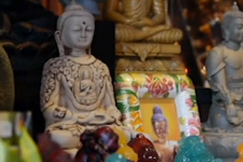
For more than two decades, shoppers happily shared close quarters at The Little Mahatma's 10-foot-by-10-foot space in the Carew Tower Arcade. So when Dan Schwandner bought the OTR business this year, he determined to continue the shop's densely merchandised history through a fresh renovation and an ever-evolving collection of international treasures.
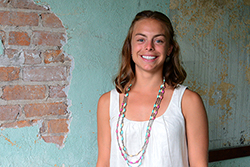
Chelsea Koglmeier never let other people's expectations deter her drive to learn, live and grow. The Mariemont native traveled the globe before returning to her hometown to start a career she never planned, in a company that barely existed.
The region's fifth annual Cincinnati Innovates competition comes with a federal twist, a global challenge and a $10,000 prize opportunity. By partnering with the US Environmental Protection Agency, Innocentive, the Cincinnati Metropolitan Sewer District and Northern Kentucky's Sewer District 1, the newly announced Water Challenge competition focuses on the development of low-cost, low-maintenance sensors able to monitor sewer overflows. Sewer overflows, which spill untold gallons of raw sewage into waterways after heavy rainfalls, remain a major challenge for cities and a major barrier to compliance with Clean Water Act regulations. Cincinnati Innovates founder Elizabeth Edwards explains this first-ever Cincinnati Innovates/government initiative: Why is the sewer system ripe for innovation and why Cincinnati? Cincinnati, like many other major metros, is faced with major infrastructure improvement costs to maintain our 100+ year old sewer system. Is this the first time you've partnered with a governmental agency and what do you think that signals? Why do you think the EPA is reaching out to basically "crowd source" innovations in how we handle water overflows? This is the first time Cincinnati Innovates has partnered with a government agency. The EPA's Water Research Lab here in Cincinnati is one of the largest in the world. This partnership is just another example of the EPA's efforts to commercialize water technologies in the region. Contests spur innovation. The EPA's partnership with Innocentive and Cincinnati Innovates is just one way the EPA is sourcing innovation. How did this partnership come about and what was the process? We've been working for several months together with Innocentive to create a prize and a process that makes sense. In defining the prize, we worked with water utility experts on both sides of the river. What impact could this competition, and the products it support, have on the people of Cincinnati--and beyond? This competition could save Cincinnati and cities like it millions of dollars a year - and improve safety and water quality. The competition is open and online now. By Elissa Yancey Follow Elissa on Twitter
The first beer to be produced from Christian Moerlein's new brewing facility in Over-the-Rhine made its debut in the Queen City’s oldest tavern, Arnold's. Watch the magic. Video courtesy The Queen City Project.
Home to the headquarters of 10 Fortune 500 companies, Cincinnati also supports a growing community of tech startups through accelerator programs, low business taxes and unemployment, and the connecting power of established companies. Read the full story here.
Our Partners