Covington

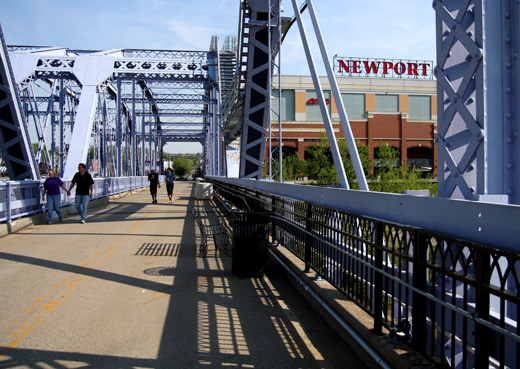
This genteel town just south of the Ohio River features a number of charming treasures including the lively MainStrasse district with its trendy bars, pubs and restaurants as well as beautiful homes stretched along the river beneath the strikingly modern architecture of the architectural jewel, the Ascent at Roebling's Bridge, designed by Daniel Libeskind. Covington is experiencing a renaissance with new shops, restaurants and condos opening along Madison and Pike Streets, and a burgeoning Arts District that acts as the cultural glue that binds the city's charm to its proud denizens. Plus, its successful startup scene is attracting entrepreneurs, especially in emerging informatics and data-driven industries thanks to the UpTech business accelerator.

TiER1 wins Small Business Innovative Research grant from Department of Homeland Security

Covington's TiER1, a custom software management solutions company, has recently received a Small Business Innovation Research grant from the Department of Homeland Security.This grant will allow TiER1 to help the DHS improve its training programs and the usability of its airport screening systems. TiER1 has received nearly $2MM in funding for similar types of work with grants from NASA, Air Force Research Laboratories, and the National Science Foundation."In this kind of high-end research we are looking at adaptive learning environments, reducing the time of training for individuals and making (training) more effective and accessible when they need it," said Normand Desmarais, TiER1 founding partner and chairman of the board.TiER1, founded in 2002, is a provider of end-to-end online learning and knowledge management solutions. The company works to drive efficiencies and performance in five key areas: People, Process, Sales, Leadership and Structure. "This win continues to expand TiER1's research capability and the results from this research is used to benefit our commercial and government clients," said Dr. Kevin Moore, TiER1 Co-Founder and Chief Learning Officer.  "This is a big win for TiER1 and the DHS."Clients include commercial, non-profit and government entities including Dell, FedEx, Fidelity Investments, Kraft, Wendy's and Procter & Gamble. Last year the company won a $750,000 research contract from Wright-Patterson Air Force Base to develop a training system to detect and prevent insider cyber security threats. The company's Performance1 software platform provides a single, integrated resource for user assessment, training delivery, usability evaluation, reporting, and tracking. The research and products that come from TiER1's government work also has applications in the private sector, which the company has used to spur growth and competitiveness."What this has done for our company in Kentucky puts us on the radar for think tanks and prominent organizations," Desmarais said. "It's given us a lot of credibility and the ability to grow our business."TiER1 employs 60 people. The bulk of their web-based software development work takes place in Covington, but the company does have a few workers in Dayton and Colorado Springs. TiER1 has a highly specialized workforce, and has hired workers from across the country, but also right here in Northern Kentucky.Northern Kentucky University's new Informatics program is providing the type of workers the company seeks out, Desmarais said.Writer: Feoshia HendersonSource: Desmarais, TiER1 founding partner and chairman of the boardYou can follow Feoshia on twitter @feoshiawrites

Covington settling in with first-ever Community Development Director

Jackson Kinney officially got started as the Director of Covington's newly created Community Development Department.  With academic roots in Ohio, and professional experience from the Midwest and West Coast, Kinney was seen as a particularly ideal candidate for the job overseeing 12 to 15 full- and part-time staffers."Mr. Kinney has a strong and diverse background in community development working for large municipalities. The knowledge, experience, and planning background that he brings to this position will propel Covington's economic and housing development efforts to new heights." stated Larry Klein, Covington City Manager.Kinney has a Journalism degree from Ohio University, and a Masters of Urban Planning from the University of Akron. He served as the Director of Community Development in Oshkosh, WI for close to 26 years, and during that time oversaw planning, economic development, housing, and downtown revitalization efforts for the city's nearly 63,000 residents. He has also served in a number of planning positions throughout several communities in the Midwest and California prior to his service in Oshkosh, WI.Kinney started his new role in Covington on Monday, July 19th and has been reviewing what has already been accomplished in terms of comprehensive and economic development planning.  He hopes to use that knowledge to work with stakeholders and develop a comprehensive program that wraps all of the existing work into one clear approach."There is lots of energy and we just need to pull it together to create a unifying plan and strategy for the downtown area,"  said Kinney.  "The goal is to create a vibrant area that has more jobs and more housing opportunities."Kinney hopes to strengthen public-private partnerships that can enhance six key areas including community planning, land use regulations, economic development, housing, historic preservation, and public infrastructure programming."The real secret to success is creating strong framework to support public-private partnerships," Kinney stated.  "I really love this opportunity in Covington because of all this potential that just needs to be tapped.  There is a great riverfront to work with, historic architecture, and very distinctive neighborhoods."Writer: Randy A. SimesPhotography by Scott BeselerStay connected by following Randy on Twitter @UrbanCincy

Licking River Greenway wins $80,000 grant

A vision to create an urban greenway from the mouth of the Licking River to the I-275 loop in Northern Kentucky took a large step forward earlier this month when officials learned that they had won an $80,000 Recreational Trails Program Grant from the Kentucky Department for Local Government.Thanks to the grant, construction is expected to begin on the $267,000 first phase of the project, which includes paved trails atop the river's levee walls, in late 2011.  The grant was awarded to the City of Covington which was the first of the member cities to officially adopt the Licking River Greenway Master Plan in 2008."With the current Licking River Greenway progress, Covington is ecstatic to hear the news about the Recreational Trails Program Grant," said Natalie Gardner, Covington Recreation Director.  "This phase one portion of the trail will begin at Clayton-Meyer Park on Thomas Street and travel south to Levassor Avenue.  First steps will be to properly engineer the trails, as well as gain the proper permits needed for a levee top trail."Developed through Vision 2015, the master plan calls for a continuous green corridor through communities like Newport, Covington, Wilder, and Taylor Mill.  Once fully developed, the plan will stabilize riverbanks, remove invasive species and restore native wildlife, and create a new multi-level system of nature, paved, and water trails.Officials supporting the five-mile corridor plan say that it will improve public safety, increase property values, and connect neighborhoods and businesses along the corridor.The $80,000 matching grant adds to the $20,000 grant that the Greater Cincinnati Foundation awarded in spring 2010 to develop a Habitat Restoration Work Plan that will help with the removal of invasive species and make room for new native plants this fall.Writer: Randy A. SimesPhotography by Scott BeselerStay connected by following Randy on Twitter @UrbanCincy

Officials meet to discuss importance of Brent Spence Bridge project

U.S. Congressman Steve Driehaus (D-OH) and James L. Oberstar (D-MN) were in Cincinnati on Monday, August 2 to discuss the Brent Spence Bridge replacement and rehabilitation project.  The congressmen met with local officials on the 25th floor of the Enquirer Building in downtown Cincinnati overlooking the river span. Driehaus and Oberstar were joined by other local officials including Cincinnati City Manager Milton Dohoney and Vice Mayor Roxanne Qualls who also serves as chair of the Livable Communities Committee and Major Transportation & Infrastructure Projects Sub-Committee which study projects of this nature.  They gathered to discuss the project's economic and transportation impacts. Completed in 1964, the Brent Spence Bridge is currently exceeding its designed capacity and presents a variety of safety concerns that range from the bridge's lack of emergency break down lanes for motorists, to poor signage that partially obstructed by the bridge's support structure. In March 2010, Brian Cunningham from OKI Regional Council of Governments told Soapbox that the Brent Spence Bridge project is the metropolitan planning organization's number one priority because of the safety concerns and the major transportation choke point it presently causes. "OKI has estimated that there is a crash along this 8-mile stretch once every three days, and when a crash occurs on that bridge it basically shuts down two interstates," Cunningham detailed. The Ohio River crossing also represents a major economic linchpin for the region, and nation.  It is presently estimated that $400 billion worth of commodities travel across the bridge every year; a number expected to more than double by 2030 to $815 billion. Cunningham states that local officials have been very supportive of the project thus far, but that significant amounts of money are still needed to make the $2-3 billion project a reality.  Local officials are hoping that a large portion of that money can come from the federal government with the help of representatives like Congressman Oberstar who serves as chairman of the House Transportation & Infrastructure Committee. The Brent Spence Bridge replacement designs have now been narrowed to three final design options, and officials hope that if the necessary funding is secured that construction can begin on the new span by 2015. Writer: Randy A. SimesRendering Provided Stay connected by following Randy on Twitter @UrbanCincy

Soapicks August 3-9

August begins in Cincinnati with another hot week of events that prove our city is Queen: energized events in Over-the-Rhine, an art exhibition in Northside, a BBQ benefit at Neons, the second annual Downtown Cincinnati Restaurant Week and more.

Northern KY Catalytic Development Fund edges toward $10M goal with $1M Duke Energy grant

The non-profit Catalytic Funding Corporation of Northern Kentucky is a step closer to its goal of helping secure needed financing for smaller, residential projects in all urban river cities including Ludlow, Dayton, Bellevue, Covington and Newport. The fund recently got a $1 million boost with a grant from Duke Energy - that brings the fund up to $3 million toward its $10 million kickoff target."A vibrant urban core is critical to the overall success of our region.  Duke Energy wants to help grow jobs," said Johnna Reeder, vice president of Community Relations and Economic Development for Duke Energy Ohio and Duke Energy Kentucky.  "We're pleased to make this investment and we're confident in strong, long-term returns for the community."The fund was first announced in late-2008 and was launched by the Urban Renaissance Action Team of the Northern Kentucky's Vision 2015 planning effort. Corporex and The Bank of Kentucky earlier pledged $1 million each to the fund."Duke Energy's investment in the Catalytic Fund represents the company's ongoing leadership in supporting economic development efforts in the Greater Cincinnati region," said Jeanne Schroer, executive director of the Catalytic Fund.  "The willingness of Duke Energy and other local leaders to step up is a huge step in moving this initiative forward.  We are very honored to have Duke Energy as one of our Catalytic Investors."The Catalytic Fund will finance mixed-use, small residential and neighborhood retail projects once the $10 million goal is raised. Plans are to leverage those dollars to raise more than $100 million for development.  CDFC is loosely modeled on gap financing funds such as the Cincinnati Equity Fund, established in 1996 and now part of 3CDC.Schroer said she is beginning to identify target sites and projects.Writer: Feoshia HendersonSource: Jeanne Schroer, executive director of the Catalytic Fund

Regency Cafe & Coffee opens in downtown Covington

Regency Cafe & Coffee has opened in the heart of downtown Covington at 630 Madison Avenue in the Wedding Mall.  The new establishment fills the space formerly occupied by Proverbs Cafe.The cafe is located directly along Madison Avenue and boasts views of the passing street life through large floor-to-ceiling windows complemented by the space's open layout.Co-owners Earl Hughes and John Sinica say that Regency Cafe & Coffee is public-oriented where customers can expect to come in and meet new people daily.  They also say that the daily menu offers a little something for everyone.The food menu includes breakfast items like English muffins, bagels and pastries that compliment the cafe's assortment of coffees, teas, and hot chocolate.  For lunch customers are treated to a standard fare that includes soups, salads, sandwiches and daily lunch specials that cost between $3 to $7.One such special is a Reuben Sandwich made with a quarter-pound of shaved corned beef, sauerkraut, Swiss cheese and a choice of mayo or Thousand Island Dressing.  Coffees cost between $1 for a small house blend to $1.75 for a large specialty roast.Regency Cafe & Coffee (map) is open Monday through Friday from 7am to 5pm, and Saturday from 9am to 4pm.  Delivery and catering options are available to those in the local area, and space can be reserved within the cafe for private meetings by contacting regencycafecoffee@yahoo.com. Writer: Randy A. Simes Photography by Scott Beseler Stay connected by following Randy on Twitter @UrbanCincy

Northern Kentucky urban development corporation aided by $1M investment

Thanks to a $1 million investment by Duke Energy, an urban development fund in Northern Kentucky is now well on its way towards reaching a goal of raising $10 million to invest in development projects in Ludlow, Dayton, Bellevue, Newport and Covington. The fund is the result of Vision 2015 which developed focuses on growth, opportunity, culture, and prosperity.  When discussing these priorities, it became evidently clear that part of that focus had to be on the five urban cities located along the Ohio River.  After studying "best practices" from around the country, local leaders determined that creation of the Catalytic Development Corporation was necessary. "We noticed that many successful urban areas around the country were utilizing development funds that are privately funded and used to assist real estate developments," said Jeanne Schroer, Executive Director of the Catalytic Development Fund of Northern Kentucky. The $1 million investment from Duke adds to the $1 million investments made by the Bank of Kentucky and Corporex Companies which jump started the fund in late 2008.  According to Schroer, the contributions made by the three companies thus far are long-term investments that will be paid back over time.  The benefit arises from the fact that the companies do not have to underwrite individual projects, and developers can utilize the money as gap financing for projects that might not otherwise garner the interest from such large companies. "We can take this money to close the gaps on projects that need our help.  This will make more projects happen more quickly, and will serve as a catalyst to the other funds involved." Schroer believe that the remaining $7 million can be raised within the next 12 months to meet the goal of raising $10 million for the urban development fund.  She says that there are "a lot" of proposals outstanding, and that these interested parties could help make the goal a reality.  In the mean time though, the Catalytic Development Corporation is very pleased with its current investors. "Duke is very focused on regional economic development, and a healthy downtown area is important to the health of the larger region," Schroer said.  "Urban revitalization is very important to long-term economic health as it serves as important factor for companies and young talent who look for vibrant urban areas." Writer: Randy A. Simes Photography by Tiffani Fisher Stay connected by following Randy on Twitter @UrbanCincy

The Christ Hospital Restaurant Partnership offers heart healthy fare at independently owned eateries

Nearly two dozen local restaurants across Greater Cincinnati have teamed up with Christ Hospital to offer easily-identifiable heart-healthy eats on their menus.Part of The Christ Hospital Restaurant Partnership launched in February, participating restaurants are all independently owned, and dishes in the program are made to meet guidelines set by the American Heart Association's Step I Heart Healthy Diet. Each qualifying menu item is marked by the Christ Hospital tower symbol.  "We applaud these restaurants for taking an active role in caring for their customers' heart health," said Susan Croushore, President and CEO of The Christ Hospital. "They have created some spectacular dishes that taste great without excess calories, fat and cholesterol."The participating restaurants include Cincinnati Sports Club Deli in Fairfax, Chalk Food + Wine in Covington, Lavomatic Café downtown, Café Bella in Mason and The Polo Grille in Mason.  You can find a complete list here. Before displaying the hospital's tower symbol, partnership restaurants must submit recipes to The Christ Hospital for confidential analysis using NutriBase nutrition software. To be considered "heart healthy" each meal must be less than 650 calories, have less than 20 grams total fat, less than seven grams saturated fat, less than 800 mg sodium and less than 100 mg cholesterol."The initial response from local restaurants has been phenomenal and includes a wide range of foods for all kinds of tastes," said Cheri Miller, M.S., coordinator of The Christ Hospital Restaurant Partnership. "As additional restaurants express interest in joining the program, we expect to be able to expand the list of dining options well into the future."Heart Healthy isn't code for bland. Check out these options from one of the newest partner's Andy’s Mediterranean Grille in Walnut Hills: Salmon with Lebanese salad; Tuna with hummus and Lebanese fries; Andy's Vegetarian kabob with rice and Baba Ghannouj, Andy's Greek salad or Lebanese salad; Andy's shish kabob (beef) with rice and Lebanese salad.Writer: Feoshia HendersonSource: The Christ Hospital

Community Development Corporations changing the trajectory of Cincinnati’s inner city neighborhoods

TEXT TEXT TEXT TEXT TEXT TEXT TEXT TEXT TEXT TEXT TEXT TEXT.  TEXT TEXT TEXT TEXT TEXT TEXT TEXT TEXT TEXT TEXT TEXT TEXT.  TEXT TEXT TEXT TEXT TEXT TEXT TEXT TEXT TEXT TEXT TEXT TEXT.  TEXT TEXT TEXT TEXT TEXT TEXT TEXT TEXT TEXT TEXT TEXT TEXT.  TEXT TEXT TEXT TEXT TEXT TEXT TEXT TEXT TEXT TEXT TEXT TEXT.  TEXT TEXT TEXT TEXT TEXT TEXT TEXT TEXT TEXT TEXT TEXT TEXT.  TEXT TEXT TEXT TEXT TEXT TEXT TEXT TEXT TEXT TEXT TEXT TEXT.  TEXT TEXT TEXT TEXT TEXT TEXT TEXT TEXT TEXT TEXT TEXT TEXT. TEXT TEXT TEXT TEXT TEXT TEXT TEXT TEXT TEXT TEXT TEXT TEXT.  TEXT TEXT TEXT TEXT TEXT TEXT TEXT TEXT TEXT TEXT TEXT TEXT.  TEXT TEXT TEXT TEXT TEXT TEXT TEXT TEXT TEXT TEXT TEXT TEXT.  TEXT TEXT TEXT TEXT TEXT TEXT TEXT TEXT TEXT TEXT TEXT TEXT.  TEXT TEXT TEXT TEXT TEXT TEXT TEXT TEXT TEXT TEXT TEXT TEXT.  TEXT TEXT TEXT TEXT TEXT TEXT TEXT TEXT TEXT TEXT TEXT TEXT.  TEXT TEXT TEXT TEXT TEXT TEXT TEXT TEXT TEXT TEXT TEXT TEXT.  TEXT TEXT TEXT TEXT TEXT TEXT TEXT TEXT TEXT TEXT TEXT TEXT. TEXT TEXT TEXT TEXT TEXT TEXT TEXT TEXT TEXT TEXT TEXT TEXT.  TEXT TEXT TEXT TEXT TEXT TEXT TEXT TEXT TEXT TEXT TEXT TEXT.  TEXT TEXT TEXT TEXT TEXT TEXT TEXT TEXT TEXT TEXT TEXT TEXT.  TEXT TEXT TEXT TEXT TEXT TEXT TEXT TEXT TEXT TEXT TEXT TEXT.  TEXT TEXT TEXT TEXT TEXT TEXT TEXT TEXT TEXT TEXT TEXT TEXT.  TEXT TEXT TEXT TEXT TEXT TEXT TEXT TEXT TEXT TEXT TEXT TEXT.  TEXT TEXT TEXT TEXT TEXT TEXT TEXT TEXT TEXT TEXT TEXT TEXT.  TEXT TEXT TEXT TEXT TEXT TEXT TEXT TEXT TEXT TEXT TEXT TEXT. TEXT TEXT TEXT TEXT TEXT TEXT TEXT TEXT TEXT TEXT TEXT TEXT.  TEXT TEXT TEXT TEXT TEXT TEXT TEXT TEXT TEXT TEXT TEXT TEXT.  TEXT TEXT TEXT TEXT TEXT TEXT TEXT TEXT TEXT TEXT TEXT TEXT.  TEXT TEXT TEXT TEXT TEXT TEXT TEXT TEXT TEXT TEXT TEXT TEXT.  TEXT TEXT TEXT TEXT TEXT TEXT TEXT TEXT TEXT TEXT TEXT TEXT.  TEXT TEXT TEXT TEXT TEXT TEXT TEXT TEXT TEXT TEXT TEXT TEXT.  TEXT TEXT TEXT TEXT TEXT TEXT TEXT TEXT TEXT TEXT TEXT TEXT.  TEXT TEXT TEXT TEXT TEXT TEXT TEXT TEXT TEXT TEXT TEXT TEXT. Writer: Randy A. Simes Photography by Scott Beseler Stay connected by following Randy on Twitter @UrbanCincy

Our Partners

Taft Museum of Art
Warsaw Federal

Don't miss out!

Everything Cincinnati, in your inbox every week.

Close the CTA

Already a subscriber? Enter your email to hide this popup in the future.