Uptown

Uptown includes all the neighborhoods around the University of Cincinnati including Avondale, Clifton, Clifton Heights, Corryville, Fairview, Mt. Auburn and University Heights, so it's a diverse mix of students and residents in one of the city's most distinct and eclectic group of neighborhoods. Uptown is the home of the Cincinnati Zoo as well as multiple hospitals and the Ludlow shopping district where you can find trendy and unique shops as well as any scent of incense you need. Ethnic restaurants, including a curiously high concentration of Indian eateries, multiple taverns, coffee houses, music venues and the Esquire — one of Cincinnati's finest independent art house movie theaters all make Uptown a one-stop walkable bazaar of exciting entertainment options.  

Taste of Belgium expanding, using SoMoLend to fund venture

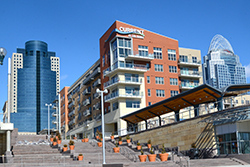
Jean-François Flechet opened Taste of Belgium in Findlay Market in 2007; four years ago, he expanded his restaurant venture to Columbus’s North Market, and a year and a half ago, he opened a full-service Belgian bistro on Vine. In the next few months, there will be two new Taste of Belgiums in the Cincinnati area—a full-service restaurant on Short Vine near UC, and a waffle counter at Friendly Market in Northern Kentucky.   The Short Vine location is on the first floor of a brand new building that includes 120 apartments. The waffle counter at Friendly Market is the only food vendor in the first phase of the market. It’s right on the edge of phase 2, which is ideal for future expansion, Flechet says.   Taste of Belgium on Short Vine will have a menu very similar to the one on Vine Street, says Flechet. But it will have more affordable options at dinnertime, such as chicken and waffles and bar food.   “There will be a bigger focus on the bar, with both Belgian and Belgian-style beer sourced from local breweries,” he says. Flechet wants to attract the college students who live around Short Vine, which is a different demographic than his customers at the bistro and Findlay Market.   Taste of Belgium is slated to open in early May at Friendly Market, and on Short Vine during the first week of July.   Flechet isn’t going the traditional route for financing his new business ventures. Instead, he’s working with local crowd-sourcing start-up SoMoLend to raise a portion of the funds for the restaurant. He wants to promote crowd-sourced funding as a viable alternative source of financing for small businesses.   “When I opened Taste of Belgium on Vine, it was hard to get financing,” says Flechet. He wasn’t able to obtain a loan from the bank, but the building’s landlord got one through 3CDC. In turn, the landlord charges high rent to recover the loan. The North Market location was financed by a loan from a small business lender who Flechet has been working with for four years.   SoMoLend connects small business owners who are in need of a loan with investors who are looking to make a return on their investments. The organization allows borrowers to get loans from customers, friends and family members. It allows lenders to make a difference on a more local level.   “SoMoLend has been promoted on a national level, but not much on a local level,” Flechet says. He’s trying to get the word out to his customers that he’s using SoMoLend and bring more users to the lending service.   The Taste of Belgium crowd-sourcing campaign launches March 11. If you want to contribute to the campaign and are a customer, friend or family member, sign up on SoMoLend’s website.   By Caitlin Koenig Follow Caitlin on Twitter

City Hall launches app as a community-organizing tool

The City of Cincinnati has taken out the back-and-forth that can occur when residents try to reach them to report issues in their neighborhoods. At the Neighborhood Summit on Feb. 16, Vice Mayor Roxanne Qualls announced that the Cincinnati City Hall mobile app is available to the public.   With the app, residents can look up trash, recycling and street sweeping days, and set reminders; locate and report problems by address; bookmark locations for quick reporting; and track the status of reports. City Hall mobile also has GPS, so users can report issues, even without an address. There’s even a searchable map with property owner information, which enables residents to see if a property is occupied or vacant.   A few years ago, residents had to use the Yellow Pages to look up the number for city departments to file complaints, says Kevin Wright, executive director of Walnut Hills Redevelopment Foundation. The city then implemented a hotline for all complaints, but residents never knew the status of their reports.   “It’s amazing how comprehensive the app is,” Wright says. “If you see a broken window, pothole, graffiti, hanging gutter or anything else that is physically wrong with your neighborhood, street or community, you can report it in an instant. It’s a great tool for neighborhood redevelopment.”   The app can also be used as a community-organizing tool, Wright says. For example, if there is a property owner who historically hasn’t taken care of his or her property, social media can help organize a community and target the property to enforce codes until the property is fixed, which is what neighborhood councils and organizations like WHRF do.   “We’re really putting power in the hands of the citizens of the neighborhoods,” he says.   As with most tech programs, the app has room to grow, too. In the future, it could be linked with Facebook or Twitter, so your friends and followers will know who reported problems and where they are.   Cincinnati residents can download the app in the Apple App Store or download it through Google Play.   By Caitlin Koenig Follow Caitlin on Twitter

Reggae Run celebrates 20 years of success, moves to Eden Park

This October will mark the 20th anniversary of the Reggae Run, and with its longevity comes continued success and an increase in participants.  What started nearly 20 years ago as a small-scale project with the hope of getting 500 people to show up has turned into an event that has raised more than $1 million dollars over the years for local charities. It has also outgrown its longtime course at Ault Park. This October, participants will instead gather at Eden Park for a new course and the same after-party that locals have grown to love, as it draws as many as 7,000 people together to celebrate.  “It’s really amazing that the time has gone so quickly, but at the same time, it’s really neat to see how the event has grown and how it’s become part of Cincinnati,” says Doug Olberding, Reggae Run's organizer. “But we realized maybe seven or so years ago that not everybody that comes to the race knows why we do it.” Olberding, who is the late Maria Olberding’s brother, says it dawned on him a few years back that most of the people who run the race—oftentimes people who are in their 20s—were about 5 years old when his sister was slain while running near her home in Mt. Lookout.  “The older people know—you tell somebody who’s around my age, and they say, ‘Gosh, I remember that, it was a big deal,’” Olberding says. “But the younger people don’t know why we do it. We put it out there, but they don’t know the story, and we feel like it is our duty to make sure we keep the story alive and keep her memory alive through the race.”  So the Olberding family puts on an event that encompasses everything Maria cherished—running, reggae and nature. Whether it was through her optimistic and positive outlook on life or through her volunteer efforts with organizations like Stepping Stones and Children’s Hospital, Maria made sure to put her best foot forward. “She wasn’t a teacher or anything like that—it was just her natural altruism,” Olberding says. “She was a pretty giving person. She was a 20-something, typical girl out of college; she worked at the Beach Waterpark and had fun with her friends, but they found time to do things—volunteer work and stuff like that—so that was part of it, and I don’t know that I can say specifically where that came from. It was just the way she was.” At the Reggae Run, participants can either run or walk a 5K. After the race, everyone joins together for fellowship through food and music, which is provided by The Ark Band, a group that Maria grew up listening to.   Olberding says themes within reggae music that deal with “finding the good in things” speak volumes to who Maria was as a person.  Proceeds from the event benefit the local chapter of the Make-A-Wish Foundation, which formed in Cincinnati when the Olberdings sought the organization out as a recipient. The more than $1 million the event has raised for the organization is just one of the positives that has come as a result of the Reggae Run.  “Some people come up to us during the race, and they’re beside themselves, saying how much they enjoy it and what it means to them to come; we’ve even had people get engaged there," Olberding says. "It’s always this really good vibe, and I think it’s one of the reasons why it’s been around for 20 years." “It’s so easy to turn something into a negative, and if you do that, you just create more grief and more anger, and then it just never stops. I look at it and say, 'Just think of all the good that this event has done.’”  Do Good:  • Register for the Reggae Run by participating in the race or joining in the after-party.  • Share Maria Olberding's history by keeping her memory alive and encouraging others to participate in the Reggae Run. • Like and share Reggae Run's Facebook page. By Brittany York Brittany York is a professor of English composition at the University of Cincinnati and a teacher at the Regional Institute of Torah and Secular Studies. She also edits the For Good section of SoapboxMedia.   

Freestore Foodbank puts healthy foods in Tri-State homes

About a month ago, a donation from Green BEAN Delivery to the Freestore Foodbank brought a recently unemployed young woman and mother of three to tears when she went to pick up food for her family.  “She knew the importance of fresh fruits and fresh vegetables for her kids, and typically, her meal money and her food money doesn’t go that far,” says Kurt Reiber, president and CEO of the FSFB.  Reiber says people often try to “stretch their resources,” which often means buying food that is affordable but also unhealthy.  Because of FSFB’s efforts to put healthy foods on the tables of about 300,000 food-insecure individuals throughout the region—110,000 of whom are children—fresh produce and healthy eating habits are increasingly becoming more ingrained in the lifestyles of our neighbors in need.  As a result of a longtime partnership with Green BEAN Delivery, FSFB recently received 2,200 pounds of fresh produce to distribute to local pantries and food banks, which Reiber says will go a long way for the families FSFB supports.  “These are people who really don’t know where their next meal is coming from,” Reiber says. “They’re coming because the car broke down or one of their children has gotten sick or their utility bills are out of whack and they spent the money they otherwise would have spent on food on those bills, so when I talk about paycheck to paycheck, that’s really it.”  Most of the recipients of FSFB’s donations visit the food banks or pantries just five times a year, according to Reiber. “It’s the community supporting the neighbors that are just down the street,” he says. “Most of them are going to church with them, or their kids see them at school.”  Reiber is appreciative of the Green BEAN Delivery’s donation because he says it has helped to provide healthy foods during a time of the year when the nonprofit is particularly in need.  In November and December and throughout the holiday season, he says, people recognize the problem of hunger, and donations come in with an abundance; but hunger is a problem that doesn’t go away. “The reality is that the following week, when we turn the page on the calendar, we’re still looking at folks out there that are hungry and don’t know where their next meal is coming from,” Reiber says.  Because of partnerships with community organizations and individuals, FSFB ensures that 35 to 40 percent of its food distribution is composed of fresh fruits and vegetables. Through its community farming program, The Giving Fields, FSFB was able to provide 175,000 pounds of fresh produce to 12 food pantries in Northern Kentucky last year; and that number, according to Reiber, will continue to grow.  “Our goal is to have it so that 50 percent of all the food we distribute will be fresh, nutritious produce and fruits, and that’s something we’re going to continue to strive to get to.”  Do Good:  • Support the Freestore Foodbank by making a donation. • Start a virtual food drive and encourage your family and friends to partcipate.  • Spread the word about hunger by liking and sharing Freestore Foodbank's Facebook page. By Brittany York Brittany York is a professor of English composition at the University of Cincinnati and a teacher at the Regional Institute of Torah and Secular Studies. She also edits the For Good section of SoapboxMedia. 

Heads up to local artisans and small-batch manufacturers: CNCY MADE has your back

The core idea is to start making connections in the local community to assist people who might be making their own physical products.

Cincy ReelAbilities film festival unifies inclusive community

ReelAbilities, which is the largest film festival in the country to showcase the artistic talents and life stories of people with disabilities, began in New York in 2007. But in 2011, Cincinnati became the first place to broaden the festival’s influence by making it a multi-city event, and for its second year running, ReelAbilities plans to increase its reach with a fervor that emphasizes the shared human experience.  Co-chaired by Living Arrangements for the Developmentally Disabled and Visionaries + Voices, the festival brings community members together to view award-winning films by and about people with disabilities, all while creating a dialogue and providing a platform for storytelling and educational panels that promote understanding and inclusion.  For local spokespersons April Kerley and Kathleen Sheil, the festival is important in that it aims to show people that the only real disabilities that all people have are those of misguided perceptions.  Kerley, a local Paralympian who swam in the 2008 Summer Games in Beijing and who is also featured in the film “Warrior Champions,” which will air during the festival, says the event is about inclusion. All people experience a technical disability at some point in time, “even if it is only a temporary one, such as a sprained ankle or recovery from surgery,” she says.  “It is not an ‘us versus them’ equation,” Kerley says. “We’re all in this together.”  Sheil, who receives services from LADD and who is working as an event planner for ReelAbilities Cincy has Down syndrome, but she says she doesn’t allow her disability to define her. “I take that disability, and I put it into ability,” she says.  Her attitude is a positive one, but Sheil says she knows all too well the horror stories of bullying that arise from a lack of understanding when it comes to people with disabilities. Sheil’s boyfriend, who has autism and wears glasses, was singled out during his high school years because of his disability, she says.  “They’d call him four-eyes and step on his glasses and break them,” Sheil says. “And that’s not what we do. That’s not the right thing to do. To me, it really doesn’t matter if you have a disability or not, and the reason why I say that is because everybody has a disability and everybody is different, and that’s okay.”  It’s these stories that ReelAbilities Cincy hopes to share, as inclusion and acceptance are topics that are vital and necessary, according to Shiel.  “I want people to hear how important it is to the people that have not just disabilities, but abilities, so that they can share their stories,” she says. “And so that way, they can be the people who shine, people who are stars and people who really know what’s going on in their world.”  ReelAbilities will take place at various locations throughout Cincinnati from March 9-16. Do Good:  • Attend a film showing to support ReelAbilities. • Like the ReelAbilities Cincy page on Facebook. • Spread the word to family and friends so that they, too, can participate in the ReelAbilties Film Festival.  By Brittany York Brittany York is a professor of English composition at the University of Cincinnati and a teacher at the Regional Institute of Torah and Secular Studies. She also edits the For Good section of SoapboxMedia. 

URBtank brings aquaponics to warehouse on McMicken

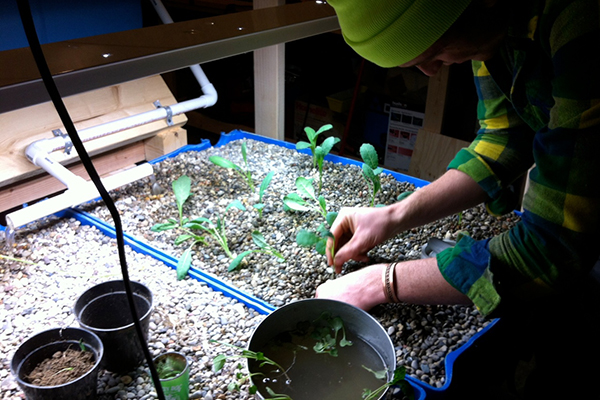
For URBtank, it’s all about the cycle. Kyle McGrath, 23, and Brad Ostendorf, 22, are the brains behind URBtank, an urban aquaponics system. The team, who both studied architecture at the University of Kentucky, worked on proposals and plans for the River Cities Project, which addresses ecological and economic conditions and tries to bring people back to the water. McGrath and Ostendorf couldn’t stop thinking about aquaponics all summer, and soon they found themselves building a system in Ostendorf’s garage in Cold Spring, Ky. Aquaponics uses fish to fertilize plants, typically of the edible kind and can function in any kind of climate, indoor or outdoor.  “Fish need nutrients, we feed the fish, they excrete waste, that fish waste can be turned into nitrates, which fertilize the plants themselves, so the plants then clean the water for the fish, and it gets returned back to the fish," says McGrath. "And it’s a close-loop cycle, so the water flows throughout the whole system." The pair is in the process of moving their system to a warehouse at 111 W. McMicken Ave. There, they have plans for massive expansion. “There thousands upon thousands of unused acres inside of old buildings, so why not tap into that?” Ostendorf says.  Space isn’t the only advantage. “There’s no interruption; it just keeps going. You take out the seasons, and you’re providing for the whole year." With no plans to stop, URBtank is currently growing microgreens, mizuna and watercress. Immediate plans include growing lettuce and other leafy greens. Both McGrath and Ostendorf are interested in fine dining, and they want to develop a community aspect to their business by allowing chefs to choose what they grow and hand-pick items for menus. “They have complete control over what they grow," says McGrath. "If they want Asian cress or mizuna or wasabi pea chutes, we can do that for them. For updates, follow URBtank on Twitter. By Gina Gaetano

Thinking outside the box: Home bakery turns Gail Yisreal into cake boss

Going on maternity leave changed Gail Yisreal’s life in more ways than having a new baby to take care of.   When she returned to work, Yisreal says she learned her position was no longer there, so she began to look for a different job. As wife and mother to a blended family of nine children, she might bake up to 11 birthday cakes in a year. But she hadn’t considered turning her knack for kneading dough into earning dough until she baked a wedding cake for a couple from her family’s place of worship. Not only did they like the cake, they suggested she start selling them.   Listening to her fans, Yisreal founded A “Mother’s Touch” Cakes with the nurturing tagline, “Making fresh homemade cakes when you don’t have the time.” Celebrating her two-year anniversary as a registered business in August 2012, A “Mother’s Touch” features signature and custom made flavors of fresh, savory gourmet, organic and vegan cakes and cupcakes that are good—and good for you.   “I didn’t know anything about decorating, so I took a class to learn more decorating skills," Yisreal says. "And I was shocked to find out that 95 percent of the cakes you buy are box cakes—because everybody wants the decoration. I started doing some research about the trans-fats and artificial ingredients, and I vowed that everything I baked would always be natural and from scratch.”     After working as a waitress for two years and in management at Starbucks for six years, Yisreal developed a love for coffee. She jokes that most ex-Starbucks managers feel they know enough about coffee to create their own line, which she actually did for A “Mother’s Touch.”   Having tried organic coffees with weak flavor profiles, she researched and found Dean’s Beans, a fair-trade pioneer that allowed her to design her own custom blends. Her signature A “Mother’s Touch” blend is made with Mexican and Indonesian beans and pairs with her carrot cake as an after-dinner coffee.   “I’m really proud of my coffee and the fact that it really was custom blended for what I wanted to complement my desserts,” Yisreal says. And, true to her mission to serve natural, sustainable goods, she says that her blends are 100 percent organic, fair-trade certified and are shade grown.   Being on the scene without a storefront hasn’t stopped Yisreal. Instead, she’s building her brand as the “cupcake lady” who networks everywhere and invites people to taste samples of her creations. Yisreal also tapped into hidden markets by hosting deals through social media.   “I did a Living Social promotion last year, which was huge,” Yisreal says. “That first day, I think I got 1,500 hits on my website, and probably about 85 deals, which I thought was really good for people who didn’t know who I was.”   And even though she sells more cakes today, the ease of transporting cupcakes built her clientele.   “When I first came out, because of my financial situation, literally, cupcakes were paying my rent,” she says. After she and her husband separated, she remembers what it was like to go from making an annual salary of $60,000 to less than $20,000 a year. But she doesn’t do it all alone.   “I have three almost-teenage girls; 12, soon to be 15 and 17, so they are my preppers,” Yisreal explains. “It’s hilarious because we’ll be in the kitchen and everybody has their big bonnets on, and they’re scraping carrots, mashing fruit, lining the liners. I have a girlfriend who I’ll sometimes sub-contract out to do deliveries. And if it’s a huge event—like for the Autism Foundation, I had to knock out 40 dozen cupcakes—I have two sisters, and at the time I had just split up with my husband so we were in literally an 800-square-foot apartment. The kitchen was all of maybe 150-square-feet, we put out six-foot tables and we were like an assembly line! It was hilarious, but we got it done. It was like an I Love Lucy episode!”   By Mildred Fallen  

S&J Bakery Cafe updates name, plans for Findlay Market

With a new business name, a liquor license and sole ownership of S&J Bakery Café in Findlay Market, Stefan Skirtz is about to get even more creative with his offerings. Which is saying something for a baker who already serves a blueberry pancake cupcake with maple buttercream icing and topped with a garnish of chocolate-dipped bacon. Mmmm, bacon. As his storefront nears its third anniversary at the Over-the-Rhine landmark this May, Skirtz remains dedicated to keeping things local and making a stop at his flourishing shop just one part of a varied market experience.  “The reason why I wanted to come to Findlay Market was to strengthen the Findlay Market experience,” says Skirtz, 44, who grew up in Clifton Heights. “I go out every Saturday and buy our produce for the week.” Skirtz, who opened the shop with a partner, reports that they spent 96 percent of the capital costs for the business within the 45202 zipcode. After making it through the first year in business, sales doubled in year two. He’s hopeful about the prospects for year three, during which he opened a second location—the S&J Café in the Main Library downtown. “The sales have been very strong,” Skirtz says. “It’s given us an opportunity to constantly adapt and adjust.” Adapting and adjusting comes naturally to the entrepreneur who started his working life far from a kitchen. He worked summers at Kings Island, then stayed with the park as its owners shifted from Kings Productions to Paramount and Viacom, where he produced live shows and planned events.  But the Cincinnati native, who once again lives in Clifton Heights, grew tired of constant travel. He decided to pursue his lifelong love of cooking at the Midwest Culinary Institute, where he could turn his hobby into a career. Skirtz’s theme park background makes him particularly sensitive to his customers’ feedback, which he has already incorporated into his business plans. For example, the dining room section of the Findlay store was intended for storage, but customers enjoyed having a place to sit and enjoy breakfast and lunch so he made the cheerful space permanent.   “People instantly started coming down and starting their Findlay Market experience with us,” Skirtz says. Regulars bring their own coffee mugs, cloth napkins and silverware. Some stop in for the same menu items every Saturday at 8 a.m. sharp; others make S&J a midway break during their trip; still others end their shopping with a leisurely lunch.  “It’s really about listening to your guests,” says Skirtz, who works with a wide range of market and local vendors, from Coffee Emporium (which created a special blend for S&J) to Bender and Eckerlin Meats for sandwich fillings. Feedback has also led Skirtz to sell his bread in demi-loaves—customers told him that whole loaves were too big for them to finish. He’s also expanding the shop’s weekday hours to 6 p.m. to accommodate a second baguette baking in the afternoon; baguette-lovers pushed for an option to stop by S&J on their way home from work to buy a warm loaf. Skirtz was also granted a liquor license this month as part of the newly formed Findlay Market Entertainment District, and is deciding how to incorporate it into his plans for rebranding, which will include a new menu, brunch, special programs and live entertainment. One thing is for certain: Skirtz will continue to see Findlay Market as a “destination attraction,” reminiscent of his theme park days. “My goal is that anybody who comes in my door and eats my food, I want them to go into the Market House and start shopping,” he says.  By Elissa Yancey Follow Elissa on Twitter

Soapdish: Cincy Crit

Soapbox provocateur Casey Coston takes on architectural shortcomings of the city's latest developments and offers three words of actionable advice: Demand better, Cincinnati.

Our Partners

Taft Museum of Art
Warsaw Federal

Don't miss out!

Everything Cincinnati, in your inbox every week.

Close the CTA

Already a subscriber? Enter your email to hide this popup in the future.