Video Modern Makers
Soapbox's Scott Beseler shares a visual feast of food art and more at the latest installment of Modern Makers, feature chef Frances Kroner of Feast.
Uptown includes all the neighborhoods around the University of Cincinnati including Avondale, Clifton, Clifton Heights, Corryville, Fairview, Mt. Auburn and University Heights, so it's a diverse mix of students and residents in one of the city's most distinct and eclectic group of neighborhoods. Uptown is the home of the Cincinnati Zoo as well as multiple hospitals and the Ludlow shopping district where you can find trendy and unique shops as well as any scent of incense you need. Ethnic restaurants, including a curiously high concentration of Indian eateries, multiple taverns, coffee houses, music venues and the Esquire — one of Cincinnati's finest independent art house movie theaters all make Uptown a one-stop walkable bazaar of exciting entertainment options.
Soapbox's Scott Beseler shares a visual feast of food art and more at the latest installment of Modern Makers, feature chef Frances Kroner of Feast.
Mr. Hanton’s Handwiches started serving up hotdogs out of a food cart to Cincinnatians in 2010. A year later, Brian and Awilda Hinton upgraded to a food trailer; in May, the couple will open a brick and mortar restaurant in Clifton to satisfy late-night cravings as well as devoted followers. Because food carts, trailers and trucks are, for the most part, seasonal mobile restaurants, the Hintons did open a storefront in White Oak a little over a year ago. They then talked to a group of investors and decided to expand Mr. Hanton’s into a chain of restaurants. The Hintons closed the White Oak storefront and are using the space as a commissary to serve as their prep location for the trailer, parties and events. Awilda left her full-time job at P&G to run the restaurant; and Brian will be focusing most of his time on their mobile business. “We had lots of customers in Mt. Adams who were UC students, and they wanted a store in Clifton,” Brian says. So it was an easy decision for the Hintons when a location opened at the U-Square at the Loop development. Mr. Hanton’s is slated to open the last week of May, with an official grand opening around June 13. The menu will be slightly different from the food trailer. For example, they won’t offer a gyro at the restaurant, but there will be a gyro-inspired hotdog, which will feature a sausage made from lamb and seasoned with Mediterranean spices and topped with celery salt, tomato, onion and tzatziki sauce, Brian says. “We’ve been hearing that Clifton doesn’t have a large variety of late-night options, and we plan to bring a new late-night option to people,” Brian says. “And it will be something different. You can get a hamburger, tacos, burritos and cheese coneys anywhere in town, but you won’t find anywhere in Cincinnati with a menu like ours.” Mr. Hanton’s offers around 30 different hotdog options, plus a create-your-own dog. The Hintons also plan on bringing a food truck to the streets of Cincinnati soon, and have big plans for their brand coming next spring. By Caitlin Koenig Follow Caitlin on Twitter
La Terza Artisan Coffee Roasterie began 10 years ago when owner Chuck Pfahler began roasting coffee out of his house. Eventually, La Terza moved to a warehouse in Northside; in January, it relocated to Short Vine, and is now inside the 86 Club. About 15 years ago, Pfahler started roasting coffee in a hot air popcorn maker, and fell in love with the process. He has studied time and temperature relations and knows how to cup and taste coffee like a pro. He’s also found a way to roast coffee that maximizes the beans’ flavor. “It’s been a labor of love,” Pfahler says. “I love sharing coffee with people, and over the years, I’ve gotten very positive feedback.” La Terza isn’t a coffee shop, but a wholesale coffee roaster that provides coffee to local coffee houses, restaurants and community groups. In February, La Terza partnered with Christian Moerlein to make a coffee-infused Baltic Porter for Cincy Beerfest. The beer was made with La Terza’s Brazil Daterra Estate Villa Borghesi, which was cold steeped in the Baltic Porter. “We want to be a catalyst for the community,” says Pfahler. “We really believe that community is a ‘third place,’ and we want to support coffee shops that serve as a community’s ‘third place.’” Pfahler wants La Terza to help bridge the gap between the coffee bean farmers and the communities that buy their crops. When a customer places an order, the coffee is roasted the next day and then shipped, so it’s very fresh, Pfahler says. “Many people have never had freshly roasted coffee, and it’s cool to see them experience it for the first time,” he says. “Coffee should be handled like bread or produce. It can’t sit around for six months and hold its quality.” Although coffee beans change with the seasons, Pfahler says La Terza’s Sumatra was very popular this year. The roasterie always offers a variety of light, medium and dark coffees, but its inventory changes. “We try not to get people locked into one coffee,” says Pfahler. “Although one coffee is great this year, it doesn’t mean it will be great [next] year, or have the same flavor profiles.” La Terza also offers coffee equipment sales and services, ongoing barista training and public coffee tastings. Along with wholesale, La Terza also sells coffee as retail through online orders. By Caitlin Koenig Follow Caitlin on Twitter
The Everybody Rides Metro Foundation, which is the first program of its kind, provides affordable transportation to about 30,000 low-income individuals each year. Metro subsidizes rides at $1 and has partnered with about 70 different social service agencies to cover the remaining 75 cents of fares for riders in need of medical or work-related transportation. “Many of our riders feel like this is the only way they can try and succeed—it’s somebody giving them a lift when they need it the most,” says Joe Curry, executive director of ERM. “The greatest outcome of this is that you’re getting people toward self-sufficiency. It’s something that stays with them forever—it helps them out until they earn money and start budgeting once they have a job; and self esteem is a large part of that overall package.” According to Curry, many of ERM’s riders are paroled into the Talbert House and have anywhere from $0 to $20 to their name after coming out of prison. Once they’ve been rehabilitated and have participated in job counseling, they may need to interview at up to 20 different businesses before they find work. “Once they land a job, the worst thing that can happen is not to show up during the first week of employment, so we give them additional money, if needed, to subsidize their rides during the first few weeks,” Curry says. “It’s to help them out temporarily so they can establish a budget—it’s not a lifetime pass.” In addition to helping riders get to job interviews and places of employment, ERM provides rides to medical-related destinations so individuals can receive preventive care. “Society of St. Vincent De Paul runs a free pharmacy on Bank Street in the West End, and if you can’t afford your meds, they’ll give you a 30-day supply for free so long as it’s not a narcotic, but you have to get to the location,” Curry says. “If you’re diabetic or are undergoing cancer treatment, meds are absolutely essential, but if you can’t get to a place where you can get your meds, you may get sicker. You may be one of those people who take that $1,500 ambulance ride, and that’s one of the things we’re trying to prevent.” Beginning in January 2014, 40,000 more individuals in the Cincinnati area will be eligible for Medicaid, and according to Curry, anywhere from 50 to 70 percent of those people will need public transportation to get to a healthcare provider or pharmacy. “Those are the people we’re worried about," Curry says. "If public transit isn’t available to them because of the cost, how are they going to get treated? More than 30 percent of our population lives in federally defined poverty—that tells you we really need to do something and think outside the box about how to solve some of these public transit issues.” Do Good: • Donate to the Everybody Rides Metro Foundation. • Like Cincinnati Metro on Facebook. • Follow the Cincinnati Metro on Twitter. By Brittany York Brittany York is a professor of English composition at the University of Cincinnati and a teacher at the Regional Institute of Torah and Secular Studies. She also edits the For Good section of SoapboxMedia.
Melanie Corwin has spent the past several years volunteering with local no-kill shelters, and while she recognizes the importance of finding homes for pets, she says the root problem that leads to their abandonment is what needs to be addressed. “You see the conditions of the animals when they came in, and it breaks your heart,” Corwin says. “I poured all my time and attention when I first started volunteering to try to get these animals adopted, but it gets very disheartening when they continue to leave but more fill the space right away. You’ve got to stop the unwanted ones from being born.” According to Corwin, 10,000 people are born on a daily basis, compared to 70,000 kittens and puppies. And more than half of those, she says, are unwanted litters. Corwin now serves as executive director at the United Coalition for Animals—an opportunity she says she jumped at when it was offered to her because she can now work toward eliminating that root problem: a lack of access to affordable spay and neuter services. UCAN’s clinic opened in April 2007, and as its sixth-year anniversary approaches, the organization expects to celebrate its 50,000th spay/neuter surgery. The clinic’s ultimate goal is to eliminate the killing of the more than four million healthy or treatable dogs and cats that are euthanized in the United States each year because of overcrowded and underfunded shelters. “It’s documented in so many research projects that the intake rates at shelters go down significantly when there’s a low-cost spay/neuter facility in the area, so that’s our goal,” Corwin says. The clinic not only provides affordable spay/neuter surgeries to the 24 counties it serves, but it also provides free transport to various areas in the Tri-State that have limited access to public transportation or veterinary care. “We just helped a person who had 49 cats, so we did a special Friday transport just for her and went out and got all her animals,” Corwin says. “Our transport driver has a really good heart, and if someone doesn’t have transport, we will find it for them.” Corwin says UCAN does everything in its power to prevent the problem of unwanted litters. Due to a generous grant from the Joanie Bernard Foundation, the clinic provides free surgery for anyone who brings in a trapped feral cat or who is taking care of a stray, Corwin says. Additionally, Corwin says the organization will never turn anyone away. If someone can’t afford the low-cost spay/neuter, UCAN will find a donor. “I just hope people make the connection,” Corwin says. “I know they see ads and things of fuzzy, cute animals to adopt at shelters, but I’d just love for them to make the connection that even though they pay to get that one out, another one’s just going to fill its spot unless we solve the problem.” Do Good: • Like and share UCAN's Facebook page, and let your friends know low-cost spay/neuter is available to them. • Donate so UCAN can continue to increase its efforts. UCAN also accepts items if you prefer to make a non-monetary donation. • Volunteer with UCAN. By Brittany York Brittany York is a professor of English composition at the University of Cincinnati and a teacher at the Regional Institute of Torah and Secular Studies. She also edits the For Good section of SoapboxMedia.
A team of dedicated workers in Cincinnati are trying to give a very sad story a happy ending. Gladys, a two-month-old baby gorilla, was abandoned by her mother, and her keepers have been caring for her until a foster mother gorilla can take over. See the full story here.
UC ranks #1 on the list of top rec centers in the nation, according to Best College Reviews. Read the full rankings here.
At the age of 3, Annie Ruth began her work as a visual artist, and during her freshman year of college, she read her first poem aloud in response to her nephew's death. Ever since then, she’s worked as a community-based visual and performing artist with the goal of bringing together diverse groups of people. Though Ruth’s first art exhibit was at the age of 3 (on the flaps of blank pages of her family’s encyclopedia set, she says), she never expected it to be a career path. “For the longest time, I was headed down the path of becoming a doctor because my mom was sick a lot when I was growing up,” Ruth says. Ruth, now 49, grew up in College Hill. She says her career transition from doctor to artist didn’t happen until her high school years when she and a friend were involved in a serious car accident while on the way to a football game. “I finally realized I had been blessed with this tremendous gift of art, and it was my art that helped build bridges and connect to people’s hearts,” Ruth says. “So I would be a doctor, but my art would be that healing mechanism.” Since the mid-'90s Ruth says she’s dedicated a lot of her work toward celebrating and empowering women, and in 2005, she created Dada Rafiki—a photo exhibit that honors women. It garnered recognition and a yearning for more stories. “When people came to view the exhibit, they said they needed to see more of it, so in 2006, I moved the exhibit to the Community Action Agency, which had just opened a new building in the Jordan Crossing area," she says. "So I pulled in other artists and poets as well, and we were able to actually donate a 22-piece permanent collection to honor 22 women, and it’s kind of grown since then.” Now Dada Rafiki: Sisters of Legacy, which celebrates the lives of 40 women who are 65 years and older, makes its debut at a nationally renowned establishment—the National Underground Railroad Freedom Center. Ruth says the intention of this installment is to “begin to create intergenerational dialogue so we can really have a chance to sit at the feet of our elders and hear some of their stories and know why they did some of the things they did that impacted Cincinnati and the rest of the world.” In addition to the exhibit’s three-month display at the Freedom Center, replicas will travel to 59 different venues in the Cincinnati area where community members can view the art and participate in different programs, which range from concerts and lectures to intergenerational talks with young mothers. “When I think about my ultimate outcome, there is a mission,” Ruth says. “Because Cincinnati is known for being such a separated community, I want to highlight that the whole community is not that way and that many of us dream of a world where people can come together and appreciate each other for the uniqueness that everyone brings to our city." Ruth says her focus is on what she believes can bring people together—music, poetry and song—“a universal language.” “I hope that people, from viewing and experiencing things going on in Dada Rafiki, will celebrate the contribution of women, but also appreciate the uniqueness that true diversity has to offer,” she says. “True diversity is about building bridges and connecting. It doesn’t mean we’ll always agree, but creating mutual respect for all types of art forms.” Do Good: • View Dada Rafiki: Sisters of Legacy at the National Underground Railroad Freedom Center. • Support Annie Ruth in her educational efforts to connect underserved communities with the arts through the Eye of the Artists Foundation. • Like Eye of the Artists and Dada Rafiki on Facebook to keep up with the latest news and events. By Brittany York Brittany York is a professor of English composition at the University of Cincinnati and a teacher at the Regional Institute of Torah and Secular Studies. She also edits the For Good section of SoapboxMedia.
When Heidi Feyerherm’s daughter Chloe was diagnosed with cancer in 2006, the family was given a bear that wore a backpack so when Chloe was away from school receiving treatment, her classmates could keep in touch. “Her brother would bring the bear home on weekends, and the backpack had all the notes in it that her classmates had written,” Feyerherm says. “Chloe Bear is something we used during her first grade year until she passed away in 2007.” The stuffed bear played a significant role in the lives of both Chloe and her classmates, Feyerherm says. When Chloe passed away, Feyerherm wanted to expand the program and make it available to more people, but with added components. “We lived three hours away from the nearest Children’s Hospital, so there was no opportunity for a social worker to go to her school to explain what was going on,” Feyerherm says. “It was on my shoulders as the parent to talk to the classroom and talk to the teachers, so I thought if I wrote a book, it would make it easier for everyone going forward.” So Feyerherm started the Love Chloe Foundation and the Monkey in My Chair program—Chloe loved monkeys. In 2009, she began sending families monkey kits, which include a large stuffed monkey and a backpack that contains Feyerherm’s book, a journal, a camera, pens and paper and a teacher companion guide with lesson plans to help elementary school students cope with the extended absence of a classmate. Initially, the Kansas-based program reached four hospitals, but in 2011, Feyerherm developed a partnership with Cincinnati-based nonprofit The Cure Starts Now Foundation, and Monkey in My Chair now reaches children across the country and is in more than 130 hospitals nationwide. According to Feyerherm, the concept of cancer is a difficult one for children to accept, and in the time of need, it’s important that they, too, have a source of comfort. “Most of them—if they’ve had any experience talking about cancer—it’s been a grandparent or a great-grandparent,” Feyerherm says. “But the monkey gives them something physical to keep in their classroom and something they can hold on to. They might take turns—one might be responsible for carrying it to gym class, or they might take it to where they read their books—or they might hold it if they’re feeling sad.” The stuffed monkey also provides a sense of security for the child with cancer who misses extended time from school, Feyerherm says. “If a student’s been gone for seven or eight months out of the school year, it’d be easy for a teacher to take that desk out, and having the monkey physically there prevents that from happening,” she says. A recent development, which was implemented about a year and a half ago, is online access to Monkey Message, which allows the student to connect with his or her teacher and classmates at any time via email and photo sharing. “Sometimes the child will write about what they’re going through and take pictures of themselves going through their treatment and then send it back to the classroom, or it works the opposite way in the classroom for them to document what’s going on while the child is away,” Feyerherm says. “It makes them feel like they’re still there even if they’re not.” Do Good: • If you know a child who has been diagnosed with cancer and you think they might benefit from a monkey kit, they can request one here. • Contribute by making a donation or sponsoring a monkey kit. • Like Monkey in My Chair on Facebook and spread the word by sharing the page with friends. By Brittany York Brittany York is a professor of English composition at the University of Cincinnati and a teacher at the Regional Institute of Torah and Secular Studies. She also edits the For Good section of SoapboxMedia.
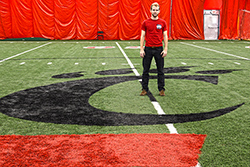
When 23-year-old University of Cincinnati track star Kyle Neyer considered his senior year at his hometown college, he knew he had a chance to make a difference. He wanted to make it easier for other gay and lesbian athletes to feel supported and welcome among their peers and fans. So, he spearheaded the production of an inspiring and inclusive video: "You Can Play."
Our Partners