Library’s urban historian to highlight photography technology that preserves past at TEDXCincy

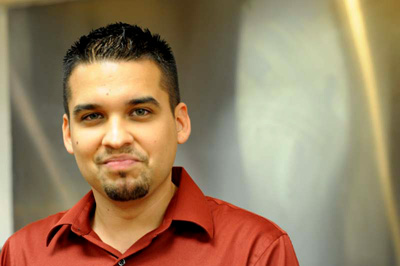
Surrounded each day by one of the top-ranked genealogy collections in the country, Patricia Van Skaik has a deep appreciation for the significance of the past in shaping our future, as well as the role the future plays in preserving that past. In her 26 years as manager of Cincinnati Public Library's Genealogy and Local History Department, Van Skaik has devoted herself to the preservation of Cincinnati's history and has embraced the advanced technologies that have enabled her passionate efforts. It was a combination of advanced technologies and passions spanning two centuries that Van Skaik credits with the eventual rescue and full revelation of "the Public Library's most valuable treasure," a priceless image from the 19th century considered to be the oldest surviving photograph of an American city. The photo, an 1848 panorama of the Cincinnati Riverfront, "is considered to be one of the finest examples of daguerrean photography," says Van Skaik, who gives primary credit for the quality of the image to the passion, skill and advanced technology employed by its19th Century photographers.Those Victorian-era cameramen would no doubt return the compliment, as it was the dedication of Van Skaik coupled with the sophisticated technologies of the present which ultimately saved the daguerreotype from potential demise. Six years ago, in an effort to safeguard the image, the urban history specialist began researching the most advanced methods of photographic preservation and in 2006, the Library made arrangements for the priceless panorama to be transported to the George Eastman House in Rochester, New York to begin stabilization and conservation work. It was there, explains Van Skaik, "that state-of-the-art microscopy equipment exposed previously undetected damage to the image" - information critical for the preservation specialists. The digital microscope also revealed an exciting surprise for the Cincinnati librarian. Due to the impressive quality of the 19th century daguerreotype, the digital microscope was able to provide an undistorted 30x magnification of the photo- an enlargement revealing unprecedented historic detail of Cincinnati's past.It was this exciting outcome, and Van Skaik's recognition that "both technology and passion have been interwoven every step of the way" that the urban historian will present as one of the notable speakers at the TEDxCincy event being held Oct. 7 at the Aronoff Center for the Arts. The local program is an offshoot of the west coast-based TED conference, an annual event devoted to "Ideas Worth Spreading" in the technology, entertainment and design sectors. Just as the Eastman microscope provided a close-up view of yesteryear along the Queen City riverfront, Van Skaik's devotion to enabling and improving access to historic information through the use of technology continues to open many doors to Cincinnati's past. TEDxCincy is a full day event, beginning at 9:30 am (check-in begins at 8:30 am) on October 7th, at the Procter & Gamble Hall in the Aronoff Center for the Arts. General admission is $55 and student admission (with ID) is $35. Registration for the event is online.Source: Patricia Van Skaik- manager of Cincinnati Public Library's Genealogy and Local History DepartmentWriter: Alyce Vilines

SORTA’S Colin Groth makes Mass Transit’s 40 Under 40

MassTransit, sponsored by New Flyer, published its 2010 Top 40 Under 40 Award, recognizing the leadership and dedication of individuals in business. SORTA'S Colin Groth made the list, as he rose to the position of government relations director due to his commitment, professionalism, and work ethic with political environments of local, regional and national governments. Groth is now a part of the development of the intermodal transit center in Cincinnati. He is actively involved with the community and will help improve the public transportation system by meeting the community's needs and enhancing Cincinnati's competitiveness in the global economy. Read the full story here.

Children’s Hospital researchers increasing bone marrow transplant success rate

Researchers at Cincinnati Children's Hospital Medical Center discovered information that could lead to a well-targeted therapy, improving the success rate of bone-marrow transplants. Bone-marrow transplants have a history of failing in the past, but this new research reveals a new rationale for successful transplants in the future. Read the full story here.

U.S., Procter & Gamble send water purifiers to Pakistan

Due to the recent devastating floods in Pakistan, Procter & Gamble is taking part in an initiative to provide 28 million water purification kits. P&G teamed up with the U.S. Government, who will provide $1 million along with P&G's $500,000 and other contributor's $500,000, to purchase the kits that will generate 280 million liters of clean drinking water for 1.5 million people in need. Read the full story here.

Cincinnati Park’s website ranked “excellent”

Cincinnati Park's website achieved an "overall excellence" ranking by The Trust for Public Land committee. Peter Harnik, the director of Center for City Parks Excellence, praised Cincinnati for a well-built website with all the essential information for the parks in the area. The website features interactive maps, directions, hours of operation, photos, prices, and even the history of the parks.Read the full story here.

Blackshaw updates 2010 social-media and mobile ‘glossary’

Pete Blackshaw, a VP with NM Incite, updates his official Social-Media and Mobile Glossary of 2010 - he originally created it in January. The updates include a jargon refresh and new words like "mayoral graft" and "hash bragger." Read the full story here.

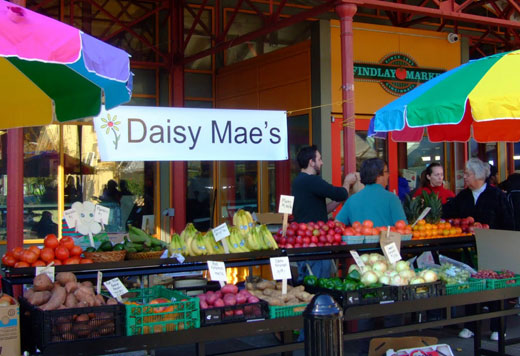
Daisy Mae’s expands reach with delivery service throughout center city

In an attempt to bring more fresh produce, and expand Findlay Market's reach, Daisy Mae's Market is now delivering throughout much of Cincinnati's center city.The new business endeavor first started a couple of months ago with their Healthy Breaks program that delivers 30 servings of seasonal fruit to offices in the downtown area for just $20.  But as the program settled in, owners at Daisy Mae's realized that the demand was a bit greater than they originally thought."We make a few of the Healthy Breaks deliveries each week, but we learned that many of those customers thought it would be nice to be able to order produce and take it home with them," explained Barb Cooper, marketing director at Daisy Mae's Market.As a result, Cooper says that the program now brings custom, grocery list-type orders to office workers downtown who want to bring fresh produce home with them and not have to worry about making an additional trip on their way home.  She says that it's all part of their effort to make getting fresh, healthy produce as easy as possible and promoting Findlay Market as a central point for doing so."Whatever we're doing, whether it's Healthy Breaks, produce deliveries, or quick-pick produce where you can drive by and pick up your order on Race Street, we're doing it to promote Findlay Market," explained Cooper.  "Findlay Market's historical importance is a critical element of the urban core and we need to do everything to preserve that."Those who do not take advantage of Daisy Mae's Healthy Breaks program can still have fresh produce delivered to their address as long as it is within the 45202 zip code.  Cooper says that those orders must be at least $15, but that they will deliver the order the next day.Those interested can place an order online, call (513) 602-5601, or email their order to daisymae@daisymaesmarket.com.  The produce offerings will change on a weekly basis so stay tuned to Daisy Mae's website.  Once the order is placed, Daisy Mae's will then respond with a price and a tentative delivery time.Writer: Randy A. SimesImage ProvidedStay connected by following Randy on Twitter @UrbanCincy

Taqueria Mercado grows downtown location

Luis Leon grew up in Chicago and lived there with his family for twenty-five years. Luis says, "My father worked in a factory and my mother was a secretary. They were good years, but my mother wanted something else, she had a dream. She wanted to own a restaurant."So when the family left Chicago and moved to Cincinnati they opened Cancun Mexican Restaurant. A year and half later, the Leon's opened the first of three restaurants bearing the name Taqueria Mercado. The first was in Fairfield, just east of Jungle Jims. The second opened about a year and a half later in Erlanger. That store eventually closed and relocated to its present location in Florence. And then, earlier this year, Leon's family opened the third Taqueria Mercado at 100 E. Eighth Street in the space formerly occupied by Javier's Mexican restaurant. Asked if he was worried about opening a Mexican Restaurant in a space where another had just failed, Luis smiles and says, "No, not at all."  He then explains, "Many of our customers in Fairfield were from Downtown and they would ask us, all the time, to open a store downtown, so I knew if we opened it people would come."The restaurant serves as a welcome addition to the downtown dining community. To mollify long time fans of the Fairfield restaurant, and to ensure continuity, Leon brought Alfredo - his favorite cook - with him from Fairfield. Which is not to say that all three stores will are identical.For Luis and Jody, both of whom live downtown, the downtown location represents an opportunity to do something special for the ever growing downtown population.Taqueria Mercado Downtown will soon offer amenities beyond those at the Florence or Fairfield locations. For instance, Luis has hired long time music promoter, Jody Steiner (who did former similar duties at The Madison and Stanley's) to book music. Steiner says live music will start the weekend of October 15 and will, eventually feature a myriad of musical styles including Latin, Rock and Roots. Prior to that, physical improvements- including the hanging of acoustic panels- will be undertaken to ensure a pleasant listening environment. For Luis and Steiner, both of whom live downtown, the 8th street location represents an opportunity to do something special for the ever growing downtown population. As a result, the Downtown restaurant will also be opened extended hours (till 11:00 weekdays; 1 am on the weekend) and offer an extended happy hour (11am to 9pm).Writer: Michael KearnsPhotography by Michael Kearns

District ‘A’ festival highlights arts district in two neighborhoods

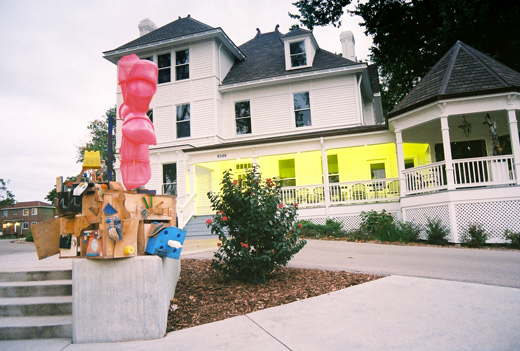
The District A Festival is a day of art, dance, music and food in Kennedy Heights and Pleasant Ridge that highlights those communities' efforts to band together and brand themselves as a destination arts district."We are doing a progressive party building on our arts assets, moving from Kennedy Heights in the morning to Pleasant Ridge in the afternoon," District A's board chair Maria Kreppel said. "Then we're having a community art party in the middle."Kreppel said the festival, this Saturday, mimics a typical Saturday in "District A" where Kennedy Heights' arts organizations offer programming in the morning and restaurants and shops are open in Pleasant Ridge during the afternoon and evening.At this year's festival, dance classes and art demonstrations begin the day at the Kennedy Heights Arts Center and Arts Innovation Movement (AIM) Cincinnati (formerly Ballet tech.) During the course of the day artists from the neighborhood (of which there are many) will sell works along Montgomery Road while art activities and a book sale will be offered at the Pleasant Ridge Library. Also, AIM will present a dress rehearsal preview of TwiNight, a dance performance premiering next Friday at the Aronoff. The event ends with indoor/outdoor concerts and dinner at the All Saints Episcopal Church in Pleasant Ridge. A non-profit, all-volunteer organization, District A grew out of a years-old effort in the two neighborhoods to keep their business districts vital despite businesses moving out. An arts renaissance in Kennedy Heights was sparked five years ago when community members turned vacant buildings into "arts anchors" like the Kennedy Heights Arts Center and later Ballet Tech Cincinnati (now AIM) and the Green Corner and Giving Garden - a market and garden.Pleasant Ridge, a district with restaurants, bars and shops, joined the effort when its community councils joined with Kennedy Heights' to establish the "Montgomery Road Arts Collaboration." It became "District A" in 2008 with assistance from design agency LPK. Kreppel said the name reflects the effort to be "not your typical arts district." The organization currently works to foster communication between artists, businesses, building owners and neighbors to promote community and economic growth, Kreppel said.District A recently helped Pleasant Perk, a coffee shop, through a change in ownership. They have also placed artwork by local artists in vacant commercial spaces at the corner of Montgomery and Ridge roads. Plans for the next big "arts anchor" in Kennedy Heights - the conversion of an abandoned Kroger's supermarket into the Kennedy Heights Cultural Center - will be unveiled at the event.Information on the festival, including times, can be found here. The festival runs from 10 a.m. to 9 p.m.Writer: Henry Sweets Photography by Henry Sweets

CMHA lands $100k for innovative home-ownership program

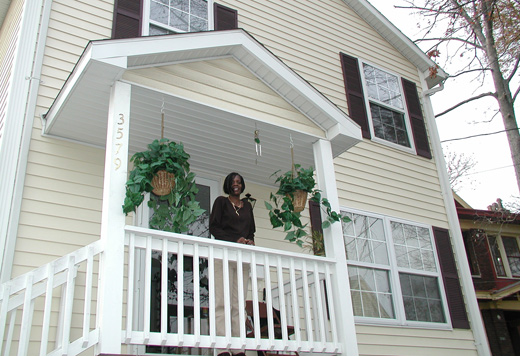
The Cincinnati Metropolitan Housing Authority has landed a $100,000 grant from the Federal Home Loan Bank.  This American Dream Home-ownership Grant will go to support CMHA's Family Self-Sufficiency Program which works with qualified individuals to purchase their first home.The grant works by providing a $10,000 down payment for minority home-buyers within CMHA's self-sufficiency program.  The program is designed to move people out of the cycle of poverty and into a more rewarding life that otherwise might have been out of reach without the down payment assistance."This grant helps the participants get a leg up on moving toward self-sufficiency," explained Stacia Buck, CMHA's Family Self-Sufficiency Manager.  "We want to help them become economically self-sufficient, and this program allows the participants to do just that."CMHA officials say this is the first time they have received this grant, and that it is the largest grant received for the program.  To date, the program has assisted approximately 40 families move into homes; 75 percent of which utilized down payment assistance.To qualify, participants must go through home-ownership training classes before and after they move into the home to make sure the new homeowners understand the costs involved.  Home-buyers must also be approved for a loan before they are eligible for down payment assistance through this program."Our participants tend to come from a long line of renters, and the first step toward home-ownership can often be quite daunting," said Buck.  "We're helping them to take that first step, and we're helping a family move into a better situation that they might otherwise not have been able to afford."The $100,000 grant expires in 2012, but CMHA officials hope that demonstrated success through the Family Self-Sufficiency Program will help them earn this grant award again.Writer: Randy A. SimesImage ProvidedStay connected by following Randy on Twitter @UrbanCincy

Our Partners

Taft Museum of Art
Warsaw Federal

Don't miss out!

Everything Cincinnati, in your inbox every week.

Close the CTA

Already a subscriber? Enter your email to hide this popup in the future.