Energy Alliance spreads efficiency gospel in Covington

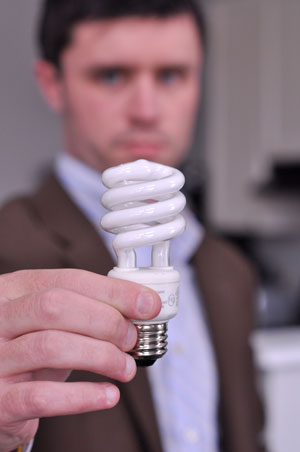
The Greater Cincinnati Energy Alliance (GCEA) hit the streets of Covington last Saturday to distribute home energy efficiency kits and spread the word about programs that provide financial assistance to Kentucky homeowners interested in making energy efficiency improvements to their home.The canvassing campaign was the first in a month-long GCEA effort to reduce energy bills for residents, and generate work for contractors, in Northern Kentucky.A new program called Kentucky Home Performance provides assistance to Kentucky homeowners in addition to the federal and private money that GCEA already offers."It's a program that just came on line literally in the last couple of weeks, so this will be the first real roll-off for it in Northern Kentucky," GCEA executive director Andy Holzhauser said.Working with the Center for Great Neighborhoods, a community development organization in Covington, the GCEA selected about 1,000 homes in the Peaselburg, Levassor Park and Wallace Woods neighborhoods to be visited by volunteer canvassers. The volunteers passed out energy efficiency kits which include compact fluorescent light bulbs and water-saving aerators, and spoke with residents about the benefits of a home energy audits and energy efficiency retrofits."We're bringing to people the message that virtually every home that we've looked at so far, whether it's five-years-old or 105-years-old, has one or a couple of what we call the low hanging green fruit," Holzhauser said. "And those are inadequate insulation, air infiltration reduction, and duct sealing."Lilah Glick, GCEA's marketing director, said that a typical retrofit can produce savings of between 20 and 30 percent of home heating and cooling costs.Between the two funding sources, GCEA volunteers offered homeowners $150 towards a $200 energy efficiency assessment, and 35% of the cost of retrofits recommended in the assessment. Depending on the work being done, and amount of energy saved, the GCEA will also help homeowners locate additional incentives offered by Duke Energy, and federal tax credits."We do as much as we can to be that personal advisor, if you will, for the customer to ensure that their support is maximized and their project is as affordable as it can be, given all the potential resources out there," Holzhauser said.Fifty eight home energy assessments were requested during the Covington canvas.The GCEA will be attending community council meetings at Ritte's East on November 11, Levassor Park and West Latonia on November 15, and Peaselburg on November 22, to continue providing information to Kentucky homeowners about energy efficiency programs.The Covington campaign was the GCEA's third canvas since it began community outreach work this summer. It is the group's first major outreach effort in Kentucky.Writer: Henry Sweets Photo of Andy Holzhauser by Scott Beseler
OTR “question cart” looks at redevelopment using art, community input

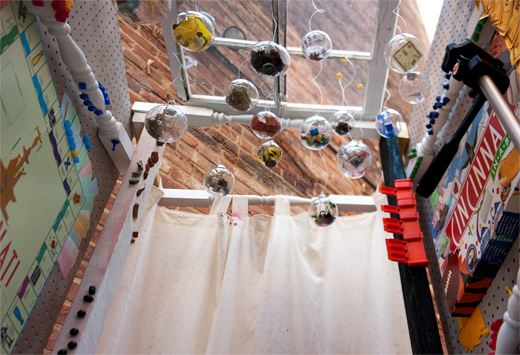
Ethan Philbrick, a University of Cincinnati graduate student and artist, received an individual artist grant award from the city of Cincinnati in 2009 to fund Project CincinnatiUS - a year long series of public performance events tackling societal issues in downtown Cincinnati and Over-the-Rhine.  Project CincinnatiUS has already featured collaborations between cultural workers and artists and Philbrick's most recent effort, The Over-the-Rhine Question Cart," engages residents the living in Over-the-Rhine and questions their feelings about redevelopment of their neighborhood. Philbrick collaborated with sculpture artist, Chloe Paisley, to create a mobile cart and the resulting short film about the project. Philbrick and Paisley rode around the neighborhood and asked residents questions about the potential in the area or their fears concerning redevelopment. The film shows a diverse collection of people as they each share different opinions and stories.In creating the project, Philbrick, a three-year resident of Over-the-Rhine, noted intense feelings associated with redevelopment in the neighborhood. He had heard mixed respones about how renovation wass great for the city, but sometimes difficult and emotional for the people who have roots in this area that are relocating. He decided to make the film to capture those thoughts and emotions.While many residents expressed excitement about the potential in Over-the-Rhine and efforts to make it a better place, some OTR residents shared stories about their fear of having to relocate and not having a place to live in suburban areas where affordable housing is scant. Others shared concerns that redeveloping may not fix the problem of poverty but only disperse it throughout the city. Philbrick wanted to put multiple voices together and see how it made the spectator feel overall."The message of the film was supposed to be complex and not a perfect picture of how a lot of people are relating to this neighborhood in different ways," Philbrick explained.  Philbrick has been showing the film around Cincinnati, and plans to continue showing the film, but you can see it now on Project CincinnatiUS's website.  He wants viewers to engage in more complex thinking about future decision in Over-the-Rhine. "I don't want to think about Over-the-Rhine in polarized manner," Phibrick said. "I wanted to make it quickly and see what kind of work it can do in the world at this moment."Writer: Lisa EnsmingerPhotography by Provided.

Wind turbine at Zoo about more than just electricity

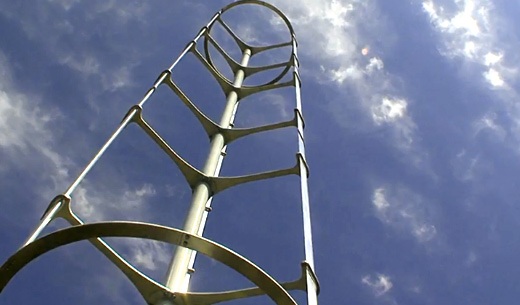
Since June, visitors to the Cincinnati Zoo have had a unique, but non-animal, attraction to see: the zoo's new, 30-foot vertical-axis wind turbine, or VAWT.The turbine, is the first such unit installed at a zoo, and produces an estimated 2000 kilowatts of energy per year - enough to run a typical dishwasher and refrigerator for a year, according to the Zoo.  The turbine and a series of solar panels are providing a third of the power needed to run the Zoo's ticketing building.It's a nifty concept, and an aesthetically interesting one to boot: Rather than the propeller/windmill shape many have come to know as typical for wind turbines, the VAWT looks more like an elongated eggbeater blade, or some type of kinetic sculpture. Videos on the zoo's website show the aerodynamic blades turning slowly in this summer's light breezes, looking more like a child's mobile than an efficient generator.And the videos show another side of the turbine, too. Comments on one, accessed through YouTube, harp on the zoo for spending a significant amount of money on a turbine that produces very little power (the actual cost of the turbine is not listed, but smaller residential units retail for roughly $4,000). In a sense, the comment has a point: why raise a turbine - in an area not known for consistent wind - that can only power a fraction of one building on a very large, very energy-costly campus? Is that really money well spent?A little digging suggests two responses: first, it's not about electricity. Second, in that light it's money very well spent.Visit the Zoo's website and peruse its medial information about the turbine, and it's clear that the installation is less about producing energy than it is about education. There are videos describing the vertical axis design, and showing it at work. There are pdf brochures and pages of information about residential use of wind generators and solar arrays. There is coverage of the Zoo's efforts to save polar bears, whose habitats are at risk due to global warming. And pages throughout the site feature the phrase "what can I do to go green?"The Zoo's turbine is about education. It's a unique eye-catcher, and a touchstone for Zoo media staff to use when connecting visitors to its other, more action- and results-oriented sustainability efforts. The Greenest Zoo in America may not have the most powerful, cost-effective wind turbine on the planet, from a purely numbers standpoint, but taken in larger context, it's a valuable player in a larger effort to produce sustainable, environmentally friendly change in Cincinnati.Writer: Matt CunninghamImages pulled from Cincinnati Zoo video.

Project Groundwork

As many residents learned this spring, Cincinnati has a runoff problem. Enter "Project Groundwork," the first phase of a public works project designed to counter the problem using innovative green solutions.

Video A Casino Meets a Neighborhood

Soapbox and Seven/Seventy-Nine take a closer look at an effort to gather community input to ensure the casino being built at Broadway Commons drives development that reflects positively on the neighborhoods surrounding it.

Local Envoys Bridge The Gap Between Cincinnati And China

From opening restaurants and exploring the world's most hyped consumer market to forging official ties, a growing number of local ambassadors are building a strong bridge between the Queen City and China.

Rosson Crow

Celebrated painter Rosson Crow was in Cincinnati this weekend to unveil "Myth of the American Motorcycle," an exhibition pairing all new work from Crow with customized American motorcycles painted by local artists.

Institute for Social Media at Cincinnati State helps new users get the most out of connecting

Sites like Facebook, Twitter and LinkedIn are so popular that most anyone with access to an internet connection has a profile on at least one, if not all three. Businesses, small and large, too are jumping on the social media bandwagon as an affordable way to drive sales and develop customer relationships.But some businesses do a better job than others at getting people excited about their latest tweet or Facebook state update. How do they do it? There's a new way to find out.Krista Neher, a Cincinnati social media expert and CEO of Boot Camp Digital, is teaming up with Cincinnati State and O'Keeffe PR for a new Institute for Social Media certification. It's aimed at teaching social media newbies how to develop a unique voice online, and form meaningful connections with people/customers."The main objective is to provide training and social application in social media for businesses to help them achieve their goals," Neher said.The three-day course will be at Cincinnati State's Development Center in Evendale. Though targeted toward business professionals, the course is open to anyone. Daylong classes will be held Dec. 1, 8 and 15. Plans are to hold the course each month, depending on demand, at a cost of $1,795, however the inaugural course will be discounted to $1,295."A lot of people who come to training programs of this kind have tried to get their feet wet, and are having trouble building a plan that leads to results," said Neher who provides social media training to large corporations throughout North America. "This will help people who are struggling, wasting time and effort, because something's not set up right.The class will be hands-on, and students will build their own social medial profiles and strategies. There will be homework and testing as well.To help insure the program stays current, the Institute will have an advisory committee made up of industry leaders from across the country.  O’Keeffe PR president Dan O'Keeffe will head the advisory committee.Find out more about the program or register here.Writer: Feoshia HendersonSource: Cincinnati State University and Boot Camp Digital CEO Krista NeherYou can follow Feoshia on twitter @feoshiawrites

The Physicians Foundation awards UC 75K for leadership program

The Physicians Foundation, a national organization that awards grants to advance the work of practicing physicians, has given the University of Cincinnati Academic Health Center a boost with a $75,000 grant to a university leadership program.The grant will go to the Health Center's Physician Leadership Program, an intensive training program for the region's community practice doctors. The five-year-old program identifies and trains physicians as leaders in the area of business and medicine. The program has faced increasing demand since its inception and the grant will help make it more accessible, said Dr. Joan Murdock, UC's Physician Leadership Program director."The demand for the program in past years has been greater than what we could accommodate, and we have turned many interested applicants away," said Murdock. "This grant from The Physicians Foundation will enable us to provide the updated program to a larger cohort of physicians from a wider geographic area over the next two years."Founded in 2005, The Physicians Foundation has awarded more than $20 million in grants since its inception. In the past few years, developing physician leadership has been among the Foundation's top priorities in its mission "to create a more efficient and equitable healthcare system."UC's program fit with the foundation's goal, its president said."The Physicians Foundation has made physician leadership a major focus," said President Dr. Lou Goodman. "Currently, there is a dearth of effective, world-class programs that provide leadership training for physicians. Our goal as an organization is to help identify and train future medical leaders in medical practice, business, government and associations. We believe that doing so will be vital to improving the quality of health care in the years ahead."The UC program began as a partnership between Humana and UC. Designed for 20 to 25 physicians each year, the 20-week program focuses on topics such as the economics of health care and health policy, consumer-centric practice management, cost and quality transparency, and health-sector finance. Writer: Feoshia HendersonSource: UC CommunicationsYou can follow Feoshia on twitter @feoshiawrites

Local father brings Balance Center to Cincinnati

Greg Marischen knows first-hand how fragile yet resilient the brain can be. More than 20 years ago he suffered a traumatic brain injury during a water skiing accident. After hours in surgery, Marischen could only move one side of his body and doctors told him he'd never walk again.But through months of intensive physical therapy that doctors were sure would never work, he eventually regained the ability to move and today he can walk and play sports with his sons. "I was told I couldn't walk again, and I was only in a wheel chair for six or seven months," said Marischen, a tax attorney. "That was something that really changed my views and I knew one day I wanted to help other people."Now Marischen is getting a chance to help his own son as well as other parents whose children suffer from neurobehavioral disorders including ADD, Dyslexia, Autism and other learning disabilities. He's opening The Brain Balance Achievement Center in Symmes Township to help treat those disorders without using drugs. A grand opening is being planned later in the year. This non-medical approach focuses on nutrition, sensory motor work and cognitive work to reconnect the brain's right and left hemispheres. The therapy known as Hemispheric Integration Therapy, or HIT, has been shown to improve student educational outcomes, according to a study in the International Journal of Adolescent Medicine and Health.There are dozens of Brain Balance centers across the county. Marischen began to research the center when his son was diagnosed with ADHD. "I was looking for alternatives to drugs for my son, and found Brain Balance. The more I found out about it, the more interested I was," he said.It took him about a year to bring a franchise to Cincinnati, which included training by New-York based program founder Dr. Robert Melillo, an internationally known brain researcher, professor, author and functional neurologist.Marischen is the Center director, but doesn't have a medical background. He has brought on a six-person team of special education teachers, motor skills coaches and a nutritionist. Initially the Center will work with youth ages 3 to 19 years old. Children will undergo a 12-week program, with three sessions a week. The work could later expand to adults, Marischen said.The Brain Balance center is currently offering evaluations and Parent Lectures to answer questions about the center and its techniques. Call (513) 376-3085 or email Greg Marischen at gmarischen@brainbalancecenters.com for more information.Writer: Feoshia HendersonSource:  Greg Marischen, Brain Balance of Cincinnati

Our Partners

Taft Museum of Art
Warsaw Federal

We want to know what's on your mind.

Close the CTA

Don't miss out!

Everything Cincinnati, in your inbox every week.

Close the CTA

Already a subscriber? Enter your email to hide this popup in the future.