
New to the farming community? You are not alone
A chat with Megan Ayers of Unvarnished Farm.
Farmers in America aren’t getting any younger. According to a report released by the U.S. Department of Agriculture, the average age of an American farmer is 57 years old, which means, sooner than later, a whole lot of farmers are going to retire. What does it mean for the country’s food security when such a large part of its workforce is so close to exiting? One Indiana farmer and agricultural educator wants to let the next generation of farmers know that they’re not alone, and they have resources at their disposal.
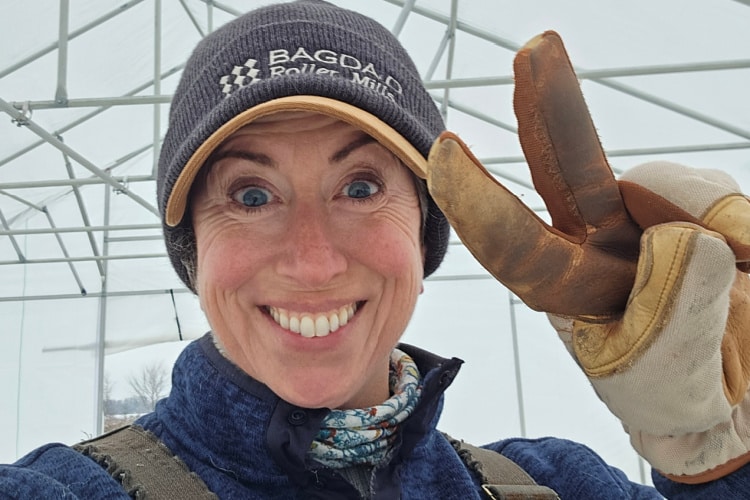
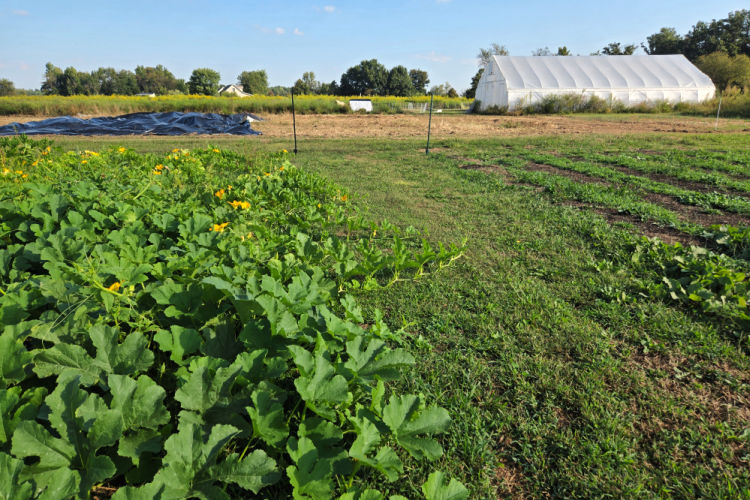
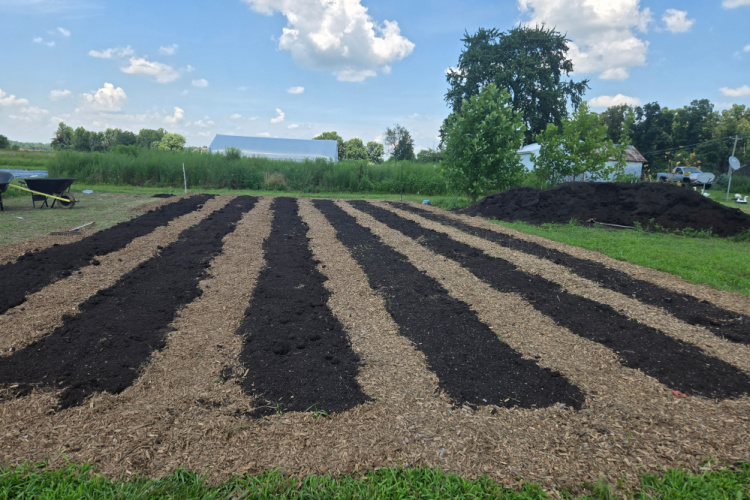
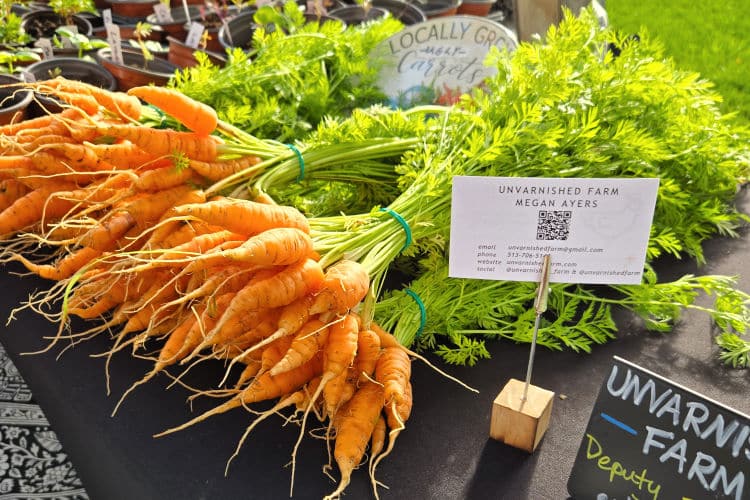
Megan Ayers runs Unvarnished Farm in Deputy, Indiana. There, she sells seasonal produce and eggs utilizing regenerative practices like rotational grazing, cover-cropping, no tilling or chemical spraying, composting and other beneficial soil-friendly methods intended to heal their land. When she’s not in her garden or at the Madison, Indiana Farmer’s Market, Ayers also works as an agricultural educator and technical assistance provider for Indiana Small Farms Conservation (ISFC), an Indianapolis-based nonprofit committed to “educate and advocate to improve soil health on Indiana’s urban and diversified small-scale farms and gardens.”
A lot of the people Ayers talks to through her work with ISFC are new to farming, often humbly starting out in a backyard garden with dreams of scaling up.
“You don’t have to leave for the country. You can do a lot on a very small amount of land,” Ayers says, and she practiced what she preaches. The first garden Ayers ever grew was in a Northside, Cincinnati backyard, later leading to a small homestead garden in Sayler Park. She connected with lifelong Sayler Park resident Mike Oberst (of The Tillers) and, together, they started up the music and sustainability festival Sayler Park Sustains.
“Mike and I both came from the punk scene in the 90s and it was very DIY, so both of us felt confident that we could throw a big festival in the neighborhood, teach people skills they could use in their own lives to be more sustainable, enjoy music, good food and drinks, and each other,” Ayers says. “Thus, in 2013, Sayler Park Sustains was born, and still continues today. Monies raised at the festival go back into the community to fund green initiatives like the Paper Street Community Garden, or the Backyard Chicken Garden Tour.”
Ayers explains that living around people who valued growing food helped her have confidence in her own expansion: “I didn’t think, ‘What if this fails?’ because stakeholders were all around me: neighbors helping neighbors, offering seed swaps or work days in each other’s yards, chicken sitting, advice about fruit tree guilds or native pollinator patches. There wasn’t a feeling that I couldn’t do it because the support was all around me.”
By this time, Ayers ran Parkland Homestead Farm, where she helped to feed her neighbors through a community supported agriculture program (CSA), the Cheviot farmer’s market, followed by the Covington Farmer’s Market, all while farming on one-tenth of an acre. Ayers and her husband, Nick Sansone, were looking to expand their farm as he began searching outside of Cincinnati for work, eventually landing on his dream job in Louisville. That’s when she bought what’s now known as Unvarnished Farm in Deputy, Indiana, where she farms today.
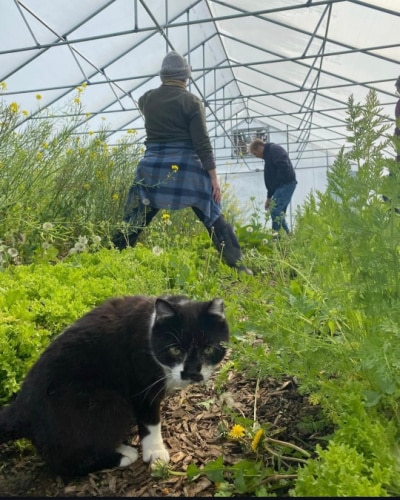
“The house was livable, but not in great shape. It was just a flat square rectangle of almost 11 acres at the right price point, so we were just sold,” Ayers says. “My husband didn’t even see it; he didn’t even visit it. I found it, it was done. I’ve been trying to heal the soil through regenerative practices, soil health conservation by not tilling, utilizing lots of mulch, adding organic matter through composts and cover crop residues, whereas Nick has been working to rehab the house. We moved in February of 2020, then the world shut down.”
Now fully entrenched in a new community, Ayers learned of the various programs and organizations that exist specifically to aid farmers like herself.
“I never knew there were any sort of non-profit groups dedicated to small scale farming, or that there were federal programs to help with conservation practices for small scale growers. I didn’t even know anything about extensions or what they did,” she says. “I was farming for 10 years before I found out any of these things that, to those who are raised in a farming community, it’s just second nature. Of course you would do FFA, of course you would do 4H, of course you would know what the extension educator does. I didn’t learn about any of that stuff until I got a job in conservation, so I want to work really hard for those new farmers so that they know they have support out here.”
So, Ayers wants new farmers to know that they’re not alone out there. With a little community involvement, a bit of curiosity and creativity, there’s always going to be a support network out there for new farmers looking to make the switch to an agricultural lifestyle.
To learn more, visit unvarnishedfarm.com.
This is the third entry in a series that highlights the tri-state’s agricultural producers and the challenges they face to keep their communities fed. If you or someone you know is a local farmer with a story to share, please reach out to Soapbox Media.
Author

Related Articles
Cincinnati technology talent stands out in Next25
The inaugural Next25 list from Ohio Tech News underscores local reputation as a hub for startup talent and technology innovation.
Where to eat well in Middletown
A guide to four independent restaurants shaping the city’s growing dining scene.
Maple myths: Demystifying syrup production in the region
The annual tapping of regional trees is going on now. Two local growers share learned wisdom about how it’s done combining old and new techniques.