
In the Jewish faith, the Hebrew phrase tikkum olam literally means “repairing the world.” Muslims turn to Al-Mizan (“the balance” or “the scale”), in part, as a call to protect nature and practice sustainability. Then there’s laudato si, a papal message that addresses existential issues like responsible stewardship of the Earth.
A Cincinnati-based initiative is uniting diverse faiths to both put these teachings into practice and preserve our planet. Faith Communities Go Green (FCGG), a partnership with regional climate collaborative Green Umbrella and interfaith organization EquaSion, is allied with local houses of worship in the fight for climate action.
In practice, this may translate to energy audits, finding grants for a rooftop solar array, or upgrading from incandescent bulbs to LEDs. This mission is perhaps best captured by FCGG founder and co-chair emerita Joanne Gerson, in a message shared on the website of her synagogue, Rockdale Temple in Amberley Village.
“God created a planet in balance for sustaining life. Life on the planet depends on this intricate balance of systems to survive. We have borrowed too much and upset this delicate balance. We have a small window of opportunity to change our lifestyle to protect God’s creation, for if we do not, it will be too late.” – Joanne Gerson
A grim message, but not a hopeless one, said Gerson. Her organization is underpinned by three working groups: advocacy, facilities and education/ lifestyles. On the advocacy side, team members organize meetings with state policymakers and contact Environmental Protection Agency officials about new rules and regulations. Monthly Zoom meetings cover the latest news, also serving as an incubator for newsletters, bulletins and letter-writing campaigns.
A 60-member education group, meanwhile, lives up to its name through sit downs with regional faith leaders. These talks sometimes result in new “green teams” at a house of worship, or tips on how facilities can reduce their carbon footprint.
This work overlaps with a facilities group led by Ken Wright, a former materials engineer at General Electric. Members tackle the nuts-and-bolts of energy efficiency, utilizing online toolkits to navigate grant applications or implement low-cost upgrades.
Reaching clergy in any or all of these areas is a crucial step in making on-the-ground changes, says Gerson.
“People in faith communities trust their leaders, and will listen if that person says it’s important,” Gerson says. “Or they might have friends in the community who put solar on their house, and they’ll say, ‘Oh, tell me more.’”
Sharing a common goal
FCGG has worked with nearly 20 congregations so far; seven through a pilot initiative, and another eight funded by City of Cincinnati’s Seeds of Change program. Several more houses of worship conducted energy audits under the guidance of Wright and local engineering groups.
Projections compiled by FCGG and its program partners revealed an annual 47% reduction in electric and maintenance costs at the seven pilot congregations. In a separate study, the eight congregations in the second group were forecast to lower their energy costs by approximately 32%.
Gerson believes that faith traditions share a common goal of caring for the planet. This conviction sparked the creation of FCGG, which started as a Jewish environmental organization at Rockdale Temple before encompassing numerous faiths.
A key inspiration for Gerson is “Faith for Earth,” an initiative launched by the United Nations Environment Programme(UNEP) in 2017 and later accompanied by a 57-page publication titled Faith for Earth: A Call for Action.
Among its aims is equipping faith-based groups to tackle global environmental crises. According to UNEP, this effort “underlines that protecting the Earth, restoring ecosystems, preventing pollution, and leaving behind a healthy environment for the next generations is an ethical, moral and spiritual responsibility. With more than one hundred million houses of worship around the globe, adapting green building principles is a massive demonstration of commitment to sustainability.”
In digesting news of wildfires, deadly flooding and severe drought, Gerson and her colleagues believe that no one can escape the reach of climate change. Ohio alone has dozens of parks, forests and wildlife refuges in need of protection. Gerson asks residents to consider the variety of plants they see on walks, or study animals foraging under rocks and leaves.
She points to the message of Genesis 2:15, which entrusts humanity to care for its natural surroundings.
“Without that appreciation and love, the next generation will not understand what we are losing, or what we have already lost, when we do not ‘tend and keep’ the miracle of creation,” says Gerson.
FCGG facilities leader Wright, who helped install a solar installation for St. Simon of Cyrene Church as well as a geothermal heat pump system at Maple Knoll Village, says rallying congregations around an issue that often feels abstract presents its own challenges.
“I work with the approachable ones, which gives us enough to do, while trying to convert the skeptics,” Wright says. “We could always do better, but I feel comfortable that we’ve done things well with the congregations that are receptive.”
Do what you can
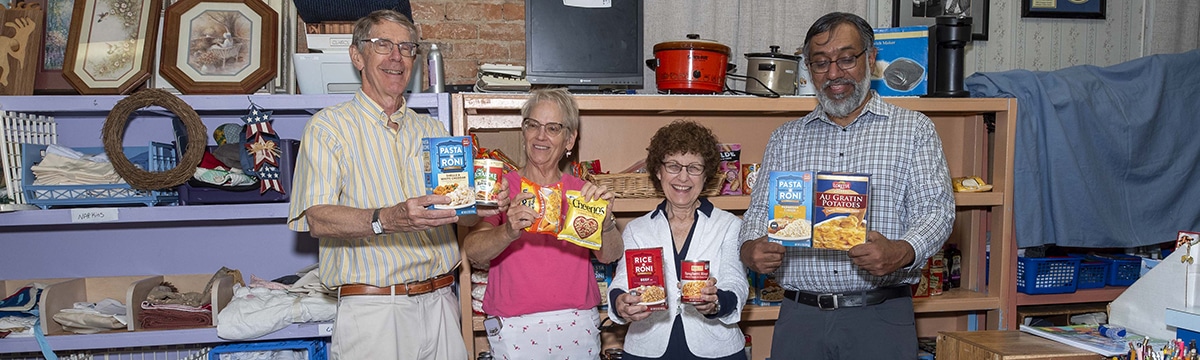
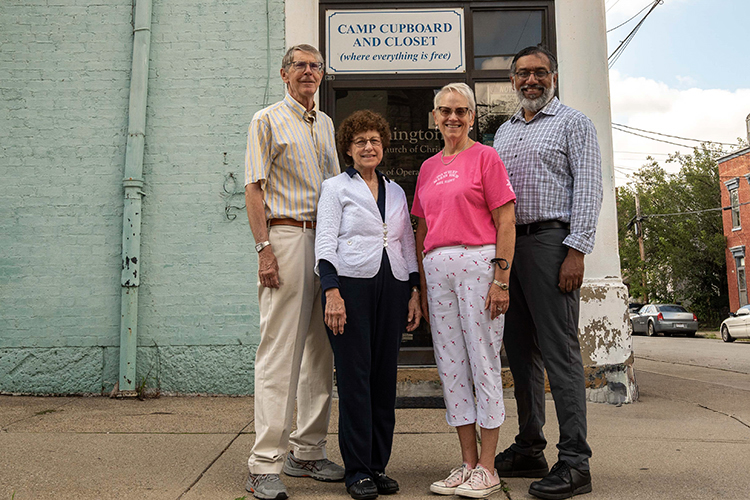
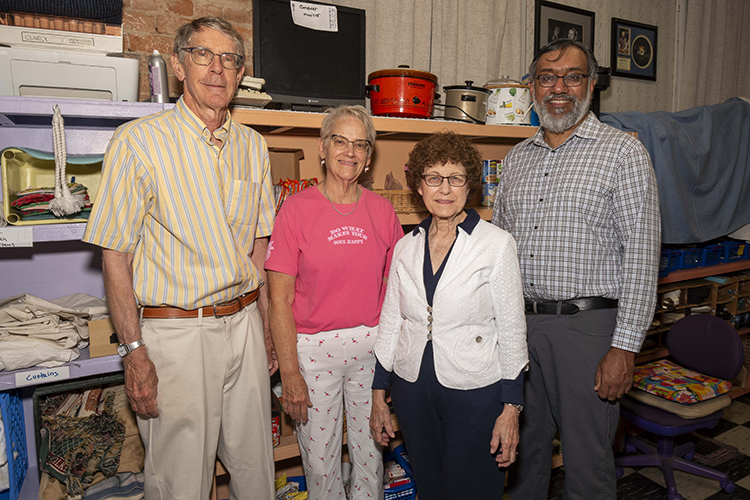
Reverand Melissa Stephens of Washington United Church of Christ (Washington UCC) needs no convincing when it comes to tackling climate issues at her congregation. Washington UCC recently received two green-friendly grants: one for a solar array on the roof of one of its buildings, and another to replace an outdated HVAC system in a church-owned apartment complex.
Funded by a $20,000 award from Seeds of Change, the solar array will generate clean electricity for the church’s food pantry, clothing distribution and household outreach initiatives. According to Stephens, the installation will generate 109% of the energy needed for a meter that had a $7,335 electric bill last year.
Although still gathering bids for the HVAC upgrade, Stephens anticipates significant cost savings for six one-bedroom apartments that currently cost $14,179 to heat and power which is about $200 a month for each unit housing AmeriCorps teams and other nonprofit volunteers.
“We have electric baseboard heat, which just gobbles up energy and is so expensive,” says Stephens. “I see the financial reports every month.”
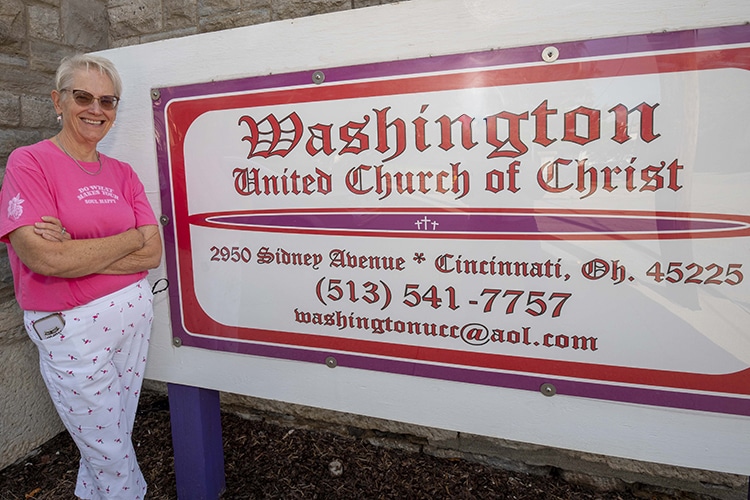
After joining Washington UCC three years ago, Stephens had immediate concerns about the church’s Styrofoam use for the 1,100 free lunches it provides monthly. Barring a wholesale replacement of food packaging, Stephens recognized heating costs and solar technology as smoother pathways to sustainability, she says.
FCGG connected the congregation with the Community Solar Resiliency Program, spearheaded by the Cincinnati Zoo & Botanical Garden (CZBG) to provide funding and surplus solar panels to churches and other organizations. Washington UCC will install its 14.8 kilowatt array before end of year, an easy win that highlights why active participation from diverse traditions is critical, says Morgan Gonzales, a member of the zoo sustainability team.
“Working to reverse the effects of climate change is an effort that needs participation from everyone,” Gonzales said in an email. “Houses of worship have a unique way of engaging with their communities, often providing essential community resources and services. We are aiming to maximize impact by supporting organizations in neighborhoods with high poverty zip codes.”
We are the champions
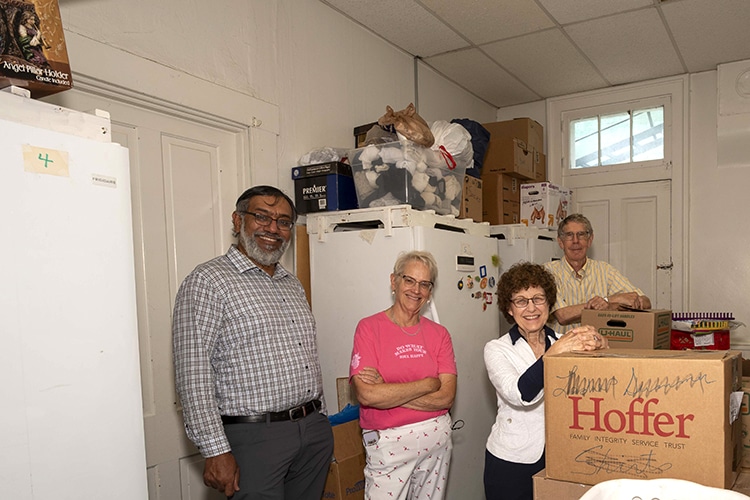
Xavier University professor Anas Malik has been part of the FCGG movement since its first meetings in Sept. 2020. As a Catholic Jesuit institution, Xavier champions laudato si, which emerged concurrently with the Paris Agreement on the climate crisis.
“I’m a Muslim, but I found (laudato si) very appealing,” says Malik, also a chair on Xavier’s committee on climate change. “The pope said people should be engaged in this process, no matter their religion. For me, it’s quite simply that we’re supposed to live as good stewards, and it was clear that we were not doing so. We’re living in a way that’s taking us down a catastrophic path.”
To drive this point home, Malik only need look to his native Pakistan, which has seen dozens die this summer in flash flooding from monsoon rains. In Cincinnati, Malik is a member of the Clifton Mosque, where he’s pursuing permitting and funds for a solar array expected to go up next year. When operational, the installation will cover 89% of the facility’s electricity needs, at an immediate savings of $1,000 a month.
Just walking down Clifton Avenue energizes Malik about setting a precedent for the houses of worship along the corridor. “I’d love for our mosque to adopt solar and become an example for everyone else,” Malik says. “The biggest misconception about solar – or environmental issues in general – is that they’re an optional add-on (in terms of) community need. But it makes great sense for finances, and a reason why these efforts are central in both the short- and long-term.”
For her part, Stephens of Washington UCC spent late July addressing her congregation about the creation of the world and our shared responsibility to sustain its health. FCGG and its work in the community is but one stone in that foundation, she says.
“We have to care for, maintain and treasure the Earth, because it was beautifully abundant in its original creation,” says Stephens. “This is what we are all called to do.”
Author
Related Articles
Greater Cincinnati Society of Professional Journalists and Ohio’s Best Journalism recognize Soapbox for excellence in 2025
Solutions journalism reporting about health, social justice and environment earn top honors.
Beyond the runway: Goodwill and UC DAAP explore fashion’s circular future
A cross-sector collaboration between Cincinnati organizations turned discarded textiles into a conversation about fashion’s future.
Equine therapy and fly fishing find common ground to support children dealing with trauma
New Day Ranch in Verona, Kentucky, and the Northern Kentucky Fly Fishers partnered for the greater good.