
In rural Ohio, a House of Hope and a center for healing rise from a former college campus
Leaders of an Ohio not-for-profit organization saw an opportunity to create a center for community services in Appalachia.
Across the region, there’s a big disparity in how long people live. Nearly 90 years, on average, in Indian Hill and Mason, but barely over 60 in Arlington Heights and Adams County. That’s nearly 30 years of life, love, children, grandchildren, and memories that are lost. Why? Community health experts are looking at the larger forces that shape health and wellness. The places where we grow up, live, work, and age shape our lives and opportunities to thrive. This is the eleventh story in the series, Health Justice in Action, a year-long deep dive into the factors that people and neighborhoods need for long, healthful lives. You can read other stories in the series here. Scroll to the bottom for an image gallery.
As an entrepreneur in the tech world, Stacey Strasser found her career trajectory going in one direction – up. An expert in systems integration and data automation, she co-founded a cryptocurrency hedge fund and is a senior executive at a blockchain tech firm that created software used for trading cryptocurrency. Life was good.
Then something happened that changed her path.
Four years ago, her boyfriend was killed in a motorcycle accident. The tragedy was so traumatic that she spent a year in therapy. In her early 40s, she dwelled on how she would spend the second half of her life.
“If I had one more month to live, would I care about blockchain or any of this?” she recalls thinking. “And the answer was no.”
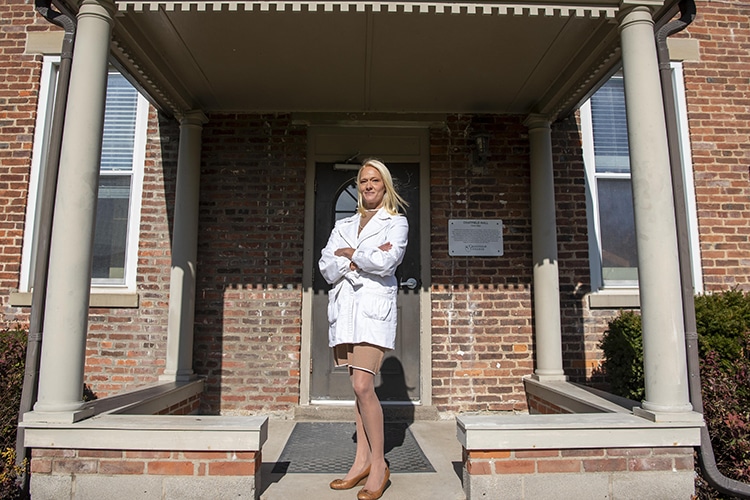
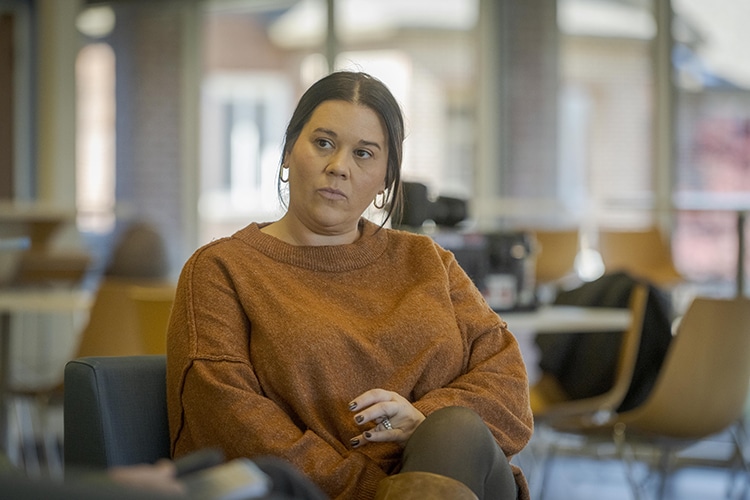
She stepped back from her day-to-day responsibilities at her tech ventures and threw herself into running a small, not-for-profit in rural Brown County, 45 miles from her home in Mason.
“I felt like I needed to go and do what I feel like God has called me to do and what would make a difference in the world,” she says.
Today, Strasser is executive director of Door of Hope, a charity that takes its name from the Book of Revelation: “I have set before you an open door, which no one is able to shut.” Door of Hope’s mission is to restore hope, foster healing and instill dignity for the vulnerable residents in a county populated by small towns, two-lane roads, farms, forests, and creeks, and where poverty, addiction and homelessness are present but largely hidden.
Last year, Door of Hope collaborated with a church in the Ohio River town of Aberdeen to revive a food pantry there that had become inactive. It has also outfitted a trailer with a shower and washer and dryer and plans to tow it around Brown and Adams counties to serve the homeless or others who lack running water.
Its flagship project is House of Hope, a shelter for women and children, said to be the first such facility in Brown County. The plans call for shelter residents to have access to counseling and job readiness training, and other supports. “The goal is to not just provide a bed,” Strasser says. “It’s to provide a good outcome for somebody’s life, for their health, for their skills. Something that can change things for them.”
A 100-acre dream
Strasser dreamed big. Sketching out her plans on paper, she envisioned a hundred-acre campus where those in need in rural Southwest Ohio could find shelter, food, treatment, child care, job skills and begin turning around their lives. Creating such a haven for a small, startup charity would take years, maybe decades.
“There I was with my dream and this drawing of a hundred-acre farm, and collecting ideas and thoughts from different people that engage with poverty, foster care, addiction, homelessness and trying to brainstorm what it is that we should do,” she says.
The defunct food pantry was revived pretty quickly with the help of the church and big food pantries in Cincinnati. She found funding for the mobile shower and laundry. Then in a conversation with the head of the local mental health agency, she heard about a project underway around Fayetteville, 43 miles north of Aberdeen, that was startlingly similar to her plans.
A big, well-funded charity based near Cleveland had bought a former college campus and was planning to turn it into a hub for wellness services, treatment, housing, and mental health care. It wasn’t 100 acres, but it was close – 99.
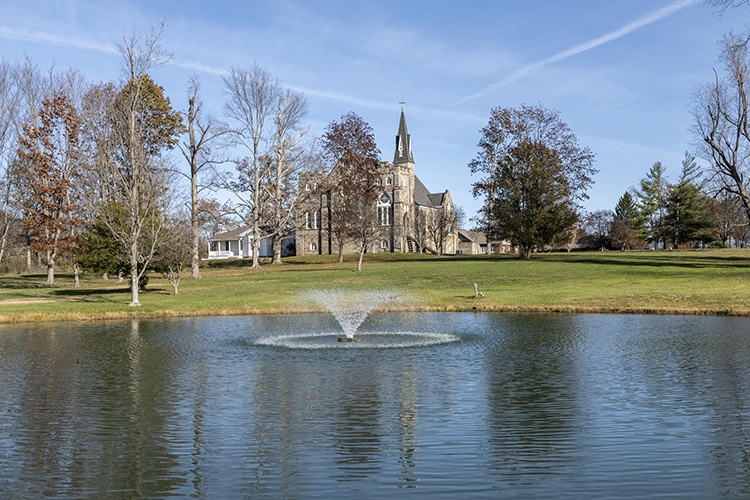
The property was the former home of Chatfield College, a school started in 1845 by the Ursuline sisters of Brown County to serve that rural community. The college leaders had reimagined the mission of the organization, changed its name and relocated. The 99-acre campus was no longer needed, and it was sold.
The buyer was Future Plans Inc., a not-for-profit based in Newbury, Ohio with a mission to end poverty and revitalize communities through training youth and others with in-demand job skills. In 2019, it launched a project to stimulate economic growth in five rural counties in southern Ohio, including Brown, and in 2025 it expanded that effort to encompass all 32 Appalachian counties in the state.
“Future Plans is a nonprofit that is committed to eradicating poverty,” says its CEO, Denise Reading. “And the only way to eradicate poverty is to get people into good-paying jobs.”
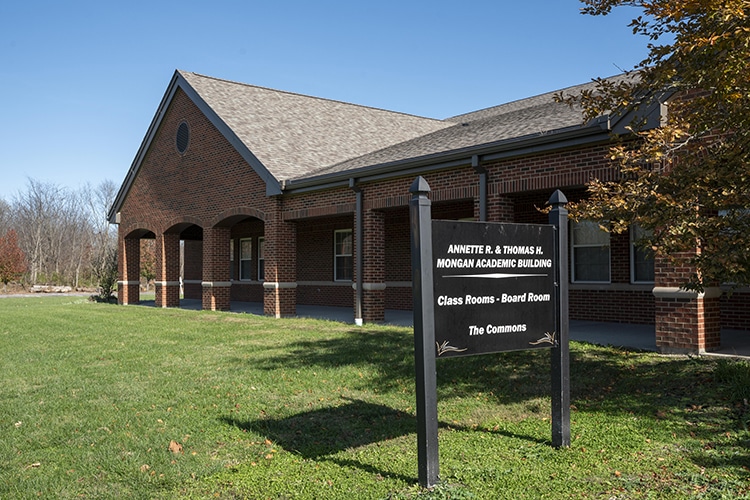
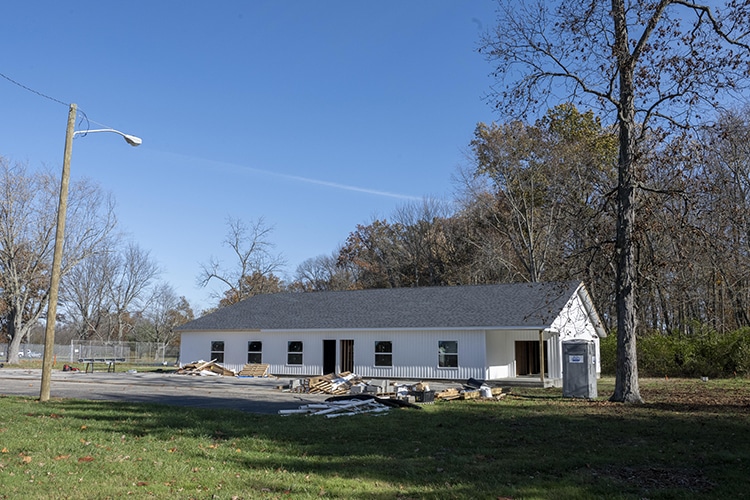
In the college campus, Future Plan leaders saw an opportunity to create a community hub where a range of services could be provided. The grounds contain nearly a dozen buildings of various ages, most of them in decent shape, some of them historic. It was renamed Dragonfly Village, a place where wellness services, recreation, child care, workforce development, addiction treatment will be found, open to residents of surrounding Appalachian communities in Brown, Adams, Highland and Pike counties.
On a windy weekday recently, workers were replacing siding on a building that will house a day care facility that will enable adults engaged on campus to be relieved of child care duties for a while. An old gym will be restored and remain a centerpiece for recreation. Angel’s Harbor, an inpatient addiction treatment center based near Marietta, Ohio will open a residential center on the campus. Chatfield Edge, the successor organization to Chatfield College, will provide support for first-generation college students. Future Plans will sponsor workforce training.
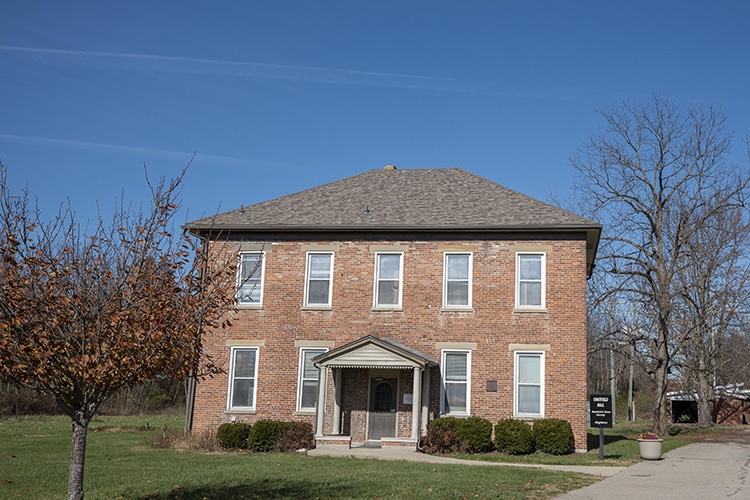
House of Hope will be located in the oldest building on campus, nearly 200-year-old building that once housed a seminary. New flooring has been laid; bathrooms have been renovated; a former manufacturing client of Strasser’s has donated 24 pillow-top mattresses. Pets will be allowed and encouraged, and a vet will make visits thanks to a grant. Benken’s Garden Center on the east side of Cincinnati donated a greenhouse, a place to pursue agricultural therapy.
“I definitely believe that nature and being out in that serene type of environment facilitates healing,” Strasser says.
So rather than build her hundred-acre dream from the ground up, an ambitious goal that would have taken years, Strasser was able to plug into the dream for Dragonfly Village, which is already well underway, and is slated to begin seeing clients early next year.
Appalachia in Ohio
The village is in a region of Ohio that experiences poverty that persists through generations, aggravated by a lack of resources to lift people out of it. The beauty and serenity of Appalachia Ohio belies an environment that is starved for the resources that could support good health and thriving. Brown County has no general hospital, something that would attract doctors, nurses and other medical professionals to the community. The hospital closed more than 10 years ago due to financial troubles. Mercy Clermont, a satellite facility, is a 25-minute drive from Fayetteville, while Adams County Regional Medical Center is 40 minutes away.
There’s a shortage of treatment professionals, so making regular appointments is a long drive both ways. “Some people are waiting one to two years just to get an ADHD assessment for their child,” Strasser says.
There’s no bus system, so making those appointments without a car is problematic. More than 17% of Brown County’s residents are in poverty, well above the national rate of 12%. The poverty rate is even higher in neighboring Adams County – nearly 20%.
Pediatric medical care is scarce, although Cincinnati Children’s just opened an outpatient surgery center and clinic in Batavia, 25 minutes away.
Rural Ohio became a focus of Future Plans’ mission six years ago, when it launched the GRIT Project, shorthand for Growing Rural Independence Together. At the heart of the project is finding decent-paying jobs for students and adults. Future Plans staff brings together public and private agencies – OhioMeansJobs, the state employment agency, the courts, treatment providers, Job and Family Services, businesses and schools – to support their work and collaborate on job placement.
“Often people who live in areas where there’s a great deal of poverty, have neither exposure to their own talents and gifts or an understanding of how they fit the world of work,” Reading says. But its method is to respond to the clients needs and the employment needs of the business community. “We think of our work as being in two parts,” she says. “Help people discover their greatness through assessment and personalized coaching, then provide exposure and discovery activities.”
Since 2019, its worked with more than 20,000 students at 28 high schools to assess career interests and skills, according to its five-year report. Its placed career navigators inside schools, expanding school-support services and working toward a common career assessment. It works with businesses, getting adults trained in electrical work for the Intel chip plant under way in central Ohio and building a talent pipeline for Honda’s expansions in the state.
Half of the students they work with have experienced traumatic events in their lives, a rate more than double that of Ohio overall. “A vast majority of our workforce comes from trauma-based communities or life experiences,” Reading says.
More than a safe place to stay
Dragonfly Village is a response to the need for a center for healing for women and their children who have suffered addiction, domestic violence, homelessness, joblessness or other traumas. Extended child care at the same site as treatment services is critical to its success. “If there’s nowhere for women and their children to go get treatment, women will not go,” Reading says. “Because if they leave their children behind, they’re in dangerous situations that can result in violence toward those children. They’ll die in addiction rather than risk their children’s lives.”
Only three treatment centers in the state take women and children, Reading says. Dragonfly Village will be the fourth.
Angel’s Harbor, which operates a 32-bed residential treatment center in Southeast Ohio, will open a residential unit dedicated to pregnant women and mothers with children up to age three.
“This home will provide far more than a safe place to stay,” says Tim Craft, who founded Angel’s Harbor after he lost his sister to addiction. “It will be a sanctuary where mothers can pursue sobriety while remaining bonded to their children, supported by trauma-informed care, medical partnerships, parenting guidance, and a faith-filled environment.”
With hope, a safe harbor, and a vision for a better future, 99 pastoral acres in rural Ohio could become a stepping stone to a better life for families in need.
This series, Health Justice in Action, is made possible with support from Interact for Health. To learn more about Interact for Health’s commitment to working with communities to advance health justice, please visit here.
Author

Related Articles
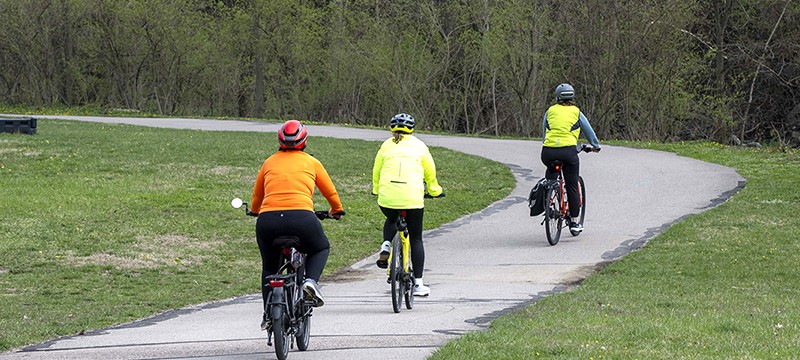
An ambitious vision, the Triangle Trail would connect more than a dozen communities. It’s making progress.
The 42-mile path would improve access to recreational opportunities in communities through the Mill Creek Valley.

Cincinnati technology talent stands out in Next25
The inaugural Next25 list from Ohio Tech News underscores local reputation as a hub for startup talent and technology innovation.
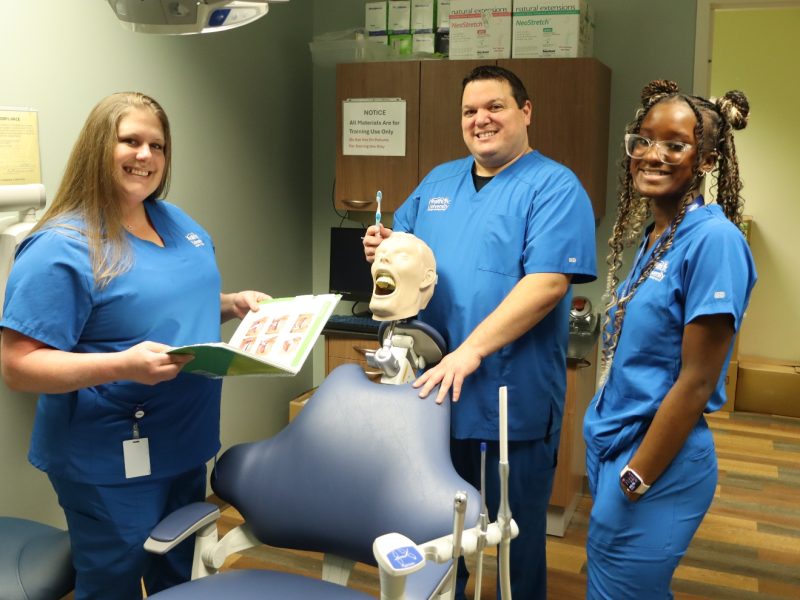
Indiana health center trains local residents as dental assistants to fill workforce gaps
HealthLinc, a federally qualified health center in Valparaiso, covers training costs while preparing local residents for dental assistant jobs, strengthening workforce pipelines and expanding access to care.