
In neighborhoods across Greater Cincinnati, a nonviolent resistance begins to organize
Concerned citizens are taking action — making whistle kits, getting a refresher in the U.S. Constitution, and reaching out to immigrant-owned small businesses.
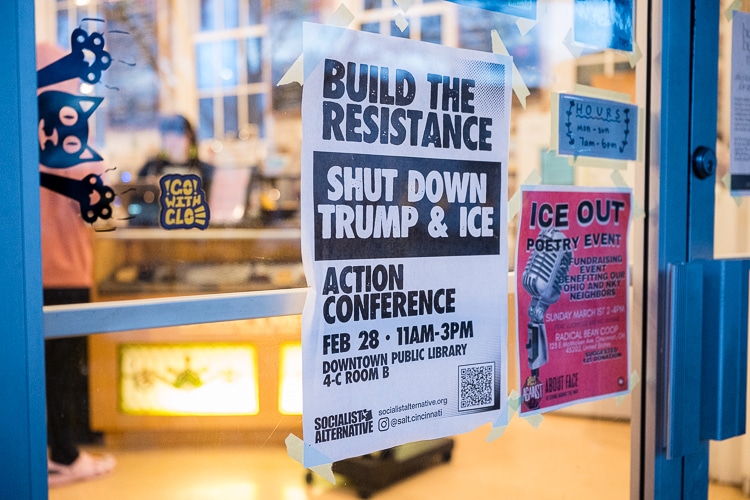
People who feel their voice matters are healthier and empowered. As divisions nationally appear to become deeper, this series, part of the larger Health Justice in Action project, examines efforts to make voices heard and improve community connections.
Horrified by the images of federal agents shooting, gassing, and intimidating other Americans, residents are organizing efforts to resist in neighborhoods and organizations across Greater Cincinnati.
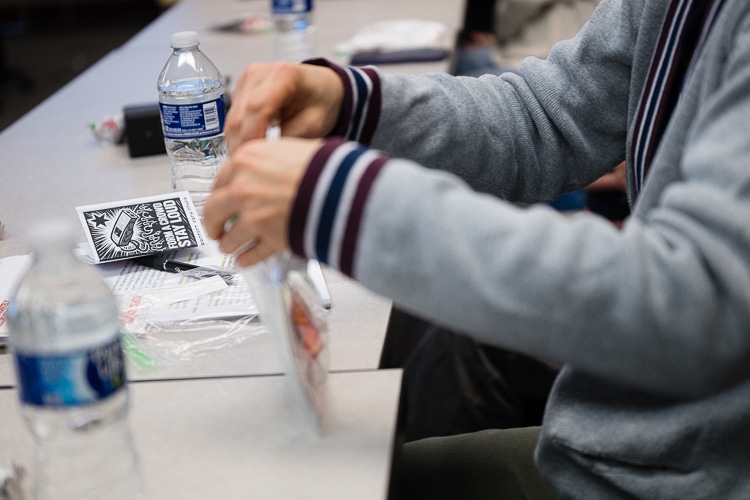
In late January, about 50 people packed into the small offices of Urban Native Collective in Northside to assemble kits that included warning whistles and information, printed in Spanish and English, about the civil rights guaranteed by the U.S. Constitution. Another 25 people waited outside in 20-degree weather for a chance to make the kits. They were to be given to businesses, immigrants, neighbors and “anyone who’s upset about what’s going on,” said one of the organizers.
Many people experienced shock, dismay, and anger upon seeing the violence in Minneapolis and other cities, including Los Angeles and Chicago. Although ICE is present in Greater Cincinnati and has carried out high-profile detentions, lurking in the back of the minds of many is whether Cincinnati, where a Democrat-led City Council once declared it a “sanctuary city,” could be the scene of a surge similar to those seen in bigger cities. But rather than marinate in their anxiety, concerned citizens are taking action — making whistle kits, getting a refresher in the U.S. Constitution, and reaching out to immigrant-owned small businesses. The efforts are antidotes to the violence and chaos they’ve seen perpetrated by agents of their government.
“I’m here to support immigrant families,” said Ashley, a Norwood resident who was waiting on a frozen sidewalk in Northside for a chance to join like-minded people in making whistle kits. “I don’t agree with what ICE is doing and how they are handling it.”
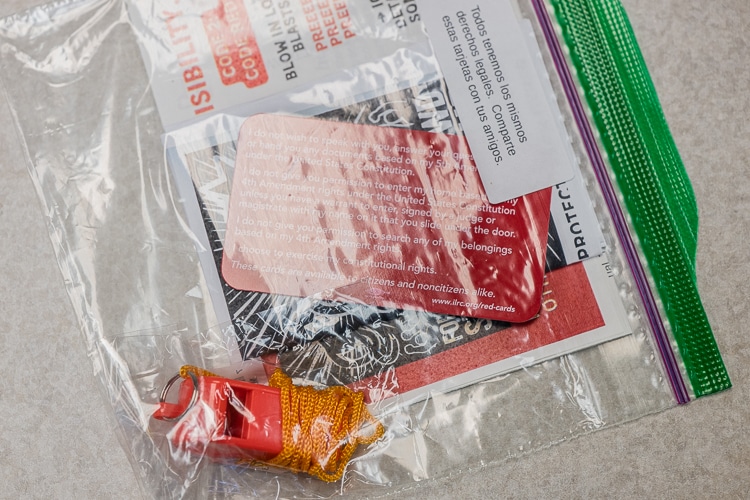
The whistles, many of them made on home 3D printers, have become a tool of resistance to alert people to ICE activity and draw people to the scene. The kits, assembled in sandwich bags, include a bilingual “zine” on how to use the whistles (short bursts for an ICE spotting, long blasts for someone being detained), and a bilingual card with language on how to exercise 4th and 5th Amendment rights.
In Montgomery in February, nearly 200 people showed up for a two-hour presentation at St. Barnabas Episcopal Church to learn about nonviolent resistance, immigration law, and civil rights.
In Wyoming, about 30 people gathered in the basement of the public library to form a neighborhood rapid response team that could swing into action in the event of a raid by the Immigration and Customs Enforcement agents.
In Newport, about 30 people crammed in to the backroom of a bookstore for an hour-long crash course on immigration law and civil rights presented by the Immigrant and Refugee Law Center.
“We’re getting involved because we know what’s coming, and we want to be prepared and available to work with our neighbors effectively,” said one of the attendees.
Whistles and pocket cards may seem like no match for AR-15 style rifles and tear gas, but the efforts are bringing together like-minded people to protect vulnerable immigrants in their communities. They create solidarity at a time when chaos and division are ascendant. And organizing is something of a remedy for the fear, rage and disaffection many felt as they watched American citizens shot, killed, and injured, and immigrants, many with no criminal record, be detained, arrested and rounded up.
“We are all kind of in emergency mode right now,” says Samantha Searls, a program director with Ignite Peace. “It’s important that we try to stay together so that we can all do what we can to fight back.”
Searls and her colleagues at Ignite Peace, formerly the Intercommunity Justice and Peace Center, have delivered presentations on nonviolent resistance and immigrant rights to more than 2,500 people in the last year-and-a-half. Working with volunteers, they have canvassed more than 400 businesses to share information about the rights of business owners and employees.
The outreach to businesses is a direct response to the practice of ICE agents to raid and inspect businesses, including restaurants, construction sites and farming operations, searching for undocumented immigrants or those who might be undocumented. Employees been arrested or detained, and entire businesses and neighborhoods have been disrupted.
To protect them, volunteers have visited hundreds of businesses in the region to hand out information about their rights and to answer questions.
Cathy, a retired nurse from Sharonville, has visited more than 80 small businesses, from Anderson Township to College Hill to Erlanger to Fairfield. She’s often able to hit multiple businesses at strip malls, such as ethnic groceries, restaurants and bakeries.
Typically, she’ll educate owners or managers that they can designate certain areas as private, or for employees only, and agents do not have a right to enter those unless they have a legitimate warrant. She shows them the difference between a judicial warrant, one issued and signed by a judge, and an ICE administrative warrant, a document that is generated by the agency and doesn’t carry the same force as one that comes from a court.
Her volunteer work has helped dozens of businesses and their workers as well as given her a purpose and an activity to assuage her angst about the harsh turn the country has taken.
“I have a special place in my heart for immigrants and what’s happening to them,” she says. “I just felt this was so wrong and actually damaging to our country.”
The work has helped her get her bearings in a turbulent time and introduced her to others of a similar bent. “It’s just helped me tremendously,” she says. “I became very anxious right after the election.” She researched some activist groups and started working with a couple, Ignite Peace and Indivisible. “All of them promote peaceful action, which is the only thing I want to be involved in.”
Her anxiety, fear and commitment was shared by others at the Wyoming meeting, where nearly three dozen people, many of them senior citizens, were learning how to set up secure communications with each other through Signal.
Most didn’t want their names used out of fear they could be targeted. The Wyoming’s group first order of business was setting up a channel of communication that could be free of eavesdropping. The media is not invited to these events. We agreed not to use names in many cases so people would speak freely.
“I want to get involved to protect my neighbors,” said one.
“I hope to make connections with other people who are doing similar things,” said another.
“I love my community, and I think that this is the only antidote to what’s going on,” said another. “I worry that my grandkids are going to see this as normal in this society, and I don’t want that to happen.”
“I want to make sure that I say which side I’m on, what I support and what I don’t support,” said one. “It makes me feel a little less out of control. It gives me something to participate in, and I get to see who else feels the same way.”
Their trepidation of course is secondary to the anxiety experienced by immigrants. “The threat of ICE activity is literally terrorizing people into hiding and not going to work, and into not sending their kids to schools,” Searls says. “The psychological stress of what is happening is manifesting in so many different ways.”
At the church in Montgomery, a Children’s Hospital physician spoke about the experience of family members in Minneapolis. Her niece and nephew there, both children of color, have been attending school remotely all year because armed ICE agents have been posted on the school grounds. “My family feels as though their city is under siege,” she said. “I’m really scared for lots of reasons, for my kids, for my family, for my patients.”
Inspiring fear is one way ICE and the Trump administration encourage people and organizations to “obey in advance,” Searls says. Recall how big law firms, prestigious universities and media organizations have succumbed to the Administration’s demands. That dynamic is playing out in neighborhoods too. “They want us to fall in line and implement these horrible policies,” she says. “But we don’t have to do that, and it takes bravery.”
Studies have documented the impact of authoritarian policies and tactics on the public: a weakening of democratic institutions and a rise in hostility to immigrants and other groups perceived to be “outsiders.“
“Authoritarian impulses threaten people’s personal freedoms, as well as the democratic foundations upon which these rights are enshrined,” concludes a 2023 study by four psychologists.
In its presentations, Ignite Peace emphasizes nonviolence, laying out the principles of a practice that has been effective, most notably in the U.S. in the civil rights upheaval of the ‘60s.
Stoking fear, anxiety and resentment is not a new political strategy, but it has usually been employed in countries ruled by authoritarian figures. To see it employed in America has generated feelings of alienation, disgust and anger among many.
“They’re trying to divide us and make us fight against each other and overwhelm us, so that we lose energy, and we lose steam,” Searls says. “We just can’t do that. There’s too much at stake.”
And while making whistles may be no match for guns, the work has another goal of building relationships, empathy and understanding in a world where distrust and division reign. It’s an act that can inspire the collective courage to resist.
This series is made possible with support from Interact for Health. To learn more about Interact for Health’s commitment to working with communities to advance health justice, please visit here.
Author

Related Articles
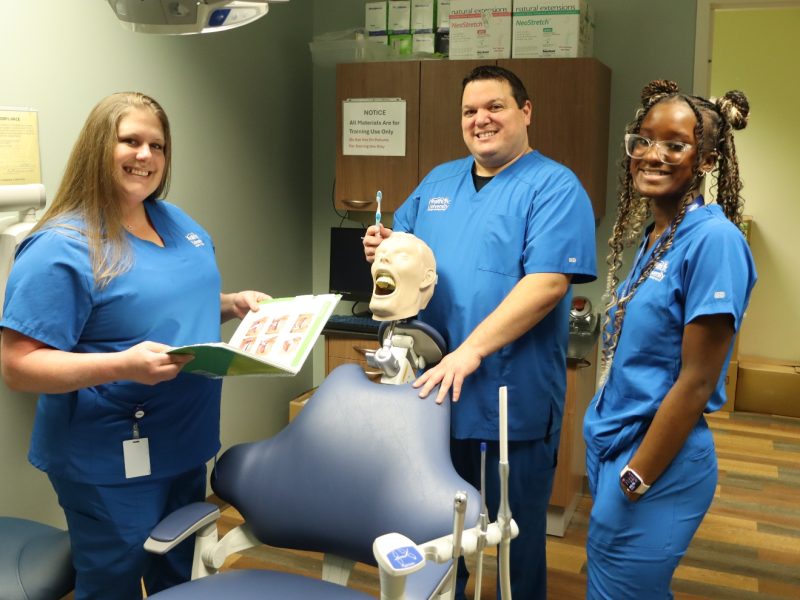
Indiana health center trains local residents as dental assistants to fill workforce gaps
HealthLinc, a federally qualified health center in Valparaiso, covers training costs while preparing local residents for dental assistant jobs, strengthening workforce pipelines and expanding access to care.

Video What does a neighborhood look like when it controls its future?
People who feel their voice matters are healthier and empowered. As divisions nationally appear to become deeper, this series, part of the larger Health Justice in Action project, examines efforts to make voices heard and improve community connections.
She helped Haitians settle into Springfield. Now she wonders if it’s safer for them to leave.
Inside a Haitian grocery store, Margery Koveleski — a “manman” to many — and her daughter Laura help their clients navigate uncertain futures as an immigration crackdown dismantles legal pathways to stay in the country.