
Foundation Park, 100 apartments planned for Middletown’s Manchester and Main
Three local partners are each investing $5 million in the revitalization project.

Intentional planning and leaning into what makes a city what it is can recreate thriving urban centers. However, cities are not monoliths, and the solutions devised must align with their best attributes. Middletown’s government and civic officials understand the need, and are proactively aligning essential infrastructure, enhanced housing stock, and a vibrant public space to provide Middletown regional residents new ways to appreciate a downtown that’s too often overlooked. Here’s a look at how numerous local stakeholders joined forces to turn necessity into an opportunity to boost civic quality of life.
Implementing a water collection system
Sufficient sewer capacity is an essential function for any city, and those that exist near waterways must mitigate the emission of detritus, waste, and effluvium into that body of water. The federal and state Environmental Protection Agencies (EPA) mandated that Middletown implement a water-collection system that reduced overflow of both sewer and storm water into the Great Miami River rather than increasing the chance of backflow into residents’ homes. Scott Tadych, Middletown’s public works and utilities director and a 26-year city employee, noted that city leaders had been negotiating a solution with federal and state EPAs since the early 2000s, with a mutual agreement reached in 2017. Construction began a couple of years later but was slowed by the pandemic. Middletown hardly stands alone with this issue. Tadych noted that approximately 90 cities throughout Ohio were required to make similar modifications.
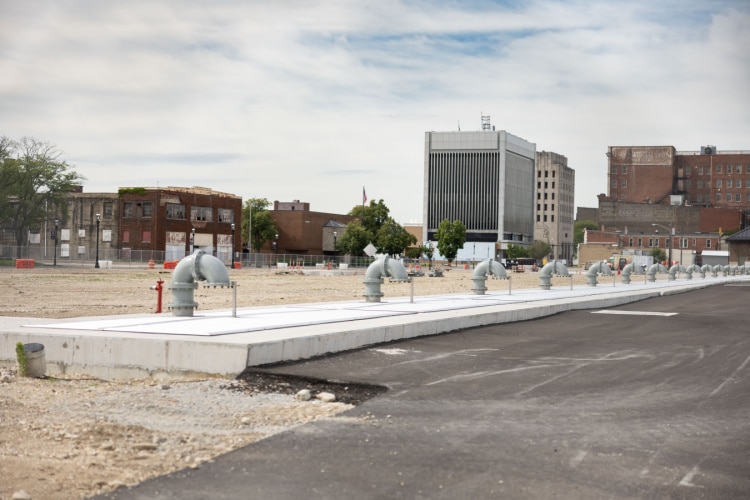
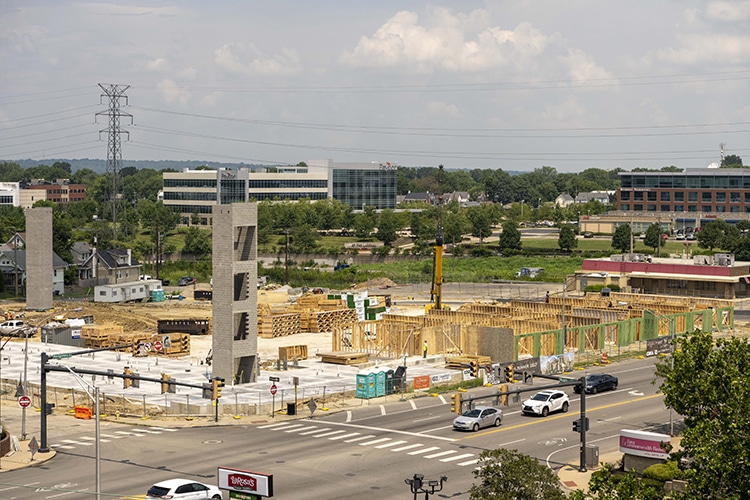
On the west side of N. Main Street, between Columbia Avenue and Manchester Avenue, a 5.1-million-gallon capacity, concrete, underground water-collection tank was completed last year, and was integrated into its sewer system in November to minimize combined sewer overflows (CSOs). The system is constantly monitored by a master control panel and equipment installed in structures peripheral to the basin.
“Prior to the tank’s implementation, heavy rain and sewage activity would cause approximately 80 [CSOs] per year,” Tadych said. “Now, we’re confident that it will reduce the occurrence of overflows to five or fewer times a year. No CSOs have happened since the tank became operational.”
The approximately $54 million cost to build the basin and supporting electrical and mechanical apparatus will be paid for by the city, with some of the cost subsidized by a loan from EPA grants that will be repaid over 30 years.
“The sheer size was one of the biggest challenges of the project,” Tadych said. “We had no experience building such massive infrastructure, but we were able to enlist the help of general contractor, Shook Construction, to follow best practices for the basin’s construction and management.”
Transforming vacant lots into a public park
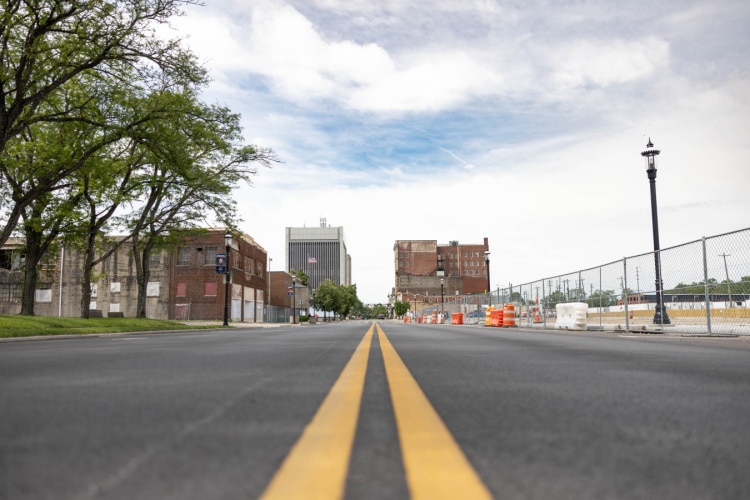
The 2.5 acres situated above the basin is being transformed from vacant lots into Foundation Park, named in honor of the Middletown Community Foundation (MCF), one of a triad of organizations, along with the Butler County Financial Authority (BCFA) and the city of Middletown, that staked $5 million each to the revitalization of its downtown. The park’s development budget will be derived from this fund.
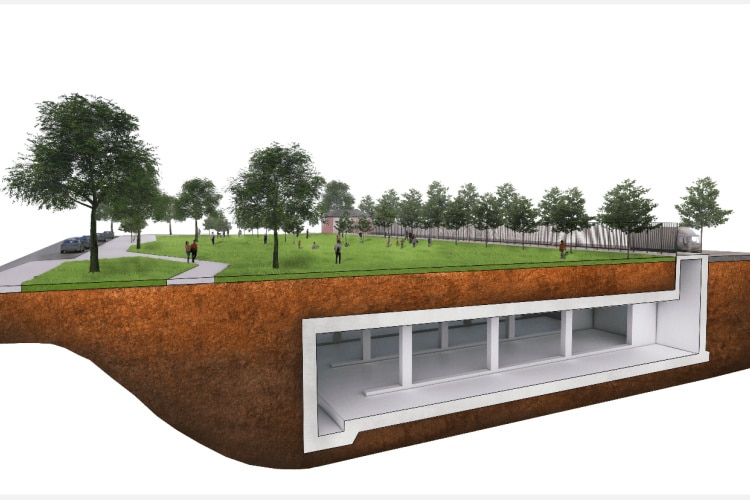
Josh Smith, BCFA’s president and CEO, spent 14 years as Hamilton’s city manager and 25 years as a local-government employee, so he’s acutely aware of the need of a strong confluence of public finance, infrastructure, redevelopment, and alignment of public and private partners to attract private investment and enrich communities.
“Public spaces and infrastructure projects are foundational to economic vitality and job creation,” Smith said. “Today, companies increasingly want to invest in communities that offer a strong quality of place, walkability, gathering spaces, housing options, and vibrant mixed-use environments that help attract and retain talent. In many cases, placemaking and infrastructure investments become the catalyst for broader redevelopment and future job growth. Reactivating these currently underutilized properties can help start the process of bringing new jobs, additional foot traffic, and private investment back into downtown Middletown.”
Smith referenced two significant city-owned properties as civic assets that could be effectively leveraged as viable commercial space for more vibrancy downtown: the former Cincinnati Gas & Electric regional headquarters at 1 North Main Street, which includes approximately 80,000 sq. ft. of available office space, and the former First National Bank building.
Travis Robinson, MCF’s executive director, assumed his post in January. Formed in 1976 under the United Way umbrella, MCF has operated as a standalone agency since 1987. It maintains more than $40 million in assets and has contributed significantly to numerous civic and educational endeavors.
“We look at our role as a community leader and are eager to collaborate with projects that will benefit Middletown,” Robinson said. “We’re excited to contribute to the development of a best-in-class public greenspace that will help add to a ‘live, work, play’ quality of life.”
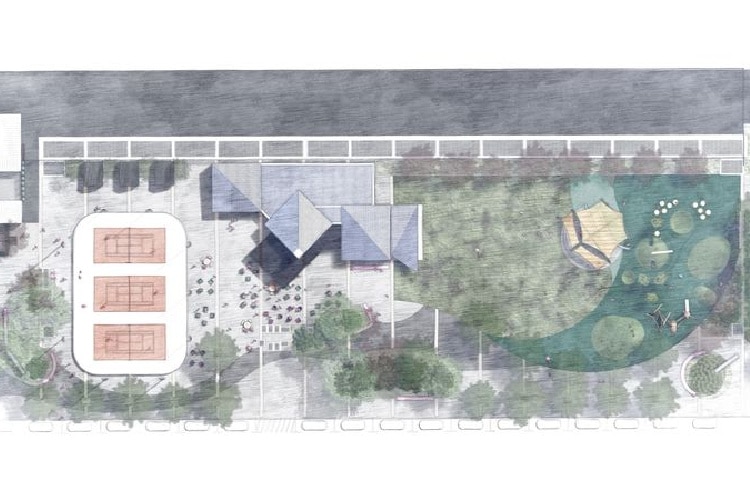
The park, which is scheduled to be completed in late 2027 or early 2028, is slated to include such amenities as a permanent ice rink (a temporary one had been used during holiday seasons) that will be converted into a roller-skating rink and pickleball courts during warmer months, an amphitheater, and accompanying structures such as a concessions stand and skate-rental booth. MCF is coordinating the park’s conceptualization with Gresham Smith, a civil engineering and landscape architecture firm with a location in Blue Ash.
Robinson touts the park as the “community’s living room” and is confident that the addition of mixed-use projects—including the revitalized property that will emerge on the former site of the Manchester and Sonshine buildings—will enhance civic life in Middletown. Although MCF holds the park’s current naming rights, Robinson noted that its moniker is available to individual or organizational benefactors.
MCF engaged Reimagine Middletown, a non-profit organization that supports events and activities downtown, to undertake Foundation Park’s event programming. Avinne Kiser, its founder and board president, said she was inspired by the opportunity provided by holiday festivities to create the organization to help entice visitors to stay downtown.
“Light Up Middletown had been a tradition [since 1999],” she said. “But the people came downtown just enjoyed the holiday lights and left. We wanted to encourage people to further enjoy our community.”
To complement the beauty of Middie City aglow in holiday lights, Reimagine Middletown marshaled community resources to procure a temporary ice rink, and engaged local organizations and businesses to stage an array of holiday events to add to downtown’s fun factor. Now, Reimagine Middletown will broaden its scope to hatch happenings to generate downtown traffic.
“I want to make sure we’re hosting concerts and events that attract a broad age range,” she said. “Being family-friendly is important, and we also want to attract audiences that reflect our diversity.”
Kiser said that one essential element of making Foundation Park a civic success will be collaborating with other organizations. She envisions concerts and events in collaboration with the Sorg Theater, Downtown Middletown Inc., the city’s library, and other key community entities.
“When organizations operate in silos, it’s a missed opportunity to combine ideas, talents, and resources to help enrich a community’s quality of life,” Kiser said. “Middletown has beautiful historic buildings, a strong arts scene, and a solid tradition of philanthropy. We want the park and its activities to authentically represent Middletown.”
More housing downtown
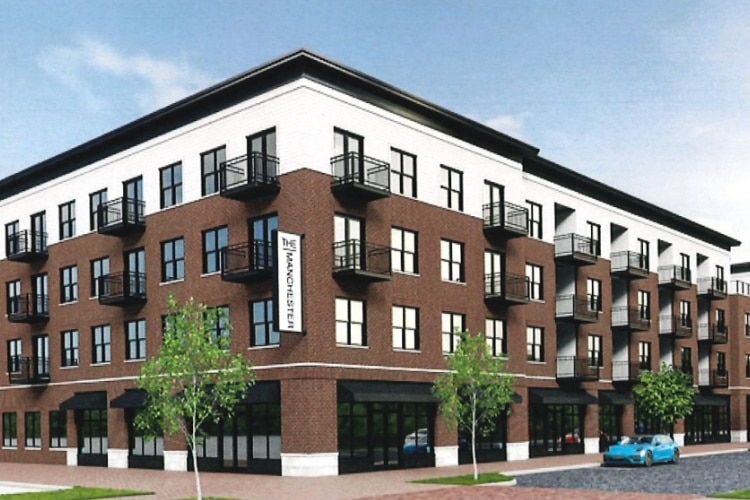
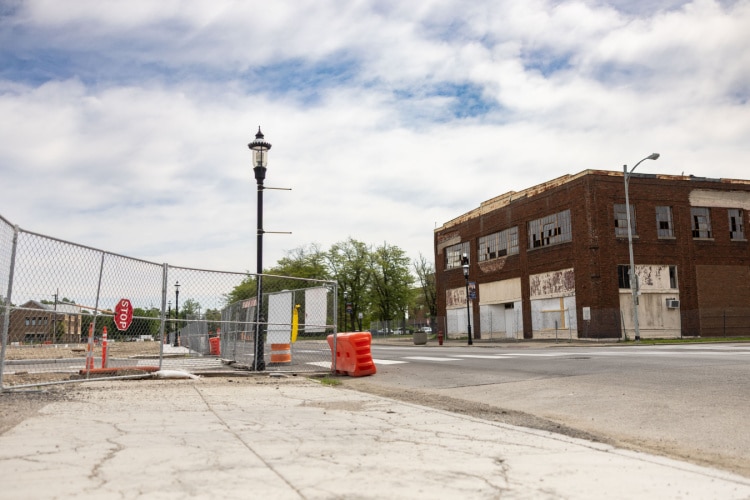
One anticipated outgrowth of Foundation Park’s creation will enhance downtown housing with attractive residential stock. CMC Properties, a Blue Ash-based property-management company, is supervising the demolition of the Manchester Hotel and the Sonshine Building along the Manchester and Main corridor to construct a mixed-use complex that will add at least 100 state-of-the-art apartments to downtown. Estimated completion is late 2027 to early 2028.
Jacob Schulte, the assistant director of Middletown’s Community and Economic Development Office, noted that the Manchester-Sonshine redevelopment is a centerpiece in a $30 million investment made by MCF, the city of Middletown, and the Butler County Commission.
In addition to the residences, the development will include 15,000 sq. ft. of commercial space. There aren’t prospective tenants in mind yet, but Schulte said a mix of restaurant and retail is the goal. He noted this project will complement the Renaissance Pointe development happening alongside I-75 on the Middletown’s east side.
“The goal is not to compete with the Renaissance Pointe development,” Schulte said. “Downtown has its own authentic history and character that offers an opportunity to provide an authentic urban core experience.”
The synergy between the city and county organizations leans into their complementary strengths, effectively gathering resources to realize the vision of a prosperous Middletown downtown community.
This Partner City Middletown series is made possible with support provided by: Cincinnati Commercial Contracting, the City of Middletown, the Middletown Community Foundation, and the Chamber of Commerce serving Middletown, Monroe and Trenton. You can read other stories from the Partner City series here.
Author

Related Articles
In search of the inaugural cultural journalism fellow
Wave Pool and Soapbox partner to support innovative journalistic coverage of culture in Cincinnati.
StartupCincy Week marks a decade of building Cincinnati’s startup community
The event returns in October with a bigger footprint, more programming, and proof that Cincinnati’s startup ecosystem has grown without losing community-driven spirit.
Who lives in our communities is changing. Housing needs to change with them.
The housing picture is complicated by changing demographics in the first-ring suburbs.