Uptown

Uptown includes all the neighborhoods around the University of Cincinnati including Avondale, Clifton, Clifton Heights, Corryville, Fairview, Mt. Auburn and University Heights, so it's a diverse mix of students and residents in one of the city's most distinct and eclectic group of neighborhoods. Uptown is the home of the Cincinnati Zoo as well as multiple hospitals and the Ludlow shopping district where you can find trendy and unique shops as well as any scent of incense you need. Ethnic restaurants, including a curiously high concentration of Indian eateries, multiple taverns, coffee houses, music venues and the Esquire — one of Cincinnati's finest independent art house movie theaters all make Uptown a one-stop walkable bazaar of exciting entertainment options.  

Anchor districts emerge as powerful players in bid to shape new metropolis

In Cincinnati, Cleveland and East Baltimore, major employers are anchoring massive new developments in a full-on effort to remake their cities. Strong partnerships and shared visions are essential elements for success.

Old kids on the block: Calhoun cornerstones offer alternatives

As U Square at the Loop looms large, long-standing Calhoun Street businesses in Clifton hope for a long-awaited resurgence.

CISV promotes world peace among children

In 1946, the idea for Children’s International Summer Villages was born; and in 1951, eight countries gathered together in Cincinnati to bring founder Doris Allen’s dream of inspiring world peace to fruition.  Allen’s idea for a nonprofit organization stemmed from the devastation of World War II. As a child psychologist who studied development, she believed that peace would ultimately be up to our children.   Now more than 60 years after the first CISV, the nonprofit that started in Cincinnati continues to thrive; and it has grown into an international sub-organization of the United Nations Educational, Scientific and Cultural Organization, with chapters in more than 60 countries, that host 180 village experiences and international programs a year.   Catherine Bell, a 16-year-old student at Turpin High School, went to her first village at the age of 11. For one month, she lived in a camp-like setting at a monastery in a mountainous region of South Korea, where she spent time learning and growing with other 11-year-olds from countries around the world.  “At a village, it’s mostly about instilling good morals and building a basis for you to make your opinion—you gain leadership,” says Bell, who now serves as CISV Cincinnati’s junior branch president. “The reason the founder chose 11 [-year-olds] was because you’re old enough to make decisions, but you don’t have previous judgments and your mind is clear—you don’t have any biases.” Bell’s village experience began with a homestay, where she says she lived with a host family so she could experience the South Korean culture for a few days. Then she, along with the other delegates—composed of two boys and two girls from each of the 12 represented countries—went to their village, where Bell says they engaged in fun activities like capture the flag. But they also participated in activities that while enjoyable, had a deeper meaning.  “During lunch, we did some activities about disabilities, where I might be tied to someone else’s arm, and you have to eat together or you aren’t allowed to speak,” says Bell.  Bell says the activities, debriefs and general unity that resulted from living with people who were initially complete strangers enabled her and others to gain leadership skills and develop lasting friendships.   “At 11, there’s no weird tension between boys and girls, and I felt like I was best friends with every single person, and we just grew together,” says Bell. “I don’t have any words to describe it because it’s just—it’s probably the best thing that’s ever happened to me.”  If it weren’t for the friendships she made and the confidence she gained through her learning experiences and time away from home, Bell says she’s not sure she would be as fearless as she is today.    “Before getting into CISV, I was really shy, and I had friends, but I’m also the middle child, so I’m very independent and I internalize a lot of things,” she says. “I really learned to open up, and I have no problems speaking in front of people. I’m so much more outgoing, and I think that is just such a gift to go from this shy little girl to this outgoing person who can speak their mind.”  Do Good:  • Pre-register for 5K The Global Way, which takes place March 16. Proceeds help fund CISV Cincinnati programs and activities.  • Learn about volunteer opportunities so that you can get involved with CISV Cincinnati.  • Learn about the various programs for youth and adults, and consider joining the Cincinnati chapter of CISV.  By Brittany York Brittany York is a professor of English composition at the University of Cincinnati and a teacher at the Regional Institute of Torah and Secular Studies. She also edits the For Good section of SoapboxMedia. 

Mindful Youth provides tools for at-risk youth to address life challenges

John Orr, 35, started practicing mindfulness about 10 years ago to cope with and better understand the difficulties he was facing in life.  “Those difficulties were rather significant, and looking around at my friends, I noticed that they were all facing similar difficulties, and I needed to find a solution for myself,” Orr says. “Otherwise it seemed like the difficulties of our lives were going to continue.”  Those difficulties for Orr’s best friend of 23 years did continue, as he took his own life at the age of 26, leaving behind a daughter, family and friends, who Orr says “cared about him deeply.”  “He was a great friend—a better friend than I’ve ever been to anybody—and I don’t consider myself a bad friend," Orr says. "He was just really caught up with a lot of drug use, and he couldn’t find a way out." It was his death, Orr says, that motivated him to consider thinking that things could have been different.  “Things didn’t have to end up that way, and if he had the tools to better deal with the stresses of life early on, I think all of that could have been avoided,” Orr says.   So Orr founded Mindful Youth, a nonprofit organization focused on helping at-risk young people improve the qualities of their lives by learning to pay attention to their thoughts and emotions while leaving judgments behind.  “I felt that early intervention would be better—to intervene proactively rather than reactively," he says. "That’s a strategy that seemed worthwhile to me." Mindful Youth’s primary focus is to provide group therapy and mindfulness training to identified populations like those who are, for example, incarcerated in the Hamilton County Juvenile Youth Center. Orr, who is a licensed professional clinical counselor, also provides individual therapy and serves as a consultant, providing mindfulness training to organizations that work with at-risk populations.  During therapy sessions, Orr says he incorporates an element of formal meditation.  “Let’s say a difficult thought were to arise," he says. "We’d frame it like, ‘Well okay, is the thought really serving you?’ Taking it a step further, we look at it as, ‘Thoughts are just thoughts—they’re never facts. They can describe facts, but thoughts are always thoughts, and we don’t necessarily have to listen or identify with every thought that arises.'" “When it comes to looking at emotions from a mindfulness perspective, we try to help the person create space so that they can see that while they have these emotions, that’s not the entirety of who they are. And so if they can make the space for them and just kind of allow them to be there, they may not be succumbed by them and they may have the power to choose how they respond," Orr says. He says the effects of mindfulness on youth, particularly at the Juvenile Youth Center, are amazing because the population the organization serves there is composed of young men who have a lot of anger and who are “quite vocal” about it.  “We don’t tell them to try to calm down or anything, but the results we get from that are—these guys just report that they’re feeling calmer, that they have a better understanding of how to manage their anger, that they have more insight into who they are and they can see this idea that, ‘Okay, if this is what’s going on with me, I’ve got a tool to deal with it,’ which is pretty cool,” Orr says.  What began as a tool for Orr to use in his own life has evolved into one that he’s now able to share with others, with the hope of helping young people to deal with the abundance of mixed messages they are exposed to daily so they can figure out a coping mechanism that enables them to be happy and productive individuals.  “I was looking for some answers in my own life, and meditation was just appealing to me—there was something that just drew me to it, and as I explored it, it became one of the greatest journeys I’ve ever been on and a journey that’s always with me,” Orr says. “I don’t have to go anywhere, and it’s always been very rewarding. At times it’s been challenging, but for the most part, I feel like it’s completely changed my life, and it continues to do so on an almost daily basis.” Do Good: • Donate to Mindful Youth.  • Volunteer with the organization to share your mindfulness practices. • Contact John Orr for more information about mindfulness, or about an opportunity for Mindful Youth to teach young people, organizations or families about its practices.   By Brittany York Brittany York is a professor of English composition at the University of Cincinnati and a teacher at the Regional Institute of Torah and Secular Studies. She also edits the For Good section of SoapboxMedia.   
Taste of Belgium expanding, using SoMoLend to fund venture

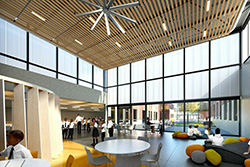
Jean-François Flechet opened Taste of Belgium in Findlay Market in 2007; four years ago, he expanded his restaurant venture to Columbus’s North Market, and a year and a half ago, he opened a full-service Belgian bistro on Vine. In the next few months, there will be two new Taste of Belgiums in the Cincinnati area—a full-service restaurant on Short Vine near UC, and a waffle counter at Friendly Market in Northern Kentucky.   The Short Vine location is on the first floor of a brand new building that includes 120 apartments. The waffle counter at Friendly Market is the only food vendor in the first phase of the market. It’s right on the edge of phase 2, which is ideal for future expansion, Flechet says.   Taste of Belgium on Short Vine will have a menu very similar to the one on Vine Street, says Flechet. But it will have more affordable options at dinnertime, such as chicken and waffles and bar food.   “There will be a bigger focus on the bar, with both Belgian and Belgian-style beer sourced from local breweries,” he says. Flechet wants to attract the college students who live around Short Vine, which is a different demographic than his customers at the bistro and Findlay Market.   Taste of Belgium is slated to open in early May at Friendly Market, and on Short Vine during the first week of July.   Flechet isn’t going the traditional route for financing his new business ventures. Instead, he’s working with local crowd-sourcing start-up SoMoLend to raise a portion of the funds for the restaurant. He wants to promote crowd-sourced funding as a viable alternative source of financing for small businesses.   “When I opened Taste of Belgium on Vine, it was hard to get financing,” says Flechet. He wasn’t able to obtain a loan from the bank, but the building’s landlord got one through 3CDC. In turn, the landlord charges high rent to recover the loan. The North Market location was financed by a loan from a small business lender who Flechet has been working with for four years.   SoMoLend connects small business owners who are in need of a loan with investors who are looking to make a return on their investments. The organization allows borrowers to get loans from customers, friends and family members. It allows lenders to make a difference on a more local level.   “SoMoLend has been promoted on a national level, but not much on a local level,” Flechet says. He’s trying to get the word out to his customers that he’s using SoMoLend and bring more users to the lending service.   The Taste of Belgium crowd-sourcing campaign launches March 11. If you want to contribute to the campaign and are a customer, friend or family member, sign up on SoMoLend’s website.   By Caitlin Koenig Follow Caitlin on Twitter

City Hall launches app as a community-organizing tool

The City of Cincinnati has taken out the back-and-forth that can occur when residents try to reach them to report issues in their neighborhoods. At the Neighborhood Summit on Feb. 16, Vice Mayor Roxanne Qualls announced that the Cincinnati City Hall mobile app is available to the public.   With the app, residents can look up trash, recycling and street sweeping days, and set reminders; locate and report problems by address; bookmark locations for quick reporting; and track the status of reports. City Hall mobile also has GPS, so users can report issues, even without an address. There’s even a searchable map with property owner information, which enables residents to see if a property is occupied or vacant.   A few years ago, residents had to use the Yellow Pages to look up the number for city departments to file complaints, says Kevin Wright, executive director of Walnut Hills Redevelopment Foundation. The city then implemented a hotline for all complaints, but residents never knew the status of their reports.   “It’s amazing how comprehensive the app is,” Wright says. “If you see a broken window, pothole, graffiti, hanging gutter or anything else that is physically wrong with your neighborhood, street or community, you can report it in an instant. It’s a great tool for neighborhood redevelopment.”   The app can also be used as a community-organizing tool, Wright says. For example, if there is a property owner who historically hasn’t taken care of his or her property, social media can help organize a community and target the property to enforce codes until the property is fixed, which is what neighborhood councils and organizations like WHRF do.   “We’re really putting power in the hands of the citizens of the neighborhoods,” he says.   As with most tech programs, the app has room to grow, too. In the future, it could be linked with Facebook or Twitter, so your friends and followers will know who reported problems and where they are.   Cincinnati residents can download the app in the Apple App Store or download it through Google Play.   By Caitlin Koenig Follow Caitlin on Twitter

Video Tyler Witte, driven to the edge

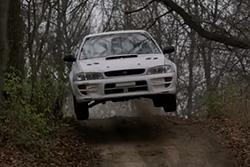
Cincinnatian Tyler Witte, 25, drives his car hard. UC Electronic Media alum Doug Horton captures Witte's passion on film. Video courtesy Doug Horton.

Library adds downloadable magazines to collection

Utilizing the Public Library of Cincinnati and Hamilton County’s resources just got easier. At the beginning of February, the library released its latest service: Zinio. It enables anyone with a library card to download free magazines as soon as they hit the newsstands.  “It’s really wonderful to be able to download magazines from the comfort of home,” says Sandy Bolek, Internet site coordinator for PLCHC. “We’re trying to meet the changing interests and needs of our customers, and there’s a tremendous interest in downloading everything out there.”  With more than 650 titles, users will now be able to download as many magazines at a time as they wish. Plus they never have to return them.  “I think there will be people who download maybe 20 magazines at a time, because how often can you walk into a library and have every single issue available for the taking that you can hang on to?” Bolek says. “So I expect that our interest and usage in magazines will go up significantly.”  In the past month alone, PLCHC users have downloaded 16,396 magazines through the new service. Magazines aren’t the only downloadable materials the library offers, however. Free e-books, audio books and even music are all available to patrons as well.  “You’re able to sit at home in your jammies at 11 at night and download music, e-books, an audio book or a magazine,” Bolek says. “We talk about being able to use the library any time, anywhere now, and I think people are increasingly expecting that in just about every service area.”  According to Bolek, the library is on track to reach one million downloaded items by October, which is a huge accomplishment in terms of achieving its mission of “connecting people with the world of ideas and information.”  “The nature of information has of course changed over the years and the decades," Bolek says. "Our collection has significantly expanded, but it’s still information. We’re supporting people’s reading interests, connecting them with books, connecting them with information, and the variety of ways we’ve been able to do that has really expanded.”  Do Good:  • Learn about Zinio, download the app for your smartphone or tablet and show your friends and family how to start downloading free magazines.  • Sign up for a free library card so you can take advantage of the many resources the library has to offer. • Promote literacy by joining a book club, reading to children or taking them to library events. By Brittany York Brittany York is a professor of English composition at the University of Cincinnati and a teacher at the Regional Institute of Torah and Secular Studies. She also edits the For Good section of SoapboxMedia. 
Tap into maple season with Cincinnati Parks

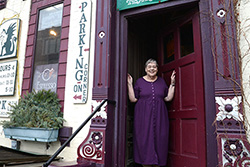
For the past month, Cincinnati Parks’ naturalists have been busy tapping sugar maples, collecting sap and boiling it down to produce real maple syrup. They’ve even taught the public how to make use of their own backyards to do the same.  With March quickly approaching, maple season will come to a close, but not without celebrating what Explore Nature! program assistant manager Erin Morris refers to as “Maple Madness.”  Maple in Mt. Airy and Pancakes in the Woods are “for those who maybe aren’t interested in doing it in their backyard, but for those who love the sweet success of the season, who want to taste that and who want to learn a little bit about the history,” says Morris.  For decades, Cincinnati Parks’ representatives have worked to relay the importance of nature education to the public. “When we started in the 1930s, technology was pretty minimal—we only had vehicles in the last 20 years, so people were outside,” says Morris. “There was no air conditioning, and they’d often sleep outside during the summer season, so people were much more connected to the outdoors and natural experiences.”  With a changing culture and a technologically oriented society, Morris says people have lost the connection with the outdoors. The Explore Nature! program aims to remedy that, however, and celebratory maple sugaring events are some of the ways in which it teaches people about the outdoors.  At both maple events, participants begin with a pancake breakfast, where they enjoy the syrup that’s been produced by the trees surrounding them. They then go on to learn the story and process behind maple sugaring.  Following breakfast at Maple in Mt. Airy, participants are immersed in the time period. They ride through the woods in a hay wagon to an area where naturalists dressed as Native Americans and pioneers teach about the first uses of maple syrup in the United States through taste-testing and hands-on experiences that explain photosynthesis and the ways trees provide nutrients for both humans and nature.  “When people think of maple sugaring, they think of Canada because they have the sugar maple leaves on their flag, but Ohio’s been producing maple syrup since the Native Americans in the 1700s,” Morris says. “It’s getting back to our history in Ohio—and even history in Cincinnati—but also having that connection with local products.”  Maple Madness events take place throughout the first two weekends of March.  Do Good: • Register your family, friends or student group for Maple in Mt. Airy. • Enjoy pancakes cooked by celebrity chefs and learn about maple sugaring at Pancakes in the Woods at the California Woods Nature Preserve. • Like Cincinnati Parks on Facebook, and join and share their events with your friends. By Brittany York Brittany York is a professor of English composition at the University of Cincinnati and a teacher at the Regional Institute of Torah and Secular Studies. She also edits the For Good section of SoapboxMedia.   

OTR Foundation preserves history, promotes community

From organizing events involving beer and historic churches to providing affordable housing and jobs to those who have struggled to attain them in the past, the Over-the-Rhine Foundation does a little bit of everything. And it's all for the purpose of reinventing and celebrating a diverse, historically-rooted community. At the beginning of February, Kevin Pape, who’s lived in Cincinnati his whole life and who grew up with a fondness for the OTR community, stepped up to the role of president of the foundation.  OTR has been a part of Pape’s family history for multiple generations, so he’s someone who understands what the community has to offer.  His grandparents lived in OTR and operated a business there until 1935, though it was actually started back in 1850. Pape lived in the community himself for about four years in the 1970s, and his office at Gray & Pape—a cultural resource management and historic preservation consulting firm—just celebrated 23 years at its Main Street location. Pape says because of his background, he deals with the renovation of historic buildings all the time, but his vision for OTR contains much more than the preservation of buildings. “I think my interest really is in community-building,” Pape says. “The message is that it’s really all about putting people back into historic buildings and finding ways to do that in a meaningful way.”  One way Pape and the OTRF plan to build on that vision is through their strategic plan, which entails owner-occupied redevelopment, historic preservation and the goal of making OTR the greenest historic neighborhood in the country.  “We also want to encourage people who are investing in the neighborhood to seek ways to provide meaningful employment and jobs for people that live in the neighborhood who may not have had access to opportunities before,” Pape says.  While working to show that “green buildings, sustainable buildings, LEED certification and historic preservation are actually compatible,” the OTRF also helps organize events like Bockfest, which Pape says showcases what’s good and great about the community. This year, the nonprofit, in conjunction with American Legacy Tours, is offering historic church tours, which will highlight the architecture and stories of four different 19th century landmarks within the community.  “When you think about the size of OTR and the number of churches, it gives you a good sense about the density of people and the diversity even at that time that would have such a population to support a variety of churches,” says Pape.    It’s that diversity that has withstood the test of time, and which Pape says the community embraces at all levels.   “Socioeconomic, racial, ethnic, you name it,” Pape says. “It provides residential density that allows people to share ideas and celebrate those differences in being able to all live in a compact place at one time. It’s about not only economic vitality, but residential vitality.”  Do Good:  • Attend Bockfest, and register for the Historic Churches of OTR Tour. • Support the Over-the-Rhine Foundation by becoming a member. • Volunteer to help the organization preserve and revitalize OTR. By Brittany York  Brittany York is a professor of English composition at the University of Cincinnati and a teacher at the Regional Institute of Torah and Secular Studies. She also edits the For Good section of SoapboxMedia.   
Our Partners

Solutions journalism takes time, trust, and your support.

Close
Psst. We could use your help today!

Don't miss out!

Everything Cincinnati, in your inbox every week.

Close the CTA

Already a subscriber? Enter your email to hide this popup in the future.