Architecture + Design

Preservationists gather in Cincinnati to develop adaptive reuse strategies for Over-the-Rhine

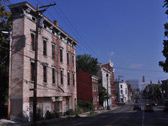
The National Trust for Historic Preservation chose Cincinnati as the location for its National Trust Advanced Preservation Leadership Training session that is focusing on adaptive reuses for four historic properties in Over-the-Rhine. The week-long training session is doing more than bringing together preservation professionals from Cincinnati and around the nation, the session is focusing on one of the most difficult issues facing preservationists working in historic urban neighborhoods. "A lot of these buildings were made for uses that no longer apply like St. John's Church on Elm Street which will probably never be used as a church again," said Paul Muller, Interim Executive Director, Cincinnati Preservation Association which is sponsoring the session locally with the Over-the-Rhine Foundation.  "New uses for these buildings makes them economically viable again, and helps to make the city a vibrant place." The preservationists involved in the week-long training session were split into four groups and toured the buildings on Sunday, July 18.  Over the course of the week the groups will put together a report for their respective buildings that will include proposals for the structures.  The reports will then be presented at a public meeting on Saturday, July 24 at Memorial Hall (map). "We're happy that the National Trust for Historic Preservation followed up on this after naming Over-the-Rhine one of the most endangered historic districts in 2006," Muller said.  "They only do a few of these trainings each year, and it is an honor they chose Cincinnati." Muller explained that following Saturday's report presentations at Memorial Hall, the National Trust for Historic Preservation will follow-up with additional efforts down the road, but he emphasized the importance of this work even if nothing comes from it immediately. "Other cities have historic districts that would only make up a corner of Over-the-Rhine.  Seeing a collection of historic buildings this large through outside eyes is really inspiring, and so far the participants have been amazed by the city and its rich historic assets."Writer: Randy A. SimesPhotography by Scott BeselerStay connected by following Randy on Twitter @UrbanCincy


Latest in Architecture + Design
LEED-certified housing hub pops up in Northside

Early last fall, Potterhill Homes announced its newest housing endeavor, a community in Northside called Northwind.  Now, just nine months later, and a month since the ribbon-cutting on the community, over one-third of the Northwind lots have been sold. And each is LEED certified, adding a dense cluster of modern, progressive planning to a historic neighborhood that has enjoyed a reputation for beautifully timeless housing stock.The Northwind models were touted for offering options including solar and geothermal energy systems, and, according to Potterhills' Northwind representative Vicki Painter, every buyer has taken advantage of those opportunities.  "All of them have opted to go LEED certified," she says. "[These homes] were built to LEED standards so, for 1500 to fill out the paperwork you save 30,000."Beyond the savings, Potterhill president Carolyn Rolfes suggests that the people interested in Northwind are just involved, forward-thinking people, period. "It's such a mix. And it's people who are excited to move back to the city."While Northwind means adding fresh blood and a new wrinkle to Northside, Rolfes says that being mindful of the existing neighborhood is always part of the Potterhill mission. "That's always our goal: to try to complement what's already there," she explains. "We've always tried to mimic the older architecture."  Painter points to design elements in the Northwind units such as big front porches, as an effort to connect back to the feel of the rest of the area. "We have that craftsman look," she says. "So we blend in well."If the idea of a multi-lot development might seem out of place alongside the stately older homes that have been Northside's architectural calling card, it bears noting that the community's location between Kirby and Hamilton Avenues sits slightly adjacent to Northside's historic core to the south.  And the homes -- which range in price from $150,000 to just over $170,000 -- are small enough to fit comfortably into an urban neighborhood.Moreover, there is no denying that Northwind is meeting an obvious demand, with nine of twenty-five lots selling within weeks of the June 15th ribbon-cutting. "People want to live in Northside," Painter says. "We've never had an opening w/ such impact."Writer: Jeremy MosherPhotography by Jeremy Mosher

Region’s first consumer marketing startup accelerator The Brandery launches

Dubbed The Brandery, it's the region's first startup company accelerator that will offer funding, mentoring and partnerships around the local consumer marketing businesses. The Brandery's founders are Cincinnati digital marketing executive David Knox, serial entrepreneur J.B. Kropp, and Taft Stettinius & Hollister attorney Rob McDonald."The power of The Brandery is the collaboration between people and companies in our community," said Knox, brand manager of global branded entertainment at Procter & Gamble. "Entrepreneurs will benefit from a wide range of talented people in consumer marketing here as well as globally."The Brandery is looking for consumer-facing businesses such as consumer Internet, media and entertainment companies based on technology platforms.The Brandery will invest in tech-based consumer businesses that rely on the internet, media or entertainment.  Companies can begin applying immediately at Brandery.org. Deadline for submissions for this first session is Aug. 11, 2010. Five companies will be selected for the first session which will begin in late August.Each applicant selected for its 12-week accelerated program will receive a $20,000 grant in exchange for equity in the company. Each company also will receive brand identity guidance from leading agencies including LPK, Resource Interactive, Barefoot Proximity, Empower MediaMarketing and Ample.   CincyTech, a public-private venture development group, is funding those $20,000 grants through its Imagining Grant funds aimed at growing companies through the investment stage."Our hope is to create a whole new pipeline of startup companies that focus on consumer marketing, to complement our portfolio of companies in information technology, bioscience and advanced manufacturing," said CincyTech President Bob Coy. "Our mission is to grow jobs in thriving industries."In addition to CincyTech and the five creative agencies, support is coming from the Haile/U.S. Bank Foundation and Xavier University’s Williams College of Business, which donated money for operating capital for The Brandery. The Brandery also is endorsed and supported by the Cincinnati USA Regional Chamber, Queen City Angels, Hamilton County Development Corp., and other local entrepreneurial organizations.The annoucement of the Brandery follows Gov. Ted Strickland's July 12 designation that the city would be the state's Hub of Innovation and Opportunity in Consumer Marketing. Along with that designation came a $250,000 state grant that will fund a hub director and an incubator that will assist startups and create new business and jobs in the consumer marketing industry.Writer: Feoshia HendersonSources: CincyTech, David Knox, co-founder The BranderyYou can follow Feoshia on twitter @feoshiasoapbox

Soapdish: Educating Tomorrow’s Urbanists Today

Located in a historic building on Short Vine in Corryville, the Niehoff Urban Studio is dedicated to addressing urban issues that challenge the quality of life in Cincinnati, and helps educate not just students, but the community at large in the "pleasures of the urban lifestyle." 

Moerlein Lager House to pay tribute to Cincinnati’s brewing heritage while anchoring its future

Final details have been released on the $4 million Moerlein Lager House that will include seating for approximately 1,100 people inside the brewpub and outdoors in its biergartens.  The new brewpub is expected to achieve LEED certification and include a geothermal heating and cooling system. Once complete in August 2011, visitors will be treated to a food menu that will feature a variety of food items often found on the menus of Over-the-Rhine's 19th Century biergartens, the largest collection of Cincinnati craft brews, a unique setting on Cincinnati's central riverfront, while also being treated to a history on Cincinnati's rich brewing heritage. "We're trying to put Cincinnati beer and its brewing heritage on the map, and we're well on our way thanks to a lot of community and civic support," said Greg Hardman, President & CEO of Christian Moerlein Brewing Company.  "Without the support of a lot of people, we would not be bringing this great establishment to Cincinnati's riverfront." The Moerlein Lager House is expected to produce 5,000 barrels of beer annually and pay tribute to Cincinnati's brewing heritage in a number of ways.  The interior of the brewpub will feature a two-story brick wall that uses reclaimed bricks from historic local breweries in Over-the-Rhine.  Hops and barely, critical ingredients in the beer making process, will also be grown in the Hop Garden outside where guests will be able to sit around a fire pit while overlooking the Cincinnati Riverfront Park, Ohio River, Roebling Suspension Bridge and other riverfront landmarks. Hardman also says that the Moerlein Lager House will be connected to the historic Over-the-Rhine neighborhood through the Cincinnati Streetcar which is scheduled to begin construction in fall 2010 and begin operations approximately one year after the brewpub opens. "The streetcar is a great vehicle that will enhance development and link us to Over-the-Rhine and Uptown," Hardman said.  "When you can hook up a world-class park with the University of Cincinnati, and everything in between, it will be a great economic driver.  While the streetcar was not the only factor in our decision making process, it was certainly one of the reasons we wanted to locate in both of these areas." Inside the Moerlein Lager House, guests will be treated to rooms themed around Cincinnati's past breweries that will include information about where the breweries were located, images, and the beer barons responsible for the product.  Hardman hopes that once people tour the rooms inside the Moerlein Lager House that they will go visit the sites in Over-the-Rhine including Christian Moerlein's new brewery facility that is on pace to begin beer production early in 2011. "The design of the Moerlein Lager House and future brewery is to link Cincinnati's brewing heritage to the riverfront and vice versa," Hardman explained.  "The streetcar represents a great added value to that vision.  I know I'll be riding it between my office at the brewery in Over-the-Rhine and the Moerlein Lager House." The 15,000 square-foot Moerlein Lager House will be open Sunday through Wednesday from 11am to midnight, and 11am to 2am Thursday through Saturday.  The brewpub will feature will feature the largest collection of heritage Cincinnati beers anywhere that will include Hudepohl, Shoenling, Burger, Moerlein and others. Writer: Randy A. SimesImages Provided Stay connected by following Randy on Twitter @UrbanCincy
State Innovation Hub, streetcar announcements tie uptown and downtown in economic growth

With two big economic development announcements last week, uptown and downtown Cincinnati ties are growing closer than ever.The first announcement was the long awaited news that Cincinnati was awarded $25 million in federal dollars for the first phase of the city's planned streetcar project. The first phase will connect the banks to Over-the-Rhine, with future plans taking it uptown into the Clifton area into the University of Cincinnati and beyond.Then second announcement from the state on Friday when Gov. Ted Strickland came to Cincinnati to announce the city would be the state's Hub of Innovation and Opportunity in Consumer Marketing.The designation is brings together Cincinnati USA Regional Chamber, the University of Cincinnati and brand powerhouses Procter & Gamble, Kroger and Macy's to promote entrepreneurship and commercialization in the consumer products arena. Hub partners will be supported by Cincinnati brand building organizations including LPK, Bridge Worldwide, Dunnhumby USA and Nielsen/Buzzmetrics.Along with that designation came a $250,000 state grant that will fund a hub director and incubator that will assist startups and create new business and jobs in the consumer marketing industry, local economic development officials said at the announcement at the LPK brand company HQ in downtown Cincinnati."This will position Cincinnati (nationwide and worldwide) as a place to launch great brands," Strickland said at the announcement. "The consumer marketing industry has had a home in Cincinnati for generations, and that has happened because of the innovation of companies and the visionary leaders of Cincinnati."Both the streetcar and the innovation hub were goals contained in the Agenda 360 strategic growth and action plan for greater Cincinnati. These particular parts of the plan have special meaning for the uptown and downtown centers and will go a long way to strengthen the urban core and retaining and attracting young talent, government and business supports said.Cincinnati Vice Mayor Roxanne Qualls called the announcements transformative."This will reinforce the creativity and synergy of both areas. This is an investment in attracting and keeping the very pool of talent the every city in the country is competing for," she said.Writer: Feoshia HendersonSources: LPK press conference

Shining A Light on Cincinnati’s Historical Assets

While it may not seem readily apparent, the fact that this year's National Trust Advanced Preservation Leadership Training session is focusing on Over-the-Rhine is yet another indication that the struggling neighborhood's prognosis is improving. 25 historic-preservation professionals will be in Cincinnati Saturday through July 24, to kick-start solutions for four specific "problem" buildings in Over-the-Rhine.

City officials take final trip to examine Nashville’s form-based code successes

TEXT TEXT TEXT TEXT TEXT TEXT TEXT TEXT TEXT TEXT TEXT TEXT.  TEXT TEXT TEXT TEXT TEXT TEXT TEXT TEXT TEXT TEXT TEXT TEXT.  TEXT TEXT TEXT TEXT TEXT TEXT TEXT TEXT TEXT TEXT TEXT TEXT.  TEXT TEXT TEXT TEXT TEXT TEXT TEXT TEXT TEXT TEXT TEXT TEXT.  TEXT TEXT TEXT TEXT TEXT TEXT TEXT TEXT TEXT TEXT TEXT TEXT.  TEXT TEXT TEXT TEXT TEXT TEXT TEXT TEXT TEXT TEXT TEXT TEXT.  TEXT TEXT TEXT TEXT TEXT TEXT TEXT TEXT TEXT TEXT TEXT TEXT. TEXT TEXT TEXT TEXT TEXT TEXT TEXT TEXT TEXT TEXT TEXT TEXT.  TEXT TEXT TEXT TEXT TEXT TEXT TEXT TEXT TEXT TEXT TEXT TEXT.  TEXT TEXT TEXT TEXT TEXT TEXT TEXT TEXT TEXT TEXT TEXT TEXT.  TEXT TEXT TEXT TEXT TEXT TEXT TEXT TEXT TEXT TEXT TEXT TEXT.  TEXT TEXT TEXT TEXT TEXT TEXT TEXT TEXT TEXT TEXT TEXT TEXT.  TEXT TEXT TEXT TEXT TEXT TEXT TEXT TEXT TEXT TEXT TEXT TEXT.  TEXT TEXT TEXT TEXT TEXT TEXT TEXT TEXT TEXT TEXT TEXT TEXT. TEXT TEXT TEXT TEXT TEXT TEXT TEXT TEXT TEXT TEXT TEXT TEXT.  TEXT TEXT TEXT TEXT TEXT TEXT TEXT TEXT TEXT TEXT TEXT TEXT.  TEXT TEXT TEXT TEXT TEXT TEXT TEXT TEXT TEXT TEXT TEXT TEXT.  TEXT TEXT TEXT TEXT TEXT TEXT TEXT TEXT TEXT TEXT TEXT TEXT.  TEXT TEXT TEXT TEXT TEXT TEXT TEXT TEXT TEXT TEXT TEXT TEXT.  TEXT TEXT TEXT TEXT TEXT TEXT TEXT TEXT TEXT TEXT TEXT TEXT.  TEXT TEXT TEXT TEXT TEXT TEXT TEXT TEXT TEXT TEXT TEXT TEXT. TEXT TEXT TEXT TEXT TEXT TEXT TEXT TEXT TEXT TEXT TEXT TEXT.  TEXT TEXT TEXT TEXT TEXT TEXT TEXT TEXT TEXT TEXT TEXT TEXT.  TEXT TEXT TEXT TEXT TEXT TEXT TEXT TEXT TEXT TEXT TEXT TEXT.  TEXT TEXT TEXT TEXT TEXT TEXT TEXT TEXT TEXT TEXT TEXT TEXT.  TEXT TEXT TEXT TEXT TEXT TEXT TEXT TEXT TEXT TEXT TEXT TEXT.  TEXT TEXT TEXT TEXT TEXT TEXT TEXT TEXT TEXT TEXT TEXT TEXT.  TEXT TEXT TEXT TEXT TEXT TEXT TEXT TEXT TEXT TEXT TEXT TEXT. TEXT TEXT TEXT TEXT TEXT TEXT TEXT TEXT TEXT TEXT TEXT TEXT.  TEXT TEXT TEXT TEXT TEXT TEXT TEXT TEXT TEXT TEXT TEXT TEXT.  TEXT TEXT TEXT TEXT TEXT TEXT TEXT TEXT TEXT TEXT TEXT TEXT.  TEXT TEXT TEXT TEXT TEXT TEXT TEXT TEXT TEXT TEXT TEXT TEXT.  TEXT TEXT TEXT TEXT TEXT TEXT TEXT TEXT TEXT TEXT TEXT TEXT.  TEXT TEXT TEXT TEXT TEXT TEXT TEXT TEXT TEXT TEXT TEXT TEXT.  TEXT TEXT TEXT TEXT TEXT TEXT TEXT TEXT TEXT TEXT TEXT TEXT. Writer: Jenny Kessler Photography by Jenny Kessler Stay connected by following Jenny on Twitter @JenLKessler

Leading Loveland ice blast cleaning technology company launches Aero 40 HP system

Cold Jet, headquartered in Loveland, has just launched is latest ice blast cleaning system - the Aero 40 HP. This high pressure, dry ice system is designed to be an environmentally friendly cleaning alternative for a variety of industries. "Our Aero Series features the best dry ice blast cleaning technology on the market, and our latest unit improves upon one of our most popular systems by delivering high pressure cleaning capabilities when a more aggressive clean is required," said Cold Jet CEO Gene Cooke.Cold Jet is a privately held company founded in 1986. It specializes in dry ice blasting and dry ice production cleaning tech and design. The internationally recognized company has more than 100 direct employees and hundreds of contractors worldwide.Cold Jet systems use high-density dry ice made from reclaimed carbon dioxide for a "non-abrasive, non-conductive, chemical-free, water-free process" designed to clean sensitive equipment without harming its surface. The cleaning systems are used by a variety of global manufactures, packaging companies, food and aerospace companies including General Electric, Lockheed Martin and Kraft Foods."Leveraging our customers' feedback and more than two decades of technology innovation and experience, we are able to continue to meet the needs of businesses across multiple industries," Cooke said.Inc 5000 named Cold Jet one of the Fastest Private Growing Companies of 2009. That same year, Cold Jet opened a new high-tech machining and manufacturing facility in Milford.Writer: Feoshia HendersonSource: Cold Jet LCC

Macy’s customized approach boosts profitability

In 2008, Macy's launched "My Macy's" in twenty different locations in order to localize different stores by using locally based district merchants. St. Louis proves to be a success by boosting profits in prom dress selection. The customization of each store led to a $23 million dollar increase in profit within the first quarter for Macy's. Read the full story here.

Our Partners

Taft Museum of Art
Warsaw Federal

Don't miss out!

Everything Cincinnati, in your inbox every week.

Close the CTA

Already a subscriber? Enter your email to hide this popup in the future.