
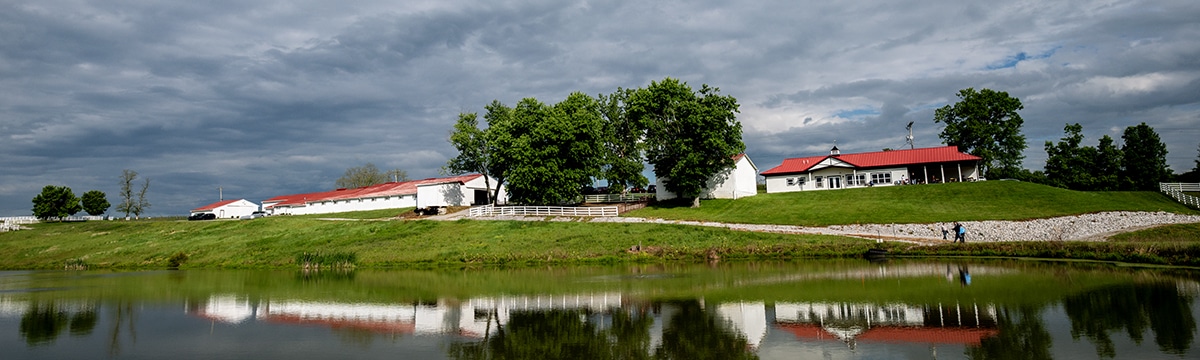
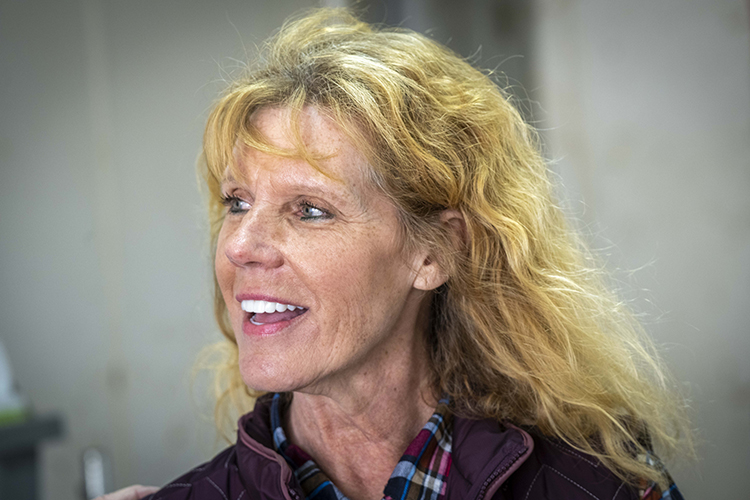
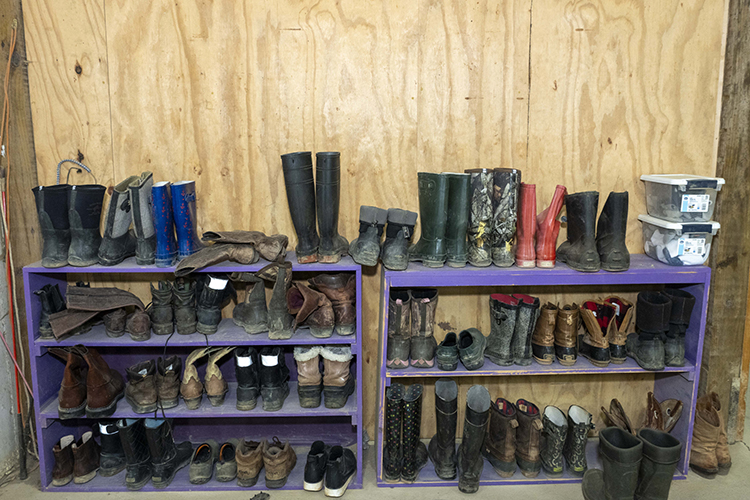
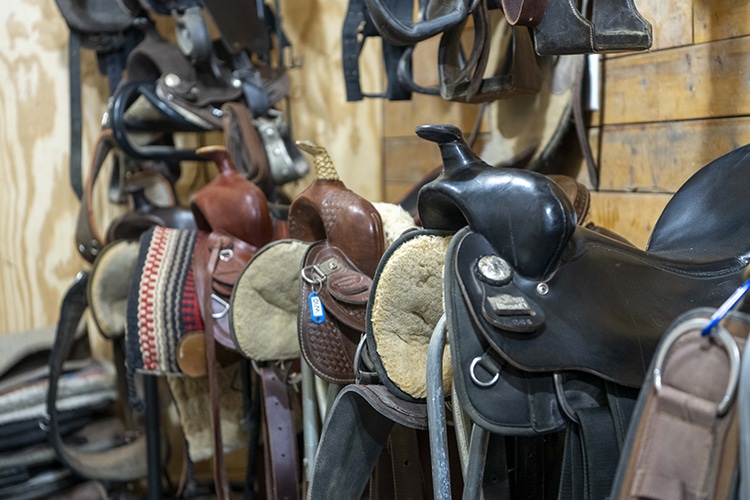
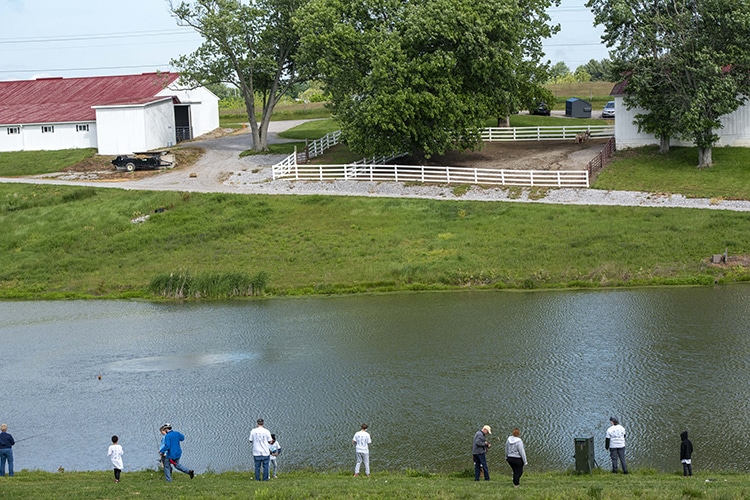
On an early May day, barn cats dusting up the arena, a neigh from the stalls just beyond, the smell of muck, hay, and leather encompassing the senses, New Day Ranch’s executive director Beth Long sits at a desk in her office talking with her barn manager, Maggie Kinney. The view outside the office window catches the eye with movement. Fly rods swing up and cast down onto the water where men and women dot the edge of a lake, reminiscent of fishing derbies on a lazy spring day.
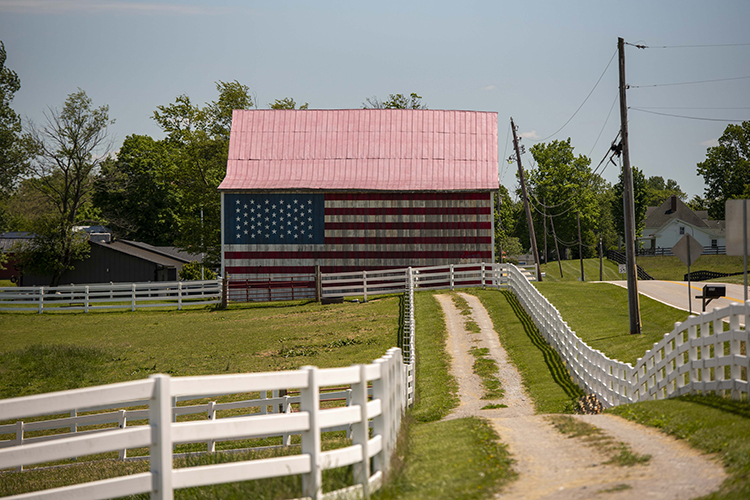
This is New Day Ranch, a 100+ acre ranch in a pastoral setting that changes people’s lives. Programming reaches children and adults who come for the healing power of horses and the peaceful tutelage of fly fishers. And it all started with the gift of a racehorse.
Before founding New Day Ranch, Long oversaw the building of the Durr Family YMCA prior to becoming the organization’s executive director. Mr. Durr personally gifted her with a racehorse for her efforts. While she’d grown up around horses, at the time she lived in a condo and wasn’t quite sure what to do with a horse, much less a racehorse. Her passion for children led her to work with the horse with seasoned horse professionals. She became a Certified PATH Therapeutic Instructor, Equine Specialist in Mental Health and Learning, and began working with clients one-on-one in rented space.
The magic of connections
Long left her position at the YMCA to pursue her passion. She had discovered how the healing power of horses had translated into her life and she began seeing clients individually at a boarding stable in Northern Kentucky. OneQuest Health (formerly CHNK, Children’s Home of Northern Kentucky) approached her to develop a program to serve middle school through high school students in the facility. The work she did gained traction and she quickly outgrew the boarding facility. But with eight horses and few resources she wasn’t sure she’d be able to continue the work.
She calls it a “God moment” when in December of 2017 people entered her life with resources that led to the purchase of the ranch in Verona, Kentucky. She had looked at a few properties but the one she found most attractive was adjacent to property owned by Steve Cauthen, the Triple Crown winning jockey. Her fledging nonprofit could not raise the capital needed to purchase such a place. But she’d met a man through OneQuest Health who told her that if she came up with a project he’d be interested in helping. Little did Long know that this individual, who wishes to remain anonymous, would become the person who would acquire the land and bring a dream to reality.
Within weeks of the initial meeting with Cauthen, she moved her horses to what is now New Day Ranch. Long has been able to expand programming to include servicing school systems in Boone, Kenton, and Campbell counties, grief camps through the Stars program at St. Elizabeth Hospice, customized programs for adults including team-building days, corporate retreats and custom programs. Long is open to developing programing that fits within her ultimate goal of helping people to heal through the benefits of equine therapy.
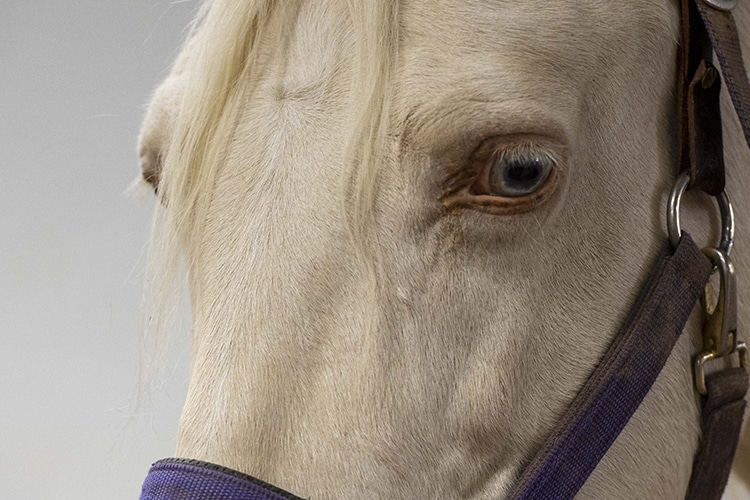
The twitch of an ear, an exhaustive breath through rolling lips, a turn of the ear, eyes that follow at a distance, these are all first meeting behaviors that counselors look for in horses when children enter the arena for the first time. Equine therapy involves a slow process of deliberate attention. In this setting, immediate riding is never allowed. In fact, sessions begin with a presentation on what to do once you enter the arena with horses.
Long retells the story of a child who had attention issues. His guardians proclaimed that he would never be able to sit through such a presentation. Long knew the calming effect horses can have but they are too big to risk a child’s fear. Barn cats abound but are unreliable as calming, lap animals. She decided to acquire a couple of guinea pigs, and when the child came with his group, she handed him the pig and he sat through the presentation, combing through the fur of the guinea pig in a calm manner.
Long explains, “all are suffering forms of trauma and transitions.” She describes a gentle, slow progression from presentation to first meeting between horses and children with the hope that the children feel the magic of a herd, part of a world where they are accepted just by their very presence.
Casting for help from local fishers
Long proved the axiom that if you can dream something you can bring it to fruition. When her benefactor approached her about creating a lake on the property, she had no hesitation. He wanted a place for his grandchildren to play and fish. Long began researching how to incorporate a fishing component to programming as she learned more about the benefits of the practice of fishing. All she needed was some fishermen and she didn’t bargain for what would come next.
She found the Northern Kentucky Fly Fishers, Inc. (NKFF) via email. At the time. Tim Guilfoile was in charge of email correspondence. He responded that he, along with fellow member Ron Ellis, would visit the ranch. They realized two things on that initial visit. One: This was a special place, and two: the ‘lake’ was merely a hole in the ground with water in it, there was an imbalance of types of fish, and lots of erosion.
Critical to the NKFF mission is education and conservation. Among their ranks, professionals stepped up to build what is now a sustainable ecosystem. Substantial improvements included securing muddy hillsides where sediment washed into the lake, adding 750 tons of rock to secure the shore, and a fish kill to be able to rebalance the stock with appropriate fish. The organization used grant money wisely to create the beautiful structure that is now an important component for the camps. New Day Ranch’s long sought-after fishing component helps calm children with wisdom provoked through a lazy afternoon on the water.
The first project the NKFF tackled was to devise a hand-built structure with holes drilled in four-inch-round corrugated pipe. They stuck one-inch PVC pipe into those holes and created a complicated structure that was perfect for fish to lay eggs. They put concrete in it, PVC and other kinds of piping, let it settle and dry, and then, by boat, dropped it in the lake. It became the perfect haven for fish to hide and lay eggs.
Because the lake had been created by just putting water in a hole, erosion was a big factor. Guilfoile pointed out the opposite hillside, above where the fly fishers cast their fly rods noting, “To help shore some of the banks because it was eroding, native grasses and wildflowers help secure the shoreline.” A variety of native plants dot the hillside and cuttings rotate annually between the west and east sides. The habitat provides cover for birds as well.
Continuing the goal of a healthy environment, Chris Lorentz, professor of biology at Thomas More College, is completing an electro-study that will help determine a proper balance of fish in the long run.
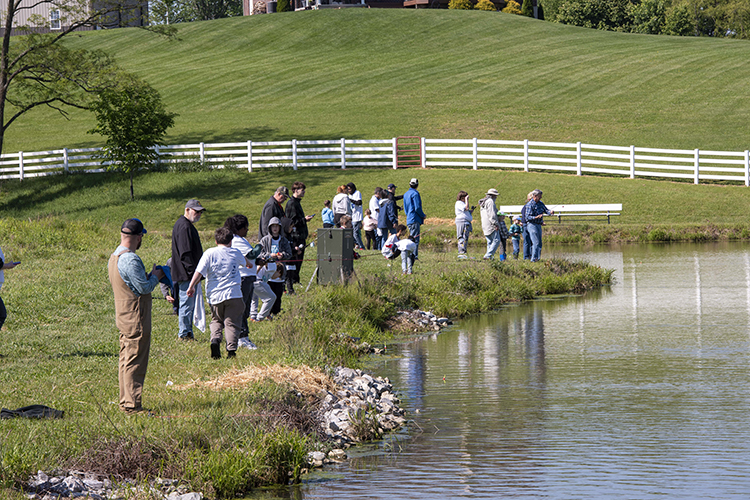
In May, Northern Kentucky Fly Fishers gathered at the event center at New Day Ranch, for a monthly meeting, fishing at the lake, and a chili cookoff. During the meeting, members report on projects at New Day and around the region including derbies for first responders and their families, and a program for veterans through Project Healing Waters. They also work on conservation projects at local parks including a large on-going project at Conservancy Lake in Boone County. Once completed, it will provide fishing, hiking and picnicking.
Big and small stories tell the benefits of equine therapy and fishing
Each year, funding for programming on the ranch comes from Boone County’s Mental Health Tax. One year, when Long applied for renewal of the annual grant, the county granted 50% more than what was asked for. Long discovered that the board of superintendents for Boone County schools pleaded the case for more money because the New Day Ranch programs provided to the schools are showing better outcomes than any other programs.
Long tells the story about a group who visited from the Stars program at St. Elizabeth Hospice. She recalls, “This little boy is touching everything.” The director of the program at the time, James Ellis, encouraged the boy to move along and keep his hands to himself. Long recognized that boy needed extra attention. Yet, when he got to the horse, Long recounts, “all the noise all around him went away, and he was calm.” Long remembers that Ellis looked at her and said, “We need to talk.” That was the beginning of what is now a fifteen-year relationship to bring equine therapy to grieving children through experiential camps each summer.
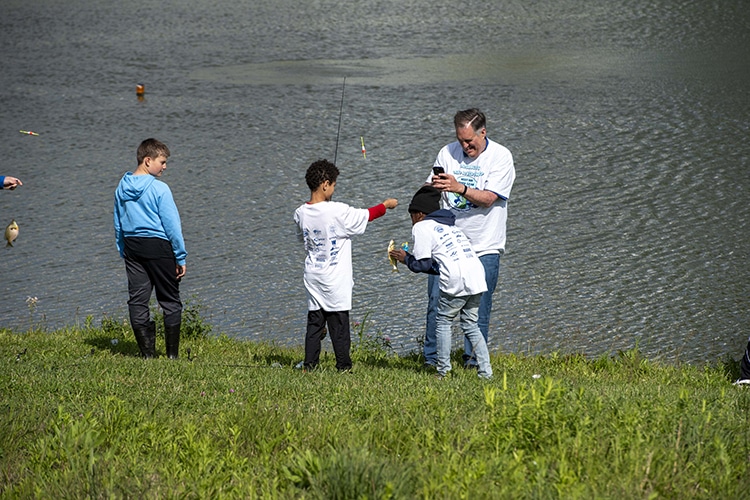
Grief Camp is a week-long experience incorporating horses, fly fishing, crafts, and a ropes course. Pairing children with fly fishers gives them an opportunity to learn about fishing but more important is mentoring from a father or grandfather type. As the week progresses, children become well-acquainted with the horses. They read to the horses in the arena, sometimes ride but not always, the optimal goal isn’t to ride so much as to experience being part of the herd. The ending ceremony includes an opportunity for each child to write a message in washable paint on their horse. Then they read the message and parade the horse around the arena for everyone to view.
A boy from OneQuest Health entered the arena to meet Rocky, one of the most attentive horses in the stable. Rocky picks up on everything and normally will automatically connect with even the most damaged humans. But this day, this boy, made Rocky skittish. In pursuit of what may have been going on with the boy, Long questioned him and found out that when he left the ranch that day, he would learn whether he’d be able to go home or not. The issues that bring kids to the ranch are complicated. The outcomes from learning from horses far outweigh the issues themselves.
What does the future hold?
At New Day Ranch, education is key. Corporate retreats, team building programs for organizations, and ongoing funding for educational programs sustain the ranch. The work of the fly fishers is invaluable with erosion control around the lake, trail maintenance, ecology of native plants to sustain the property, and most of all, the conveyance of a patient, male hand to help a child grow.
Horses, fish, and children, are not the combination you might think of first to benefit children, but the outcomes of these programs are undeniable. Spending an afternoon with a horse or at the shore of a lake provide a world of healing energy for children, adults and parents of grieving children, school staff who come for team building, as well as corporate executives and their staff who want to strengthen working relationships.
Want to get involved? The New Day Ranch golf outing will be held on July 18, 2026. This is New Day Ranch’s major fundraiser. Contact Beth Long at beth@newdayranch.org to find out more.
Author

Related Articles
Generous paternal leave policies improve maternal and newborn health, family finances and workplace equality
Allowing both parents sufficient time off to bond and adjust to their new roles can have longer-term benefits within the family unit and contribute toward more equity in child rearing.
How one dentist and a multitude of volunteers built Cleveland’s biggest day of smiles
TeamSmile’s program shows how local volunteers, sports teams and community partners connect children with healthier smiles.
Greater Cincinnati Society of Professional Journalists and Ohio’s Best Journalism recognize Soapbox for excellence in 2025
Solutions journalism reporting about health, social justice and environment earn top honors.