
Maple myths: Demystifying syrup production in the region
The annual tapping of regional trees is going on now. Two local growers share learned wisdom about how it’s done combining old and new techniques.
Did you know that Kentucky espouses 100 maple syrup producers from as far east as Pikeville to Graves County in the western end of the state? This is a surprising fact, from the Kentucky Maple Syrup Association, since the defined southern-most area for sap collection and syrup production is Southwest Ohio. Ohio reports 4,500 acres of syrup-producing trees.
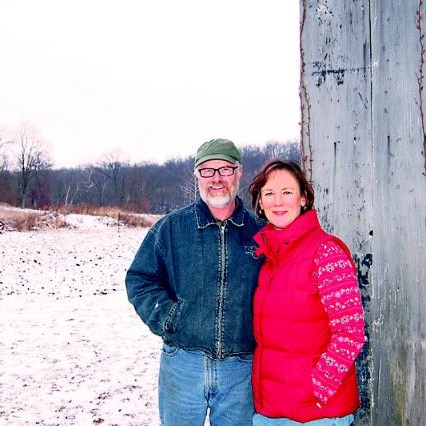
Barry Schlimme, of Red Sunflower Farm in Independence, Kentucky, decided to collect sap many years ago when he became fascinated with the possibility of producing syrup on his sustainable farm that runs along the Banklick Creek. As with other adventures in small farming, having left the corporate world for a more earth-centered life, Schlimme, with his wife, Mackey McNeil, found their best lessons in sap collection to be through doing the work, tapping the trees, boiling the sap, and bottling the amber liquid that compliments pancakes.
In the early years, he dispelled a number of myths. For instance, not all Canadian syrup is from maple trees. In the Canadian Plains, Box Elders are a great source for syrup because there are so many of them, even though they don’t produce at the same rate as Sugar Maples. He explored online resources to find out all he could about this source of food and how to maximize production. That led him to the work of Michael Farrell, author of “The Sugarmaker’s Companion” and one-time director of the Uihlein Forest at Cornell University,
During several email exchanges with Farrell, Schlimme began to understand the most efficient way to not only harvest sap from trees but also other species. Black Walnut and sycamore trees dot the landscape of Red Sunflower Farm and are closer in proximity to farm operations than what he calls “Sugar Hill,” making the decision to tap Black Walnut trees first and then in another sugaring season, sycamores.
Black Walnut trees have a dark bark, a reflection of their rich, dark syrup. To the untrained eye the only thing these trees produce is tennis-ball sized, green spheres that house walnuts in shells that smart if they land on your head. At Red Sunflower, the syrup produced the first year was cloudy. Schlimme learned through Farrell’s work about a unique filter press that would help to clarify the Black Walnut syrup. However, the labor-intensive nature of such work led to abandoning these tall trees that populate so much of the region as the income generated from this unique process did not warrant the work needed to create the product.
One outcome from the many emails between Farrell and Schlimme was to tap sycamore trees, which are supposed to produce a rich, buttery syrup. Red Sunflower Farm is part of the World Wide Organization of Organic Farmers or WWOOF, a network of organic and sustainable farms around the world where people work for short stints and are provided room and board.
At Red Sunflower, two interns helped to tap forty-five sycamore trees along the Banklick Creek. After a few weeks very little sap flowed from the trees and that which dripped into the milk jugs attached to the trees, was bitter and so small that the project was abandoned before any syrup could be bottled. Unlike Black Walnut, that has a depth of character in it’s final form, tapping sycamores wasn’t worth the hours of vigilance necessary for production.
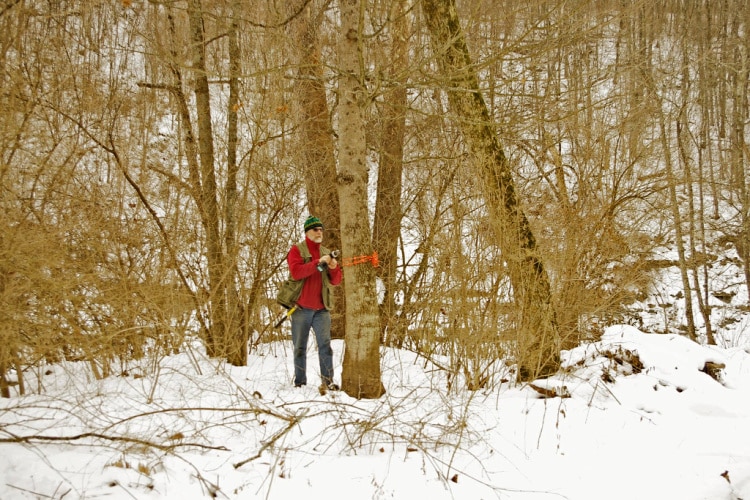
Schlimme has refined his processes for maple syrup production and has gained great wisdom from trying various methods, always with an eye toward efficiency but keeping as close to the natural process as possible. For him, expectations run high in mid-January days when he sets out to tap the trees after the fall season when he had tied orange plastic ribbons around tappable trees.
In the early years, a corncrib on the farm sufficed as a place to build a makeshift evaporator. There he tended a wood fire twenty-four hours a day, seven days a week to keep temperatures consistent in the evaporation process. Since then, Schlimme learned that if he doesn’t want to be out in the barn at ten o’clock, he says, “I’ve still got a barrel with 30 gallons of sap in it. I can just let the fire go out and then start again the next morning. The nice thing is that once you collect sap and you have to keep track of it, you really don’t want it to be out of the tree more than three days.”
Ohio syrup producer: Losantiville Farms
Like the folks at Red Sunflower Farm, Jake and Kyle, owners of Losantiville Farms are learning as they go, with 250 trees tapped in their second year of production. These young farmers, who go by first names only—Jake and Kyle—have a zeal for the work they are doing and the product they are producing; a rich, light maple syrup that hints of almond and vanilla. It’s a thirty-minute drive east on US-52 to Losantiville Farms in New Richmond, and a slow climb twisting up a gravel road.
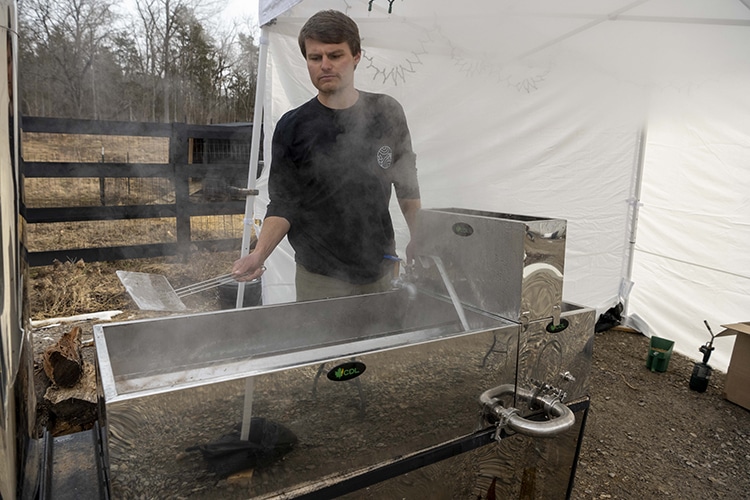
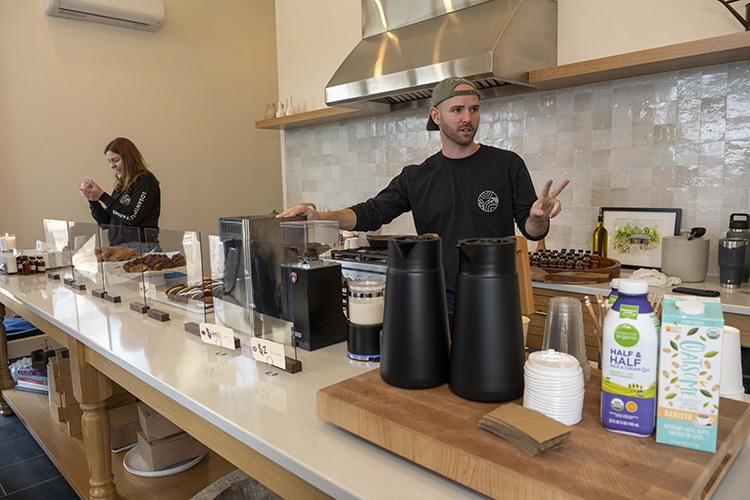
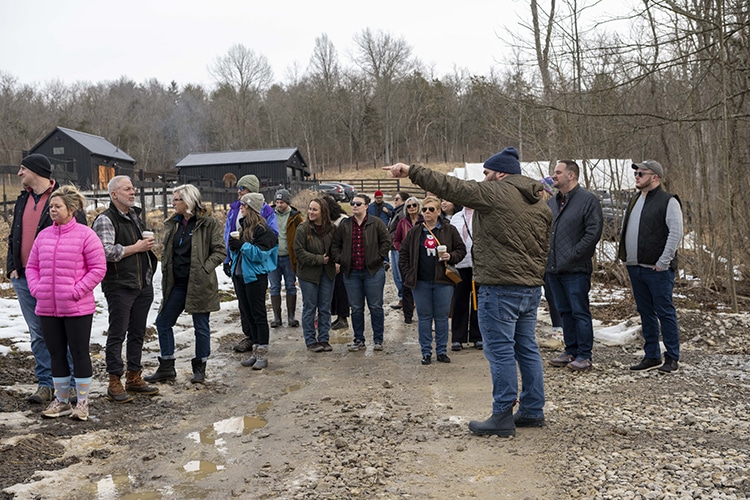
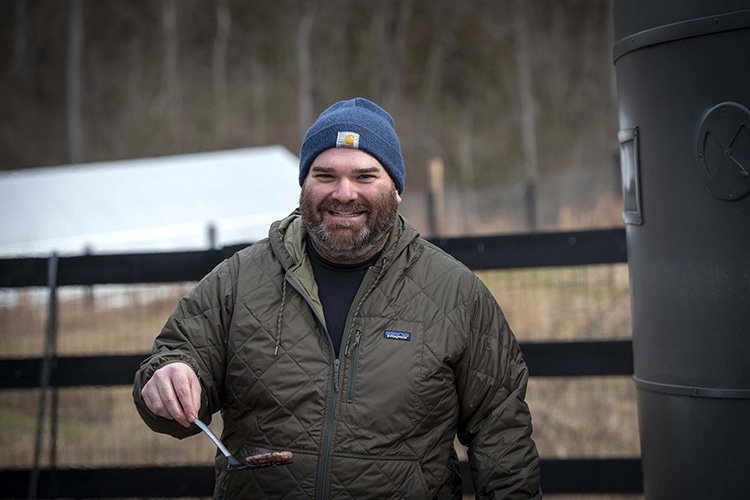
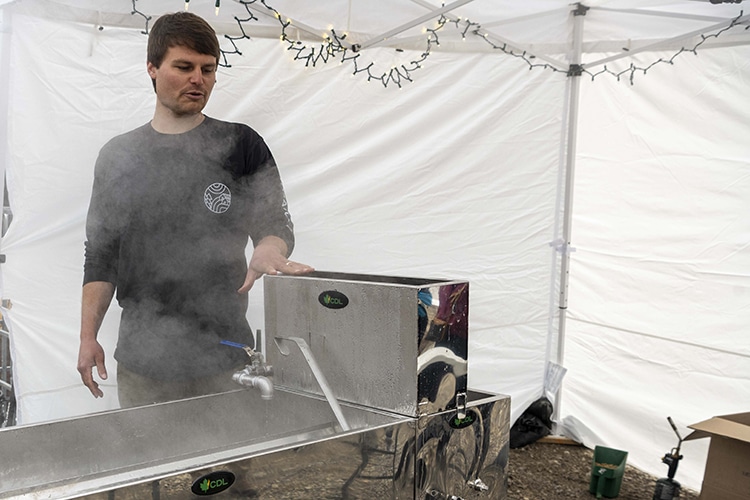
On a crisp Saturday morning in mid-February, high above the Ohio River, smoke billowed at the end of a field full of chickens, goats, geese, and two vigilant Great Pyrenees protectors of the herds on the 75-acre Losantiville Farm. Jake flipped sausages at a large grill while giving hugs to guests as they arrived for the Maple Days event. Inside a venue rentable for private events, Kyle made lattes and prepped pancake batter. Luther Payette, the farm manager, fed the wood fire under a Tin-Man-looking contraption called an evaporator that reduces sap to syrup in a way not unlike a French chef tends a fine bechamel sauce.
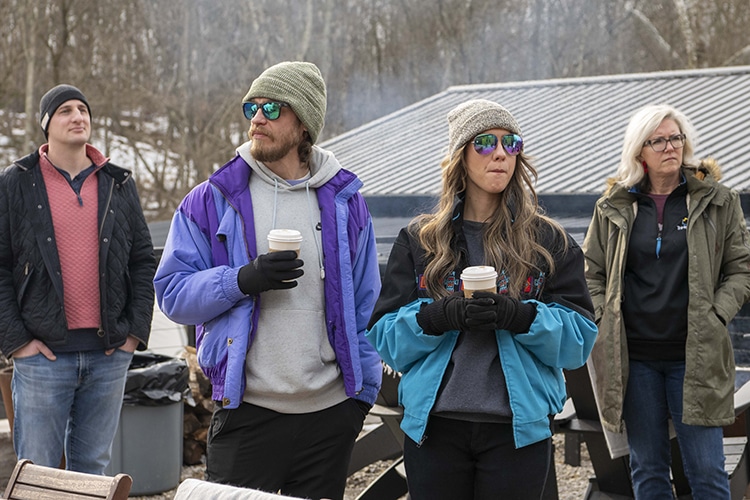
A gathering of interested onlookers, there for the event sipped maple lattes, munched on pecan sticky buns and maple blondies while looking out at a hill that traced blue lines connecting trees reminiscent of paper road maps. Payette, the farm manager, explained the science behind the diagram of tubes dripping sap from 250 sugar maple trees.
To the untrained eye, it looked like a child’s game board, but in fact Payette designed the connective tubing from the top of the hill before tapping the trees in order to collect sap by no other force than gravity. Jake smiled as he admitted his greatest fear, that deer would stumble into the forest of trees and break the intricate design of tubes.
Technology versus the old ways
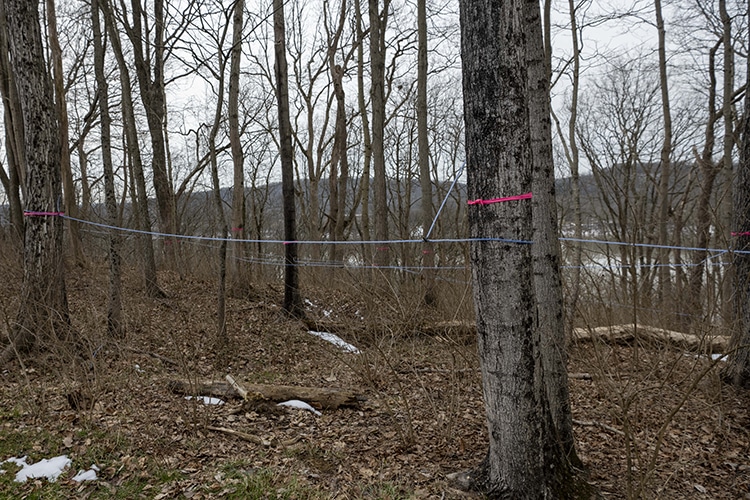
Modern technology such as reverse-osmosis and vacuum tubing are used by other farmers, but at Losantiville Farms, similar to Red Sunflower, the farmers are producing their product as close to the natural way that Native Americans have done for centuries. Collect the sap by the pull of gravity, incorporate a wood-fired evaporator, finish the syrup by running it first through a wool filter and then a paper filter before finishing the syrup in a large pot on the stove to clarify even further.
As Payette described how to identify trees, his wisdom for such a young person, was evident. He’d grown up on a farm in New Hampshire. And like the system of identifying trees at Red Sunflower Farm, he pointed to trees with pink ribbons as tappable trees.
To accurately harvest sap, many things must align. Work begins in summer or fall to identify trees for tapping. Trees ten inches in diameter can be tapped once, twenty inches – twice, over thirty inches – three taps, but in a stand of 250 trees, Payette says that only two – thirty inch trees are tapped.
Weather is an important factor that keeps farmers checking the weather reports. Schlimme has developed a step-by-step, three-page document he gives to farmers who contact him about the process. He explains, “The sap starts to flow up the tree when temperatures are above thirty-two degrees during the day after being below that benchmark at night.” Once sap travels up trees and outside daytime temperatures are consistently above forty degrees and hovering around twenty degrees at night, sap begins to travel once more into the roots. That is the prime time for tapping.
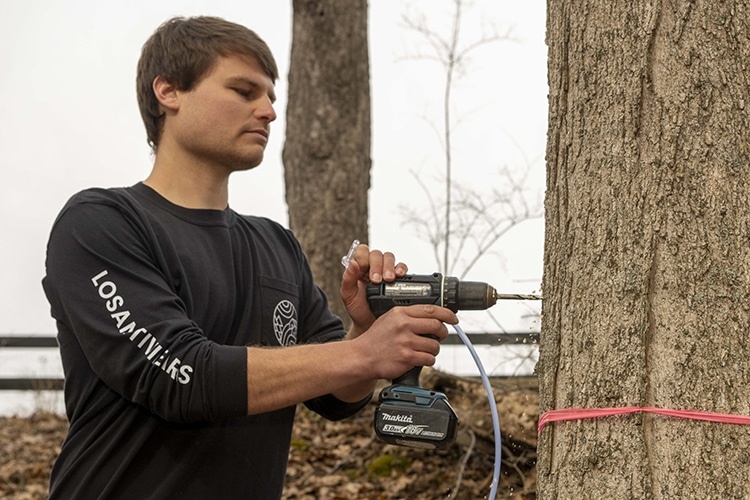
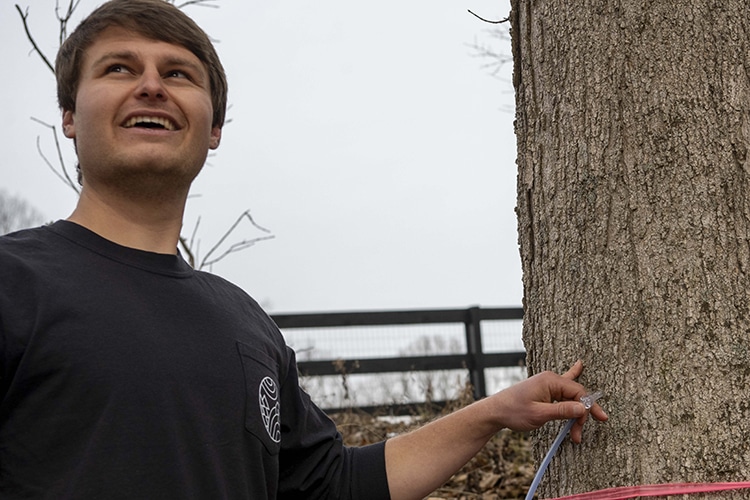
Payette, at Losantiville Farms, demonstrated how to tap your backyard trees if you have the right equipment. He said, “It’s not rocket science, but with the right tools.” He encouraged those interested in the process for a few trees on their property to try it. With a drill equipped with a five-sixteenth bit, a tap appropriately sized, and a food-safe bucket or milk jug, anyone can tap a tree.
Forty-three gallons of sap produce one gallon of syrup. In the second year of production, Jake and Kyle hope for eighty gallons of syrup. Considering that the weather in late January didn’t cooperate and the day before a Maple Days event on February 14, they were checking the weather in hopes of sap beginning to flow, they hope the shortened season will still produce for them.
As with Red Sunflower Farm, Losantiville Farms is a year-round, working farm: chickens, goats, wholesale flower business and maple syrup. The owners both have full-time jobs away from the farm but their passion for farming is evident when they talk about what the farm produces.
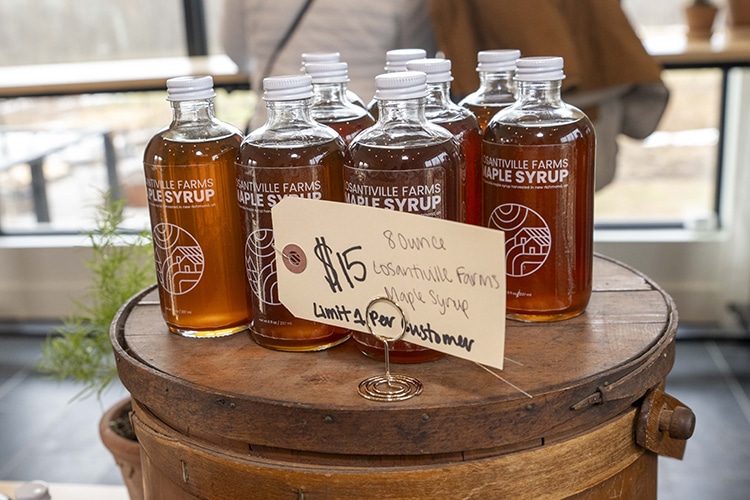
The idea to tap trees was the brain child of Jake. “It all started with my husband, Jake. When we first moved here, we saw when we were clearing the land. We had a ton of old maple trees, and so he started reading some books up on the syrup in the sap process, and we had plans to do it.” Kyle said. They met Payette, a Xavier University graduate, and the concept of sugaring took off.
Knowing this sweet taste of freshly harvested maple syrup has been produced for hundreds of years brings satisfaction to those who generate it. Perhaps the Native Americans had it right. The marriage of an old custom with new technology keeps a practice alive that feeds people in the region.
Author

Related Articles

Cincinnati technology talent stands out in Next25
The inaugural Next25 list from Ohio Tech News underscores local reputation as a hub for startup talent and technology innovation.
Where to eat well in Middletown
A guide to four independent restaurants shaping the city’s growing dining scene.
New to the farming community? You are not alone
A chat with Megan Ayers of Unvarnished Farm.