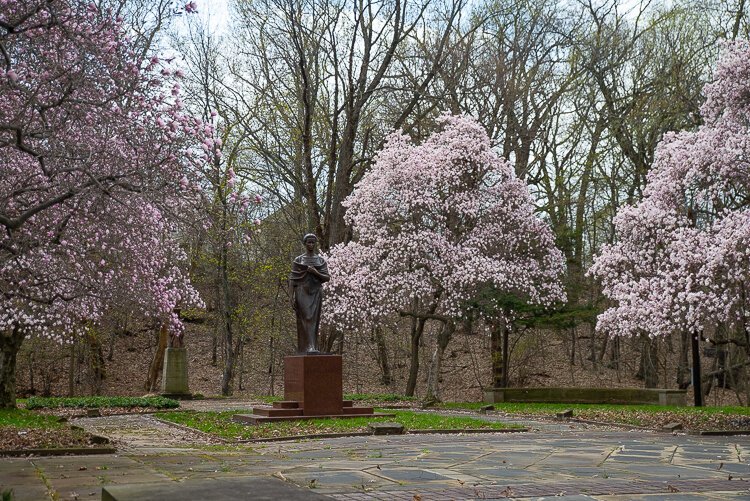
The Ukrainian Garden: a celebration of Ukraine’s history with a nod to Cleveland
Cleveland Masterworks: Northeast Ohio began to draw a large Ukrainian population in the 1880s, and World War I prompted them to settle here. The history of the Ukraine and its people is well documented in the Ukraine Garden at the Cleveland Cultural Gardens.
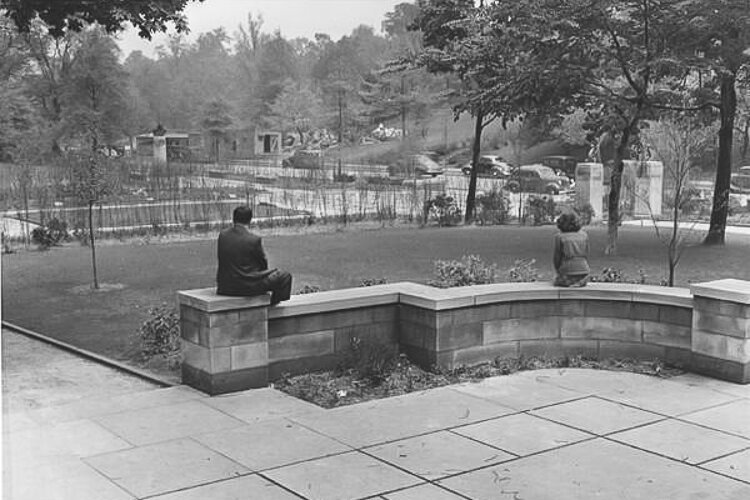
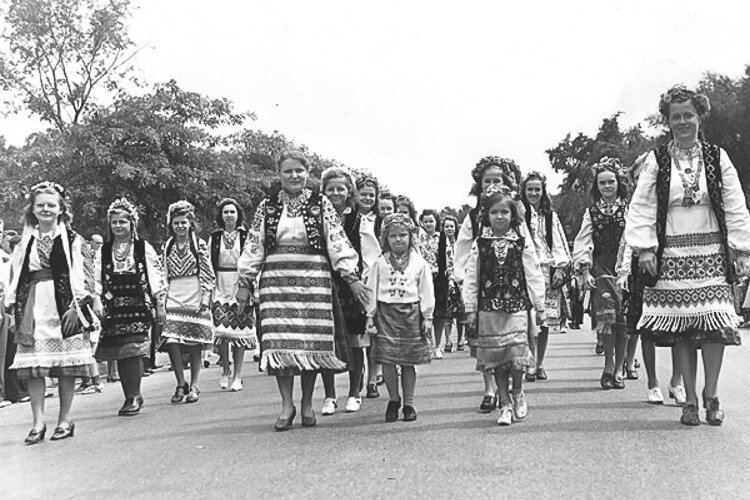
One-third of Ohio’s Ukrainian population lives in Northeast Ohio, with Parma serving as home to the most Ukrainians in the state. Ukrainians began settling in Tremont in the late 1800s, and the population and its culture are deeply woven into Northeast Ohio.
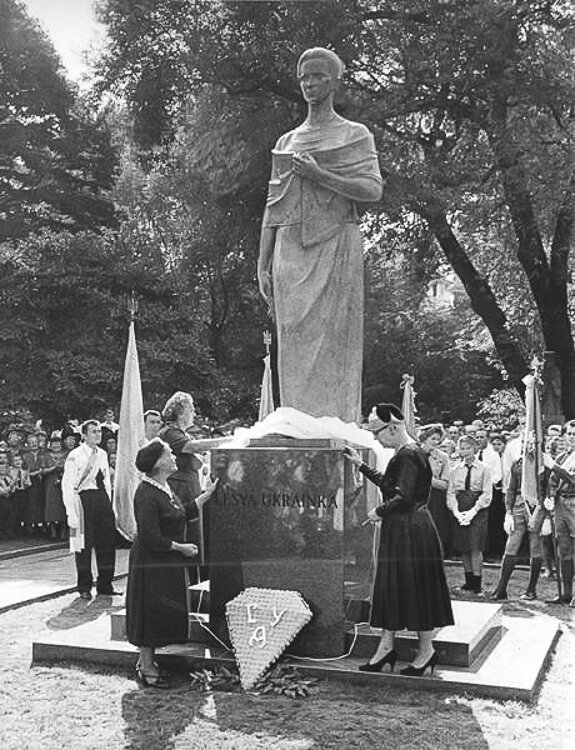
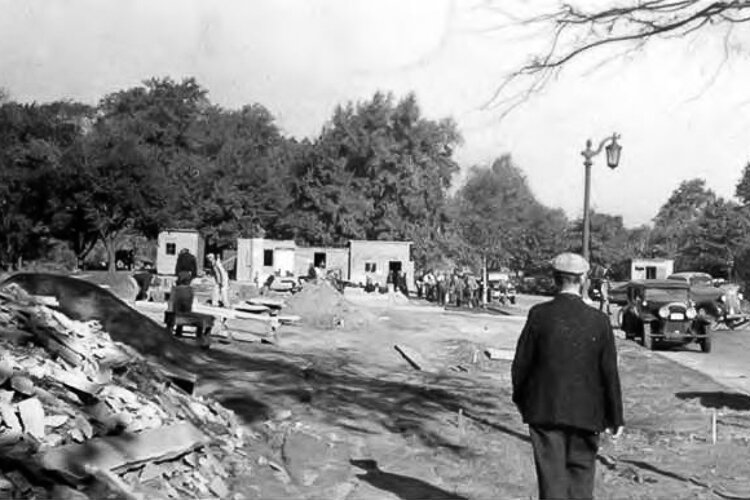
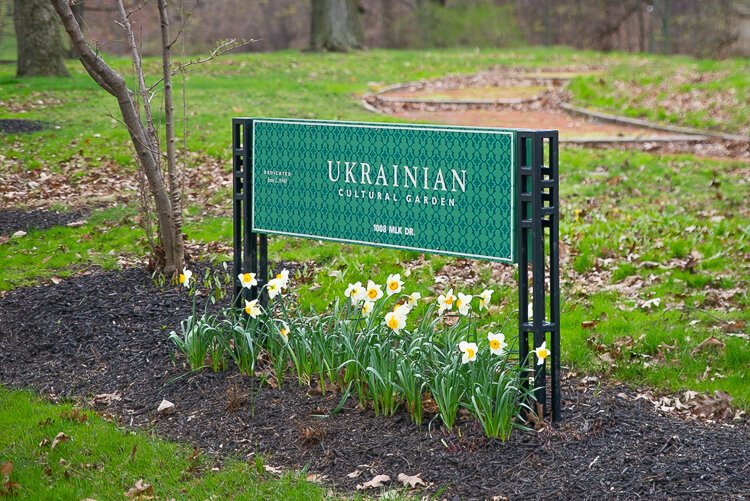
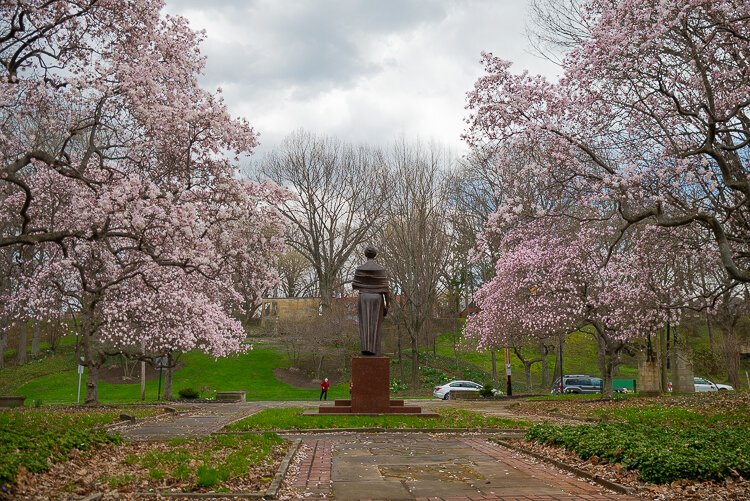
The Ukrainian Garden was completed in 1939 in the Cleveland Cultural Gardens—and is now one of the 33 gardens along Martin Luther King Boulevard that have been designed and cultivated by distinct cultural or nationality groups.
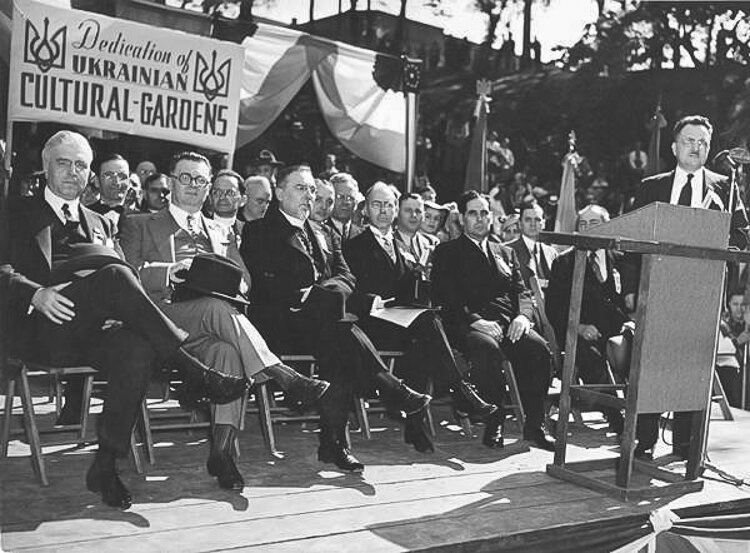
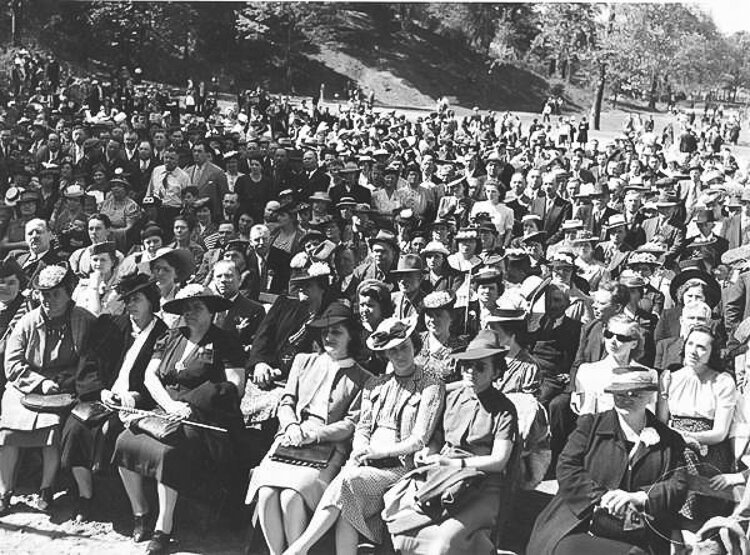
Located on the west side of East Boulevard and bordered by Doan Brook to the west, the garden was dedicated by Cleveland Mayor Harold Burton on June 2,1940, with considerable fanfare.
It marked the contributions of 25,000 Cleveland residents of Ukrainian descent. Brick and stone courts connected by stone paths lead to a focus on several heroic figures from Ukrainian history.
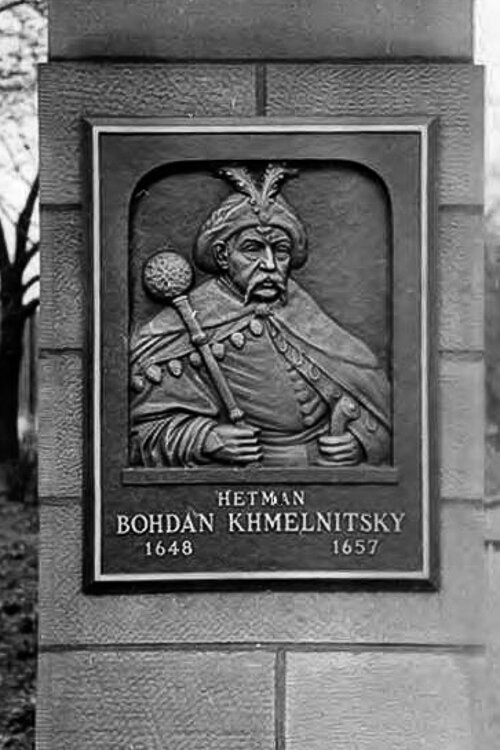
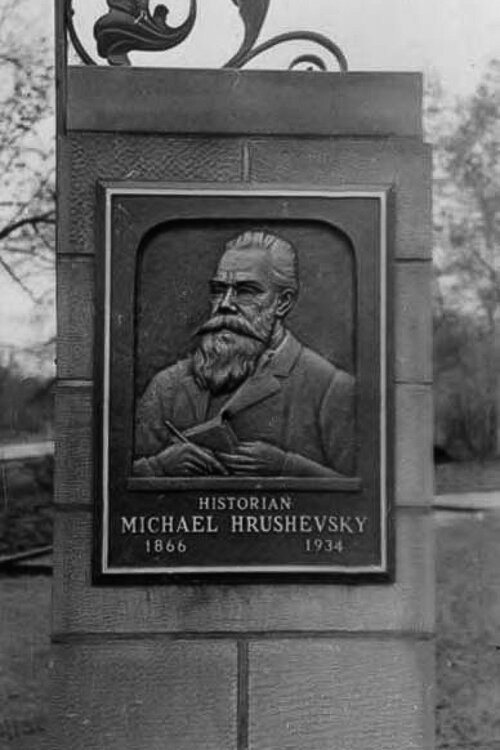
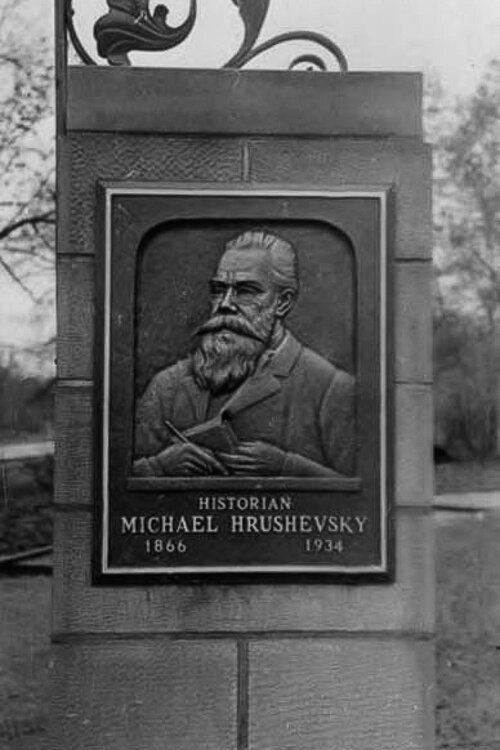
Those figures are Bohdan Khmelnitsky (1593-1657), leader of a revolt against the Poles in 1614, and Mikhail Hrushevsky (1866-1934). a well-known teacher and scholar.
Khmelnitsky and Hrushevsky are recognized by bronze plaques displayed at the gardens entry—the work of noted sculptor and Cleveland native Frank Jirouch.
He and his partner, George J. Fischer, incorporated Fischer & Jirouch in 1902 at 4281 Superior Ave. For many years, the firm was one of the best-known in the country for its molded plaster decorations. The partners made sculptural works that included such landmarks as the (Conor) Palace Theatre, the Union Commerce Bank (today the Centennial), and several Walker and Weeks buildings.
Frank Jirouch was a renowned sculptor. In addition to the statuary work he did for his clients, he contributed 30 sculptures throughout the Cleveland Cultural Gardens—giving him the largest number of statues attributed to a single artist.
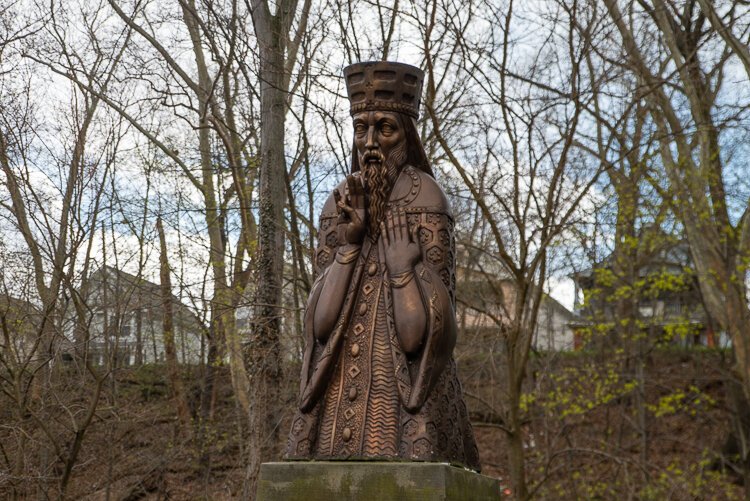
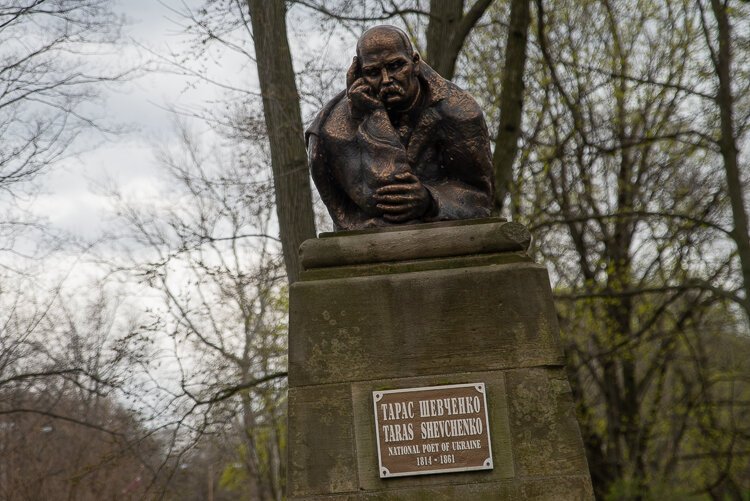
The garden also presents three bronze busts of noted Ukrainians. Those honored include Volodymyr the Great (956-1015), the first Christian ruler of Ukraine; Taras G. Shevchenko (1814-1864), notable as a poet and reformer; and Ivan Franko (1856-1916), noteworthy as a poet and folklorist.
These busts are the work of Alexander Archipenko. A native of Kiev (today’s Kyiv), he immigrated to the United States in the 1920s after the Russian Civil War. His sculptures are a key element of the garden’s decoration.
The busts suddenly disappeared from the garden in the 1970s and many mourned them lost or stolen. They resurfaced in the 1990s—located in a Cleveland municipal garage where they had been placed for safekeeping.
Fiberglass copies take their place in the Ukrainian Garden today with the originals on display in the Ukrainian Museum-Archives in Tremont.
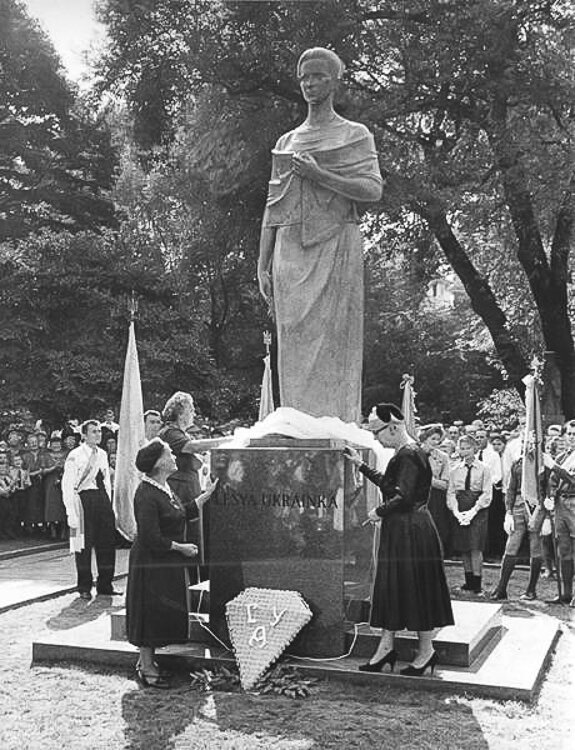
A full-length statue honors Larysa Petrina Kosach Kvitka, a renowned poet best known by her pseudonym Lesya Ukrainka. Born in 1871, she grew up in era when publication in the Ukrainian language was forbidden in the Russian Empire.
Kvitka’s first collection of poems was published elsewhere and brought to then-Kiev in secrecy. Diagnosed young with tuberculosis of the bone, her formal education was limited, and she compensated by learning to read early and becoming fluent in 10 languages.
Kvitka became well known for her plays as well as her political activism and traveled extensively to seek relief from the illness that took her life at age 42.
Ukraine is the second largest country in Europe after Russia. The country’s land is a vast and fertile prairie stretching eastward from the Carpathian Mountains to the Sea of Azov. The black soil, known as “chornozem,” is among the richest in the world and for centuries has made Ukraine to be known as the granary of Europe.
The country has a stormy past. Prior to World War I, Ukraine was divided between the Austro – Hungarian Empire and Tsarist Russia. After the defeat of the empires Ukraine came under the control of the Soviet Union, Poland, Romania, and Czechoslovakia (today the Czech Republic and Slovakia).
In 1932 and 1933 Ukraine became the scene of one of the greatest acts of genocide in modern history. Known as the Holomodor, which literally translated means death by hunger, this intentionally created famine took the lives of millions of Ukrainians. The number of lives lost is disputed but it approaches the number lost in the Holocaust a decade later.
The famine is thought to have been a reprisal against a class of wealthy farmers known as Kulaks who resisted Stalin’s efforts to collectivize their farms.
Stalin’s resentment may have extended all the way back to the Russian Civil War, when the Ukrainians resisted the Bolshevik Revolution and actively aided the White Russian forces in their battle against the Reds.
Now Ukraine finds itself locked in an unsought battle with its old antagonist, Russia. With the whole world watching, the nation lives up to its well-earned reputation for toughness.
If Russian leaders expected an easy victory, they are about to learn a hard lesson.
Related Articles
More than $1 million granted to first suburbs to spark economic impact
The money is meant to kick start improvements in business districts and help achieve long-term plans.
Middletown, Butler County leaders mull fate of city’s historic buildings
As the city looks for a new path forward, perspectives may vary, but there is shared enthusiasm for an invigorated downtown.
Coming Clean with Paul Sturkey, America’s River Roots captain of cuisine
Food and music always have and always will be a common thread that bring people together according to this regional culinary legend.