
Tradition meets technology at Cincinnati International Wine Festival
New CIWF app technology helps attendees discover wines and engage more deeply with the event.
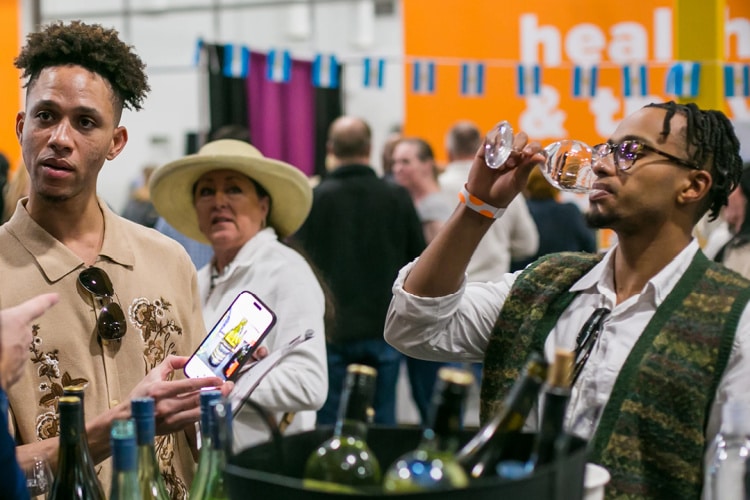
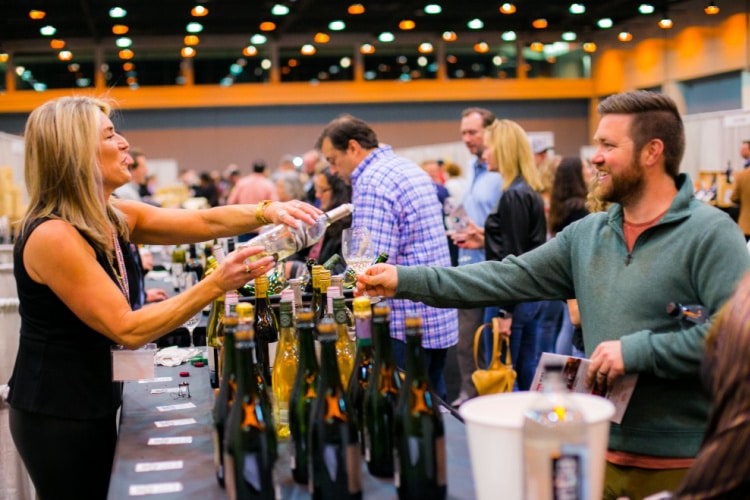
For 35 years, the Cincinnati International Wine Festival (CIWF) has drawn wine lovers downtown to sample vintages from around the world. What began as a tasting event has grown into one of the Midwest’s largest wine festivals, bringing together hundreds of wineries, thousands of attendees, and a growing commitment to community impact.
For the second year in a row, the festival is pairing that tradition with technology. Through a partnership with Cincinnati-based company Rarify, festival organizers are introducing a digital experience designed to help attendees navigate the sheer scale of the event while learning more about the wines, the winemakers, and their own tastes along the way.
With more than 700 wines available to sample across the newly remodeled Duke Energy Convention Center, the challenge for many attendees is not finding something to try but figuring out where to start.
“When you walk into a wine festival with 700 wines, it can be really overwhelming to know where to start,” said Rarify’s Chris Heile.
Turning data into discovery
Rarify was originally developed to improve dining and reservation experiences in country clubs before expanding into restaurants and the wine industry. At the center of the platform is a taste engine that analyzes flavor preferences based on how people respond to food ingredients, textures, and combinations. From that data, the system builds a detailed flavor profile that can be applied to menus, wine lists and tasting experiences.
For the Cincinnati International Wine Festival, that technology is being used to personalize the event for each attendee. Before the festival begins, participants can take a short quiz that identifies the wine varietals, regions, and styles most aligned with their palate. Once festival data is loaded, the app matches those preferences with specific wines available on the tasting floor.

Chris Heile remarks “I’ve always had a passion for great food and wine. The craft and art that goes into doing it right has always been inspiring to me. I feel fortunate to live in a city with such a vibrant and welcoming food and wine community. When you have the ability to turn a passion into something that helps other people discover and grow along with you, it’s incredibly rewarding.”
Rather than scrolling through a generic list, users see recommendations ranked for their individual taste, along with booth locations and tasting notes. The app can also generate a guided tasting path that leads attendees through the festival in an organized way, reducing the guesswork that often comes with large events.
“We rate every wine based on the varietal, region, vintage, and how it’s produced, whether it’s oak or steel or something else,” according to Heile.
More than a map
The CIWF app is not just a digital program. In addition to maps and schedules, it includes detailed information on each wine, behind-the-scenes stories from winemakers, and the ability for attendees to track what they sample throughout the event.
“The stories are what really bring the wine to life,” Heile said. “You’re not just looking at a listing on a page. You’re learning about the people who made it, the region it comes from, and what makes it meaningful.”
Attendees can rate wines they enjoy, save favorites, and see where those bottles are available at local restaurants or retailers after the festival. In some cases, wines featured at the event will also be available for purchase directly through the platform.
“The whole point is helping wineries get their wine in front of people and helping people remember what they liked,” Heile said.
That functionality supports wineries as well, many of which attend festivals as a way to introduce their products to new audiences. By helping guests remember what they liked and where to find it later, the technology extends the impact of the event beyond a single weekend.
Designing for wineries, as well as attendees
While much of the attention around festival technology focuses on the attendee experience, Heile said Rarify was built with another audience in mind as well: the wineries themselves. At large-scale tastings, producers often pour hundreds of samples over the course of a weekend, with little opportunity to build lasting connections or ensure guests remember what they tried.
Rarify’s platform was developed to help wineries maintain visibility beyond the moment of the pour. By linking tasting notes, producer information, and wine details in one place, the technology creates a record of discovery that continues after the event ends. For wineries, that continuity can be difficult to achieve in crowded festival environments where conversations are brief and attention is limited.
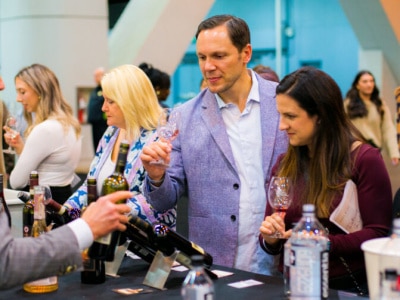
Heile also pointed to education as a persistent challenge at wine festivals. Many attendees arrive without formal wine knowledge and may feel pressure to appear more experienced than they are. Designing tools that allow guests to explore independently helps lower that barrier, making the tasting experience more accessible without relying on instruction or expertise.
Building technology for live festivals presents its own set of obstacles. Connectivity, noise, and time constraints all shape how guests interact with digital tools in real time. Those conditions require systems that are intuitive, fast, and flexible enough to support discovery without interrupting the experience itself.
Taken together, those considerations reflect a broader shift in how technology is used at events like the Cincinnati International Wine Festival. The goal is not to direct behavior but to support memory, storytelling, and connection for both guests and the wineries they encounter.
Deeply rooted in culinary partnerships
Before the convention center doors open for the weekend, the Cincinnati International Wine Festival also offers Thursday-night Winemaker Dinners, a tradition started in 1992 that brings global wines together with local chefs in some of the city’s most respected restaurants.
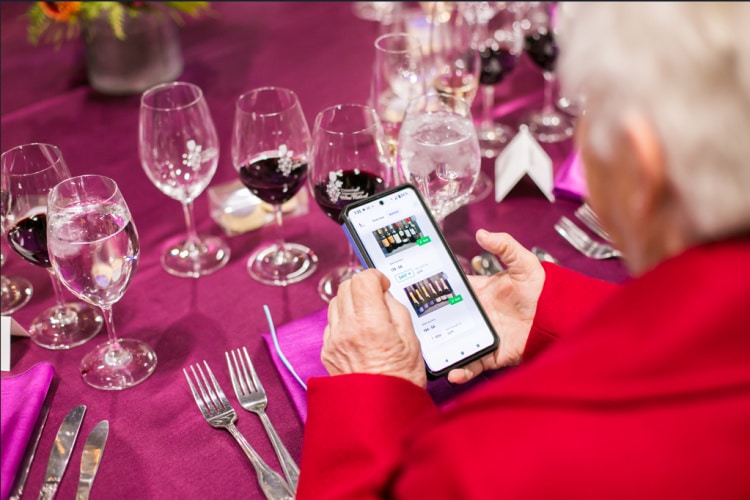
Partner restaurants in recent years have included The Capital Grille, Subito, Jag’s Steak & Seafood, Son of a Butcher, Carlo & Johnny’s by Jeff Ruby, and more, each offering multi-course menus paired with wines from visiting exhibitors. More information on this year’s Winemaker Dinners can be found here.
These dinners allow attendees to engage more deeply with both wine and food, creating a more intimate environment for conversation with winemakers and chefs alike. For many guests, these events provide a different kind of tasting experience that complements the larger festival weekend, showcasing Cincinnati’s culinary strengths while celebrating the craft and stories behind each wine.
An interactive tasting experience
The app also supports interactive programming throughout the festival. One feature allows attendees to participate in a sommelier tasting contest, where guests taste alongside experts and test their palate using guided prompts within the platform. Menus from food vendors and food trucks outside the convention center are included as well, helping attendees plan pairings as they move through the space.
Beyond logistics, the technology is designed to encourage exploration. Many people arrive at wine festivals with familiar preferences, often sticking to the same varietals they already know. The goal is to gently push attendees beyond those boundaries.
“There are other wines you might like that you just haven’t tried yet,” he said. “If you love rosé, for example, you might actually enjoy a lighter red with lower tannins. This helps people discover that.”
In addition to the main festival, Rarify has supported pre-event programming such as the Pop-Up Wine Sale, where attendees could explore wines and make purchases in advance.
Last year marked the first time Rarify partnered with the Cincinnati International Wine Festival. According to Heile, approximately half of ticket holders used the app or web-based experience, with roughly 40 percent completing the taste quiz. Adoption rates at other festivals have grown significantly in subsequent years as attendees become familiar with the tools.
By combining personalization with education, the festival aims to create an experience that feels both accessible and enriching, whether someone is attending for the first time or returning for the tenth.
Want to discover your wine profile before the festival begins? Take Rarify’s wine taste quiz to explore varietals and styles matched to your palate. Quiz results will be customized to align with the 700 wines available at this year’s Cincinnati International Wine Festival. Take the quiz.
As the Cincinnati International Wine Festival enters its 35th year, the blend of tradition, technology, and philanthropy reflects how the event continues to evolve while staying rooted in its original purpose.
A nonprofit mission at the core
As the event evolves, organizers continue to look for ways to align innovation with impact. While technology is enhancing the tasting experience, the Cincinnati International Wine Festival is also a 501(c)3 nonprofit organization with a long-standing commitment to community support.
In 2025, the festival distributed $345,000 to 35 nonprofit organizations across Greater Cincinnati and Northern Kentucky. Since its founding in 1991, total donations have surpassed $8 million, supporting programs focused on food security, education, health, and the arts. Those investments have impacted more than one million people across the region.
Partnerships with organizations like Rarify help strengthen that mission by increasing engagement, expanding attendance, and creating new opportunities for wineries and sponsors to participate.
The festival’s presenting sponsor, Kroger, along with wineries, supporters, and ticket buyers, make those contributions possible each year.
Plan your visit
What: Cincinnati International Wine Festival featuring 700+ wines from around the world
When: March 5-7, 2026
Where: Duke Energy Convention Center
525 Elm Street
Cincinnati, OH 45202
Learn more and buy tickets at: winefestival.com
Author

Related Articles
At the Taft Museum of Art, a 40-year legacy meets a living artist
The inspiration for the Duncanson program is literally painted on the walls inside.

Women do a world of good: How one woman transformed personal tragedy into triumph
106-year-old Junior League of Cincinnati focuses on strengthening women and children’s environments today.
WCC, a nonpartisan organization of feisty women, brings awareness to issues facing the average citizen
Women’s City Club hosts arts activist, Gina Belafonte, who uses music and art for social justice impact.