Talent

Univision Marketing VP: If you want to grow your business, target Latino consumers

With the explosive growth of the United States' Latino population, marketers can no longer think of Latinos as a niche market. If businesses want to grow, Latino customers must be integrated into all stages of marketing, not added as an afterthought. That's the message Chiqui Cartagena, VP of corporate marketing at Univision, brought to the January luncheon of the Cincinnati Chapter of the American Advertising Federation. The luncheon was held at the Covington Radisson. She brought a few stats to back her up: Latinos saw 56 percent population growth since the last census1 in 4 births today is to a Latina mother100 percent of population growth of adults 18-49 in the next 10 years will come from Hispanics"There are 1.5 million new Hispanics joining the marketplace every year," Cartagena says. "Hispanics are now 17 percent of the population and soon will be 30 percent. The general market is the Hispanic market." Univision, with major operations in New York and Florida, has the largest Spanish-speaking television audience in the world. The growing station often rivals the country's major television networks and is available by cable and satellite. Cartagena is the author of "Latino Boom! Everything You Need to Know to Grow Your Business in the U.S. Hispanic Market." The 25-year marketing and media veteran has developed, launched and lead some of America's successful Spanish-language consumer magazines, including People en Espanol. Instead of reaching out to Latinos at the end of the marketing process, successful marketing really integrates Latino consumers into all parts of marketing, including product development and messaging, says Cartagena. This is a major shift from the past. Major brands, including Walmart, have dramatically shifted their marketing mindset, she says. Recently, the company said it expected 100 percent of its growth will come from multicultural markets, with plans to double its advertising spending in that area. It takes much more effort than translating an ad or packaging into Spanish to create loyalty in the Hispanic market, Cartagena says. Among her recommendations were to: Examine if your products and services are culturally relevantCreate culturally relevant themes in the marketingSupport your efforts with sufficient and consistent fundingDefine and track success "Embrace the similarities and the differences between the Hispanic and general market," she says. "It's really about growing your business. You need to present (products or services) that are culturally relevant to Latinos, then invite them in." By Feoshia H. Davis Follow Feoshia on Twitter

Latest in Talent
Private-session Pilates in Mt. Washington appeals to all ages

Nancy Trapp has very few excuses for not getting in regular workouts. The Pilates instructor and owner of Studio NT works from her home, which is equipped with mats, machines and plenty of space to stretch. Trapp grew interested in Pilates after lower back and hamstring tension left her seeking a fix. Yoga didn’t work, but she found relief with classical Pilates. After six weeks, she says, “I was standing up taller. My husband didn’t have to remind me not to slouch anymore.” Trapp’s typical session lasts 55 minutes and she recommends clients come twice a week. She offers group mat classes to supplement individual sessions. She earned her certification from the Pilates Method Alliance after completing a 600-hour training program in May 2012. Pilates (and especially classical Pilates) is different from yoga in that it focuses not just on mat exercises, but also involves a range of equipment that facilitates exercises promoting core strength, balance and stability. Some modern Pilates instructors offer mat-based classes for practical reasons, but Trapp, who often works with clients one-on-one, prefers the mental work of figuring out which exercises best fit each individual. “I have a client who is 75 and has never exercised in her life who comes two days a week," says Trapp. "Now, she says, ‘I can’t miss a day because I feel great.' " And the senior client is not alone. “I’m loving my older clientele, my 60s, 70s and older. I’m getting some more referrals for people that age. I like to teach everybody, but they can feel the difference quicker than somebody who might be doing all different types of [exercise].” For Cincinnatians looking to stretch themselves in a new way, Studio NT may be just the place to start. By Robin Donovan

Happy Chicks’ at-home bakers offer vegan goods

The idea for Happy Chicks Bakery began in Jessica Bechtel’s kitchen. She and Jana Douglass, 31, have been friends and colleagues for about 10 years, and over those years, they’ve made many batches of cookies together. Since they love to bake and are both vegans, the pair figured they could make it into a business.   Douglass and Bechtel started Happy Chicks, a vegan bakery, in April of last year. Happy Chicks doesn’t have a storefront, but they sell their products wholesale to Park+Vine and the Family Enrichment Center in Northside. In the summer, Happy Chicks has a booth at the Northside and Madeira farmers markets. Bechtel and Douglass also do custom orders and cater special events.   “Our goal is to have a storefront in the next few years,” says Bechtel, 33. “We’re trying to do the business without taking out loans. When the time comes, we’ll probably look for a space downtown.” Happy Chicks is also in the process of looking for other wholesale opportunities to help expand their business.   Happy Chicks makes cakes, cupcakes, cookies, macaroons, pies, scones, muffins, a vegan croissant, breakfast roll and coffee cake; the breakfast items are popular at both Park+Vine and the Family Enrichment Center, Bechtel says.   The black raspberry chocolate chip cookie is a top-seller, as are the tiramisu and caramel chocolate stout cakes. They also offer seasonal-flavored treats, such as the Snowball, which is a coconut cupcake topped with coconut frosting and filled with a cranberry sauce.   All of the bakery’s goodies are dairy and egg-free, and most of the recipes are also soy-free. Many can be made gluten and nut-free, too.   Need to satisfy your sweet tooth before Valentine’s Day? Visit Happy Chicks at Sweet Victory, a wedding dessert tasting and cake-decorating contest, Feb. 6 at Cooper Creek Event Center. Or get tickets to Cupcakes & Cocktails, a ladies-only event that benefits the Eve Center, Feb. 8.   By Caitlin Koenig Follow Caitlin on Twitter

Colette Paperie makes sending, receiving snail mail fun

Need a funny card to send to the special someone in your life? Look no further than Colette Paperie, a new-to-Cincinnati online stationery business.   Keli Catalano, 30, started Colette Paperie back in 2008 when she was a designer at Target in Minnesota. At the time, stationery was something she liked to do on the side, but when Catalano moved back to Cincinnati in 2010, she decided to make it her full-time job.   “I’ve always loved paper,” says Catalano. “Even though I don’t have a need for them, I still buy cards.”   Catalano designs and illustrates the cards herself. She usually draws the designs by hand and then touches them up on the computer.   The majority of Catalano’s business is through online sales, but she does visit craft shows and sells her products wholesale to boutiques across the country. They’re available on Colette Paperie’s website, or at Boutique 280 in Madeira and Wholly Craft in Columbus.   Colette Paperie offers cards for all occasions, plus journals, calendars, stationery sets, pencils and magnets. The products' messages say exactly what you want to say, but in unique ways.   The baby cards are some of Catalano’s craziest designs, and they tend to be the most popular among buyers. “Some of them are ridiculous, but they’re funny,” she says.   Catalano does take custom orders for wedding stationery, but she hasn’t concentrated on that side of her business yet. She also customizes messages on the insides of the cards for customers.     Catalano’s goal is to create a new reason to send paper mail instead of email. “I love seeing people send cards for no particular reason,” she says.   By Caitlin Koenig Follow Caitlin on Twitter

Rosenthal champions ‘New Voices’ of art in community at Prairie

David Rosenthal began his art career in a traditional setting, but he says it wasn’t the right niche. As an M.F.A. graduate and full-time professor in the University of Cincinnati’s fine arts department, he spent most of his time in the studio. While he enjoyed his work, he says he felt there was a divide and that too many people in the community simply didn’t connect with art created in that environment.  “That whole practice was kind of centered on the idea that the artist was the creator, and that art happened in the mind and at the hands of the artist,” says Rosenthal. “And I wanted to get away from that idea.”  So he set out to find a way to put art into the hands of a completely different demographic, and in 2009, Rosenthal founded Prairie, a nonprofit that works to gather artists together to create and explore ideas in non-traditional ways.  Educational programming is one of Prairie’s primary functions, and through the New Voices program, Rosenthal aims to bring two groups together for the purpose of building an understanding of the human condition through art.  The most recent collaboration: residents of City Gospel Mission’s Exodus Program—a long-term rehabilitation effort that seeks to help men who struggle with alcohol and drug addiction—and students from Milford High School. The program lasted 12 weeks and consisted of weekly excursions where the two groups came together to photograph the Over-the-Rhine community, discuss their work, talk about why it’s meaningful, and then reflect on the whole process.  “I think that when art is put in the hands of people who don’t usually have that tool, it’s just incredibly powerful, because I think that somebody who has never had the opportunity to be expressive usually has a ton to say,” Rosenthal says. “When you combine that with another group of people who maybe does that on a consistent basis, like high school students who are involved in the arts, you can see these bridges forming, and barriers coming down—significant barriers. That’s all through the language of expression.”  While Rosenthal is a facilitator in the process, he says he’s also an art-maker because of the “creative energy and problem solving” that he brings to the program. Part of his drive stems from his 15 years of art experience, but he says it also goes back to his undergraduate days when he studied history. “I think I really just became interested in social science—why people create the kind of institutions they create, how people relate to each other through those institutions, how they bring us together, divide us, create progress, get in the way of progress—that kind of thing,” he says. “I think really my curiosity is what happens when you introduce these expressive, creative tools into social situations.”  Reactions from those involved in the program are positive. Rosenthal says the Milford students’ video reflections revealed changes that were both eye-opening and for some, even “life-changing.” “There’s always some kind of sheltering or inward-looking that happens at every high school because students are so busy, and that’s just the nature of the whole program—you do your work at school,” says Rosenthal. “So I’ve found that there’s lots of opportunities for students to get out and see the world and really kind of answer some of those questions that come up in their daily work about the world all around them, and I’m really happy to be doing that work.” Do Good:  • Attend Prairie's upcoming exhibition "After the Fall," which is a collection of artists' work, built on the theme of female identity. The exhibition opens Feb. 9 and continues through April 6. Contact Prairie for more information.  • Support art programs within your local school district.  • Join Prairie in its misison to reach out to community organizations by getting involved with a local nonprofit. By Brittany York Brittany York is a professor of English composition at the University of Cincinnati and a teacher at the Regional Institute of Torah and Secular Studies. She also edits the For Good section of SoapboxMedia. 

Building strong communities through Charitable Words

It only took Tom Callinan a few months to realize how much he missed the community and connections he had built in Cincinnati.  Callinan—who served as editor of the Cincinnati Enquirer for eight years and then as the McMicken Professor of Journalism at the University of Cincinnati’s journalism program—tried to retire, but the lifestyle just didn’t work out. He traveled to his home in Arizona with the intention of finally taking a break from his long-time career as a communicator. He took up golfing to occupy his time, but he says it simply wasn’t rewarding.  “I just woke up one morning and thought, ‘I love Cincinnati,’” says Callinan. “One of the gifts of being the editor of the paper is you get to know a lot of people. So connections are currency, and I know people, so what can I do to put that to good use?”  So Callinan returned to Cincinnati and founded Charitable Words, an organization that functions as an intern-placement program, which helps students gain real-world job experience as they put their skills to use at small nonprofits in the community. Then they, too, can better fulfill their missions and strengthen their messages.  “What I see in the nonprofit world is there’s such a need, but the audience is so fragmented—you can’t just get a story in the paper, and Twitter and Facebook have become noise, so communication’s really essential,” Callinan says.  One of Charitable Words’ most recent matchups, and the one that Callinan is most proud of, is the pairing of Charitable Words Scholar Tia Garcia, a UC student who works as the multimedia editor at The News Record, with Melodic Connections, a local nonprofit that provides music therapy to students with special needs.  “They have this wonderful program—not a lot of people know about it—and what a wonderful story to tell," Callinan says. “It’s just an amazing matchup to me because it’s small enough that she will make a huge difference, and I just love it. I’m not sure there is another internship program that thinks that way.”  Callinan’s aim is to turn Charitable Words Scholars into a community—a family—that will function as a microcosm of what he, and others from outside the Cincinnati area, view as the makeup of this city.  “I moved here from Phoenix, and the term I use is, ‘That was a crowd, not a community,’” says Callinan. “A lot of people doesn’t make a community, and here, it’s amazing. Every place I go, I tend to know someone. It’s like a small town, but it’s not. It’s a metropolitan area.” At workshops and presentations across the country, Callinan says Cincinnati is recognized as a “really special place,” with a model that other cities look to replicate, for the purpose of achieving social change through collective action.  “It really strikes me as I travel around," Callinan says. "There’s the old cliché that people in Cincinnati don’t appreciate how good they have it; they’ve got inferiority complexes and whatnot, but people who move here are astonished at how wonderful the city is and that anyone would think it’s not a world-class city." There are currently six Charitable Words Scholars, but the vision is that there will be hundreds. In the coming months, Callinan will form an advisory board with professionals from a variety of industries who can serve as mentors to interns so they can better achieve nonprofits’ missions; and Charitable Words will become much more than an internship-placement program that serves community organizations.  “What I’d like to do is become a family,” Callinan says. “We’d have an annual service day; maybe we’d have a party. These Charitable Words Scholars would stay together over the course of time, network as friends and continue to make a difference. That’s my wish for it.”  Do Good:  • Connect with Charitable Words by liking and sharing its Facebook page. • Contact Charitable Words if you're seeking an internship and have a passion for humanitarian efforts. • Reach out to the organization if you would like to support an intern in his or her placement. By Brittany York Brittany York is a professor of English composition at the University of Cincinnati and a teacher at the Regional Institute of Torah and Secular Studies. She also edits the For Good section of SoapboxMedia. 

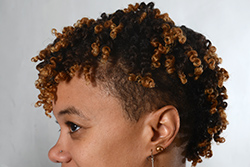
Natural style: Local black women find support as they embrace their roots

Through ’Nati Naturalistas and Queen City Naturals, black women in Greater Cincinnati nurture their love of natural hair—and of themselves.

SpringBoard grads infuse city with creative startup energy

Laura Chenault took an abandoned garage on Spring Grove Avenue and transformed it into a space for everything from filming indie documentaries and music videos to hosting cooking classes, dinner parties and dance parties, too. But she didn’t do it alone.

Untethered adds intimacy to local theater scene

It’s not often that you find students so engrossed in their studies that they decide to do more than what’s asked of them and expand a project beyond the realm of the classroom. For Untethered Theater, however, a single-scene performance in a theme study course taught by Miami-Hamilton professor Bekka Reardon led to a full-fledged self-produced play in 2011. And now, two years later, the group’s continued passion for intimate theater continues as the ensemble takes on Adam Rapp’s “Red Light Winter”—the second of four plays in the company’s 2012-13 season.  “Red Light Winter” portrays the hard truth of “how impossible it is for people to let things go,” says Mary Kate Moran, one of Untethered’s three founding members. It takes place throughout the course of a year: one night in Amsterdam and then a year later in New York City, and it’s performed in a 50-seat basement-level space at the Clifton Performance Theatre, where Moran says the audience is oftentimes in the middle of the action.  “We want to provide accessible, sort of in-your-face storefront theater,” says Moran. “It’s intimate. It’s participatory. We want to be so different that you’re going to go to a night of theater and feel like maybe you walked into something and were a fly on the wall.”  Moran says the ensemble, which has nine official members—most of whom have full-time day jobs as well—decided to put on the play because of some of the members’ intense passion for its themes, in addition to the group’s mission to perform pieces that people don’t see very often.  “This is a labor of love,” says Moran. “We go and do this full-time after we get away from our desk or retail jobs or whatever because there’s no other place we want to be. We just want to create art that is a lot of fun for people who know and love theater.”  Untethered contributes to the community by bringing its skills and dedication to the stage, but the company also hopes to reach out to the neighborhood by providing support to increase involvement in the arts. “We want to have nights where we have shows where almost all of the profits go toward people in the community,” says Moran. “We want to surprise people with that kind of stuff. We love Clifton, we love being in Clifton, and we want to make Clifton a better place.”  Untethered Theater’s “Red Light Winter” will continue through Feb. 2.  Do Good:  • Purchase tickets to a performance of "Red Light Winter."  • Support Untethered Theater and its sister-company Clifton Players by attending an upcoming show or purchasing a season subscription. • Like Untethered Theater on Facebook. By Brittany York Brittany York is a professor of English composition at the University of Cincinnati and a teacher at the Regional Institute of Torah and Secular Studies. She also edits the For Good section of SoapboxMedia. 

How To Build An Internal Social Network That Your Company Loves

When Shane Atchison took the job of CEO at Possible Worldwide in April, he needed a way to get in sync with 1,100 people across 32 offices. Possible, a division of the advertising giant WPP, then acquired three small companies in four months, making the issue even more pressing. How do you build a sense of community when you’ve got people from Poland, Budapest and Moscow connecting with people in Cincinnati or Seattle? Read the full story here.

Our Partners

Taft Museum of Art

Common Ground Is Brewing

Support local stories and receive our signature roast straight to your door when you join at the Standard level (or above).

Drink Better, Read Local

Close the CTA

Don't miss out!

Everything Cincinnati, in your inbox every week.

Close the CTA

Already a subscriber? Enter your email to hide this popup in the future.