Cincinnati

New Mariemont city schools use technology, green building to teach life skills

 Mariemont City Schools are busy with several development projects, including building a brand new junior high school and updating two elementary schools that are scheduled for completion by August 2012. Groundbreaking for the new Mariemont Junior High School began a few weeks ago at the former Fairfax Elementary school site.The new junior high will provide an up-to-date, hi-tech gathering place for students and residents. The community will have access to the school's new gym, media center, and commons area for gatherings. The goal is to not only serve students but the community at large, according to Kathy Ryan, Program Manager for Mariemont City Schools.Construction of the building will follow LEED certified standards with the goal of achieving silver or gold certification. Some of the green attributes will include the use of sensored lighting, geothermal heating and cooling, and green materials. The building will take advantage of natural lighting from the windows by placing skylights in the gym with baffles to redirect light. If it is a bright day, the lights will be dimmed in order to conserve energy."It is important to design a LEED certified building," Ryan explained. "The school sets a good example for the kids as they learn about geothermal energy and how lighting works. It will be a living building that exemplifies what we are teaching. Everything we are looking at is for the future."One of the important aspects of the new school includes upgraded technology to teach students the necessary life skills to survive in a working environment outside of the classroom. Classrooms will have docking stations where students can work with their laptops in a group and the library will have small rooms where students can do video presentations. "We're including things that help evolve the life skills of a student by using technology. We follow what Fortune 500 companies say needs to be taught to produce a well-rounded student including being creative, thinking outside the box, knowing technology, and taking risks," Ryan said. The new junior high will be a huge plus for Mariemont, but Ryan said it will also set a great example for other schools. "Schools will want to come and see what we've done, just as we've visited other schools to see what is working well. We've put a tremendous amount of time in studying things, getting opinions from the experts, and talking to the community and we hope that everyone felt heard in the process."Writer: Lisa Ensminger


Latest in Cincinnati
Riverfront Park hits funding milestone

 According to those involved with the development of Cincinnati's Riverfront Park, this new stretch of city green space is going to be far more than just a pretty spot along the river. "It's an irreplaceable urban treasure," said Debbie Oliver, co-founder of the Women's Committee for Cincinnati Riverfront Park. "Once it's built out, it's going to be such a joyful, healthy place. It's going to be the city's new front yard."Oliver and her colleagues in the six-year-old Women's Committee have worked in increasingly larger steps to advocate for the 45-acre park that frames the Ohio entry to the John A. Roebling Bridge. Through a series of fundraising efforts, the committee is raising funds to establish an endowment for the park and to support family-friendly programming there. On Thursday, the Women's Committee will host its 2011 Hats Off! Luncheon, the first event to officially be held in the park. And during the event, Oliver said the committee will make a big announcement: its fundraising effort that started in 2006 with a goal of raising $100,000 will top $1 million, thanks to a $20,000 donation from a local garden club.Gretchen Hooker, Cincinnati Parks Foundation development associate, said the money is an important piece in the park's multi-stream funding puzzle. The $120 million needed to complete and partially endow the park is expected to come from a variety of state, federal and local sources, she explained. A third of that - roughly $40 million - is planned to come through private donations, like that raised by the Women's Committee. Hooker said fundraising efforts are ongoing - as of May 18, private donations totaled slightly more than $8.1 million - but added that the Women's Committee's work has gone beyond dollars and cents."It's important to have the money, just because we need the money to fund park, but the advocacy it brings when people are engaging in it, I think, is even more important."Oliver noted several reasons for the group's strong advocacy for the park: it serves as a "crown jewel," she said, tying together the stadiums and The Banks. It draws residents from downtown, and provides a peaceful break from the urban landscape. And it adds to the city's already-renowned urban park system."We're going to go on beating the path, pounding the pavement, because we so believe in it," she said.And that advocacy work will likely play a direct role in the rate at which the park's planned amenities, such as an event lawn and water features, come online. As with many projects nationwide, Riverfront Park has had to adapt to changing timelines for state and Federal funding."You have to be flexible," said Oliver, who noted that the park has been in planning and development since 1999. "It's about being responsible and responsive with the resources at hand." For the time being, Oliver said the Women's Committee will continue its fundraising and advocacy work on behalf of the park. And Hooker noted that that ongoing support is already having a ripple effect, as more and more private donors step up to help fund this prominent public space."The women who have stepped up have been so supportive and energetic," Hooker said. "As they spread the word, they get more people engaged. And as people join forces, they often add more donations to help support the park."Writer: Matt CunninghamPhotography by Matt Cunningham

Covington youth find meaning in the BLOCK

When Jenni Miller-Francis first talks with fourth and fifth graders who go to school in Covington, she asks them what they like about the city. A common initial response? "Nothing."After 10 weeks of Born Leaders of Covington Kentucky (BLOCK), she notices a transformation. Students have spent weekly sessions learning about their community, interviewing current leaders and analyzing ways they could do their part to help, from making "thank-you" soup jars filled with ingredients and instructions to conducing a neighborhood-wide lead-poisoning awareness campaign. "There are a lot of great things happening here," says Miller-Francis, the director of youth and family initiatives at the Center for Great Neighborhoods in Covington. "The coolest part is watching kids who either don't know anything about their community or don't have anything that they like about it really see the assets and start to have pride in it."While the Center for Great Neighborhoods of Covington has offered youth leadership training since 1976, BLOCK has only been around since 2007. Miller-Francis says partnering with Covington Independent Partner Schools and Covington Partners in Prevention has helped solidify the program in the Northern Kentucky city's 19 elementary schools. Teachers recommend students to participate in the program, which lasts for 20 weeks in all. Teachers and School Resource Center coordinators offer the additional 10 weeks of instruction. "The schools encourage kids to get involved in the community," Miller-Francis says. "We try to help them understand city and local government and how to be involved."Some graduates of the BLOCK and other youth leadership programs created by the Great Neighborhood nonprofit have remained in leadership roles in their community. Some have joined the Covington Youth Commission, where they can gain experience as grant makers, supporting projects developed by other young people aimed at bettering their city. "The kids learn how to be leaders," Miller-Francis says.Do Good:• Get a new Mac. And give your hand-me-down laptop to the Center for Great Neighborhoods of Covington.• Help a Born Leader. Volunteer to spend a session or two as a part of BLOCK.• Make nice on Facebook. Friend the Great Neighborhoods of Covington Facebook page to keep up on the latest news. By Elissa YanceyPhoto courtesy of BLOCK

Students get in StEP with market economy

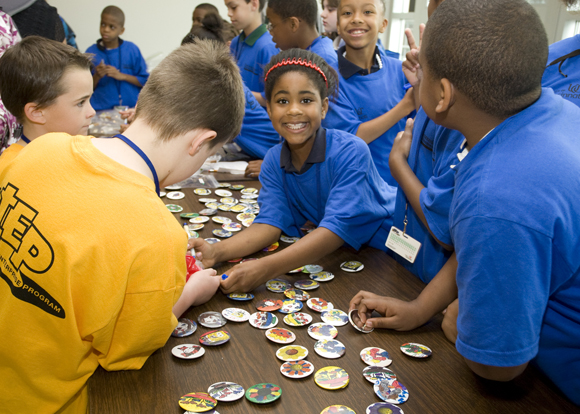
Third through fifth-graders survey a table of opportunities- silly bands, basketballs, notebooks, Frisbees. Which will they choose? That depends, of course, on how much they have to spend. It's part of the Student Enterprise Program (StEP), an initiative of the nonprofit Economics Center, located at the University of Cincinnati.The more than 4,000 Cincinnati elementary students who participate in StEP earn a maximum of $15 per day for attendance, homework completion and behavior. Their hypothetical money is logged in a ledger and spent via checks that students fill out themselves. Students get practical financial education and skills as classrooms are converted to small businesses and students as hold jobs, save, spend and invest school currency. Through saving and spending their money, students learn about supply and demand, opportunity cost and the value of their work.From Western Hills to Bond Hill and more than three dozen points in between, StEP offers more than a simple addition and subtraction lesson, says marketing manager Jaclyn Smith. Experiencing the impact of thoughtful financial decision-making - should I buy a notebook now or save for a basketball? - empowers students. Students learn what it feels like to delay gratification, and even have an opportunity to develop and market their own products in preparation for StEP's annual Market Madness event in the spring, Smith says. More than 700 students travel to UC in the spring to showcase their business ventures, which range from flowerpot shops to bakeries. During the event, students also tour UC's campus. The results impact students long after their market days are over. From better grades and more interest in their classwork to improved attendance, StEP participants prove that innovative incentives can make a real difference in learning.Do Good:• Mind the shop. Spend some time as a volunteer at a StEP school store near you. Email StEP Director Dr. Val Krugh for details.• Help a start-up. Interview students for management roles for their business ventures or make a direct donation to the program.• Give a tweet. Follow the Economics Center on Twitter. By Elissa YanceyPhoto courtesy Economics Center

Building a Green Legacy in OTR

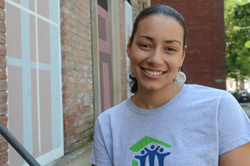
The US Green Building Council's Legacy Project partners with preservationists and affordable housing advocates in Over-the-Rhine for a first-of-its-kind green historic housing development. 

UC’s DAAP, Hughes High School team for TREAD Project

Three University of Cincinnati Industrial Design students are empowering and educating students at Hughes High School through a footwear design studio as part of their senior thesis, the TREAD Project.Charley Hudak, Vanessa Melendez, and Jince Kuruvilla, are fifth-year industrial design students in the College of Design, Architecture, Art and Planning and have been networking for nearly five years to bring TREAD Project to life.The design studio was somewhat inspired by a program at Carnegie Mellon University, Sneakerology Course, which focuses on the culture and history of sneakers, not design.In its first year as a footwear design studio, the TREAD Project became part of UC's ID curriculum thanks to the support of Dale Murray, associate professor and coordinator of Industrial Design, and Phyllis Borcherding, associate professor and coordinator of Fashion Design and Development. After the success of its initial year, the design team decided to share the project at the high school across the street from UC's Uptown campus. The TREAD Project is a seven-week design student for 25 Hughes students who meet for three sessions per week. The last session each week features a footwear industry professional, including representatives from Nike, Reebok, Adidas, Jordan, Toms Shoes, Vans and more. In classes, students learn how to design with markets in mind, solve design problems and creatively sketch their concepts of the perfect shoes, which they will present to a panel of experts on the last day of the studio, May 25."It gives them a different opportunity to realize their skill sets can be applied to any problem," Melendez says. "They're using different thinking skills to solve problems instead of memorization or standardized tests."The project has particular significance at Hughes, where the dress code allows only black or white shoes. The students' shoe brands become a way for them to express their personalities.While the studio teaches students about footwear design, it also inspires them to take more active roles in their lives, including getting to school every day, applying to college or landing a job after graduation. "There are opportunities that not all of these students are aware of," Hudak says "Creative problem-solving goes beyond the education and design process." "Their skill sets can be applied to any problem," Melendez says. "They're using different thinking skills to solve problems instead of memorization or standardized tests."Hudak and his partners, all of whom are graduating this June, hope to expand the curriculum into a working non-profit model that could be replicated nationwide. Do Good:• Support the Tread Project. Donate money or supplies so tread can continue to teach inner-city students. • 'Like' Tread Project on Facebook. • Get informed. Visit the Tread Project online to learn more about the progress and see cool pictures, too!By Jayna BarkerFollow Jayna on Twitter @jaynabarker.http://www.jaynabarker.comPhoto courtesy Tread Project

Chamber’s GrowthForce program aims to accelerate regional business growth

The Cincinnati USA Regional Chamber is ramping up its efforts to retain and grow the region's existing businesses through a revamped program called GrowthForceGrowthForce is building and expanding on the successful 20-year old Regional Business Retention Committee (RBRC), a volunteer group of 30 business leaders who mentor local business owners through growth periods."GrowthForce is a collaboration of business sector volunteers, local economic development professionals, and regional Workforce Investment Boards, a vastly expanded team of experts to address business needs," said Julia Muntel, the Director of Investor Relations and Business Retention with the Chamber. "The coordinated approach allows us to maximize resources by working in a regional, aligned fashion. This gives us the most bang for our buck. GrowthForce leverages powerful, existing resources and applies the same methods and tools of business attraction to help local companies stay strong and grow jobs in the economy. Focusing on local, established business growth isn't a small piece of Cincinnati's economic pie. In 2010, nearly three-fourths of the region's total business investment came from existing businesses, according to the Chamber.The free program is open to companies in the 15-county tri-state region of SW Ohio, Northern Kentucky and SE Indiana. The program's goals are to grow the its number of business outreach volunteers by 25 percent, and to increase the number of participating businesses to 450, a 10 percent jump from last year. "In this era of elevated competition and economic uncertainty, we have recently chosen to focus on companies that may be rapidly expanding, within targeted industries, or those experiencing a variety of changes in their business cycle. These high potential companies, large and small, may be well positioned for growth," explained Muntel. GrowthForce's expansion is largely being supported with a $250,000 grant to increase business retention efforts that the Ohio Department of Development awarded the Chamber last December.To support the program, the Chamber will publish the Cincinnati USA Regional Business Resource Guide, and provide training and orientation to partners. The resource guide and other supporting materials can be found online on the GrowthForce website.Writer: Feoshia HendersonSource: Chris Kemper, Cincinnati USA Regional ChamberYou can follow Feoshia on Twitter @feoshiawrites

My Soapbox: Bill Cunningham

In the startup community, Bill Cunningham is known as a man of action. The founder of five startups has spent the past 20 years as an advocate, teacher and mentor to budding entrepreneurs. Soapbox asked next generation startup leader, Elizabeth Edwards, to talk with Cunningham about his past and offer advice for future entrepreneurs.

Freedom Writers’ visit sparks regional education initiative

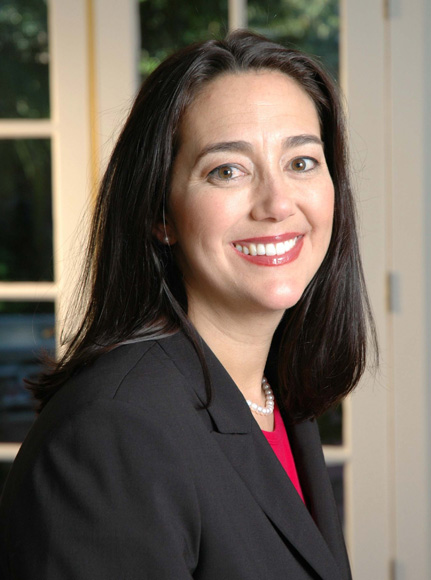
Mark Kohan knows how to bring people together. Though still a doctoral student in educational studies at the University of Cincinnati, Kohan has spent the last year planning a regional effort to inspire social justice in classrooms, schools and communities.Earlier this month, his work to unite universities and community organizations around those efforts culminated with a visit from the nationally known Freedom Writers, led by teacher Erin Gruwell of California. Gruwell's work in and out of the classroom became the basis for the 2007 film "Freedom Writers," starring Hilary Swank. Gruwell, a high-school English teacher, became known for her work with inner-city youth - groups of students who had been at best underestimated and at worst written off completely. Gruwell's efforts to expose her students to stories of empowerment and individual responsibility led to the formation of the foundation that now provides support to teachers and students around the country. Kohan pulled together a broad coalition to support the Freedom Writers visit during the 50th anniversary year of the Freedom Riders as a way to build momentum for Teaching Hope, an initiative that will launch in Cincinnati schools next fall."The goal of Teaching Hope is to call attention to how schools can be involved in making social justice a priority for the health and well-being of our region," according to Kohan, who served as coordinator for the Cincinnati Freedom Writers Project.He crossed institutional boundaries by partnering with Xavier and Miami universities, brought in non-profit support with the Center for Holocaust and Humanity Education, the National Underground Railroad Freedom Center, Women Writing for (a) Change and the Public Library of Cincinnati & Hamilton County. From visits to schools and with teachers throughout the day to a sold-out session with educational leaders and fans at the Freedom Center, six events throughout the day drew more than 700 enthusiastic educators and supporters. The Cincinnati Freedom Writers Project capitalized on the passion of educators and leaders to work toward social justice in and out of the classroom. Do Good:• Learn about the partners. From Women Writing for (a) Change to the shttp://cincinnatilibrary.org, you can find countless opportunities to get involved with social justice education.• Join the movement. Sign up to receive newsletters and other updates from the national Freedom Writers Foundation.• See how you can help Teach Hope. Email Mark Kohan at UC for more information. By Elissa Yancey Photo courtesy of Cincinnati Freedom Writers

AMP Electric Vehicles hands over keys for all-electric SUV to Iceland’s Northern Lights Energy

In a ceremony attended by local government officials, business associates and employees, AMP Electric Vehicles turned over the keys to the first of 1,000 all electric SUVs it will deliver to Iceland as part of a ground breaking partnership.AMP signed a deal last fall with Northern Electric Lights, a private company in Iceland. Under a letter of Intent, NLE has committed to buy the SUVs from AMP over the next five years. This marks the largest single order for the startup, and the first time the company has converted vehicles for an overseas buyer."Northern Lights Energy has been a visionary in the application and advantages of electric driven SUVs. We are extremely pleased to be working closely with NLE in the first large scale deployment of electric SUVs. This agreement represents a major advancement in transportation from conventional combustion engines and hybrid/extended range vehicles into effective SUV-sized 100 percent electric vehicles," said AMP president and CEO Steve Burns.One in four vehicle purchases in the US are SUVs. The company is working to capture less than 1 percent of the SUV market. Currently AMP specializes in converting three vehicles to 100-percent electric: the Chevrolet Equinox, Saturn Sky and Pontiac Solstice. AMP manufactures and installs state-of-the-art, all-electric, high performance engines and transmissions for the vehicles.Burns said Iceland is the perfect place to experiment with introducing a large number of all electric SUVs into the market (the country only has 200,000 drivers). SUVs are very popular in the Northern European Island, which has some rugged terrain. Gas is expensive, up to $8 U.S. per gallon, because it's all imported. Electricity is cheap and in the last few decades the government has made it a priority to develop the country's renewable hydropower and geothermal power sources.In addition most of the country's densely packed population lives in or near the capital, making the average commute about 30 miles.The potentially $100 million deal will set AMP as a leading SUV supplier, AMP CEO James Taylor said. The agreement allows for expansion into the Nordic region including Finland, Sweden, Norway, Denmark and the Faroe Islands. Initially AMP will supply the Chevy Equinox and Mercedes Benz ML EV.Writer: Feoshia HendersonSource: AMP Electric VehiclesFollow Feoshia on Twitter @feoshiawrites

Our Partners

Taft Museum of Art

Common Ground Is Brewing

Support local stories and receive our signature roast straight to your door when you join at the Standard level (or above).

Drink Better, Read Local

Close the CTA

Don't miss out!

Everything Cincinnati, in your inbox every week.

Close the CTA

Already a subscriber? Enter your email to hide this popup in the future.