Cincinnati

Mural, mural, on the wall

From an homage to Frank Duveneck to an original C.F. Payne to the spoils of a TED prize, MuralWorks by ArtWorks brightens more than city walls.This week, we tour of a few of the finest with Soapbox photographer Scott Beseler.

Latest in Cincinnati
Head of the class: Mary Ronan, CPS superintendent

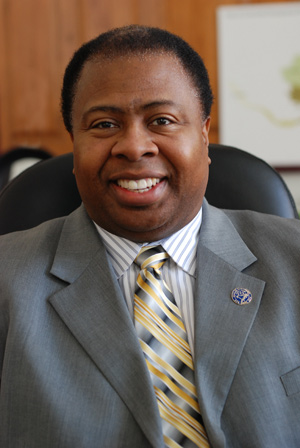
This fall, Cincinnati Public Schools celebrate higher test scores and make a plea for critical funding. As CPS students head back to school this week, Soapbox quizzed Ronan about the year ahead, the district she loves and her favorite school supply.

Cincy Metropolitan Orchestra celebrates 15 years

Whether you prefer a symphony by Beethoven or the soundtrack of a Hollywood blockbuster, the Cincinnati Metropolitan Orchestra offers affordable, accessible music. Performing to a full house at the Seton High School Performance Hall, the CMO kicked off its free Summer Concert Series, which commemorates 15 years of service to the community. President Gail Harmeling, who is also first violinist and concert master, was one of the orchestra's founding members. "We all felt a mutual calling to form a group where non-professional musicians could play," says Harmeling. Ranging from high school students to senior citizens, orchestra members hail from a variety of careers and backgrounds. Conductor David F. Allen draws on his lifelong experience as a music director, teacher and pianist to balance and unify the ensemble. Although the orchestra performs throughout the area, Seton High School is its primary rehearsal and performance space. "We're very grateful to them for allowing us to use their beautiful auditorium," Harmeling says.In addition to being free and open to the public, CMO concerts appeal to various age groups and musical tastes. "We do perform classical music, but also Broadway, Big Band and Pops," Harmeling says. "There's something for everyone."To celebrate the 15th anniversary, CMO musicians and members of the vocal ensemble selected popular pieces from past concerts. Entitled "Back by Popular Demand," the Summer Concert Series includes music from Star Wars, Harry Potter, Pirates of the Caribbean, Lord of the Dance, Phantom of the Opera and Les Miserables. Upcoming concerts will be held outdoors. "Little kids can run around and enjoy the music without having to be quiet," Harmeling says. With such a lively program awaiting the public, children won't be the only ones cheering for an encore.Do good:Make a donation. Become a Patron or purchase tickets to the October Broadway Concert.Volunteer with the Metropolitans. Email to find out how you can help behind the scenes.Audition. The CMO currently has openings for string musicians. Call (513) 921-4919 for more information.By Laura Thompson

Comics conversations

Read It. Jeff Suess and his graphic novel discussion group meet at 1 p.m. on Saturday, August 13, at the Mercantile Library. They'll be discussing Anya's Ghost by Vera Brosgol. There are copies available at the Public Library of Cincinnati and Hamilton County. [414 Walnut Street, 11th floor, downtown, 513-621-0717] Buy It. The 2011 Cincinnati Comic Expo takes place on Saturday, September 17, at the Duke Energy Center. Nearly 30 vendors will be on hand, selling everything from comics to figurines. [525 Elm Street, downtown] Try It. The first Saturday in May is Free Comic Book Day, in which stores give away comics and other goodies to entice would-be customers. "Rockin' Rooster has a ton of graphic novels and a variety of new titles," Suess says. "Up Up & Away has great back issues. Queen City and Mavericks run the gamut in titles. Arcadian has a nice selection of independent titles. And Comic Book World in Florence has been around a long time and has a big selection. And the people who work at all these shops really know their comics." Go online to find out which local shops participate.

Talent search

As cities realize the importance of attracting and retaining talent, smaller development projects and neighborhood investment are becoming a crucial part of some cities' revitalization efforts. 

Local bookstores fill niches as national chains falter

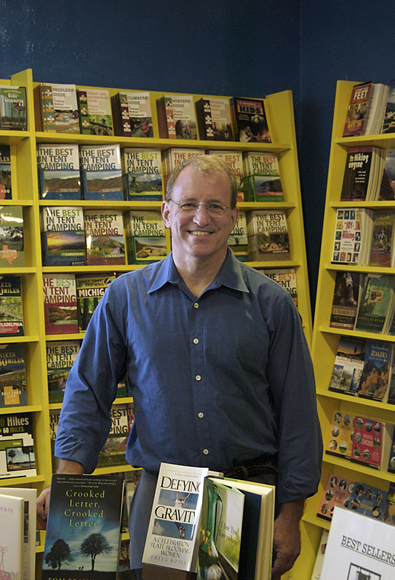
The publishing and bookselling industries bore witness to the death of a giant last week when Borders ran out of options to stay in business. But as the second largest bookstore chain in the nation closes its doors for good, a new generation of the stores it once replaced say the future looks bright.Richard Hunt, co-founder of Roebling Point Bookstore in Covington, says the year-old store is gaining a steady following of patrons who appreciate its focus on travel and outdoor recreation titles, as well as its large selection of books on local topics and by local authors."We wanted to be a resource for people here," he says. "Our grand aspiration is to be the best resource for these categories."Hunt says the bookstore is expanding to add a community meeting room, more shelf space and possibly a coffee shop. That may not be much different from the features of the large chain bookstores, but he notes that Roebling Point's knowledge of local authors, and its ability to find the niche books desired by its patrons, give it a leg up in the market."That's one of the things the bigger bookstores don't focus on so well," he says.Serving profitable niches is a specialty of another successful independent bookstore in Cincinnati: Blue Manatee Children's Bookstore in Oakley. Events Coordinator Kelli Gleiner says the small store's deep knowledge of its customers is a huge tool in keeping the business vibrant."We're such a small store with a small staff, that most of our customers know the staff well," she says. For Blue Manatee, that means providing programming that customers won't find in big-box bookstores. The store offers the story times one might expect, but also hosts weekly yoga classes and brings in authors for book signings with the frequency one might only expect for a store catering to adult readers. Again, it's simply a response to customer demand, Gleiner says."We have to know what they want, otherwise we wouldn't be here," she says.Ben Vore, general manager at Joseph-Beth Booksellers in Norwood, says the parallel themes of greater customer awareness and adaptability to customer desires are more than just good marketing plans for independent bookstores."I think that, to me, is the only way we're going to continue to survive, and to thrive," he says. "With Borders going down, I feel that, with fewer bookstores out there, we're going to really need to be very rooted in the community and in tune to what's going on around town."Story and photos by Matt Cunningham Follow Matt on Twitter @cunningcontent

Advocates share realities of affordable housing

Too often, the term "affordable housing" carries negative connotations of everything from high-crime zones to run-down tenements. The reality, says Alicia Townsend of the Cincinnati Development Fund, holds the key to building better futures for those facing life-altering challenges.From single parents to grandparents, tenants on the hunt for housing face fixed incomes, unexpected unemployment and other barriers to finding dependable shelter. "We want to get accurate info out about affordable housing and who needs it," says Townsend. The Greater Cincinnati Foundation recently awarded $20,000 to Cincinnati's Affordable Housing Advocates to do just that. "Someone who needs affordable housing might be your grandmother that can't maintain her home and lives on a fixed income."Affordable Housing Advocates began in 1993 as a collaboration between the Cincinnati Development Fund, the United Way and the Legal Aid Society. The mission is to provide safe, accessible and affordable housing to residents in southwest Ohio.The infusion of money supports AHA's Public Education and Awareness Campaign for Affordable Housing. "We have a big push on educating the public on the positive merits of affordable housing," Townsend says. "The grant will help us put into action a campaign plan for speakers and education forums."Townsend says the education forums help dispel negative stereotypes and introduce the public to the people who need affordable housing, a group which newly single mothers, seniors, teachers, nurses and people newly released from treatment or prison programs.The new education campaign targets two key demographics: youth between the ages of 16 and 24 and faith-based organizations, in part because the youth market is key to AHA's success, says Townsend. "They're the tastemakers," she says. "If you can get to them before they become homeowners, they have the ability to influence the adults around them."Do Good:• Sign up. Get regular updates about AHA via email.• Join. Become a member of the AHA and support the education campaign through volunteering and donation.• Spread the word. Volunteer your time, talents and money to the cause of affordable housing in Cincinnati.By Ryan McLendon

This Place Matters showing boosts more than OTR

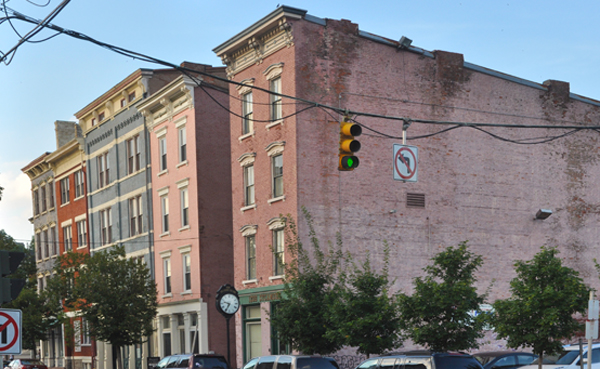
It was a near miss that some still see as a much-needed shot in the arm. The Over-the-Rhine Foundation, a community organization dedicated to promoting sustainable growth in the historic neighborhood, was the dark horse story of the National Trust for Historic Preservation's 2011 This Place Matters Community Challenge. The organization came from behind in the closing weeks of the voting drive event, which offered its winner $25,000 to support historic preservation efforts. At one point, the OTR Foundation led the field of 100 finalists in a close race that came down to the final days.But when the final tallies came in, preservation projects in Newport, RI, and Wellington, TX, gained first and second spots, respectively. The OTR Foundation placed third, with an accompanying $5,000 prize.But never mind the scoreboard: the organization's representatives - and historic preservation advocates in the city - are calling the third-place finish a huge success, for both Over-the-Rhine and Cincinnati as a whole."The way we look at it, any interest in the neighborhood is good," says OTR Foundation Vice-President and former Soapbox managing editor Sean Rhiney. "It puts us on the map and in the national conscience."Cincinnati Preservation Association executive director Paul Muller agrees, noting that it was community mobilization in multiple neighborhoods that drove the voting effort. "It was really exciting to be part of the community that mobilized for that effort," he says. "It was great, particularly, to show the National Trust the passion and support for Over-the-Rhine in Cincinnati."According to both advocates, Over-the-Rhine's success speaks to something happening in Cincinnati: a renaissance of interest in the city's history, and a new respect for its urban core - the 'inner circle' neighborhoods like Over-the-Rhine."That's almost like the city is coming to terms with itself," Rhiney says. "We're changing the conversation from focusing on negatives to attributes."On Tuesday, Aug. 2, Mueller and CPA preservation director Margo Warminski asked members of Cincinnati City Council to push forward an effort to have Cincinnati designated a Preserve America Community by the Federal government. The move would help preservation initiatives in the city receive grant funding, and would help build what Mueller calls one of the city's greatest present and future assets: its historic treasures. By Matt Cunningham Follow Matt on Twitter @cunningcontent

Organizers call for support of Office of Environmental Quality

Like Federal, state and other local governments, Cincinnati needs to trim its budget. But if a group of vocal supporters have their way, those cuts won't come at the expense of revenue-generating efforts to increase the city's sustainability. City Administrator Milton Dohoney's office proposed cuts include disbanding the city's Office of Environmental Quality. The office's responsibilities include managing energy conservation and use in city facilities, obtaining grant funding for city projects that enhance the city's environmental friendliness and working with the city and Hamilton County to improve the region's air quality. Under the proposed plan, the OEQ would be absorbed into the Department of Public Services and the Finance Department's Risk Management Division. Five OEQ staff members would be absorbed into other city departments; two would lose their jobs. "To call the City Manager's proposal of eliminating the OEQ short-sighted would be a gross understatement," says Libby Hunter, a green realtor for Comey & Shepherd and chair of the U.S. Green Building Council's Cincinnati Residential Green Building committee. She argues that the numbers don't add up. "The OEQ has increased public participation in the recycling program to more than 75 percent of households, while creating 20 new city jobs and decreasing the city's net recycling cost by more than $1 million," she says. "OEQ has raised over $14 million of private investment to improve the energy efficiency of city buildings and reduce the city's utility bill by over $1.2 million a year, and is pushing to finalize a plan with a private vendor to install a solar array at no cost to the City that could generate $250,000 a year in electricity." At the first of five planned hearings on the budget, 21 of the 23 citizens who spoke to council did so to voice their support for keeping the OEQ. Likewise, groups of concerned residents have launched an online petition drive and a Facebook page promoting grassroots action on the proposal."This is about economic development as well as quality of life," says Danny Korman, owner of sustainable goods retailer Park + Vine. He notes that Cincinnati ranks 27th in the nation's metropolitan areas for green jobs, and that the OEQ - and city-level green projects - play a role in keeping the city current in the world of sustainability. "As someone who loves this city and has a business in the city, this would really be a huge void in the city to not have it around."The Cincinnati Green Group, an affiliation of environmental and sustainability advocates, is encouraging citizens to speak up at budget hearings planned for August 10, 15 and 16. If groups as large as the one that spoke at the first meeting continue to voice their concerns over the matter, council member Laure Quinlivan says the grassroots effort could prompt council to act."I can tell you in my short experience at city hall, I've seen it happen," she says, noting that proposals that would have closed pools and cut nature education in city parks were both amended after strong public outcry."I think citizen power will work if people continue for fight for what we have," she says.According to Korman, this is not a fight to be left for the future."Once you let something like this go, it's hard to get it back," he says. "We're concerned that once we lose it we're never going to see it again."By Matt Cunningham Follow Matt on Twitter @cunningcontent

UC researchers innovate with lab-on-a-chip technology

A sensor chip developed by researchers at The University of Cincinnati is small enough to be covered by a matchbook. But this little device offers huge potential for making medical care faster, easier and less painful.UC researchers Erin Haynes, DrPH, and Ian Papautsky, PhD, are in the early stages of testing a sensor that can measure the level of manganese, a potentially toxic metal, in a blood sample. Excessive manganese exposure can cause a range of symptoms, including behavioral changes, balance problems and nervous system damage. Haynes, an environmental medicine researcher, initially began studying manganese exposure after she was contacted by residents of Marietta, Ohio, who worried that a manganese processing facility in that city was releasing dangerous amounts of the metal into the air.Haynes says that current testing practices, which involve periodic blood testing among participants, can take up to six months or more as her team collects a batch of samples, ships them to a lab, and then waits for results."Families are anxious," Haynes says. "They want to know the results immediately or in a short amount of time."Haynes says she approached Papautsky with the idea of developing a so-called lab-on-a-chip: a single-use device that could quickly test a small blood sample for manganese and provide a near-instant result. Papautsky says this type of point-of-care testing is a hot topic in biomedical engineering. And the subject at hand presented a unique challenge, he says."It turns out manganese is very challenging to detect in an electrochemical approach," he says.The researchers' prototype chip uses an electrical current to pull manganese out of the blood sample, and measures how much energy it takes to do that - the amount of energy required correlates to the amount of manganese in the sample. The electrodes normally used in this kind of device are often made from mercury, but the team found that making the electrodes out of less-toxic bismuth produced a more sensitive sensor, and one that's more environmentally friendly.Papautsky says the chip is still in the early phases of lab testing - it has shown promise detecting manganese in blood serum, and his team hopes to test it using whole blood in the near future. It could be several years before a consumer-ready version of the chip can be deployed to Marietta, thanks to the long process of verification and testing that goes into ensuring any medical device is ready for use.But both Papautsky and Haynes are excited about the chip's potential. Its high sensitivity could trickle down into making other tests, such as that for lead exposure, more effective. But patients young and old may better appreciate another fact: the lab-on-a-chip could one day conduct a range of front-line lab tests with only a finger-prick's worth of blood, rather than the vials required today."These type of systems are changing the way medicine is practiced and can be delivered," Papautsky says.By Matt Cunningham Follow Matt on Twitter @cunningcontent

Our Partners

Taft Museum of Art

Common Ground Is Brewing

Support local stories and receive our signature roast straight to your door when you join at the Standard level (or above).

Drink Better, Read Local

Close the CTA

Don't miss out!

Everything Cincinnati, in your inbox every week.

Close the CTA

Already a subscriber? Enter your email to hide this popup in the future.