
Startup News

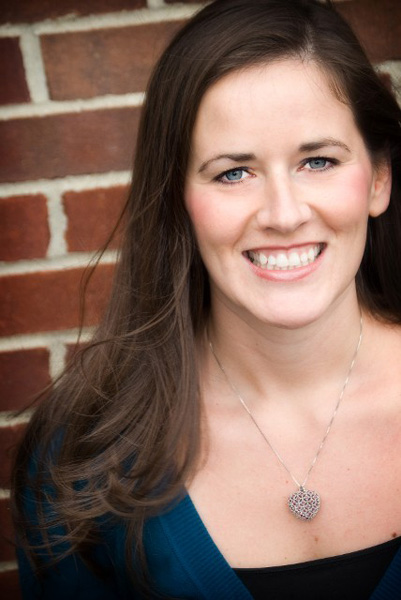
Live Well Chiropractic Center focuses on young patients, moms

If chiropractors make you think of arthritis, car accidents and old, achy spines, you’re not alone, but chiropractic care can start much sooner in life than when grey hairs appear. Kim Muhlenkamp started seeing a chiropractor as a baby when torticollis, a painful condition causing muscle spasms in the neck, made it painful to lift her head. For Muhlenkamp’s family, regular chiropractic care was simply normal and “part of our everyday lifestyle.” Today, Muhlenkamp, who goes by “Dr. Kim,” has her own chiropractic practice, the Live Well Chiropractic Center, which opened last April in Mason. She sees all ages of patients, but focuses on relieving pain in kids and expectant moms. One of her specialties is the Webster technique, an adjustment designed to balance the pelvis and allow breach babies to be born naturally by giving them space to position themselves head down in the womb. Muhlenkamp, who sees a chiropractor weekly herself, says pregnancy doesn’t have to be painful. She points out that chiropractic adjustments can relieve the pain of sciatica as well as discomfort in the lower back, ribs and pelvis that women often experience during pregnancy. Children require a much lighter, gentler technique Muhlenkamp says, which is what makes her expertise so important. After all, she says, “The birth process can have a huge impact on the spine and neck. Even a little misalignment can affect things down the road.” She’s also passionate about helping kids avoid pain and injuries later in life. “The reason we develop arthritis and imbalances, well, let’s just say it’s not just something that happens overnight. It’s something that starts with a fall or an injury in high school, something that happens early on. When it goes untreated, our bodies compensate, and we develop issues down the road. The importance of keeping everything aligned from the early stages on is huge.” By Robin Donovan

Latest in Startup News
Profile: Rosalie Giesel of 346 Stanley

How did you come to be an entrepreneur?   It started with a project in one of our entrepreneurship classes at the University of Cincinnati’s College of Business. We had to come up with an idea for a new business, product, or service and build a business plan around it. Although the class ended in December 2011, we felt that we had a marketable product and decided to continue on with its development by founding 346 Stanley LLC. How did you come up the idea? Some of my favorite perfume leaked from the bottle and onto my cell phone. I found that I loved smelling it every time I used my phone and even continued to spray it on the case when it began to wear off. That’s where the idea was born. I should mention that our original name for the product was Tek-Tak but when our lawyer researched it, we found that the name was already in use. We have since changed the product name to “Akscentz.” What resources here did you take advantage of and how did they help? We’ve had some great help from professors in the College of Business; they are all very supportive of us going forward and taking our product to market. Also, we’ve consulted with lawyers and professionals with expertise in launching new products. What inspires you? The thought of coming up with our own idea and actually taking it to market and making it a success inspires us. Seeing the hard work and passion of other entrepreneurs who have taken their ideas and turned them into something real; that is truly inspiring. What’s next for you and your product? Right now we are consulting with some experts who have experience in launching new products. We want to learn the best way to produce and market Akscentz.   By Robin Donovan

Resource: CincyTech

CincyTech is a public-private partnership whose mission is to invest in high--growth startup technology companies in Southwest Ohio.  This is done through management assistance, seed-capital investments and connections to partners who share our mission. CincyTech is supported by the State of Ohio's Third Frontier Project and by corporations, foundations and research institutions in Southwest Ohio. Its work focuses on opportunities in information technology and life sciences.  CincyTech provides the following services: Connections to a network of resources for assistance.Management assistance provided by a team of executives-in-residence and investment associates to help accelerate the growth of promising technology companies.Seed-stage investments through a $10.4 million seed fund.Capital formation assistance provided by an investment development director, who works with clients to access follow-on rounds of capital from angel and private-equity investors regionally and nationally.Imagining Grants to prove the potential of technologies developed at regional research centers to be commercialized by startup companies. Grants also will be available to launch new companies based on orphaned technology at established regional companies.Since it began investment activity in May 2007, CincyTech has: Considered more than 1,800 investment opportunities.Provided substantive advice to more than 421 companies.Invested $5.3 million in 17 companies -- 11 in information technology, five in bioscience and one in advanced manufacturing.Helped local startup companies raise $89 million from seed- or early-stage venture investors.Through September 2010, CincyTech's portfolio companies have created 250 jobs at an average annual wage of $61,000. At this rate, those companies are on track to produce up to 1,000 jobs over the next eight years. At the same time, the partnership will have expanded the region's entrepreneurial class with a new cadre of successful business leaders with the capacity to launch new firms, support the arts and other philanthropic activities, and assume civic leadership responsibilities.

DIY crafts, sass make ‘Housewife’ popular

No matter thunderstorm, stifling heat or Cleveland snow storm, the craft show must go on. That’s the way Martha Latta, the 30-year-old do-it-yourself crafter extraordinaire behind Sunday Afternoon Housewife, sees it, anyway. “Always bring an extra pair of socks and T-shirt,” Latta, who lives in north east Indianapolis, says with a laugh. “Be prepared for everything.” Sunday Afternoon Housewife, a moniker that Latta picked up in 2004 when she and a friend started a zine, now represents a blog of “handmade goods and unsolicited advice” and her business. Latta, a part-time instructor at a local community college who travels around the country to sell her goods at craft shows, also sells her Scrabble tile pendants on her website. The tiles each have a vintage-inspired image on the blank side of the tile with the Scrabble letter visible on the back. The image is coated in resin to give the necklace a shiny, glass-like appearance. She’s also the force behind a growing Indiana-centric T-shirt business. The necklaces and T-shirts, which are also sold in stores from Cincinnati to Dallas, are the latest in a line of creating that started when Latta was in high school. She’s experimented with wood burning, leather work, beading, paper making, photography, embroidery and sewing. The skills, she says, she inherited from her mother and grandmothers. “One is a really good quilter and cook – I get all of my cooking skills from my dad’s mom,” Latta says. “My other grandma, she does beautiful needlework, cross-stitch, embroidery, knitting and crochet. My mom never settled on one thing. … She’s on a mosaic phase now.” For the month of December, Latta is working a pop-up shop at a gallery in Indianapolis that features work from 45 different artists. She’s using it to “get my toes in the water of retail” although she isn’t committed to opening her own shop just yet. Next for Latta? Who knows, she says. “I don’t know that I’ll be making necklaces for the rest of my life,” Latta says. “I’m doing really well with the T-shirt line and thinking that in the next year I’ll be expanding that, doing more things that are general instead of city-centric.” Interested in her work? Latta has her goods on sale in at least two Cincinnati boutiques; Fabricate in Northside and Red Tree Gallery on Madison Road. By Taylor Dungjen

Whirlybird launches line of local granola

Research the history of granola and a couple different accounts surface. Who thought of it first—a health spa owner or John Harvey Kellogg? From healthy snack to diet staple, granola’s popularity gives it staying power beyond its early “hippie food” advocates. For Mariemont’s Christy White, 27, the love of granola reaches beyond yogurt topping and trail mix. She’s taken her passion for local ingredients and entrepreneurial spirit and launched Whirly Bird Granola in April 2011. After seeing granola for sale at local flea markets, she spend six months testing and perfecting her recipes for three signature varieties: original, chocolate and vanilla berry. One of White’s main focuses while testing recipes was finding a local, high-quality maple syrup. The name of her company evolved directly from the sugar maple tree’s seed, which many people refer to as “whirlybirds” or “helicopters.” She settled on Ohio’s Snake Hill Farm. “They produce organic maple syrup and it was delicious,” White says. “It is family-run and the people were amazing. We wanted to support such a great family with a great product.” http://www.whirlybirdgranola.com/WhirlyBird is all-natural, and 40 percent of its ingredients are organic. White uses dried cranberries, dried blueberries, flax seeds, sunflower seeds and more. “I’m trying to get as many organic and local ingredients into my recipes,” White says. “Sometimes it can be hard because of cost.” Currently, White, has only sold her granola at the City Flea. She’s in the process of finding a certified kitchen so she can expand beyond her Mariemont home and make larger quantities. White also takes orders by email and even delivers them to customers around the city. “I’m trying to meet what every customer needs,” she says. For now, that includes a special gingerbread-flavored granola for the holiday season. By Evan Wallis

Local woman makes lifelong hobby her business

With a lifetime of experience making jewelry, clothing and purses for herself, Kelly Lehman, owner and operator of Flora Sun Jewelry, is following a lifelong dream. Flora Sun launched in 2008 and Lehman decided she would focus only on jewelry. “There are a lot of distractions,” Lehman says. “I decided I needed to focus on just one aspect of things I make so I can stay on target.” With a degree in fine arts and interior design from The College of Mount St. Joseph, Lehman had taken classes in everything from metalworking to pottery. “I’ve always received compliments from friends, family, even strangers,” Lehman says. “People started offering to buy stuff from me. That’s when I thought I could make this into a business.” Before launching Flora Sun, Lehman worked as a project manager at an architecture firm for four years. Today, she freelances for production companies and runs Flora Sun. “I left that job to do something more arts-based,” Lehman says. Making her jewelry out of her basement studio in her house in Bridgetown, Lehman began to attend any local craft show she could find. The wide variety of materials that she buys or finds serves as her inspiration when she makes jewelry. “I use whatever catches my eye,” Lehman says. “I never know what I am going to make when I start.” From coral to semi-precious stones to metal, Lehman hand-makes one-of-a-kind earrings, necklaces and bracelets that sell well at craft shows like the City Flea and the Hyde Park Art Show. Sometimes she has even wiped out her inventory on her Etsy site. Since June of this year, Lehman has participated in eight different art shows around the city. With business going well, Lehman has thought about opening a storefront, but plans on continuing to work out of her house for the next couple of years. By Evan Wallis

Startup Such + Such builds collective design future in OTR

After graduating from DAAP and having experience co-oping with large design firms, three UC alums set an ambitious goal: start their own business and do it right here, in Cincinnati Starting out of Losantiville Design Collective at 1311 Main Street in Over-the-Rhine, the team at Such + Such is perfecting design and woodworking skills while working with neighborhood businesses and creating handmade furniture products. The company’s own line of products is available at Losantiville and on Such + Such’s Etsy site. Such + Such also provides design services – founders recently helped create the build-out for Sloane Boutique. The Losantiville Collective was formed to give creative types a place to share rent, tools and ideas. All the tenants pay rent, and the leftover money is invested in tools and an effort to  find a larger space than can hold more tenants. After graduating in June 2010, Alex Aeschbury, Zach Darmanan-Harris and Mike Nauman started Such + Such in March 2011. From clocks to tables to coat racks, all of Such + Such’s work is crafted in OTR. The trio’s eye for beautiful craftsmanship, along with their  manufacturing skills honed in years of DAAP studio work, allow them to make simple, but eye-catching, products. At Such + Such, every day offers a new learning opportunity. One day found the three start-up founders creating a four-foot-long spork to be used in an online video. “We wanted to be in charge. Between us, we had worked for 18 different companies while on UC co-ops. And we knew what we didn’t want and that was to have a small part of a task, product, branding or packaging project. We wanted to dictate the direction of an entire company, from capital investments to the finish on screws,” Aeschbury says. Such + Such founders want to expand their product line and find shops around Cincinnati and Colombus to sell them. The trio is working hard each day on learning business skills and handling a growing number of projects. But in the end, they are living their dreams and enjoying ever-changing workdays. By Evan Wallis

Resource: Northern Kentucky University Fifth Third Bank Entrepreneurship Institute

Northern Kentucky’s Fifth Third Bank Entrepreneurship Institute may be one of the newest among regional universities and colleges, but it is starting to make a name for itself. “We think that there is a huge untapped resource here,” says program director John Clarkin, an associate professor for entrepreneurship at NKU. “We really cater to the students from outside the business school.” “We really think that distinguishes this program from others in the country.” Clarkin helped build the program over the past 10 years ago after running a similar program at the College of Charleston (S.C.). He is the process of handing over the reins to a successor that hasn’t been picked yet. But he thinks the program is on the right track. “The goal is to make sure the students come through program and go out into community and have a much smoother transition from college life into real life,” Clarkin says. “And I think we’re getting there … and that’s why I feel I can step away.” In addition, the institute works very closely with the NKU’s Small Business Development Center, which provides free or low-cost consulting or project work for regional businesses. And the entrepreneurship program specializes in placing interns with area companies. And the institute also brings students and area business leaders together at least twice a year for major conferences and speeches, such as the one coming up on Tuesday, Nov. 16 featuring Dan Meyer and Richard Palmer of Nehemiah Manufacturing Company – who will speak on “building brands, creating jobs, and changing lives in our community.” “At any given time, there are a lot of students learning about entrepreneurship all over our campus, and you can’t ask for much more than that,” Clarkin says. Information about the NKU Fifth Third Entrepreneurship Institute. The Nov. 16 speaker. Information about the Small Business Development Center at NKU. By James Pilcher

Resource: University of Cincinnati Center for Entrepreneurship Education and Research

Want to learn about making music, and then how to sell it? The University of Cincinnati’s College Conservatory of Music and the Center for Entrepreneurship Education and Research have just the program for you. The directors of both programs came up with a combined major for commercial music production – realizing the need for both musical and start-up business skills. And it is this kind of cross-campus partnership that entrepreneurship center director Chuck Matthews says is the program’s strength. The program has been around since 1997, and Matthews has been there every step of the way. Now, the center routinely consults with area businesses, and has about 125 students majoring in entrepreneurship. “But entrepreneurship can come from anywhere,” says Matthews, a  professor in entrepreneurship and strategy. “Entrepreneurship is nothing more than an economic phenomenon combined with a certain set of tools. And you don’t need to be a business major to learn those skills.” In addition, Matthews has been director of UC’s Small Business Institute since 1982. He says the institute has done over 500 faculty-guided student based consulting projects for local businesses, and the results have created a 99 percent customer satisfaction rating. “And 80 percent of our companies will implement at least one of our recommendations within the first few weeks,” Matthews says, adding that the services are free (although he is considering a sliding-scale fee model). And finally, the center is heavily involved in research. The UC entrepreneurship center is a Division I Carnegie-funded doctorate program as well as teaching undergraduates. That means that UC routinely publishes both theoretical and applied research in academic journals. Information on the UC Center for Entrepreneurship Education & Research, 513-336-7133 By James Pilcher

Resource: Miami University Institute of Entrepreneurship

Miami University’s Institute of Entrepreneurship has branched out into the growing field of social entrepreneurship, but this isn’t about making the next great plug in for Facebook or Twitter. In building one of the nation’s first such programs that concentrate on undergraduates, Miami is looking to apply entrepreneurship principles and practices to social problems and challenges such as inner city poverty, increasing education levels and environmental issues. The Institute for Social Entrepreneurship was started several years ago by Brett Smith as a branch of the school’s overall entrepreneurship. Smith, an associate professor of entrepreneurship, is also now the director of the overall program – which has been around since 1992. Since it started, it has helped create flywheel Smith says the social aspect is one of three areas of emphasis for the program. The other two concentrate on teaching startup entrepreneurship as well as corporate entrepreneurship. The program was recently ranked 15th nationally among undergraduate focused programs by the Princeton Review. And earlier this year, the program was named as an Ohio Center of Excellence by the Ohio Board of Regents – meaning it could be in line for more funding and programming from the state and its Third Frontier program. The center is also available for consulting work for those looking for help starting up a business or even with a corporation.  “We have a lot of momentum right now,” Smith says. “We are trying to connect deeply with the entrepreneur ecosystem in the Cincinnati area, and we are doing work with The Brandery and CincyTech. “What we really are trying to do is both contribute to and benefit from that ecosystem. And we feel that we are doing a good job – more than half our students come from beyond the business school.” For more information: Institute of Entrepreneurship Institute of Social Entrepreneurship: Contact: Sue Rude, 513-529-1221 By James Pilcher

Our Partners

Taft Museum of Art

Don't miss out!

Everything Cincinnati, in your inbox every week.

Close the CTA

Already a subscriber? Enter your email to hide this popup in the future.