Westwood

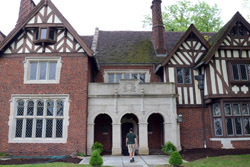
Cincinnati's largest neighborhood, Westwood, houses more than 30,000 residents in a six-mile area just west of downtown. With tree-lined streets and architecturally appealing homes, many parts of the neighborhood offer beautiful walking views. Westwood maintains its historic buildings as renovations, new businesses and diverse young residents continue to be drawn to the west side. The community was featured in the Soapbox On The Ground series where we connected with Westwood community members and their many, ongoing initiatives. Want to learn more about Westwood? Check out On The Ground Westwood.

Fifth Quarter in Cincinnati: Not your mother’s summer school

Now in its 4th year, Cincinnati Public Schools’ 5th Quarter program targets under-performing, low-income schools with an extended school year and a collective approach to learning, and fun, that's getting national attention.

Taft’s collection hits the streets in Art for All

A Rembrandt on Fountain Square. Rousseau’s Fontainebleau in Fairfield’s Founder’s Park. A Millet at the Boone County Library. Famous works of art on display outside? Why yes, says the Taft Museum of Art. To commemorate its 80th anniversary, the Taft has begun installing 80 framed weather-proof reproductions from its collection in public spaces around the region. Reproductions of landscapes, portraits and expansive vistas will be at libraries, schools, parks, the Great American Ball Park as well as restaurants and even a bar or two. A full map of all locations can be found here. “This is a great way to engage new audiences and reenergize the interest of those already familiar with the Taft’s collection,” says Deborah Emont Scott, Taft director/CEO. “Plus, it will be great fun for those who are out and about to find a masterpiece around the corner in one of the city’s many great neighborhoods.” Dubbed Art for All, the Taft program was modeled after successful public art projects by the Tate Gallery in London and the Detroit Institute for the Arts. The $200,000 project, which officially starts June 1 and runs through September, was funded by The Carol Ann and Ralph V. Haile, Jr./U.S. Bank Foundation, says Tricia Suit, the museum’s marketing and communications manager. The Taft has spent months preparing for the open-air exhibit and has worked with numerous community groups, including ArtWorks. That public art group will create two permanent murals based on works in the collection that will be installed in Over–the-Rhine and Bellevue, KY. “This is a great addition to the project,’’ Suit says, adding that the murals last for about 20 years. “It would be fabulous to have them up until our 100th anniversary.” As part of the project, the museum is also holding Third Sunday Fundays from 1 to 4 p.m. The free events will include performances, family activities and short talks about the works of art. Each Sunday will focus on an area of the city where the collection’s reproductions are located: June 17 will feature works on the West Side of Cincinnati; July 15 will feature the East Side; August 19, downtown and the central region; and Sept. 16 will focus on Northern Kentucky. Downloadable maps will be available online after June 1. Printed maps will be available at the Taft and other area locations. In addition, the museum will use social media sites like Flickr, Foursquare, Facebook and Twitter to share information about the project. Suit says she hopes people will snap pictures of themselves with the art with their smartphones and upload it to the museum’s Art For All Flickr account. Does Suit think some will go hunting for all 80? Sure. “I know we will have some who will do that … we should really have a fabulous prize for those who do. It’s kind of like a scavenger hunt. I think it would be great for folks to discover – or rediscover - parts of our city and our area as part of this.’’ Do Good: • Like Art for All on Facebook. • Follow Art for All on its Twitter account. • Party in the garden at the Taft’s Soiree in the Garden, Thursday, May 17. By Chris Graves Chris Graves is the assistant vice president of social and digital media at The Powers Agency, a public relations and advertising agency. You can follow her Art For All check-ins on FourSquare .

Soapdish: Crosley, Pulitzer highlight local preservation victories

Tis May once again, dear Soapdish readers. At the dawn of Preservation Month, we coronate our region’s more notable preservation victories of the past 12 months. From Powel Crosley Jr.'s estate to Emily Pulitzer's childhood home, Cincinnati saves legendary landmarks.

Plan, Build, Live encourages community feedback

City and neighborhood leaders, led by Vice Mayor Roxanne Qualls, have been building support for a new approach to development regulations for more than four years. Much of that has been developed through the program Plan, Build, Live. Plan, Build, Live is a program driven by community feedback and discussion, all gathered  via the project's website. The website encourages people to share their ideas about how a city should be designed. This weekend, instead of just online, Cincinnati residents and business leaders will come together to shape our future through a citywide Urban Design Workshop. The Workshop takes place from April 28 to May 2 to help create a "form-based code" that can be used by neighborhoods all over Cincinnati -- and help shape how development happens in Cincinnati in decades to come.    "Traditional zoning focuses on the use of the building and how far the building is off the street or how large the building is," says Della Rucker, public engagement office for Plan, Build, Live. "Form-based code flips that around and focuses on how a property contributes to the experience people have in the area. How it creates a vibrant, walkable community."  Plan Build Live is funded by a $2.4 million grant from the U.S. Department of Housing and Urban Development (HUD). Local funding is provided by the City of Cincinnati, the Metropolitan Sewer District of Greater Cincinnati, the Cincinnati Health Department, and the Mill Creek Restoration Project. One of the Plan Build Live tools, a form-based code, encourages strong neighborhoods, business districts, and downtowns by focusing on the shapes of buildings, streets and sidewalks. Form-based codes can helps maintain or enhance a mixed-use, pedestrian-friendly environment that offers a mix of residential options, transportation methods, workplaces, shopping and more. Traditional zoning codes encourage patches of similar use, forcing long distances between work, home and play. Form-based codes allow different uses to cluster – restaurants, apartments, drug stores and grocery stores, for instance – as long as they stick to rules that address the ways they relate to the neighborhood.   Form-based codes are not planned to replace other types of zoning in Cincinnati, but they are intended to give neighborhoods a more flexibility. A key difference of form-based codes is that even people who are not trained planners help put them together. Participants only need to be willing to share their ideas. During the Workshops, citizens will meet with planners, architects and engineers to talk about what they like and want to see -- both in Cincinnati's neighborhoods and on several "special opportunity" sites.  The preliminary Workshop focuses on creating a city-wide form-based code that will serve as a framework for the fall workshop, which will focus on four neighborhoods: Westwood, College Hill, Madisonville and Walnut Hills.  The estimated completion date is 2013, but feedback and participation from residents and business owners is critical to helping the city implement the program. By Evan Wallis

Western Wildlife Corridor restores beauty along the Ohio River Valley

The Western Wildlife Corridor has turned a passion for nature into a crusade for a more beautiful Ohio River Valley. Stretching from Mill Creek near downtown Cincinnati to the Great Miami River bordering Indiana, the WWC’s work seeks to enhance the quality of life for Cincinnatians by removing pollutants from the air and water, eradicating invasive plant species and helping boost the values of properties along the river.   As stated on its website, the organization’s mission is “to protect the scenic beauty and natural resources of the Ohio River Valley through direct land protection and through the promotion of responsible land use.” One of the ways the WWC accomplishes this is by obtaining protective easements or purchasing properties in need of habitat restoration. “Raising enough money to purchase these properties is probably one of our biggest challenges,” says Tim Sisson, WWC president. According to Sisson, the WWC has agreements to protect properties in both Miami and Delhi Townships.   In terms of the condition of the land itself, Sisson says that one of the biggest problems facing the Ohio River Valley is the prevalence of invasive plant species. “Species like Amur honeysuckle and garlic mustard kill other plants, trees and bushes,” says Sisson. “Once brought in as ornamental, these species are now threatening the indigenous plant life in the Ohio Valley.”   Although the organization conducts habitat restoration year round, springtime is its busiest season – and just a few weeks away. The WWC relies entirely on volunteers to do everything from manually removing the smaller invasive plants from the riverbanks to performing administrative duties such as bulk mailings, website maintenance and newsletter coordination and editing. “Volunteerism with the WWC represents the opportunity to protect something important,” says Sisson.   This fall, the WWC celebrates its 20th anniversary. Throughout 2012, the WWC will host many events providing opportunities for the community to become aware and involved. On Tuesday, Feb. 28, the WWC will host its annual meeting at the College of Mount St. Joseph. Open to the public, the meeting will include a presentation on the ecology and geology of the hillside.   “Now is the time to protect the beautiful natural environment of the Ohio River Valley for future generations.” Sisson says.   Do Good:   • Donate: funds to help purchase a property in need of natural restoration. • Volunteer: your time to “clean up” the Ohio River banks. • Become: a member of the Western Wildlife Corridor.   By Deidra Wiley Necco

Ameenah C. Hall
Local winery makes national list

Cincinnati may be the last place you’d expect to find a winery, but Henke has been around for more than a decade. Read the full story here.

Madcap puppets get a new home

What makes a business district more friendly than puppets? In Westwood, neighborhood redevelopment gets a boost from some of the city’s most colorful characters, the troupe from Madcap Productions, which moves into a bigger, better space this year. For more than 30 years, Madcap’s traditional and contemporary puppeteering have engaged audiences of all ages. Thanks to a new grant, Madcap can move from its Glenway location to a bigger space that will include a theater. In a partnership with the Westwood Community Urban Redevelopment Corporation, Madcap was invited to the new space in an effort to help restore the historic business district in Westwood.  The grant came after a two-year search by Madcap leaders who found the Neighborhood District Development Fund and received the capital grant from the City of Cincinnati. “We are working with several private and public community organizations,” says John Lewandowski, artistic director at Madcap. “We are excited to reanimate the district and become an anchor for the community.” Performing hundreds of shows each year for tens of thousands of people each season, Madcap has garnered national and international attention. The troupe travels around the country, performing at schools, with symphonies and even with local artists such as Know Theater.   “We’ll be able to open our new shoes in our own theater,” Lewandowski says. “We’ll be able to invite local and regional audiences.” The new building, on Harrison Avenue in Westwood, will give Madcap a 200-seat performance space, a space to display their 600-plus-puppet collection and opportunities to expand workshops and educational offerings. Lewandowski hopes to have the doors open this spring, but he has no set date for performances. Working with teachers to immerse children in the arts is the backbone of Madcap’s educational programs. With the added square-footage, Madcap will be able to host larger workshops that focus on children in grades K-6, where they learn about storytelling, literature and even get to make their own puppets. While children remain a large focus of the non-profit, Lewandowski makes sure the performances appeal to adults as well as children. “We reach an enormous span of ages,” Lewandowski says. “Puppets can reach four-year olds, all the way up to adults.” By Evan Wallis

Historic Mt. Airy celebrates history, nature

Once, the forests of western Ohio were so dense, a squirrel could travel by tree from the Ohio River to Lake Erie and never once touch the ground. In today’s urban landscape, it is hard to imagine those many miles of dark woods that once blanketed Hamilton County. Mt. Airy Forest’s 1,471 acres of wooded ravines and hiking and bridle trails offer city residents a glimpse into that past, even in the midst of highways and urban sprawl. The Mt. Airy Forest Festival, Oct.8, celebrates the history of this park’s creation 100 years ago and its legacy as one of, if not the first, urban reforestation projects in the country. In 1911, the Cincinnati Park Board established this park with the purchase of poorly managed farmland and began to reforest and enlarge it. The physical development of the park - its roads, trails, lodges, arboretum, stone walls and open shelters – was the work of the Depression-era Civilian Conservation Corps (CCC) and Works Progress Administration (WPA). For its rustic architecture, the rich history behind its construction and the early reforestation of an urban area, the park was recently listed as a historic site on the National Register of Historic Places.   Mt. Airy Forest Festival celebrates that designation with the installation of a National Park Service plaque. History interpreters and members of three history encampments will celebrate Cincinnati’s history, discuss the work of the CCC, the paths of the Underground Railroad through Hamilton County and Civil War stories. The day also features an annual Amazing Family Race, games for all ages and food vendors.   Do Good: Attend: Mt. Airy Forest Festival, October 8, 11 am-5 pm, Oak Ridge Lodge. Learn:  About the rich history of the Cincinnati Parks and what the parks offer residents today. Volunteer: Contact the Cincinnati Parks to discover many volunteer opportunities in the parks. By Becky Johnson

Just tossing around the old bag of corn

This summer — from the Jersey Shore to Brooklyn, and from the Hamptons to the Catskills —the satisfying thump of weighted sacks hitting plywood of cornhole reverberated across New York area beaches, lawns, rooftops and city sidewalks. Read the whole story here.

Our Partners

Solutions journalism takes time, trust, and your support.

Close
Psst. We could use your help today!

Don't miss out!

Everything Cincinnati, in your inbox every week.

Close the CTA

Already a subscriber? Enter your email to hide this popup in the future.