Uptown

Uptown includes all the neighborhoods around the University of Cincinnati including Avondale, Clifton, Clifton Heights, Corryville, Fairview, Mt. Auburn and University Heights, so it's a diverse mix of students and residents in one of the city's most distinct and eclectic group of neighborhoods. Uptown is the home of the Cincinnati Zoo as well as multiple hospitals and the Ludlow shopping district where you can find trendy and unique shops as well as any scent of incense you need. Ethnic restaurants, including a curiously high concentration of Indian eateries, multiple taverns, coffee houses, music venues and the Esquire — one of Cincinnati's finest independent art house movie theaters all make Uptown a one-stop walkable bazaar of exciting entertainment options.  

CASS provides meals, enables seniors to stay at home

When senior citizens are able to stay in their homes, they’re better off, says Claudia Harrod, Cincinnati Area Senior Services’ development manager.   “They can be more active, and they’re less depressed,” she says. “And it’s also more economical for seniors to be able to stay at home than be in a facility.”   In order for seniors to stay at home, they need to be able to maintain their independence while having various needs of daily living met. Since 1967, CASS has worked to meet some of those needs, and has helped seniors with everything from nutrition and transportation to financial assistance and guardianship.   “When you think about seniors, sometimes even opening a jar can be difficult,” Harrod says.   Each week, CASS delivers about 2,000 meals to homebound individuals in Hamilton County, which helps provide healthy options to those who are unable to cook or visit the grocery store regularly, if even at all.   “Nutrition is very important for everyone, but particularly for seniors, and these meals are balanced and meet one third of the daily recommended requirements for seniors,” Harrod says. “A lot of them have no way to get to the grocery store, and even if they could, they have to go up stairs and can’t carry the groceries, and some aren’t able to stand at the stove and cook, so this way, they always have one meal that’s easy for them to fix.”   A few years ago, CASS started its Savory Selects program, a food delivery program that provides enough meals for the week, plus bread and milk. Area seniors choose from 31 different catered entrees and side items, and instead of receiving a frozen meal once a day, they receive all of their meals at the beginning of each week.   “It’s nice for them because they can eat what they want that day and when they want it,” Harrod says. “Usually they would wait for the meal to arrive each day, and then it would have to be heated up, so it gives the seniors some dignity in being able to select what they eat.”  Do Good:  • Keep an eye out for CASS' new website, and look for ways you can get involved and help out.  • Call CASS at 513-721-4330 if you are a senior or know of a senior in need of assistance. Needs are not based on one's financial capabilities, so do not hesitate to seek help.  • Call CASS to make a donation.  By Brittany York Brittany York is a professor of English composition at the University of Cincinnati. She also edits the For Good section of SoapboxMedia. 

New online tool aims to keep Cincinnati residents engaged in their neighborhoods

On July 24, the City of Cincinnati adopted Nextdoor, a free, private social network for you, your neighbors and your community. The goal is to improve community engagement between the City and its residents, and foster neighbor-to-neighbor communications.   Each of Cincinnati’s 52 neighborhoods will have its own private Nextdoor neighborhood website, which is accessible only to residents of that neighborhood. City administrations and several city departments will also use Nextdoor to share important news, services, programs, free events and emergency notifications to residents, but they won’t be able to see who is registered to use the site or the conversations among residents.   Founded in 2010 in San Francisco, Nextdoor’s mission is to bring back a sense of community to the neighborhood. The site was tested in 175 neighborhoods across the country, and results showed that neighborhoods had some of the same issues, plus a variety of different issues.   “We all remember what our neighborhood experience was like as kids, when everyone knew each other, looked out for one another and stayed in the community longer," says Sarah Leary, co-founder of Nextdoor. “We want to invoke that nostalgia for neighborhoods.”   To date, Nextdoor is being used by about 17,000 neighborhoods across the country. In June, Nextdoor partnered with New York City and Mayor Bloomberg to communicate with the city’s 8.3 million residents. The site plans to roll out in other major cities like Cincinnati over the course of the next several months.   Nextdoor also recently released its iPhone app. “We’re really putting the lifeline of the neighborhood into the palm of the residents’ hands,” says Leary. “The common thread is an interest in using technology to make connections with neighbors. But it doesn’t stop there—once people have an easy way to communicate, they’re more likely to get together in the real world.”   You can sign up for Nextdoor on its website, or download the app in the App Store.   By Caitlin Koenig Follow Caitlin on Twitter

With grant money, Cincinnati Children’s pushes for tech innovation

Cincinnati Children's has invested about $500,000 in six ideas through its Innovation Fund. Read the rest of the story here.

Demand Better Cincinnati

This week marks the launch of a new Soapbox series: Demand Better Cincinnati. We'll explore a new issue each week and sift through what's been done, what's being done and how we can push our current and future leaders to, well, demand better.

Demand Better: Architecture’s impact on Cincinnati’s economy

As election day approaches, we'll be re-running our four-part Demand Better series in an effort to spark conversations and provoke thought about how we can demand more from our city's leaders. This week, we take a look at the topic of architecture.

Metro now offers stored-value cards to riders

Many city-dwellers are continuously faced with the arduous task of budgeting their quarters between two priorities: bus fare and laundromats.

The Happy Maladies want YOU to write their next album

The project is titled “MUST LOVE CATS,” and it will be an album of five compositions.

World Piano Competition strives for world-class status

Though the World Piano Competition has been in Cincinnati for the past 57 years, Mark Ernster, WPC executive director, says this past season represented a shift in thinking about how to promote and celebrate the art of classical piano music in a way that does the competition justice.  The primary way the organization has done that, Ernster says, is by developing a partnership with the Cincinnati Symphony Orchestra and the University of Cincinnati’s College Conservatory of Music.  “Cincinnati, as a city, has a wonderful arts heritage, and they’ve got a wonderful orchestra, and they have a wonderful conservatory—CCM and the CSO are pretty highly regarded around the world,” Ernster says. “If you add into that an element of a piano competition, you create the possibility to draw more worldwide attention to the city through this additional art form because it builds on strengths at the conservatory and builds on strengths with the orchestra.”  Ernster says he remembers his first experience with the WPC back in 2009 when he attended the finals of the Artist Competition, and about a year later, he knew he wanted to get involved and help the WPC further its mission and reach more people.  “The artist finalists were wonderful musicians, and I was surprised by the fact there was nobody there—I got perfect seats like two hours before the event," Ernster says. "That’s usually a bad sign, right? Except the quality of the music was very high.”  So in 2010, Ernster joined the board, and this past October, he began his work as executive director and was able to start conversations about integral community partnerships.  “Without their help, I don’t think we would have gotten as far as we’ve gotten this year,” Ernster says of the WPC, which was able to offer competitors a world-class jury, thanks to its partnership with CCM, in addition to a performance opportunity with the CSO.  “A piano competition is really wonderful when you really draw the top aspiring artists, and the way you get the top aspiring artists is you have a great jury and you have a good performance opportunity,” Ernster says. “There are a number of piano competitions around, but very few of them are partnered with a major symphony orchestra, like the CSO. And almost none have the combination of a major orchestra and a major conservatory.”  Do Good:  • Learn about the Dinner Concert Series and attend an event.  • Like the WPC on Facebook. • Contact the WPC if you'd like to get involved or volunteer.  By Brittany York Brittany York is a professor of English composition at the University of Cincinnati. She also edits the For Good section of SoapboxMedia.    

Tronk Design puts modern spin on handcrafted mid-20th century style furniture

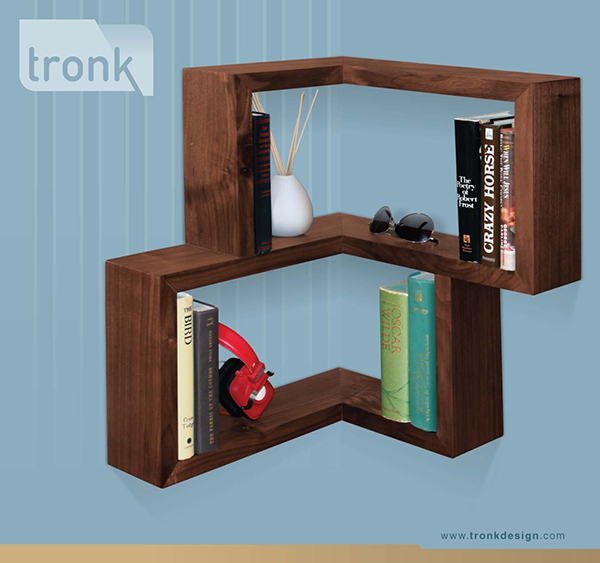
Brad Musuraca started building furniture "just for fun" shortly after graduating in 2006 from the University of Cincinnati. In January, he decided to make it a way of life, and he launched Tronk Design. The startup puts a modern spin on the classic design of the mid-20th century. Tronk's handmade pieces come in three hardwoods: cherry, maple and walnut. The line includes a table, planter, shelf, bed and "retro" clock/stereo dock. "Our current line very much has a mid-century feel to it," Musuraca says. "We really wanted to stay away from the ultra contemporary look, which may be appealing now but will eventually look dated. We are really going for a simple but elegant look that won't lose its appeal." Tronk Design debuted at the AmericasMart International Home and Gift Show in Atlanta. Musuraca designs and manufactures the furniture in his Forest Park workshop. The furniture features simple designs with clean, sharp lines and an interesting look. Tronk's most popular product so far is the Franklin Shelf. It's a 90-degree corner shelf that can be easily used in small spaces. "The Franklin shelf gets a lot of attention," Musuraca says. "It was up for an award at the Icon Honors (furniture industry award) in Atlanta. It was a finalist." Tronk furniture is sold mainly through independent retailers and online through sites including fab.com, TouchofModern and Scoutmob. Tronk has recently added an option to buy through its website. Musuraca is working to grow the company by finding new dealers and expanding the line. By next year, he plans to add metal and more contemporary pieces to his designs. By Feoshia H. Davis Follow Feoshia on Twitter

Mercantile Library’s Hackathon inspires creativity, produces ideas

Young merchants and clerks of Cincinnati came together in 1835 to found and organize the Mercantile Library, which to this day maintains historic collections of books and artwork in the city. It is recognized as “one of the oldest cultural institutions in the Midwest.”  When the young minds and innovators came together at that time, in what was one of the largest cities in the United States, the goal was to move Cincinnati forward.  To this day, that goal remains the same. And at the end of April, the library hosted a Hackathon—an event that brought together young coders who possess the ideas and skills needed to market the library and its offerings to a younger generation.  “At a typical hackathon, some people will have an idea of a team they want to get together and a project, or a product they want to launch," says Zach Zimmerman, a member of the Hackathon’s first-place team, and who is now working to build the library a new website. "But at the core of the hackathon, you push it out to people, and they come, and you break off into groups and start to ideate about what you could do, what you could build to provide a solution that hasn’t been thought about before or that could really push a company or product over the edge and make it something big.”  Zimmerman says one of the ideas his team had to make the library’s website appealing was to rely simply on the building’s beauty and grandeur, as the space showcases history and sells itself through its offerings to the public.  “The building is gorgeous," he says. "The art that’s there, and just flipping through some of the books—these are 200- to 300-year old books, and the art and just the labor that went into making them—it’s just fascinating to me. I just felt very inspired, and our team actually worked at the library when the hackathon kicked off. They said you could go out and about, and at the end of the hackathon, come back and present your ideas. But we actually stayed at the library the majority of the time because it was a very inspiring place—somewhere I felt pushed to do more.”  Do Good: • Become a member of the Mercantile Library. • Support the library by making a donation. • Like the Mercantile Library on Facebook. By Brittany York Brittany York is a professor of English composition at the University of Cincinnati. She also edits the For Good section of SoapboxMedia. 

Our Partners

Taft Museum of Art

Common Ground Is Brewing

Support local stories and receive our signature roast straight to your door when you join at the Standard level (or above).

Drink Better, Read Local

Close the CTA

Don't miss out!

Everything Cincinnati, in your inbox every week.

Close the CTA

Already a subscriber? Enter your email to hide this popup in the future.