Price Hill

Price Hill is on Cincinnati's western edge overlooking the downtown basin. Locals love long-standing family-owned business like Incline Public House, Primavista and Somm Wine Bar. Once home to Pete Rose and the headquarters of Slush Puppies, Price Hill still houses a major food manufacturing plant for hometown-based Kroger. Mt. Echo Park offers sweeping views of the Cincinnati skyline, and Cincinnati Christian University resides along Glenway Avenue, attracting young students from all over the world to this unique and historical area of town. Groups like Price Hill Will and Cincinnati Landmark Productions are helping to revitalize the area with new entertainment options, local businesses and neighborhood restorations.

Cincy Metropolitan Orchestra celebrates 15 years

Whether you prefer a symphony by Beethoven or the soundtrack of a Hollywood blockbuster, the Cincinnati Metropolitan Orchestra offers affordable, accessible music. Performing to a full house at the Seton High School Performance Hall, the CMO kicked off its free Summer Concert Series, which commemorates 15 years of service to the community. President Gail Harmeling, who is also first violinist and concert master, was one of the orchestra's founding members. "We all felt a mutual calling to form a group where non-professional musicians could play," says Harmeling. Ranging from high school students to senior citizens, orchestra members hail from a variety of careers and backgrounds. Conductor David F. Allen draws on his lifelong experience as a music director, teacher and pianist to balance and unify the ensemble. Although the orchestra performs throughout the area, Seton High School is its primary rehearsal and performance space. "We're very grateful to them for allowing us to use their beautiful auditorium," Harmeling says.In addition to being free and open to the public, CMO concerts appeal to various age groups and musical tastes. "We do perform classical music, but also Broadway, Big Band and Pops," Harmeling says. "There's something for everyone."To celebrate the 15th anniversary, CMO musicians and members of the vocal ensemble selected popular pieces from past concerts. Entitled "Back by Popular Demand," the Summer Concert Series includes music from Star Wars, Harry Potter, Pirates of the Caribbean, Lord of the Dance, Phantom of the Opera and Les Miserables. Upcoming concerts will be held outdoors. "Little kids can run around and enjoy the music without having to be quiet," Harmeling says. With such a lively program awaiting the public, children won't be the only ones cheering for an encore.Do good:Make a donation. Become a Patron or purchase tickets to the October Broadway Concert.Volunteer with the Metropolitans. Email to find out how you can help behind the scenes.Audition. The CMO currently has openings for string musicians. Call (513) 921-4919 for more information.By Laura Thompson

Literacy Center West supports student success

Located on Warsaw Ave. in Price Hill, Literacy Center West helps more than 200 students a year prepare for their next move in learning. Whether that move is preparing for the GED test or learning how to properly fill out a job application, the staff at LCW is prepared to help through their Next Level Program. "All it really is, is life coaching," says Jeremiah Griswold, LCW program director. "Whatever barriers they have, we work to help them overcome them. If they have kids, we help them get childcare vouchers. If they need transportation, we help them get bus tokens."  Students who enroll in Next Level must be between 17 and 21 and not currently be enrolled in school. The LCW staff and volunteers work with  students in any areas they need so they can pass the GED. In 2010, 24 LCW students obtained a GED. Job readiness workshops help prepare those who have graduated from high school for interviews. Students learn tips for filling out applications and can "shop" in a closet filled with donations for clothes to help them dress the part. "The amount of kids who succeed and get a job is amazing," Griswold says. "It's around 87 percent." He attributes the success rate to the connections the staff makes with students. "It's all about building relationships with the kids," he says. "We follow up for three years after they leave. If their ride to work falls through, we will help them get a ride, and they know if they lose their job, they can come to us, and we'll help them out again." Do Good:• Volunteer. LCW needs math and English tutors for morning and evening classes. Email for more information.• Donate. LCW operates on a budget of less than $500,000 per year. Donations really do help. You can donate gently used clothing, too.• Play a round of golf. LCW's 12th annual golf outing will be held Oct. 10, 2011. Contact Jeremiah for more information.By Evan Wallis

Drawn together

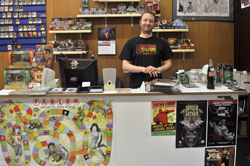
Independent comic book store owners in Greater Cincinnati are in the business of sharing their passion with the masses. In the age of e-readers and iPads, they satisfy die-hard fans and cultivate new ones by nurturing a sense of community.

Comics conversations

Read It. Jeff Suess and his graphic novel discussion group meet at 1 p.m. on Saturday, August 13, at the Mercantile Library. They'll be discussing Anya's Ghost by Vera Brosgol. There are copies available at the Public Library of Cincinnati and Hamilton County. [414 Walnut Street, 11th floor, downtown, 513-621-0717] Buy It. The 2011 Cincinnati Comic Expo takes place on Saturday, September 17, at the Duke Energy Center. Nearly 30 vendors will be on hand, selling everything from comics to figurines. [525 Elm Street, downtown] Try It. The first Saturday in May is Free Comic Book Day, in which stores give away comics and other goodies to entice would-be customers. "Rockin' Rooster has a ton of graphic novels and a variety of new titles," Suess says. "Up Up & Away has great back issues. Queen City and Mavericks run the gamut in titles. Arcadian has a nice selection of independent titles. And Comic Book World in Florence has been around a long time and has a big selection. And the people who work at all these shops really know their comics." Go online to find out which local shops participate.

Cincinnati Development Fund earns $1.5M federal grant

The Cincinnati Development Fund has been a financial resource for affordable housing development in the city's neighborhoods for 23 years. And that long track record of helping spur development -- and redevelopment -- in some of Cincinnati's underserved areas recently earned the CDF a $1.5 million federal grant to support its mission.The grant comes from the U.S. Treasury's Community Development Financial Institutions Fund (CDFI). The CDFI awarded $142,302,667 to 155 community development financial institutions -- like CDF -- nationwide. CDF received $750,000 from the fund in 2010, making this year's award a very pleasant surprise, says CDF president and CEO Jeanne Golliher."We were really expecting something along the lines of what we got last year," she says.The $1.5 million sum is the maximum any single organization could receive from the CDFI. Golliher credits CDF's long-standing role in the community as reason for the high award."We're really in touch," she says. "We know where the needs are."A main focus of CDF's efforts, she explains, are smaller developers -- sometimes individual homeowners, sometimes development companies focusing on one or two buildings -- who wish to revitalize property in parts of the city suffering from high foreclosure and vacancy rates. The smaller developers fit a niche that complements larger development organizations, such as the Cincinnati Center City Development Corporation (3CDC), which is in the midst of redeveloping a large portion of Over-the-Rhine. Golliher refers to many of CDF's borrowers as "urban pioneers:" people willing to be early redevelopers in areas that have yet to see widespread revitalization."We've had so much activity with our small loan program," she says. "There are a lot of cases where people want to buy and fix up a building on their own, and they come to us."Golliher says her team is in the process of planning how to best use the grant funds. Some of it may be used as matching funds for $3.3 million in low-interest funding CDF has requested from the U.S. Treasury to help fund small business development in the city.  She plans to present a proposal for how the funds will be used at CDF's August board meeting. In the meantime, she says she and her team are thrilled by this recent show of federal support."I think it speaks to our track record," she says.By Matt Cunningham Follow Matt on Twitter @cunningcontent

Bees in the hood: urban beekeeping in the Queen City

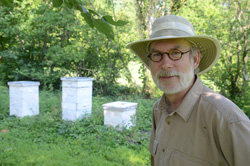
A sense of wonder and a buzz of energy infuse conversations with Cincinnati beekeepers. For them, keeping bees is about living in harmony with nature and reinventing a tradition with many of the time-honored tools that have kept the world supplied with honey, and kept crops pollinated, for hundreds of years.  

LISC Grant bolsters services of four non-profits, aids community development

With support from the Local Initiatives Support Corporation (LISC), four non-profit service organizations in the region have opened LISC Financial Opportunity Centers (FOC), or grant-funded programs that will bolster employment, financial and public benefits counseling services offered to low-income individuals and families. LISC, a national organization, has invested more than $9 billion in cities across the U.S., including more than $32 million in the Cincinnati/Northern Kentucky Region.The FOCs underscore its commitment to enhancing Queen City communities and beyond. "Financial opportunity centers are part of LISC's Sustainable Communities approach to comprehensive community development," says Kathy Schwab, executive director of LISC Greater Cincinnati & Northern Kentucky. "We can't help communities recover from economic distress if we don't help families achieve financial stability."In 2010, LISC was awarded a $4.2 million grant from a federal initiative called the Social Innovation Fund. Cincinnati was on the list of the cities to receive a share of such funding, and, as Schwab explains, research pointed LISC GCNKY to the following four non-profits: • Brighton Center (awarded $145,000), which champions family support and services• Cincinnati Works (awarded $100,000), which champions employment services• Santa Maria Community Services (awarded $145,000), which advocates the revitalization of Price Hill• Urban League of Greater Cincinnati (awarded $125,000), which advocates self-efficiency and entrepreneurship while engaging African-American and other at-risk populations"This grant allows them to provide more services and achieve greater success," Schwab says. "These particular groups understand the concept of financial opportunity centers and are willing to adapt to this business model."She says FOCs tie into LISC's definition of comprehensive community development. "It isn't just about bricks and mortar. It's about the overall health of the community," she says. "People need jobs, people have health issues, people need good schools and green places to play … that's the comprehensiveness of it." Wonda Winkler is associate operating officer at Brighton Center. She says the LISC grant will help the center bundle its services in a more deep and meaningful way. "It's more than just helping people get a job," she says. "It's about also helping them understand their budget and understand what kind of resources are out there as they look toward financial stability."The more people are building assets - for example, home ownership - the more invested they are in their community." Writer: Rich Shivener

Incline District takes step closer to official designation in East Price Hill

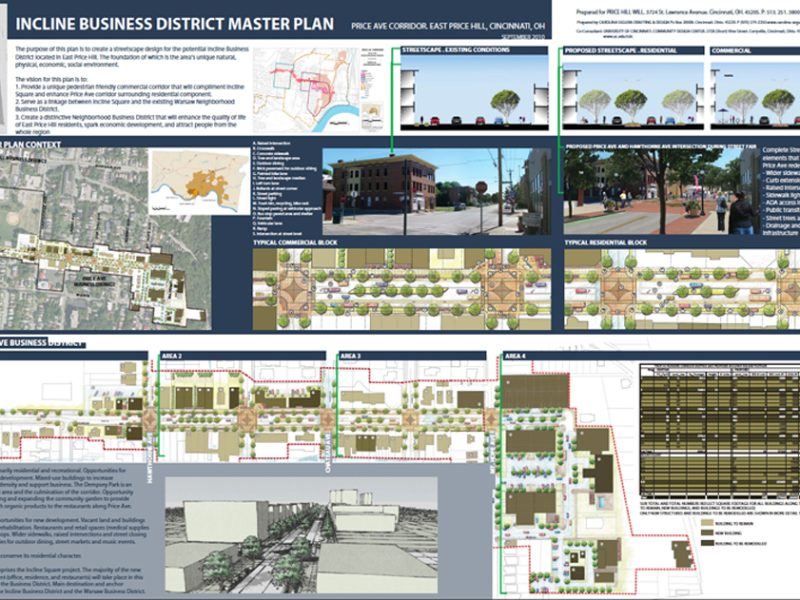
Known for its historic architecture and panoramic views of downtown and the Ohio River, East Price Hill has a new life of late with businesses, restaurants, and reconstruction happening from Price Hill Avenue to West 8th and Elberon. And now the new boundaries of the neighborhood's "Incline District" are a step away from being official. The East Price Hill Improvement Association's (EPHIA) motion seeking this designation was approved by the Cincinnati Planning Commision last Friday. According to EPHIA President John Schlagetter, the Incline District encompasses one mile by 3/4 mile and includes 2,500 residents. The designation, which helps the neighborhood celebrate its history and assists with future branding, will be recognized with a sign at the corner of Elberon and Mt. Hope. Following approval, the potential next step for this recognition is Council's Livable Communities committee. Former city councilman, John Cranley's venture called City Lights recently began construction on Incline Village along Grand Avenue, which includes a new restaurant and office space. Cranley says the new restaurant will join neighboring Prima Vista and offer the same phenomenal views of the Cincinnati skyline from its patio, all within the district's designation. Also currently under construction are new apartments atop the development."Price Hill has struggled for the past 40 years and this is a sign that positive things are happening," Cranley said. "It has great opportunities for urban living because it is so close to downtown with beautiful architecture, phenomenal park spaces, and extremely affordable housing. This project will improve the quality of life for the people already here and those moving in."According to local business owner Bill Burwinkle, Price Hill went through the same evolution that any urban neighborhood encounters. After hosting three generations of families, the neighborhood suffered neglect and vacancies but with recent rehabilitation and new construction, the neighborhood has already seen a renaissance.Burwinkle is responsible for several projects in the Incline District. Almost two years ago, he opened a coffee shop called Corner Bloc to provide a place for conversation and entertainment. Burwinkle then moved across the street, developing a building with five luxury flats and a possible new art gallery. Next on his agenda is an eatery for residents and employees in Queensgate who currently don't have a lot of options. "We're seeing a lot of people that are coming into the community that are buying homes and really causing the neighborhood to be rebuilt," Burwinkle explained. "These developments are showing a lot of people that Price Hill is a neighborhood that should be invested in. It will be catalytic for future development." Writer: Lisa Ensminger

Urban Appalachian Council works to bridge cultural, educational gaps

Amanda sits with her pen between her teeth. Her brow is scrunched more tightly than the ponytail that contains her long black hair. The 20-year-old high school drop-out has been working at the Urban Appalachian Council's East Price Hill GED Center for just a couple of months, but her patience is wearing thin.She looks at a page from an English practice test. Compound words and contractions. She learned this stuff years ago. "Why do I have to keep doing the same things over and over again?" she asks, shaking her head. Then she looks at the next section of words that must be joined to form compounds that fit into a series of sentences about boats in a harbor. The first sentence stops her cold."What type of object would pull slowly into a harbor?" her tutor asks.Amanda looks up from the page and scans the room filled with long tables and thick study guides. Some of her peers at the end of the table are swapping stories, and Amanda has found an easy distraction. "Hey, Amanda, let's just get this section done," her tutor says. The words "tug" and "boat" sit just a few centimeters above the blank in the sentence. "I bet you can guess. What would pull in a harbor?""I can't guess," Amanda finally says, taking a deep breath. "I don't know what that word, harbor, means."Like many of her classmates on this damp March day, Amanda faces a series of hurdles beyond showing up for class each morning and barreling through page after page of study guides in an effort to earn her Graduation Equivalency Diploma. Cultural gaps, not in intelligence but in exposure, seep into the room like fog into a harbor, slow and stifling.The national average age for people who take the GED is 24. In 2009, Ohio ranked 23rd among the 50 states for the number GED test-takers who passed all components, with 76 percent. Nationally, 69 percent of people taking the GED passed it. But the statistics can be deceptive. Some students in East Price Hill are making their third, fourth or even fifth trip back to GED books. While Cincinnati Public Schools has raised its overall graduation rate to just more than 80 percent, that is not the case at Amanda's neighborhood school, Oyler, where nearly nine of 10 students are economically disadvantaged and nearly one in three students has a disability. Oyler's current 50 percent graduation rate marks a steady improvement in many areas of study, but that doesn't change the fact that prospects for half of the school's students remain dim.Oblivious to the statistics that might give her pause, Amanda chews her gum and dreams of day when she can have a regular job, nothing fancy, just a chance to bring home a paycheck and take care of herself. Do Good:• It's simple as A-B-C to volunteer to help GED students. Call the East Price Hill GED Center, 513-557-2546, to find out how you can help. Fill out a volunteer application online.• Find out the latest. Join the UAC email list today.• Make a donation using Paypal. Support UAC's efforts without leaving the comfort of your laptop.By Elissa YanceyPhoto courtesy Urban Appalachian Council

Welcoming the new kids on The BLOC

Tucked behind the shiny new Kroger store on Warsaw Avenue in East Price Hill, an old, once-majestic red brick church welcomes a new wave of immigrants. At the McPherson Avenue BLOC Center, Guatemalan families find English and Acculturation classes, homework help for their children, computer training and a growing sense of community. The BLOC, a non-profit, faith-based organization, was founded in 1998 by Executive Director Dwight Young and his wife Stephanie, a licensed counselor. Its Price Hill and Cleves centers offer at-risk youth after-school programs, from theater classes to tutoring to sports and games. Some lift weights, others play pool or navigate new computer programs. All students who hang at The BLOC create their own communities and learn how to make positive decisions part of their daily routines. They take those lessons home, and, Young believes, contribute to building stronger families because of them. "We just try to help them with everyday life," he says. A new initiative, though, brings The BLOC closer to the homes of some of its most at-risk neighbors. Young wanted to serve the growing number of Hispanic families in Price Hill—families with parents struggling to learn English and children struggling to fit in. Providing healthy, affordable housing, and establishing a community one street at a time, seemed like the perfect way to start. Bolstered with a grant from the Greater Cincinnati Foundation, The BLOC has launched a concerted effort to renovate three homes and an eight-unit building on McPherson, providing space for 12 to 14 Guatemalan families, by this summer. "Our goal is to bring a better attitude to the people who live on that street," he says. Do Good: • Donate: Support the efforts online at The BLOC. Each apartment unit will cost $5,000 to renovate. All donations welcome. • Have some coffee: Visit one of the two Corner BLOC Coffee Houses. • Make a Friend: Like BLOC Ministries on Facebook.

Our Partners

Solutions journalism takes time, trust, and your support.

Close
Psst. We could use your help today!

Don't miss out!

Everything Cincinnati, in your inbox every week.

Close the CTA

Already a subscriber? Enter your email to hide this popup in the future.