Mt. Lookout / Columbia-Tusculum

Home of Cincinnati's 16-inch astronomic telescope and Ault and Alms parks, Mt. Lookout boasts locally-owned, one-of-a-kind specialty shops, as well as upscale restaurants and neighborhood watering holes. The neighborhood is inviting with a bright mix of traditional and modern elements scattered around the easily walkable Mt. Lookout Square.Featuring a well-maintained stock of stately older homes, a new wave of young families and singles have recently taken to moving up to the hill in search of housing deals conveniently located to a vibrant nightlife and strong community involvement.

Reyes wins Flying Pig Marathon

Sergio Reyes of Palmdale, California won Cincinnati's annual Flying Pig Marathon in 2 hours, 20 minutes and 37 seconds amongst a record field of more than 16,000 runners. Reyes called the marathon one of the most scenic races he's ever run.  The race started in downtown Cincinnati and then twisted through many of the city's scenic neighborhoods, hills and even followed along the Ohio River for several miles. This year marked the 12th year for the Flying Pig Marathon which gets its name from Cincinnati's former status as the pork-packing capital.  Autumn Ray of Galveston, Texas won the women's side in 2 hours, 52 minutes and 23 seconds. Read full article here.

Issue 9 debate engages local businesses one month before the November vote

Keep Cincinnati Beautiful's biggest event of the year takes place on April 25 with a kickoff in College Hill, and the organization could use your help.Great American Cleanup, the nation's largest community improvement project with an estimated 2.8 million volunteers, is aimed at boosting the quality of life in neighborhoods by planting flowers and trees, picking up litter, collecting discarded tires, painting façades, landscaping, and recyclingBecause of the massive amount of work to be done, Keep Cincinnati Beautiful program manager Josman Rodriguez says that volunteers are very much needed.Just last year, 8,352 volunteers collected 406,460 pounds of litter and debris; planted 13,500 flowers and bulbs; cleaned 578 miles or roads, streets and highways; and recycled more than 40,000 plastic bottles and more than 2,500 scrap tires."We're expecting 10,000 volunteers beautifying 90 communities, 25 parks, and 30 schools," Rodriguez says.He also says that Give Back Cincinnati, community leaders, and Cincinnati council members plan to participate, and that United Dairy Farmers is serving as a co-sponsor.To volunteer, contact Liz Bowater at (513) 352-4380 or at liz.bowater@cincinnati-oh.gov.Writer: Kevin LeMasterSource: Josman Rodriguez, project manager/public awareness, Keep Cincinnati Beautiful

Focus on environment garners planning award for Green Cincinnati plan
Qualls pushes council to make streets ‘for people, not just cars’

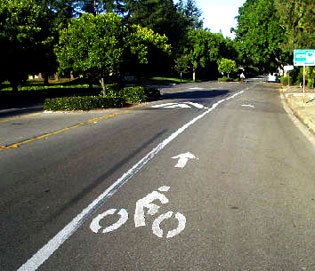
Cincinnati City Councilmember and chair of the Vibrant Neighborhoods Committee, Roxanne Qualls introduced a resolution supporting the federal Complete Streets Act of 2009, a piece of legislation meant to encourage streets that are safe for all forms of human transportation.Sponsored by Sen. Tom Harkin (D-IA) and Rep. Doris Matsui (D-CA) and introduced earlier this month, the legislation promotes the design of streets that are safe for motorists, bus and transit riders, pedestrians, bicyclists, and people with disabilities by directing state departments of transportation and metropolitan planning organizations to adopt and implement complete streets policies for federally-funded transportation projects.It would also update the current federal code on pedestrian and bicycle accommodation and authorize research, data collection, technical assistance and dissemination of best practices.Qualls' resolution is currently in council's Economic Development Committee, which next meets on April 7."We actually put funds in the biennial budget to develop a complete streets program," Qualls says.  "So the city has already recognized the need to design streets for people, not just cars.  Ultimately, the goal is to make our streets multi-modal."According to the National Complete Streets Coalition, more than 5,000 annual fatalities and 70,000 injuries occur to pedestrians and bicyclists because of inadequate sidewalks and crosswalks, space for bicyclists, and room for transit riders.Locally, the city's Department of Transportation and Engineering has been working with the Mount Washington Community Council to retrofit a portion of Beechmont Avenue that has seen an increase in speeding and accidents since a road widening project in 2004.Residents of Westwood have also requested traffic calming measures for a mostly residential – but busy – section of Montana Avenue."Our competitive advantage is in our neighborhoods, and our quality of life is dependent on our streets," Qualls says.  "If we look at our streets as our largest public spaces, then the quality of those spaces is critical to economic development."Qualls says that complete streets is one of many strategies that cities are using to become more walkable and mixed-use, pointing out that more than 80 state and local governments already have passed complete streets policies."It's a matter of changing how we think about streets," Qualls says.  "What we recognize is that if you design streets for cars, you get cars.  If you design streets for people and alternative modes of transportation, that's what you'll get."Writer: Kevin LeMasterSources: Roxanne Qualls, Cincinnati City Council; Jennifer O'Donnell, assistant to Councilmember Qualls

Hamilton County taxes lower than its peers

A recent Forbes survey finds that Hamilton County's property tax rate is the lowest, as a percentage of income, of Ohio's six largest urban areas, says Hamilton County Commissioner David Pepper.In his PepTalk blog, Pepper says that there are misconceptions about the county's tax rate, but that it's actually relatively low when compared to other metropolitan areas against which it competes for jobs, businesses, and talent.The Forbes survey found that Hamilton County's property tax rate as a percentage of income was 26 percent lower than Cuyahoga County (Cleveland), 16 percent lower than Franklin County (Columbus), and 8.5 percent lower than Summit County (Akron).Hamilton County's sales tax was also the lowest of the top six urban counties, tied with Summit County.Read the blog post here.

Spohr appointed to direct SW Ohio workforce development

Jennifer Spohr has been appointed as the regional workforce director of the Ohio Department of Development's (ODOD) Southwest Ohio office.In her new role, Spohr will serve as a liaison to state government, local business leaders, elected officials, and economic and workforce development entities to meet the training and talent development needs of businesses throughout Hamilton, Butler, Warren, and Clermont counties.Spohr joined ODOD in 2005 as coordinator for the Ohio Investment in Training Program and is currently on the Greater Cincinnati Workforce Network's Hard-2-Hire Workforce subcommittee.This year, she received from Cincinnati mayor Mark Mallory the 2009 Super Award from the Workforce One Investment Board of Southwest Ohio in recognition for her work with the SuperJobs Center.Read the full release here.

Mallory highlights economic growth in State of the City address

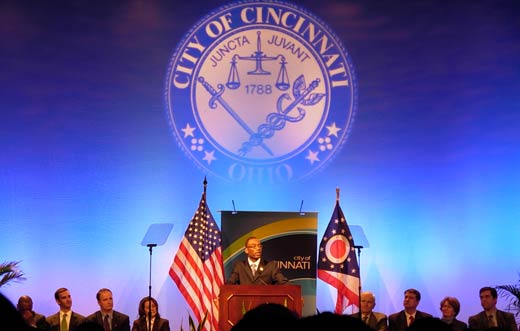
In his fourth State of the City address, delivered last Wednesday at the Duke Energy Center, Cincinnati Mayor Mark Mallory said that the city is weathering the poor economy much better than most."At a time when other cities are seeing businesses move out, we are seeing businesses expand and new businesses move in," he said.He credited the "aggressive and strategic" approach of City Manager Milton Dohoney and Economic Development Director Holly Childs for bringing 2,500 new jobs to Cincinnati last year, including commitments from such major players as Medpace, Humana, dunnhumbyUSA, and US Bank.Mallory also spoke of the need to empower small and minority-owned businesses, saying that four more Shop52 seminars will be held this year to link entrepreneurs with business experts, non-profit service providers, and lending professionals."We must also ensure that individuals have the opportunity to realize their dreams," he said.  "Shop52 is all about small business growth and strengthening our neighborhoods."In addition to job creation, Mallory noted that construction is underway on two major building projects – Great American Tower at Queen City Square, a 41-story, $340 million office tower and The Banks, a 2.8-million-square-foot mixed-use development on the city's riverfront.But Mallory said that the most crucial component of Cincinnati's development plans is the streetcar system that would connect Downtown, Over-the-Rhine, and the Uptown neighborhoods."Now, we have done our homework and the benefits of a streetcar system are clear," Mallory said.  "When a city puts rails in the ground, economic growth follows."Mallory said that $1.4 billion in economic impact would result from the project's first phase, giving the city additional resources that it can use in neighborhoods throughout the city."The benefits of the streetcar system are too significant to allow the naysayers to derail our efforts," he said.  "Streetcars must be a part of Cincinnati's future and we will fight to make it happen."According to Mallory, the key to Cincinnati's future success is strong local, national, and global partnerships.To achieve these partnerships, the city and its residents must be their own advocates."We have a great city and we must make it our priority to promote it here at home, across the nation and around the world," Mallory said.Writer: Kevin LeMasterSource: 2009 Cincinnati State of the City address Photography by Kevin LeMaster


Mayor Mallory gets assurances from President Obama

Following a meeting with President Obama and Vice President Joe Biden at the White House, Cincinnati Mayor Mark Mallory says that he's assured that Cincinnati will receive its fair share of the $787 billion federal economic stimulus bill.According to Mallory, the president told the 80 mayors in attendance that stimulus money will be on the streets within six months and is expected to be spent on projects within 18 months.He was also pleased that $7 billion of the $12 billion set aside for transit projects would go directly to cities, instead of being funnelled through state governments."The president stressed several things, that he understands the importance of cities as it relates to stimulating the economy," Mallory tells the Enquirer.Read the full article here.

Ohio’s 10 best-kept secrets

Following a year and a half of talking to Ohio's business leaders and executives, the Ohio Business Development Coalition has compiled a list of the ten best-kept secrets about doing business in Ohio.Everybody knows about the relatively low cost of living and the advantageous location, but what other advantages does Ohio have?I'm not going to give it all away here!You'll have to read the full article here.

Spaces remain for 10-week government academy

Several spaces remain for the spring session of the Cincinnati Citizens Government Academy, a 10-week course designed to give an in-depth look at how city government is organized and how services are funded and delivered.Beginning March 2nd and held Mondays between 6 PM and 9 PM, the Academy features field trips to numerous city departments to learn about their services and programs.The goal of the program is to not only improve citizen understanding of how local government works, but also to encourage citizen involvement in strengthening and improving the quality of life throughout the city's neighborhoods."As City government continues to engage citizens, it's important that citizens have a broad understanding of how their government works," says Cincinnati city manager Milton Dohoney.  "We believe that informed citizens are involved citizens and that makes for better government.  The Academy may also bring forth some new ideas from the public that we may need to consider."Since 2007, the Academy has graduated 45 participants from its two sessions.Participation is free, and citizens can enroll by calling Trina Porter at (513) 352-5335 or by e-mailing citizensgovernmentacademy@cincinnati-oh.gov.Applications are also available online at or by visiting Suite 104 at Cincinnati City Hall.Writer: Kevin LeMasterSource: Tiffaney Hardy, senior communications specialist, City of Cincinnati Photography by Scott Beseler Milton Dohoney

Our Partners

Taft Museum of Art

Don't miss out!

Everything Cincinnati, in your inbox every week.

Close the CTA

Already a subscriber? Enter your email to hide this popup in the future.