Mt. Lookout / Columbia-Tusculum

Home of Cincinnati's 16-inch astronomic telescope and Ault and Alms parks, Mt. Lookout boasts locally-owned, one-of-a-kind specialty shops, as well as upscale restaurants and neighborhood watering holes. The neighborhood is inviting with a bright mix of traditional and modern elements scattered around the easily walkable Mt. Lookout Square.Featuring a well-maintained stock of stately older homes, a new wave of young families and singles have recently taken to moving up to the hill in search of housing deals conveniently located to a vibrant nightlife and strong community involvement.

Sugar cookies from Mt Lookout Sweets match any occasion

Imagine the work that goes into a batch of cookies: mixing, rolling, baking, decorating and washing. Now imagine baking 1,000 cookies a month. That’s how many Debbie DeGeer typically creates at Mt Lookout Sweets, a bakery she runs from her Mt. Lookout home – complete with a commercial kitchen in the basement – each month. That’s 12,000 cookies a year, but DeGeer isn’t counting. Baking helps keep her hands busy and her creative mind active while she cares for her aging mom, who helping instill in DeGeer a love of floury hands and blustery ovens. Because DeGeer’s mom lives with Alzheimer’s, the duo spend their share of quiet nights at home.  Baking started as “a kind of therapy,” and DeGeer often arrived at Comey Shephard, the real estate agency where she works, laden with cookies. Her creations with the company logo on them were particularly popular for the real estate company’s open houses, and from there, the requests grew. DeGeer specializes in hand-decorated sugar cookies that are part art and part dessert, and she has a design for everyone. When Keidel, a Cincinnati-based plumbing, cabinetry, appliance and lighting contract, celebrated its 100th anniversary, DeGeer created confections in the shape of bathtubs, light bulbs and even toilets. “I never thought in my life I would make a cute toilet, but I did,” DeGeer says. Active with other cookie pros, dubbed “cookiers,” on Facebook, DeGeer has about 1,200 Facebook fans for her business, and says it’s a top source of referrals, along with word-of-mouth. Mt. Lookout Sweets averages three to four orders per week, with her capacity filling up quickly around the holidays and in late spring or early summer as couples plan their weddings. DeGeer typically requests a week’s notice for each order and more during busy seasons. By Robin Donovan

Big plans in the works for Cincinnati

As many areas of Cincinnati are being rejuvenated, including OTR and Washington Park, the City of Cincinnati approved a comprehensive approach to focus on development in the city as a whole, not just targeted neighborhoods.  Last Friday, the City Planning Commission approved and adopted Plan Cincinnati, which was designed with input from residents. The Plan is an opportunity to strengthen what people love about the city, what works and what needs more attention, says Katherine Keough-Jurs, senior city planner and project manager.   The idea is to re-urbanize suburbanized Cincinnati; in a sense, to return to the strengths of the city's beginnings. Cincinnati was established just after the American Revolution in 1788 and grew into an industrial center in the 19th century. Many of those industries no longer exist in the city, which is part of why Cincinnati has become more suburbanized in the past 50 years. One of the long-term goals of the Plan is to bring new industries to Cincinnati.   With a new approach to revitalization, Cincinnati is blazing the trail for other cities. With a focus on building on existing strengths rather than tearing down structures and creating new ones, the Plan aims to capitalize on the city's “good bones” and good infrastructure.   Cinicinnatians had a huge role in developing the Plan. The first public meeting for the Plan was held in September 2009, when residents offered their insights into “what makes a great city?" and "what would make Cincinnati a great city?” A steering committee of 40 people representing businesses, nonprofits, community groups, local institutions, residents and City Council helped develop the Plan. The Plan also got support from a grant from the Partnership for Sustainable Communities, which the City received in 2010. The grant allotted $2.4 million over three years to support the Land Development Code, which combines and simplifies Cincinnati's codes, reviews the development process, implements Form-based Codes and considers more creative uses for land. The grant allowed the city to start implementing some of the ideas voiced in public meetings.   Visionaries included youth, too. City staff worked with community centers and Cincinnati Public Schools to develop an art project for children. They were given clay pots and asked to paint their fears for the city on the inside and their dreams for the city on the outside. The children saw the big issue was quality of life, just like the adults did.   “It was an interesting way to get the kids involved and thinking about the future,” Keough-Jurs says.   The Plan aims to strengthen neighborhood centers—the neighborhoods’ business districts. It maps out areas that people need to get to on a daily basis and found that most are within about a half-mile of the business districts. But in some neighborhoods, residents can’t access their neighborhood centers. The accessibility of a neighborhood center is based on walkability—not just for pedestrians, but also about how structures address walking. For exampke, if a pedestrian can walk from one end of the neighborhood center to the other without breaking his or her pattern (the window shopping effect), the area is walkable; if he or she has been stopped by a parking lot or vacancies, it’s not walkable, Keough-Jurs says.   The neighborhood centers are classified in one of three ways in the Plan: maintain, evolve or transform. Some neighborhoods have goals to maintain levels of walkability, whereas others need to gradually change or evolve. Still others need to completely transform in order to strengthen their business districts.   “Cincinnati is at the heart of the region,” Keough-Jurs says. “If we strengthen Cincinnati, we strengthen a region.” The next step for the Plan is to go before the Cincinnati City Council, specifically the Livable Communities Committee, which is chaired by Vice Mayor Roxanne Qualls.   By Caitlin Koenig Follow Caitlin on Twitter

Treasure hunt introduces local couple to state’s natural gems

Joyce Gardner has been hiking for years. And as a lifelong Cincinnati resident, she was pretty sure she had visited most of the area’s natural spaces.  So Gardner was surprised when she found some hidden gems this summer as part of the Nature Conservancy’s Natural Treasures of Ohio Challenge. “People don’t realize that we really have some great trails here,” says Gardner, of Covedale, who hiked in Ault Park  and Mt. Airy Forest locally and visited another 11 natural areas across the state with her husband. Sure Gardner and her friend, Kathy Brown, visited the Ault Park Pavilion and Everybody’s Tree House in Mt. Airy; but they also spent hours discovering the trails that many may miss, she says. That was exactly the point of the Nature Conservancy’s challenge: To introduce and showcase some of the state’s natural areas and encourage residents from all corners of the state to learn about the various natural wonders of the state. “Our hope is that folks would find natural areas and say: ‘Wow, I had no idea that this is here,’ ” says Josh Knights, executive director of the Nature Conservancy in Ohio. “And at the end of the day, we believe that if Ohioans discover and come to know these areas, they will be inspired to help us protect them.” That Nature Conservancy and Honda launched the challenge, a kind of treasure hunt, in June. Ohio residents could visit one to 30 designated places and upload a photo of themselves at the designated landmark on the Nature Conservancy’s Web site for a chance to win a 2012 Honda Insight Hybrid. The contest, which will also award five $500 REI gift certificates, ran from May 22 to Aug. 8. Winners are expected to be announced in September.  More than 3,000 entries were filed, with many people visiting all 30 places this summer. Many families used the challenge as their summer vacation, Knight says. While pleased with the participation, he wonders if this summer’s record-breaking heat and high gasoline prices may have hindered some participation. The photo galleries, as well as the detailed descriptions and maps of each of the 30 destinations that are organized by geography, will remain on the Nature Conservancy at least through December and maybe longer, Springs says. While winning would be nice, Gardner says the challenge really created an opportunity for she and her husband, John, to visit areas they have always wanted to – including Kelly’s Island State Park on Lake Erie, where they celebrated their 33rd wedding anniversary. They also stumbled across several parks they normally would never have set out to themselves. Her new favorite? Magee Marsh Wildlife Area, in Northern Ohio between Toledo and Sandusky on Lake Erie. She likened the 2,200-acre state park to being in the Everglades.  “I was really impressed with that one,” she says. “I really couldn’t believe I was standing in Ohio.” That’s not the first time Knights has heard that about the state’s varied natural elements. “Ohio really does have a diverse landscape; from one of the largest lakes in the world to the Ohio River there in Cincinnati … Ohio has all of these fantastic places. We wanted to introduce more Buckeyes to what we have at home.”  Do Good: • Follow the Ohio Nature Conservancy on Facebook. • Visit some of the designations this fall. • See the photos of the Southwest Ohio designations and read the scrapbook. • Watch the video. • Donate. Chris Graves, assistant vice president of digital and social media at the Powers Agency, loves the outdoors. You will find her camping with her daughters on Kelly’s Island this fall.

What The New York Times forgot: Our innovative parks

With the Smale Riverfront Park open and Washington Park debuting July 6, we take a closer look at how the Cincinnati Park Board's oft-overlooked innovations move, and in some cases outright push, the city forward.

Cincinnati Parks summer camps get kids outside

In 1927, naturalist Esther Stephenson organized Cincinnati Parks’ first summer camp. Cincinnati naturalists say that Stephenson, an early advocate of environmentalism and the outdoors, would carry large signs on the bus to advertise her day camp while on her way to work. Today, Cincinnati Parks’ summer camp program gives children ages 3-13 chances to learn about nature and explore the outdoors. The 19 different camps, which run from 9 a.m.- 5 p.m., are now open for registration online and include five days of outdoor activities and planned lessons from nature specialists. “Kids spend so much time playing video games or surfing the Internet—those things keep them inside,” says Ruthann Spears, manager of Cincinnati Parks’ Explore Nature division. “We want to show them that getting muddy is OK.” Through their program, Cincinnati Parks naturalists hope to engender a sense of curiosity in their campers. Their goal is to get children and adults outside to explore Cincinnati’s parks on a regular basis. “We want to shows kids that being outside isn’t scary,” says Spears. “We want to give them a chance to connect with the outdoors and instill in them a love of nature that they’ll share with parents and friends when they get home.” Cincinnati’s park system--what Spears calls “everyone’s backyard”— comprises 70 neighborhood parks in locations ranging from Mt. Washington to Mt. Airy. Cincinnati Parks’ summer program offers camps in more than 10 of the 70 Cincinnati parks. In 2009, summer camp employees served more than 5,400 children from all 52 Cincinnati neighborhoods. But camp isn’t just for kids: Last year’s biggest success was Grand! Camp, an outdoor bonding experience in Ault Park for young children and their grandparents. The camp premiered last year, and sold out within the first few weeks of registration. Spears says the most popular camps in the program are the Astronomy Camp in Burnett Woods, the Grand! Camp and the Nature Camps in Ault, French and Stanberry Parks. Following the path of Esther Stephenson, Cincinnati Parks naturalists look forward to another summer of outdoor learning. Spears, who wishes she could sign up for camp herself, says reconnecting with nature helps people to connect with themselves and each other. “We should be outdoors most of the time,” she says. “That’s just how we were built.” Do Good: • Register: your child for one of Cincinnati Parks’ summer camps.   • Like: Cincinnati Parks on Facebook.• Visit: any of the area's parks. By Jen Saltsman

Leap app helps heath-minded competitors stick to goals

James Dickerson, Nick Cramer and Ryan Tinker live together, true startup style, near Ault Park. Right now, they’re tackling the Paleo diet, a tough-to-follow way to eat as our Paleolithic ancestors did, which basically means avoiding dairy, grains and processed foods in favor of produce, nuts, fish and meat. When one of the guys eats a meal -- say, baked fish, a handful of nuts and a salad -- they snap a photo and upload it to Leap, a mobile app they launched this year on Leap Day (Feb. 29). As competitors in their own challenge, the guys win points if their meal fits the rules they set, or get a foul if it includes a forbidden food. Challenges in the app are designed by participants and proven by photographs. “The idea was born from our own competitive nature and our interest in healthy habits,” Dickerson says. “I think all of us are really inspired by taking risks, doing really interesting things and not really going by the norms of society. We really want to do our own thing.” Leap was built through trial and error. Dickerson found that people wanted an app that let them define their own goals (healthy or not) and compete with friends. Recently featured by Apple’s app store, the free app was downloaded more than 3,400 times in the first 60 hours it was available. The Leap team hopes to monetize the app by allowing companies to sponsor a challenge. For example, Chipotle might challenge its Facebook fans to burrito-eating contest, handing out swag to whoever eats the most. Or, a Crossfit gym could sponsor a diet challenge for its athletes. “Leap is a product that people can use to try to push their friends to try new things and lead more interesting and fun-filled lives,” Dickerson says, explaining that the app can be used for any life-enriching goal, big or small. “I think our own goals and the lives we want to live are reflected in our product enabling others to do the same.” By Robin Donovan

Local Writer Initiative Network’s outsourced medical writers team grows

Cincinnati-based Writer Initiative Network, a highly skilled team of medical writers, is growing with more than 300 writers in the WIN network since its 2009 founding. WIN is part of Keith Kleeman's Medical Communication Consultants company founded in 2004. Based in Mt. Lookout, the company provides a wide variety of contract writing services for medical device and pharmaceutical clients. MCC relies on a network of highly educated, experienced writers with medical backgrounds who write clinical reports, patient narratives, risk benefit analysis and more. WIN writers are currently working with five to 15 companies at a time; most clients are referrals. Writers work remotely from across the country and are all contract employees. Kleeman's low-overhead, expertise-based model allows him to match writers with skills specific to client needs quickly and efficiently, he says. He maintains the writers' abilities to work on everything from pre-clinical to marketing trials can shave months off the drug development process and save a company up to $100 million in development costs. The company vets its writers in a 3-stage, rigorous process. The first stage details every aspect of medical writing experience in the last 5 years. If that experience is sufficient, the writers then take an online writing exam. If they pass, they move on to a battery of personal interviews. Only if they pass all phases of the vetting process are they fully approved and available for projects. “We have over 300 writers in the WIN Network, with over 100 of those fully vetted, and the rest at some stage of approval,” Kleeman says. WIN is growing as the drug and medical device development process is changing; companies are outsourcing more processes to experts in this labor-intensive industry. But that trend is just part of WIN's growth, Kleeman says. “We differentiate ourselves greatly from other vendors or suppliers by our unique company structure, which leads to the best writers for a very competitive, if not better, price. So, while outsourcing in the pharma world has grown, our growth has been larger than that of our competitors,” he says. By Feoshia Henderson Follow Feoshia on Twitter

Local Star Gazers’ host also Observatory star

Dean Regas has been turning Cincinnatians on to the stars for much of the past 20 years. As outreach astronomer and assistant director of the Cincinnati Observatory Center, Regas has earned a reputation as a local expert in all things celestial, from observational astronomy to star identification and mythology. Thanks to a long-running PBS program, Regas’ passion for astronomy is making an impact on viewers around the world. In December 2010 Regas became co-host of the PBS program, Star Gazers, which airs each night on PBS stations around the world, including more than 100 stations in the United States. The program features a new one-minute or five-minute segment each week and provides education on timely astronomy topics, like the one seen in this video. “The segments are designed to help you find your way around the sky,” Regas says. The program shows people what to look for in the sky, and explains the science behind heavenly sightseeing. Regas describes his gig as co-host of Star Gazers as “an honor,” and doesn’t mind traveling back and forth to Miami, Florida, once a month on a completely voluntary basis to tape the show. His passion for astronomy and dedication to education motivate him. Donations can help provide funds to support his travel. Some individuals have even donated frequent flyer miles to help make sure Regas and Star Gazers stay on the air. (To make it simple, donations are accepted online at http://www.cincinnatiobservatory.org/stargazer.html.) When he isn’t traveling to Miami, Regas educates Cincinnatians, engaging all ages to experience astronomy. “My goal is to try to get people excited about the sky by making it a topic that’s accessible,” he says. To that end, the Cincinnati Observatory holds monthly events for visitors of all ages on a wide range of topics. Kids and teens can join the Youth Astronomy Club while all age groups can take part in astronomy classes and telescope viewings. Do Good:  • Donate travel funds or frequent flyer miles to help support Star Gazers.  • Tune in to Star Gazers on PBS • Support the Cincinnati Observatory by joining, participating in programs or making a donation. By Deidra Wiley Necco

Dog days heat up 100-year-old Ault Park

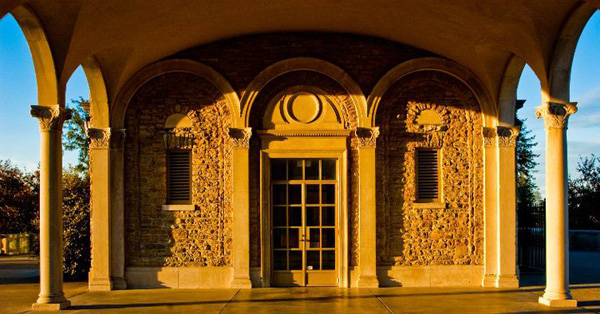
The Cincinnati Park with the photo-friendly pavilion and extensive old-fashioned rose collection turns 100 this year. In addition to traditional celebrations like a birthday bash this August, Ault Park will also, for a few hours every Saturday, go to the dogs.Camp Canine, a month of Saturdays dedicated to getting to know your dog, is designed to get both you and your pup some exercise in one of Cincinnati's most historic greenspaces."We want to get more exposed to our hiking trails," says Ruthann Spears, manager of the Cincinnati Parks' Explore Nature program. "We thought this was a great way to get everyone and their dogs out in the park."Each week, experts specializing in everything from pet nutrition to psychology will be on hand to answer questions about food choices, tell you when it's necessary to call a vet and even offer insights into what your dog night be thinking"[The pet psychologist] can give people clues on to how to read what your dog is feeling," Spears says. "It helps owners with rescue dogs to understand what the dog has been through and other dogs that don't understand why their owner leaves all day long for work."Camp Canine is the Parks' first dog camp. In order to participate, dogs should be up to date with shots, have a good temperament and be on leash during the hikes.Do Good:• Leave no child inside. Don't have a dog? Click your way to fun ideas about how to enjoy city parks with your family. • Join the birthday celebration. With a birthday bash slated for Aug. 18 and more celebrations in September, be sure to take time to enjoy more than a walk in the park.• Give a day, get a game. Volunteer at least four hours in a city park and earn a free ticket to a Reds game as a token of appreciation. By Ryan McLendonPhoto courtesy Cincinnati Parks

Wasson Way bike path advocates hope to transform rail spur

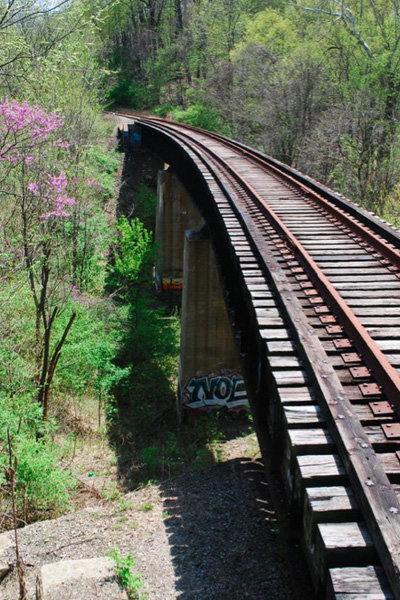
A group of residents from several Cincinnati neighborhoods spoke at the June 7 meeting of Cincinnati City Council's Quality of Life Subcommittee. Their subject? A recently closed railroad spur and a proposal to change it into a 6.5-mile cycling and walking path."This could really serve as an important connector for the many [multiuse path] projects Cincinnati has going on," said project advocate Jay Andress.The proposed project would convert a Norfolk Southern Railroad spur into a path that would connect with the Little Miami bike trail in Newtown and run into the heart of downtown. Advocates at Tuesday's meeting pointed out that the path would only cross seven roads in its entire length, making it a true rarity: a nearly uninterrupted trail running through several neighborhoods in a major urban area.But beyond the health benefits and transportation options that the path could provide, some residents at the meeting brought up another point: building the path could resolve a growing problem with the semi-abandoned line.Hyde Park Neighborhood Council President Anne Gerwin said the point where the line crosses Wasson Road has been a maintenance and safety issue for years. "We struggle many times each year to have the city and railroad maintain it," she said. The neighborhood's council passed a resolution supporting the project.Likewise, Hyde Park resident Lindsay Felder, who said her home is within sight of the track, said there's been a visible deterioration of it - and an uptick in people loitering along the weedy path - since it became inactive in 2009."We've always wondered about the tracks," she said, explaining that she began going door to door to drum up local support after meeting Andress and learning about the proposed project."We see it as a great upcycling of existing property that is underutilized," she said.Subcommittee chair Laure Quinlivan said there are a number of details to clarify before the project moves further forward, such as determining if Norfolk Southern has future plans for the line, and if an arrangement can be made that would allow the city to adapt the path into light rail if that becomes a future transit option."This is really a great proposal," she said. "The best ideas don't always come out of City Hall. If we could make this happen, it would be such a great asset to so many residents."Story: Matt CunninghamPhoto: Wasson Way Project

Our Partners

Taft Museum of Art

Don't miss out!

Everything Cincinnati, in your inbox every week.

Close the CTA

Already a subscriber? Enter your email to hide this popup in the future.