
Volunteers, signatures needed for affordable housing trust fund
A proposed charter amendment will allocate funds to support the city’s most vulnerable population.
Lockland is named for the first set of lock gates on the Miami and Erie Canal. In a bygone era, the canal brought prosperity to Lockland, which in those times took advantage of the significant waterpower provided by a 15-foot drop in level along the canal’s path by operating a large gristmill. The upsurge of railways eventually drew the business of transporting goods away from the canal, and by the 1940’s the Mill Creek Expressway (now a part of I-75) was created in its wake. Many eye-catching historical buildings still frame the area surrounding the former canal. The quiet, friendly and walkable village was the second location of notable mattress company, Stearns and Foster, which operated in Lockland from 1882-2003.

A proposed charter amendment will allocate funds to support the city’s most vulnerable population.

The dispute between police and residents has been going on for decades. Now, concerned citizens are trying to find a compromise.
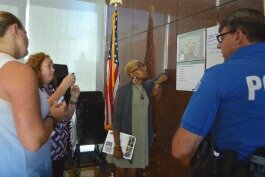
Over the next decade, all 40 branches will receive renovations and improvements.

Annie Streitmarter’s program cultivates children's minds, bodies, and souls with lesson and demonstrations on healthy eating.

For those who have fled to Ohio from other countries, becoming an official resident isn't always easy.

Pets in Need of Greater Cincinnati offers affordable vaccinations and quality care as well as discounted collars and leashes to pet owners living in poverty.
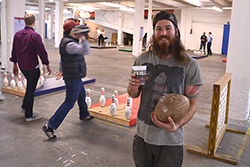
Shortly after the new year arrives, so do Cincinnati Beer Week, Cincy Winter Beerfest and the almighty Bockfest, which can mean just one thing: It’s Beer Season! To celebrate, I offer a highly subjective sampling of what our region has to offer in the burgeoning world of craft beer and taproom tourism.

Cincinnati's brewing renaissance is expanding with the quick and early success of Lockland-based Rivertown Brewing Company. Founded by home brewing enthusiast Jason Roeper and his business partner Randy Schiltz, the craft brewery has gone from a two-person startup to an emerging local brand in less than two years. Their traditional German-style lagers and ales can be found in 65 Ohio and Kentucky Kroger stores, and in local Meijer and Biggs Rempke stores. It can also be found on tap in more than 100 local restaurants and bars, including Parkers Blue Ash Tavern and Dilly Café in Mariemont. Roeper and Schiltz met through mutual friends in the local home brewing community. Coincidentally, they're both former car manufacturing professionals who left their jobs after steady job cutbacks in the industry. Roeper had been home brewing for more than a decade, and says he became "obsessed" with the brewing process. He joined the American Homebrewers Association to improve his finished products. "I started entering competitions across the country to get feedback about what I was doing right and what I was doing wrong," he says. "Then I started winning awards and gold medals." A major victory came shortly after being laid off. In 2008, he was named a finalist out of 13,000 entries in the Sam Adams' homebrew contest for amateur beer makers. Soon afterward, he decided to start his own brewing company. During that time, he met Schiltz, who was looking to start a brewpub in Northern Kentucky. The timing was right; they teamed up and started Rivertown Brewing. "He was looking for the same thing," Roeper says of his partner. "We knew we could make it happen. In a matter of months, we had our SBA loans approved and we found a location." They also pulled together financing from private investors. Rivertown now has five full-time employees and the brewery runs seven days a week. Thirst for its beers have far outweighed products. In their first year, they expected to produce 500 barrels; instead they rolled out 1,400. This year they are on pace to produce 3,000. Roeper attributes their success with quickly partnering with local distributors in Ohio and Kentucky, as well as their own extraordinary drive. Home brewers are known for the plans to start companies; but often don't follow that with action, he says. "We have drive and motivation and learned from others' mistakes," he says. "And local distributors have helped us get into these outlets." Rivertown plans to expand, including opening a tasting room at their Lockland location. By Feoshia Henderson You can follow Feoshia on Twitter @feoshiawrites
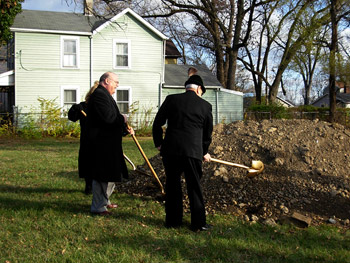
Cincinnati Housing Partners (CHP) has broken ground on phase two of the Lockland Revitalization Project at the corner of Elm and Mulberry streets. Of the eight new homes, six will be built in the two-story "Lydia" style, while two of the homes will be traditional ranches, also known as the "Lorraine" style. The homes will sell for around $135,000, providing affordable housing that helps stabilize the neighborhood. Early last month, the dedication of Mayor Jim Brown Park, on Elm Street land that had once contained blighted, crime-ridden housing, helped set that tone of stability. "This is one of those projects that people get into public service for," says Village of Lockland administrator David Krings. "Every small step we've taken is one step for a better community. You can see just by walking around Lockland how it really is a community on a rebound." To aid the project, CHP received a $450,000 Ohio Housing Finance Agency grant and financial assistance from the Hamilton County Department of Community Development and National City Bank. "With FHL bank loans and a soft second mortgage from Hamilton County, it's conceiveable that a homebuyer's mortgage could be between $75,000 and $80,000," says Bonnie Blankenship, president and CEO of CHP. "The subsidy is key to our houses moving as quickly as they do. And we're building the best quality home that can be provided - homes that we would want to live in ourselves." Since 1999, Cincinnati Housing Partners has built 20 houses in Lockland. CHP is also working on housing initiatives in St. Bernard, North College Hill, and in its home neighborhood of Carthage. Writer: Kevin LeMaster Source: Bonnie Blankenship, president and CEO, Cincinnati Housing Partners Photography provided by CHP
Our Partners