Hyde Park

One of Cincinnati's oldest neighborhoods, Hyde Park, has become a favorite among young professionals. Hyde Park Square has evolved to become a thriving hub of activity while still preserving its original charm. Upscale specialty shops and restaurants surround the charismatic fountain in the middle of the square.A delightfully walkable neighborhood, Hyde Park seems to enjoy an unusually significant number of dog-walkers, joggers, rollerbladers and tricked out baby strollers criss-crossing its tree shaded side streets.

Qualls pushes council to make streets ‘for people, not just cars’

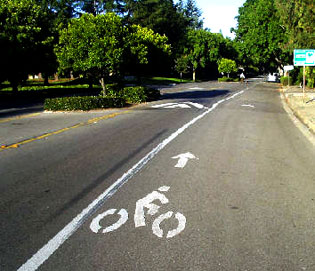
Cincinnati City Councilmember and chair of the Vibrant Neighborhoods Committee, Roxanne Qualls introduced a resolution supporting the federal Complete Streets Act of 2009, a piece of legislation meant to encourage streets that are safe for all forms of human transportation.Sponsored by Sen. Tom Harkin (D-IA) and Rep. Doris Matsui (D-CA) and introduced earlier this month, the legislation promotes the design of streets that are safe for motorists, bus and transit riders, pedestrians, bicyclists, and people with disabilities by directing state departments of transportation and metropolitan planning organizations to adopt and implement complete streets policies for federally-funded transportation projects.It would also update the current federal code on pedestrian and bicycle accommodation and authorize research, data collection, technical assistance and dissemination of best practices.Qualls' resolution is currently in council's Economic Development Committee, which next meets on April 7."We actually put funds in the biennial budget to develop a complete streets program," Qualls says.  "So the city has already recognized the need to design streets for people, not just cars.  Ultimately, the goal is to make our streets multi-modal."According to the National Complete Streets Coalition, more than 5,000 annual fatalities and 70,000 injuries occur to pedestrians and bicyclists because of inadequate sidewalks and crosswalks, space for bicyclists, and room for transit riders.Locally, the city's Department of Transportation and Engineering has been working with the Mount Washington Community Council to retrofit a portion of Beechmont Avenue that has seen an increase in speeding and accidents since a road widening project in 2004.Residents of Westwood have also requested traffic calming measures for a mostly residential – but busy – section of Montana Avenue."Our competitive advantage is in our neighborhoods, and our quality of life is dependent on our streets," Qualls says.  "If we look at our streets as our largest public spaces, then the quality of those spaces is critical to economic development."Qualls says that complete streets is one of many strategies that cities are using to become more walkable and mixed-use, pointing out that more than 80 state and local governments already have passed complete streets policies."It's a matter of changing how we think about streets," Qualls says.  "What we recognize is that if you design streets for cars, you get cars.  If you design streets for people and alternative modes of transportation, that's what you'll get."Writer: Kevin LeMasterSources: Roxanne Qualls, Cincinnati City Council; Jennifer O'Donnell, assistant to Councilmember Qualls

Hamilton County taxes lower than its peers

A recent Forbes survey finds that Hamilton County's property tax rate is the lowest, as a percentage of income, of Ohio's six largest urban areas, says Hamilton County Commissioner David Pepper.In his PepTalk blog, Pepper says that there are misconceptions about the county's tax rate, but that it's actually relatively low when compared to other metropolitan areas against which it competes for jobs, businesses, and talent.The Forbes survey found that Hamilton County's property tax rate as a percentage of income was 26 percent lower than Cuyahoga County (Cleveland), 16 percent lower than Franklin County (Columbus), and 8.5 percent lower than Summit County (Akron).Hamilton County's sales tax was also the lowest of the top six urban counties, tied with Summit County.Read the blog post here.

Spohr appointed to direct SW Ohio workforce development

Jennifer Spohr has been appointed as the regional workforce director of the Ohio Department of Development's (ODOD) Southwest Ohio office.In her new role, Spohr will serve as a liaison to state government, local business leaders, elected officials, and economic and workforce development entities to meet the training and talent development needs of businesses throughout Hamilton, Butler, Warren, and Clermont counties.Spohr joined ODOD in 2005 as coordinator for the Ohio Investment in Training Program and is currently on the Greater Cincinnati Workforce Network's Hard-2-Hire Workforce subcommittee.This year, she received from Cincinnati mayor Mark Mallory the 2009 Super Award from the Workforce One Investment Board of Southwest Ohio in recognition for her work with the SuperJobs Center.Read the full release here.

Mallory highlights economic growth in State of the City address

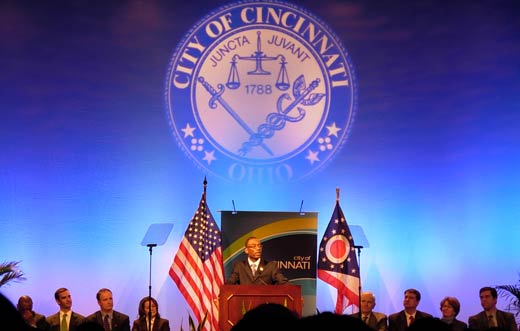
In his fourth State of the City address, delivered last Wednesday at the Duke Energy Center, Cincinnati Mayor Mark Mallory said that the city is weathering the poor economy much better than most."At a time when other cities are seeing businesses move out, we are seeing businesses expand and new businesses move in," he said.He credited the "aggressive and strategic" approach of City Manager Milton Dohoney and Economic Development Director Holly Childs for bringing 2,500 new jobs to Cincinnati last year, including commitments from such major players as Medpace, Humana, dunnhumbyUSA, and US Bank.Mallory also spoke of the need to empower small and minority-owned businesses, saying that four more Shop52 seminars will be held this year to link entrepreneurs with business experts, non-profit service providers, and lending professionals."We must also ensure that individuals have the opportunity to realize their dreams," he said.  "Shop52 is all about small business growth and strengthening our neighborhoods."In addition to job creation, Mallory noted that construction is underway on two major building projects – Great American Tower at Queen City Square, a 41-story, $340 million office tower and The Banks, a 2.8-million-square-foot mixed-use development on the city's riverfront.But Mallory said that the most crucial component of Cincinnati's development plans is the streetcar system that would connect Downtown, Over-the-Rhine, and the Uptown neighborhoods."Now, we have done our homework and the benefits of a streetcar system are clear," Mallory said.  "When a city puts rails in the ground, economic growth follows."Mallory said that $1.4 billion in economic impact would result from the project's first phase, giving the city additional resources that it can use in neighborhoods throughout the city."The benefits of the streetcar system are too significant to allow the naysayers to derail our efforts," he said.  "Streetcars must be a part of Cincinnati's future and we will fight to make it happen."According to Mallory, the key to Cincinnati's future success is strong local, national, and global partnerships.To achieve these partnerships, the city and its residents must be their own advocates."We have a great city and we must make it our priority to promote it here at home, across the nation and around the world," Mallory said.Writer: Kevin LeMasterSource: 2009 Cincinnati State of the City address Photography by Kevin LeMaster

Spaces remain for 10-week government academy

Several spaces remain for the spring session of the Cincinnati Citizens Government Academy, a 10-week course designed to give an in-depth look at how city government is organized and how services are funded and delivered.Beginning March 2nd and held Mondays between 6 PM and 9 PM, the Academy features field trips to numerous city departments to learn about their services and programs.The goal of the program is to not only improve citizen understanding of how local government works, but also to encourage citizen involvement in strengthening and improving the quality of life throughout the city's neighborhoods."As City government continues to engage citizens, it's important that citizens have a broad understanding of how their government works," says Cincinnati city manager Milton Dohoney.  "We believe that informed citizens are involved citizens and that makes for better government.  The Academy may also bring forth some new ideas from the public that we may need to consider."Since 2007, the Academy has graduated 45 participants from its two sessions.Participation is free, and citizens can enroll by calling Trina Porter at (513) 352-5335 or by e-mailing citizensgovernmentacademy@cincinnati-oh.gov.Applications are also available online at or by visiting Suite 104 at Cincinnati City Hall.Writer: Kevin LeMasterSource: Tiffaney Hardy, senior communications specialist, City of Cincinnati Photography by Scott Beseler Milton Dohoney

Mayor Mallory gets assurances from President Obama

Following a meeting with President Obama and Vice President Joe Biden at the White House, Cincinnati Mayor Mark Mallory says that he's assured that Cincinnati will receive its fair share of the $787 billion federal economic stimulus bill.According to Mallory, the president told the 80 mayors in attendance that stimulus money will be on the streets within six months and is expected to be spent on projects within 18 months.He was also pleased that $7 billion of the $12 billion set aside for transit projects would go directly to cities, instead of being funnelled through state governments."The president stressed several things, that he understands the importance of cities as it relates to stimulating the economy," Mallory tells the Enquirer.Read the full article here.

Ohio’s 10 best-kept secrets

Following a year and a half of talking to Ohio's business leaders and executives, the Ohio Business Development Coalition has compiled a list of the ten best-kept secrets about doing business in Ohio.Everybody knows about the relatively low cost of living and the advantageous location, but what other advantages does Ohio have?I'm not going to give it all away here!You'll have to read the full article here.

Mayor Mallory names new YP Kitchen Cabinet

A new Cincinnati Young Professionals Kitchen Cabinet was announced Tuesday, and already they're charged with working on a major initiative.The group must prepare a proposal, due this month, to host the 2009 Next Leaders Summit, the largest meeting of young professional groups in the nation.Mayor Mark Mallory started the advisory group in 2006 in an effort to coordinate the activites of various YP groups throughout the region, with the goal of attracting and retaining young professionals.This year saw a record number of applicants for the cabinet, Mallory tells the Enquirer.Read the full article here.

Cincinnati submits $332M stimulus wish list

Cincinnati mayor Mark Mallory has submitted a request for $332 million to fund 51 projects as part of the proposed $819 billion federal stimulus package.The list includes $190 million in water and sewer projects, $74 million for new streets and related infrastructure, and $24 million for public improvements connected to neighborhood economic development initiatives.Also requested was $12.6 million to conduct an engineering study to determine the best route for an Over-the-Rhine-to-Uptown streetcar connector.Mallory estimates that more than 3,600 jobs would be created if the list of projects were fully funded.Read the full article here.

New and improved CincySites makes site selection easy

The new and improved Cincinnati Commercial Site Portfolio, joint effort of the Economic Development Office of the Hamilton County Development Co. (HCDC) and the City of Cincinnati, has moved to cincysites.com.The online database is a comprehensive inventory of Hamilton County sites available for redevelopment, including industrial, retail, office, warehouse, and vacant land.The database also serves as a central source of information for those who might want to invest in the community, with layers of detailing population and workforce demographics, spending data, and information on nearby businesses.CincySites is a cut above the average economic development website because it utilizes geographic information system (GIS) technology, allowing users to create maps and reports that would normally take weeks –and dollars – to collect.Because more than 90 percent of initial site selection screening is now done using the Internet, it is hoped that the depth and ease of use of CincySites will help attract new business and promote economic development in Hamilton County.Writer: Kevin LeMasterSource:

Our Partners

Taft Museum of Art
Warsaw Federal

Don't miss out!

Everything Cincinnati, in your inbox every week.

Close the CTA

Already a subscriber? Enter your email to hide this popup in the future.