Clifton / CUF

Resting on a hill overlooking the north side of Cincinnati, Clifton offers a wide range of experiences from a college atmosphere with the city's largest school, the University of Cincinnati, to an international center for cutting-edge medicine featuring University, Children's and Good Samaritan hospitals. Clifton's history has been preserved in historical buildings and homes — from modest to millionaire. Trendy shops and restaurants can be found on Ludlow Avenue in the Gaslight District, along with the Esquire Theatre, yoga studios, Clifton Market and a newly renovated branch of the Cincinnati Public Library. Even though Clifton is tightly compacted with large buildings and interesting architecture, green space does exist at Burnet Woods

UC’s DAAP, Hughes High School team for TREAD Project

Three University of Cincinnati Industrial Design students are empowering and educating students at Hughes High School through a footwear design studio as part of their senior thesis, the TREAD Project.Charley Hudak, Vanessa Melendez, and Jince Kuruvilla, are fifth-year industrial design students in the College of Design, Architecture, Art and Planning and have been networking for nearly five years to bring TREAD Project to life.The design studio was somewhat inspired by a program at Carnegie Mellon University, Sneakerology Course, which focuses on the culture and history of sneakers, not design.In its first year as a footwear design studio, the TREAD Project became part of UC's ID curriculum thanks to the support of Dale Murray, associate professor and coordinator of Industrial Design, and Phyllis Borcherding, associate professor and coordinator of Fashion Design and Development. After the success of its initial year, the design team decided to share the project at the high school across the street from UC's Uptown campus. The TREAD Project is a seven-week design student for 25 Hughes students who meet for three sessions per week. The last session each week features a footwear industry professional, including representatives from Nike, Reebok, Adidas, Jordan, Toms Shoes, Vans and more. In classes, students learn how to design with markets in mind, solve design problems and creatively sketch their concepts of the perfect shoes, which they will present to a panel of experts on the last day of the studio, May 25."It gives them a different opportunity to realize their skill sets can be applied to any problem," Melendez says. "They're using different thinking skills to solve problems instead of memorization or standardized tests."The project has particular significance at Hughes, where the dress code allows only black or white shoes. The students' shoe brands become a way for them to express their personalities.While the studio teaches students about footwear design, it also inspires them to take more active roles in their lives, including getting to school every day, applying to college or landing a job after graduation. "There are opportunities that not all of these students are aware of," Hudak says "Creative problem-solving goes beyond the education and design process." "Their skill sets can be applied to any problem," Melendez says. "They're using different thinking skills to solve problems instead of memorization or standardized tests."Hudak and his partners, all of whom are graduating this June, hope to expand the curriculum into a working non-profit model that could be replicated nationwide. Do Good:• Support the Tread Project. Donate money or supplies so tread can continue to teach inner-city students. • 'Like' Tread Project on Facebook. • Get informed. Visit the Tread Project online to learn more about the progress and see cool pictures, too!By Jayna BarkerFollow Jayna on Twitter @jaynabarker.http://www.jaynabarker.comPhoto courtesy Tread Project

Freedom Writers’ visit sparks regional education initiative

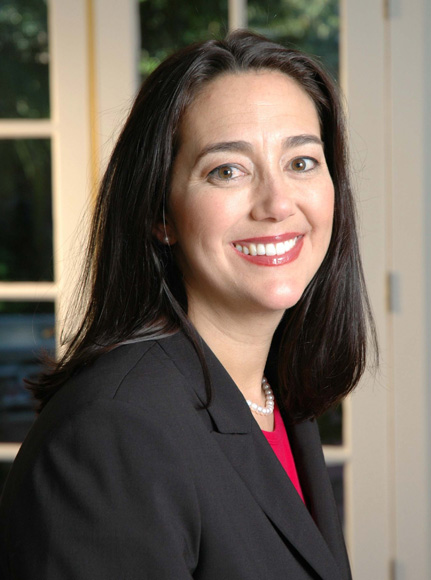
Mark Kohan knows how to bring people together. Though still a doctoral student in educational studies at the University of Cincinnati, Kohan has spent the last year planning a regional effort to inspire social justice in classrooms, schools and communities.Earlier this month, his work to unite universities and community organizations around those efforts culminated with a visit from the nationally known Freedom Writers, led by teacher Erin Gruwell of California. Gruwell's work in and out of the classroom became the basis for the 2007 film "Freedom Writers," starring Hilary Swank. Gruwell, a high-school English teacher, became known for her work with inner-city youth - groups of students who had been at best underestimated and at worst written off completely. Gruwell's efforts to expose her students to stories of empowerment and individual responsibility led to the formation of the foundation that now provides support to teachers and students around the country. Kohan pulled together a broad coalition to support the Freedom Writers visit during the 50th anniversary year of the Freedom Riders as a way to build momentum for Teaching Hope, an initiative that will launch in Cincinnati schools next fall."The goal of Teaching Hope is to call attention to how schools can be involved in making social justice a priority for the health and well-being of our region," according to Kohan, who served as coordinator for the Cincinnati Freedom Writers Project.He crossed institutional boundaries by partnering with Xavier and Miami universities, brought in non-profit support with the Center for Holocaust and Humanity Education, the National Underground Railroad Freedom Center, Women Writing for (a) Change and the Public Library of Cincinnati & Hamilton County. From visits to schools and with teachers throughout the day to a sold-out session with educational leaders and fans at the Freedom Center, six events throughout the day drew more than 700 enthusiastic educators and supporters. The Cincinnati Freedom Writers Project capitalized on the passion of educators and leaders to work toward social justice in and out of the classroom. Do Good:• Learn about the partners. From Women Writing for (a) Change to the shttp://cincinnatilibrary.org, you can find countless opportunities to get involved with social justice education.• Join the movement. Sign up to receive newsletters and other updates from the national Freedom Writers Foundation.• See how you can help Teach Hope. Email Mark Kohan at UC for more information. By Elissa Yancey Photo courtesy of Cincinnati Freedom Writers

University Square at the Loop brings green housing and retail to Uptown

 A new residential, retail, and office space will soon break ground this summer in the backyard of the University of Cincinnati's campus. Located between Calhoun and McMillan streets, University Square at the Loop is a joint effort with developers Towne Properties and Al Neyer Inc."It's been a collaborative and organic effort all the way to gain community and university support and to make sure the project reflects the unique and authentic values of the neighborhood that serves the students and Uptown employees," said Gail Paul, business development at Al Neyer Inc.The project consists of 161 residential units that will be built over 80,300 square feet of restaurant and retail space, a 100 room hotel, 716 space parking garage, and 44,000 square feet of Class A office space. The developers incorporated the opinions of UC's student body, including 1500 student participants in a survey, and met consistently with student body representatives during the planning phase. Students told the developers that they would like to see clothing stores, bookstores, electronic and supply stores, and affordable restaurants at the development."We will continue to go out and gain input as the project develops to make sure UC students get behind the project, shop at its stores, and eat at its restaurants and socialize at its bars," said Alan Hagerty, incoming student body president at University of Cincinnati. "We are happy to be a part of the development process."Developers expect to attract graduate students, young professionals and UC employees with studio and one to two bedroom apartments that have nine-foot ceilings, granite countertops, and stainless steel appliances. The construction and buildings will be LEED certified. "When you're building in a university setting with major institutions like the Cincinnati Zoo and Children's Hospital, you're walking among green giants in a way," Paul explained. "So you want to stand tall with the neighborhood and company, allowing residents to appreciate the green qualities while wanting to work and live in a green environment."Writer: Lisa Ensminger

Cincinnati State launches Center of Sustainability Excellence

Cincinnati State is adding to its array of green and sustainable workforce development programs with a new Center of Sustainability Excellence. The program is geared toward the manufacturing and distribution industries, with curriculum focused on the technical and scientific application of sustainability. "We clearly recognize there is a need for this, and we will be able to deliver the education asked for in the manufacturing and supply chain sectors," said James Kleemeier, Center Project Manager at Cincinnati State. Kleemeier believes this is one of the first programs of its type in the nation, and the first one in the Greater Cincinnati region. He expects it to be offered by late summer or early fall, though a specific date hasn't been set yet. The program has two components: online and in the classroom. It will begin with "Introduction to Environmental and Social Management," an eight-hour online course that outlines sustainability concepts and the business case for sustainable development. Completion earns students a course certificate and one credit hour. The online course is a prerequisite to further classroom work. Following the online work, the program offers seven more accredited classes at Cincinnati State's Workforce Development Center in Evendale. The classroom courses are: • Certified Sustainability Manager • Sustainability Auditing Techniques • Sustainability Solutions to Technical Issues • Energy RRR (Reduction, Recycle, Reuse) • Sustainable Supply Chain • Sustainability Program Management Techniques • Sustainable Solutions to Economics & Community Development The program was developed in partnership with the National Sustainability Coalition and the International Sustainability Institute of Applied Sciences. "The Sustainability Center will serve as a regional resource to the labor market by offering sustainability education that is sensitive to real-life experience and relevant to what people are doing in the workplace," Cincinnati State President Dr. O'Dell Owens said. "With the concept of sustainability firmly imbedded into our lives and the immediate future of our society, now is the time to apply ecological knowledge to decision making at every level." Writer: Feoshia Henderson Source: Cincinnati State Communications and Center of Sustainability Excellence Project Manager James Kleemeier

Lessons transcend language in Village Life Outreach Project

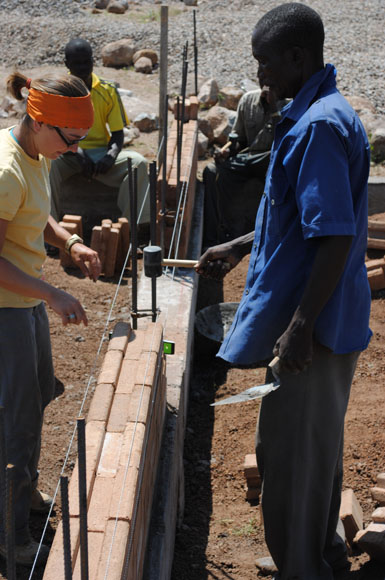
Emily Roush was worried. As a graduate student in the University of Cincinnati's architecture program, she had the chance to work on one of two projects over the course of her second and final year of study. One of the options involved staying in Cincinnati. The other had the potential, the slimmest hope, that she might travel to Tanzania to help build a health center in the remote villages of the country's Rorya district. Surely, in her class of 30 students, there would be stiff competition for what Roush saw as the adventure of a lifetime. As it turned out, just six of her classmates chose to work on the African project, a part of the non-profit Village Life Outreach's work to provide life, health and education, in particular those underserved in East Africa. Of those, she was the only architecture student interested in working on the ground in Tanzania. So the Hillsboro native and Arizona State graduate got busy. She made a two-week visit to the health center site in the fall, not long after choosing the project, to do field research and assessments to bring back to Cincinnati. Roush, 26, traveled alone and worked with villagers and others already on site, using translators to sift her way through Swahili and Luo, the two main languages of the region.Her first thought when she saw the sweeping vistas and wide open spaces of Africa? "It's real," she says. She returned to Cincinnati even more determined to bring the health center to life.By spring 2010, she was ready to start her six-month journey. Back in Tanzania in March, she lived with a Tanzanian family, built relationships with villagers and got hands-on construction experience. "I was impressed with the people of the villages," she says. "They really banded together."After three months, she came back to the States for a family wedding and a funeral, then returned to Africa with her now-fiancee, and Village Life Outreach Project executive director, Richard Elliott. When she returned to Cincinnati to start school in September, Elliott stayed behind, helping with construction and coordination.The Roche Health Center is just one of a series of Village Life Outreach efforts. From mobile health care to a range of education projects, the non-profit focuses on new approaches to improving and sustaining community health and well-being.Roush hopes to return to Tanzania after she graduates and marries Elliott. She wants people to know that there is more to Village Life's mission than providing support for villagers."The most meaningful thing for me are the relationships I built with people," she says. "We have a lot to learn from them."Do good:• Limit malaria's reach. For $25, you can sponsor a mosquito net for a family of four.• Do lunch. For $50, you can buy school lunches for six children in Tanzania—for an entire year!• Drink coffee. Visit Coffee Emporium on Central Parkway to buy  Village Life Outreach Project-branded Peaberry coffee from Tanzania. A portion of the proceeds support Village Life's work. You can also order the coffee online.By Elissa Yancey Photo courtesy Village Life Outreach Project

Hughes students learn retail ropes at Macy’s

The Macy's boardroom, with sweeping views of downtown and the riverfront, was all atwitter. Not with social media messaging, but with nearly 30 female teenagers, all students from Hughes STEM High School presenting final projects as part of an intercession project they'll never forget.In its second year, the program offered high schoolers a chance to spend a week immersed in the world of retail planning and development as they worked in teams to create a new juniors department for Macy's. Their final presentations, judged by a panel of Macy's experts, included research, merchandising, store design and construction, marketing and financial plans."I learned a lot more than expected," says ninth-grader Makennah Searles. "I learned what the design, construction, area research and human resource areas do and how they work. We were given time to talk to them and ask questions."Cecilia Matos, vice president and head of area research for Macy's, coordinated the program, which was created as a diversity outreach project. She explains that the benefits of the program go both ways. Macy's employees can help Hughes students learn about business strategies and making professional presentations while the students offer insights into their young customers' mindsets.?After the groups presented their findings and proposals, judges awarded a winning team while other Macy's staff compiled a list of ideas to consider for potential future implementation. Do good:• Get involved with Hughes. Opportunities include mentoring and helping with a creative intercession program.• Learn more about what's going on at Hughes.• Join the Hughes recruiting class on Facebook.By Elissa YanceyPhoto courtesy of Macy's

Artifacts teach powerful lessons at Center for Holocaust and Humanity Education

When Leo Willich was having a really bad day, he pulled out a box he had protected for decades. Inside was a clean uniform with hauntingly familiar vertical stripes and sewn-on tags. He would put on the garment he wore every day at Auschwitz and look in the mirror. From the safety of his home in Cincinnati, he would have hope for a better day."That teaches a lesson in itself," says Sarah Weiss, 29, executive director of The Center for the Holocaust and Humanity Education in Kenwood, where Willich's uniform is displayed in the Mapping Our Tears exhibit.The collection of artifacts from Holocaust survivors who settled in Cincinnati connects the past with the present, and the future, in a powerful way. A pair of battered gold earrings tells the story of a teen girl's determination to keep her connection to her family alive. A potato peeler serves as a reminder of those who risked their lives to hide Jewish families from Nazi soldiers.Along with a theater that looks and feels like an attic, where visitors watch video testimonies from local survivors, the artifacts reflect the Center's founders, a group of Holocaust survivors who met regularly beginning in the 1950s. They gathered for support and for connection. "It was more like family," Weiss says.From 2000 until 2006, the Center was housed at Hebrew Union College in Clifton. A desire for more space and an independent identity converged when the Center became a distinct non-profit and moved to the campus of Rockwern Academy on Montgomery Road.Weiss explains that the Center's mission reaches beyond honoring the memories of the Holocaust. "We want to teach everyone who comes to be critical thinkers," she says. "That is equally important."With just three full-time staff and one Public Ally, the Center provides programming for and education to more than 40,000 people each year. In 10 years, its programs have touched a half million lives. Do good:• Visit the Center. Find a place of deep knowledge and even deeper respect for humanity between 9 a.m. and 5 p.m. weekdays and 11 a.m. till 3 p.m. Sundays. Entrance cost is a $5 donation per person, but Weiss adds that no visitor will be turned away.• Remember May 1. Designated Yom Hashoah, it is the date on which all who died during the Holocaust—most of whom left little evidence of their lives, much less their death date--are remembered and honored.• Be a friend. "Like" The Center for Holocaust and Humanity Education on Facebook.  ?• Run The Great Human Race. Lace up your shoes for the May 15 fundraiser at Lunken Airport Playfield.By Elissa YanceyPhoto courtesy The Center for Holocaust and Humanity Education  

SVP donors plant seeds of success at Civic Garden Center

Cincinnati's Civic Garden Center staff had a dream: turn an abandoned Avondale gas station site into a high-tech example of all things environmentally sustainable. The far-reaching goals of the Green Learning Station targeted builders, developers and public officials as well as homeowners and students. The innovative idea and environmental focus intrigued the then-new Social Venture Partners Cincinnati, a non-profit made up of individuals who invest their financial and professional capital in group grants, known as "partnerships." It was 2008, and SVP gave its first grant--$25,000--to the Civic Garden Center to support the development of the Green Learning Station, which was slated to open in 2009."They wanted to be relevant to today's communities," says Lisa Davis-Roberts, SVP Cincinnati director. So began a unique collaboration between grantor and grantee. SVP Cincinnati assigned a team of partners to support the project. Members included a financial management expert, a project manager from Procter & Gamble, a venture capitalist and a marketing expert.Through their research, partners discovered a major concern, located just blocks from the Civic Garden Center. The successful and popular Harold C. Schott Education Center at the Cincinnati Zoo & Botanical Gardens, which opened in 2006, already fulfilled many of the Green Learning Station's goals for environmental education.Instead of pulling funding, SVP members helped CVG partners develop a new strategy for the site, one more in line with their central mission of helping people garden. "Rather than try to be everything to everybody, the new Green Learning Station is about gardening for people," Davis-Roberts says.With rain gardens, vertical gardens and container gardens, pervius paving and composting, the station highlights practical ways that people can positively impact the environment in their daily lives. It will open to the public this summer."The cost is a fraction of what it was going to be," Davis-Roberts says. She explains that money, in this case a total of $55,000, is just the start of SVP's investment in a project. "We work with our organizations for three to five years." SVP members invest $6,000 of their own money for three years and also commit to an average of 100 volunteer hours—time spent sharing their expertise with non-profits. Davis-Roberts says that Cincinnati's roughly 20 partner units (which can be made up of more than one person) represent a wide range of skills, including legal, financial, IT, marketing and project management. Working with professionals, many of whom have years of experience in corporate settings, offers non-profits invaluable insights. "Non-profits need cash," Davis-Roberts says. "They also need capacity building." SVP Cincinnati, which launched in spring 2007, is one of 25 affiliates of the Seattle-based non-profit in cities across three countries. So far, the local branch has invested in four non-profits. "We want to grow an engaged community of knowledgeable donors," Davis-Roberts says. Do good:• Become a partner. Make the most of your social investments by using your expertise to be a part of positive change.• Link with SVP. See which of your LinkedIn connections are already involved. Then join them and start spreading the word.• Get your hands dirty. Learn more about the Civic Garden Center's Green Learning Station before it opens this summer.By Elissa Yancey Photo courtesy SVP Cincinnati

Arts center builds audience in Clifton

With new access to upper floors and a growing list of classes, the founding executive director of the Clifton Cultural Arts Center envisions thousands of visitors experiencing art and education in ways they had never imagined. Then again, Ruth Dickey is no stranger to dreaming big in the world of nonprofits. The founding executive director for the Clifton Cultural Arts Center (CCAC) has been working with nonprofit organizations for more than a decade. Before she left Seattle, she was working as the executive director of New Futures in Burien, WA — a nonprofit that works with families in low-income apartment complexes.When Dickey moved to Cincinnati in May 2008, the Clifton School on Clifton Avenue, a Beaux Arts landmark dating from 1906, had been sitting unused for two years. Public school plans to construct a new, state-of-the-art Fairview German Language school across the street inspired community members to re-envision the historic space as an innovative arts center. When the CCAC took possession of the building to prepare for its grand opening, it was covered in dust and cobwebs. Room by room, volunteers painted, fixed plaster and pulled staples out of floors to make the center a welcoming space for artists and visitors. "This place has the potential to do many things – inspire people and make them a part of something," Dickey says. Since its opening in September 2008, more than 25,000 people have walked through its doors for classes, exhibits and events. From her position as executive director of Miriam's Kitchen  — a Washington, DC-based breakfast and social service program for people who are homeless — to her degrees in foreign service, Latin American studies, creative writing and poetry, Dickey lives her passion – maintaining the well-being of nonprofits and the arts."The arts have a unique way to help us see things differently," Dickey said. "The arts have the power to let us connect in ways we never would otherwise."The 53,000-square-foot building in Clifton currently houses classes in dance, yoga, and painting, dog training classes, summer camps, music concerts and art exhibits.Expanded offerings required expanded renovations, including last fall's $1.7 million updates to the fire protection and elevator systems that allow for more use of the top two floors."I think the hardest part for every nonprofit is balancing these huge, ambitious dreams and what is possible with what you have the financial resources to do," Dickey says.Much of the funding CCAC received has come from an array of different contributors — the state of Ohio, the city of Cincinnati, a generous anonymous donor, individuals and foundations.But even the funding for renovations doesn't cover the cost of keeping the building lit, warm and clean."There's always this tension between what you can see – if only we had more investment, we could do so much more for the community – and then making possible with what you have," Dickey says.Do Good:• Take a class. From Pilates to puppy training, view the current calendar to see what you need to learn next.• Make the Center your friend. On Facebook, where else?• Get crafty. Bring your bags and some cash to the Crafty Supermarket Saturday, May 7. Be prepared for crowds, great food, one-of-a-kind crafts and entertainment. By Jayna BarkerFollow Jayna on Twitter @jaynabarker.http://www.jaynabarker.comPhoto courtesy CCAC

ArtWorks projects’ impact lingers on walls, in lives

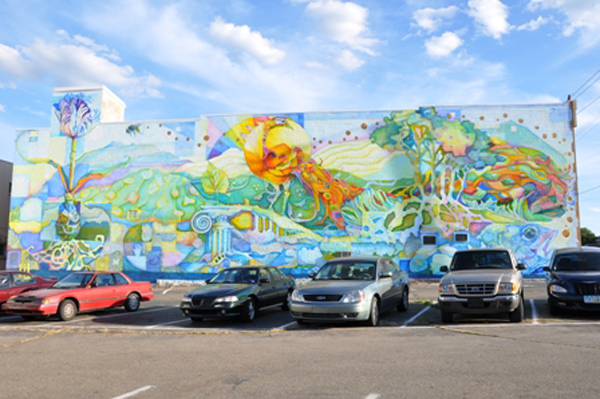
It was a big, blank moldy wall on Covington's Washington Street this time last year. Now, a brightened, clean parking lot sits next to the building, which is home to Be Concerned, a non-profit that helps low-income families obtain necessities. The art has transformed a neighborhood eyesore to a sign of rebirth through art.The massive ArtWorks mural, with blues and greens that reflect the power of the Ohio River, is full of hopeful images—a flower, a fish, a grove of blooming trees. It is the result of the work of a team of 14 apprentice artists, lead artist Tina Westerkamp and three teachers. One young mural worker on the project made a two and a half our journey from his home in Roselawn to Covington to get to work each day. He took two busses and walked across a bridge. He did it for minimum wage. He did it to make art."We want to set these kids up for success," says Tamara Harkavy, founding director of ArtWorks, the largest employer of visual artists in the community. This is the 16th summer that ArtWorks has sponsored public art projects that do more than provide jobs and add a splash of color to neighborhoods. "These are real investments in community," says Harkavy. In Covington, for example, the mural inspired new lighting for the parking lot as well as a concerted effort to keep the space clean. Last year, ArtWorks received 400 applications and hired 75 apprentices between the ages of 14 and 21. This year, Harkavy wants more. She wants double, to be precise. By adding $300,000 to her $800,000 budget from last year, she can hire 150 apprentices to work on projects, including a C. F. Payne-designed mural, "Sing," on the side of WCET's office building in Over the Rhine. This summer, innovative art projects are planned for Avondale, Mt. Adams, Newport, Covington, downtown and Over-the-Rhine. One, at the Ronald McDonald House in Avondale, will employ 16 apprentices to add art to 26 guest rooms and conduct an art-making workshop with families. Harkavy knows the lasting impression made by ArtWorks extends beyond the paint on walls. With 15 summers completed, she often runs into lawyers, surgeons and professors and artists, all former ArtWorks apprentices, who credit the summer job with changing their lives.Do Good:• Adopt an Apprentice. As little as $25 can sponsor a young artist for a half a day's work creating a lasting piece of community-inspired beauty.• Interview an apprentice. Help ArtWorks narrow the talented applicant pool.• Hear why they do it. ArtWorks alums describe the program and their role in it.By Elissa YanceyPhoto courtesy of ArtWorks

Our Partners

Taft Museum of Art

Don't miss out!

Everything Cincinnati, in your inbox every week.

Close the CTA

Already a subscriber? Enter your email to hide this popup in the future.