Clifton / CUF

Resting on a hill overlooking the north side of Cincinnati, Clifton offers a wide range of experiences from a college atmosphere with the city's largest school, the University of Cincinnati, to an international center for cutting-edge medicine featuring University, Children's and Good Samaritan hospitals. Clifton's history has been preserved in historical buildings and homes — from modest to millionaire. Trendy shops and restaurants can be found on Ludlow Avenue in the Gaslight District, along with the Esquire Theatre, yoga studios, Clifton Market and a newly renovated branch of the Cincinnati Public Library. Even though Clifton is tightly compacted with large buildings and interesting architecture, green space does exist at Burnet Woods

Finding Your Soul in the City

Changes are afoot at Soapbox: Managing Editor Sean Rhiney is moving on but not before taking a few moments to look back at some of the stories we've published about those who found inspiration, and a little bit of soul, in their city.

Queen City Gets Real

Cincinnati ranks as the top market in the country for reality TV viewers who gobble up Survivor and American Idol nightly. Now a group of Cincinnati State students and faculty are changing our reputation, getting off the couch and behind the lens to produce the Queen City's first reality series.

Streetcar design to respect FONSI guidelines, OTR history

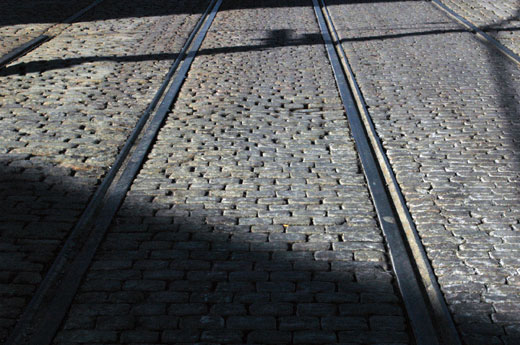
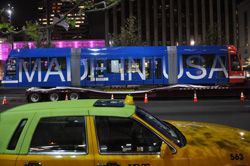
The Cincinnati Streetcar could soon become one of the first projects in the country to be funded by the Federal government's Urban Circulator grant program. The city of Cincnnati announced June 10 that the project received a Finding of No Significant Impact (FONSI) from the U.S. Environmental Protection Agency, a final step needed before the project could access the Urban Circulator funds it won in June 2010.According to Streetcar Project Manager Chris Eilerman, a key to passing that government-mandated standard has been a commitment to protecting not only the physical environment, but the cultural one as well."Because this project extends into Over-the-Rhine, which is pretty heavily regulated, we were really sensitive when looking at the impact," he said. "We want to make sure we don't produce a negative impact on the historic properties."Over-the-Rhine's historic collection of Italianate architecture is as much a part of the environment as air and water quality - at least in terms of what the EPA's environmental assessment evaluates. Eilerman said as part of the assessment, the city has promised to work closely with the Ohio Historic Preservation Office. The office will review designs for platforms, transmission wire poles and other streetcar facilities, to ensure they complement the historic neighborhood's overall look and feel."This is a neighborhood that grew up around streetcar transit," Eilerman said. "We view the resurgence in this type of transit as something that could make the neighborhood better, and we want to make sure we do that."He explained that, now that the FONSI is on the records, the project will work to complete initial design work and right-of-way negotiations. Throughout the process - especially in the design department - the Ohio Historic Preservation Office will provide review and oversight, to make sure Cincinnati's streetcar fits in with the past as it moves the city into the future.

New “Dive Bar” opens on Short Vine

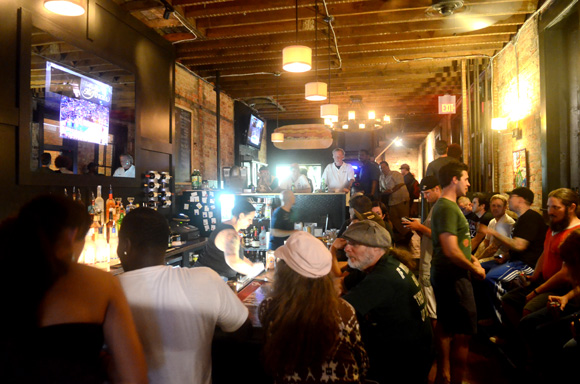
Short Vine in Corryville, once a hot spot for electic night spots, gets a a new bar and restaurant that replaces a former drug hot spot.Dive Bar owner Joe Pedro, a Columbus native and business owner of two bars near Ohio State University, said choosing the site for the Dive Bar came down to the old real estate maxim: Location, location, location."We like the proximity to the college campus and to the hospitals," he said. "There is a lot of people around the area who are good for our services. We also immediately fell in love with the history and character that Short Vine has to offer."Although in recent years this stretch of Short Vine has been known more for drug activity than business opportunities, Pedro said the past serves as a model for what the street could again become."The drug activity is a concern that we are aware of, but we are making an effort to get involved right away with the community and other business members to take hold of the street for the community and push out those elements that no one really cares for," he explained. "Over the past eight months we've seen more businesses coming through as well as more involvement with the community business association and city officials that have made changes that everyone has longed for and wants for the area."Construction of the bar took six months and involved completely gutting and renovating the whole space, leaving exposed brick throughout. Pedro also installed wood floors and new counter tops. The impetus for the work? Pedro's, and his partners', desire for the personality - and affordable cost - of an older building.Beth Robinson, President and CEO of The Uptown Consortium, is extremely supportive and thrilled about the new local hangout."We've made great strides in the past couple of years on Short Vine with continuous police control and increased activity of businesses and residents on Short Vine," she explained. "The bad image is starting to fade into the past as we start to have more businesses open in the area, which will help attract people back on the street and customers back to the area."Writer: Lisa Ensminger

New research could shift cities to emulate

We have issues. Specifically, health, social and economic issues in Greater Cincinnati that local researchers explore and write about on the Community Research Collaborative Blog.Monthly entries feature content from researchers at the United Way of Greater Cincinnati and the University of Cincinnati http://uc.edu . On the blog, three 2011 Community Research Collaborative fellows, along with other community contributors, work to describe the socio-economic health of our community.Each month a new post offers a new analysis. The May 2011 post, for example, compares the 1999 and 2009 data about Cincinnati's income growth, which is a measure of all sources of personal income, including wages, health insurance and a wide range of other benefits. The results showed significant progress as well as sobering realities. While the metropolitan area moved from 58th to 24th place out of 366 areas around the country, Cincinnati, along with many of its regional peers, grew slower than the national average. But Cincinnati wasn't alone. Nearly all of the regional competitors that the CRC uses to track our region's progress posted slowed growth. Those cities include: Austin, TX, Louisville, Charlotte, NC, Cleveland, Columbus, Denver, Indianapolis, Minneapolis, Pittsburgh, Raleigh, NC and St. Louis. CRC fellow Janet Harrah, who serves as the senior director of Northern Kentucky University's Center for Economic Analysis and Development, suggests that it may be time to examine similarly sized cities that are managing to beat the national averages when it comes to personal income. Those include Oklahoma City, Virginia Beach, Baltimore and Washington, D.C.Do Good:• Educate yourself. Read about 2010 Census data for our region and see what you could do to make a difference.• Subscribe to CRC's newsletter so you will get the latest news and updates from the researchers.• Check more data. You can download the 64-page report online.By Elissa YanceyPhoto by Scott Beseler

My Soapbox: Rome Ntukogu

Utilizing his knowledge of the local music and business communities, Rome Ntugoku set out to connect venues, artists, and sponsors to people seeking unique, diverse experiences that can't be found in your average bar or entertainment venue. Along the way, he and his staff at Far-I-Rome have helped change the perception of what a 'night out' means in Cincinnati.

Energy assessments offer layers of savings for homeowners

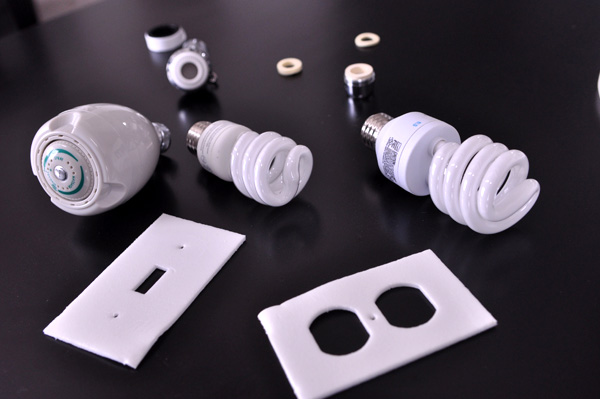
For a limited time, homeowners in Hamilton, Boone, Campbell and Kenton counties can spend just $50 for a $400 to $500 review of potential energy inefficiencies in their homes, and then apply that $50 toward improvements that will help lower their energy bills.An initiative of the non-profit Greater Cincinnati Energy Alliance, the discounted three to five-hour energy assessment includes an in-depth examination of how well your home's heating and air conditioning are working, as well as trouble-shooting for potential leaks and gaps in insulation. "It doesn't matter if a home is five years old or 105 years old, there are cost effective energy upgrades in almost every home we've ever looked at," says Andy Holzhauser, GCEA's executive director. "It's our job to make the process easy and affordable for everyone in our community."Holzhauser believes connecting homeowners with local contractors who have been trained to find affordable, environmentally sustainable ways to retrofit homes creates a powerful motivation for living green. So, after the energy assessment, the GCEA will discount up to 35 percent of the cost of projects that assessors recommend. "We make the retrofit more affordable," Holzhauser says. "In the case of a $5,000 retrofit, we will put $1,700 to $1,800 of our dollars on the table right alongside the homeowner's investment."Best of all, there are no income restrictions on the discounted assessments and retrofit projects, both of which can lead to lower monthly living costs and better environmental stewardship. "The notion of an investment on a home actually generating a cash return back to you is something that is new," Holzhauser says. "It's at the heart of what we do."Do Good:• Watch a home energy assessment in action.• Find out how much you could save. Sign up to learn your potential savings and request an audit of your own.• Tweet and learn. Follow GCEA on Twitter.By Elissa Yancey Photo by Scott Beseler

Couple puts life on the line to find expert care at Ronald McDonald House

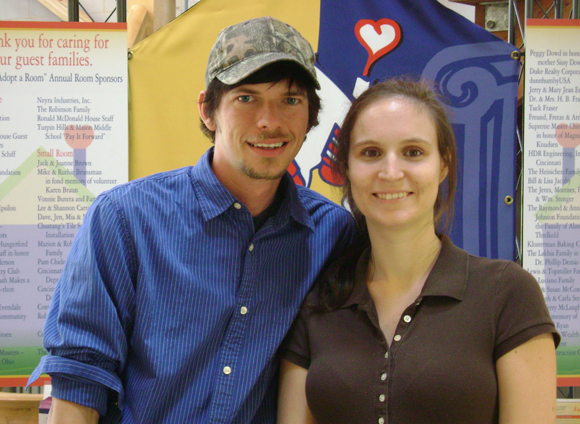
Angeline is still weeks away from being born, but she is already a miracle for her mother, LaDonna Thompson, and her father, Jared Litke. The young couple from Biloxi learned in April that their daughter-to-be had spina bifida - her spinal cord was literally growing outside of her back. They researched, consulted with experts and weighed heavy options.They could wait until her birth, then face a dangerous operation and growing odds that she might need to have a shunt inserted into her brain or spine to help drain spinal fluid. Or, they could try a risky but promising procedure available at only a handful of hospitals in the country. Fetal surgery to enclose their baby daughter's spinal cord before her birth offered the best chance that she might live a more normal life. "Only four hospitals in the country do it," says Litke, 24. "Vanderbilt and Cincinnati Children's are the top two."So Litke and Thompson, 19, who met while working at Petsmart in Mississippi, made plans to travel north. "We lost our jobs, we lost our home coming up here," Litke says. Though engaged, they don't qualify for the Family Medical Leave Act. They relied on family and friends to do what they could to help.They had three weeks to clear out their belongings and head north. It was a daunting task, but Litke and Thompson didn't hesitate. "Kids always come first," Litke says.Their stay at the Ronald McDonald House in Avondale started this spring. Thompson underwent a three-hour surgery in May to close Angeline's spine. Results looks promising so far, but because of the risks, the parents-to-be will stay in Cincinnati until Angeline's birth in September. The couple settled on the name Angeline early on, Litke explains. The word for "angel" has strong Irish and Italian roots, as do the parents.The Ronald McDonald House never withholds treatment because families can't afford it, but Thompson and Litke wanted to contribute something to offset the cost of treatment. In 2010, the facility housed more than 1,200 families from 49 states and 28 countries. Providing a room costs the agency $90 per day, but the suggested donation amount for families is just $25. Thompson and Litke could scarcely afford any additional expenses, so they decided to start a non-profit, Angeline's Hope, to raise funds for other families in similar conditions. They started collecting pull tabs from canned drinks, mostly via Facebook and friends in Mississippi, to donate to the Ronald McDonald House as well as to raise awareness of the organization's never-ending needs.Just 13 percent of its annual budget actually comes from McDonald's, explains ?Colleen Weinkam, communications manager of the Ronald McDonald House Charities of Greater Cincinnati. Cincinnati Children's Hospital Medical Center contributes 1 percent of the annual budget. But the lion's share of the funding, 84 percent, comes from donations and contributions. Last year, the organization raised more than $16,000 by cashing in hundreds of thousands of pull-tabs. Though it takes more than 300,000 pull-tabs to support a single night's stay in the house, Litke and Thompson were inspired by the House's existing pull-tab donation program. Plus, they wanted to give something back to show their appreciation and support of the people who became their family away from home. So far, they have collected more than 100,000 pull tabs. Their goal is to hit 400,000 before Angeline's birth. "It really does feel great knowing there is that there is all that support there," says Litke. "It's important to know that we are giving our little girl a better shot at living more of a normal life." Do Good:• Become a friend. Get the latest news on Angeline and fundraising on Facebook.• Sponsor a family. Pay for as little as one night for $25 or three months for $2,325 to cover costs for a family that is fighting for its life.• Be a Hero. Pick from more than a dozen options that package donations into categories including a "Basic Baker's" pack, a "Comfort" pack and a "Kitchen" pack.By Elissa YanceyPhoto courtesy Ronald McDonald House Charities of Greater Cincinnati


Streetcar Facts, Figures and Fights Mirror Other Cities

Cincinnati is one of 80 American cities currently considering, planning or building a streetcar line. While it might seem that the challenges we're facing in making this a reality are unique, most are common among cities pursuing this revitalized form of public transit and the economic development boon that follows.

Students get in StEP with market economy

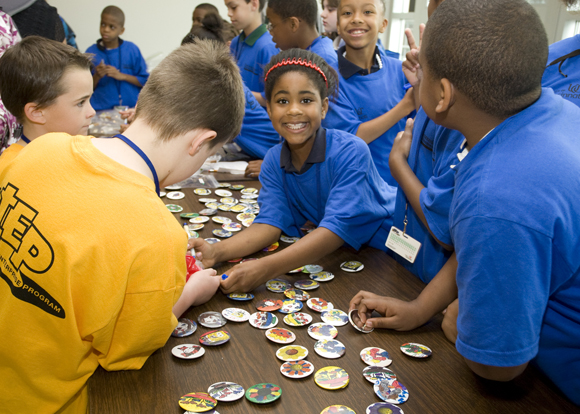
Third through fifth-graders survey a table of opportunities- silly bands, basketballs, notebooks, Frisbees. Which will they choose? That depends, of course, on how much they have to spend. It's part of the Student Enterprise Program (StEP), an initiative of the nonprofit Economics Center, located at the University of Cincinnati.The more than 4,000 Cincinnati elementary students who participate in StEP earn a maximum of $15 per day for attendance, homework completion and behavior. Their hypothetical money is logged in a ledger and spent via checks that students fill out themselves. Students get practical financial education and skills as classrooms are converted to small businesses and students as hold jobs, save, spend and invest school currency. Through saving and spending their money, students learn about supply and demand, opportunity cost and the value of their work.From Western Hills to Bond Hill and more than three dozen points in between, StEP offers more than a simple addition and subtraction lesson, says marketing manager Jaclyn Smith. Experiencing the impact of thoughtful financial decision-making - should I buy a notebook now or save for a basketball? - empowers students. Students learn what it feels like to delay gratification, and even have an opportunity to develop and market their own products in preparation for StEP's annual Market Madness event in the spring, Smith says. More than 700 students travel to UC in the spring to showcase their business ventures, which range from flowerpot shops to bakeries. During the event, students also tour UC's campus. The results impact students long after their market days are over. From better grades and more interest in their classwork to improved attendance, StEP participants prove that innovative incentives can make a real difference in learning.Do Good:• Mind the shop. Spend some time as a volunteer at a StEP school store near you. Email StEP Director Dr. Val Krugh for details.• Help a start-up. Interview students for management roles for their business ventures or make a direct donation to the program.• Give a tweet. Follow the Economics Center on Twitter. By Elissa YanceyPhoto courtesy Economics Center

Our Partners

Taft Museum of Art

Don't miss out!

Everything Cincinnati, in your inbox every week.

Close the CTA

Already a subscriber? Enter your email to hide this popup in the future.