P&G aims new Gain dish soap at Hispanic shoppers

Procter & Gamble will be launching its new hand-dishwashing brand, Gain, as the company aims its promotion at Hispanic shoppers. Studies have shown that the Hispanic population is growing in numbers while it's also younger than the population as a whole. The marketing campaign will be led by a Hispanic ad agency.Read the full story here.

UC and XU among the Princeton Review’s best 373 colleges

Princeton Review published its annual college guide, "The Best 373 Colleges." The University of Cincinnati and Xavier University both ranked on this list among only fifteen percent of the nation's four-year colleges. Princeton Review ranks schools based on institutional data, school visits, student feedback, and staff opinions.Read the full story here.

American Airlines starts non-stop service from JFK to Cincinnati

American Airlines announced a daily non-stop service flight between New York and Cincinnati as well as Indianapolis and Norfolk. This addition allows more access to three key business cities for New York residents and also more access to international flights from JFK for Cincinnati residents.Read the full story here.

Ford to bring 2,000 jobs back to factories including Sharonville plant

Ford plans to bring nearly 2,000 jobs back to the United States by 2012 due to drafted competitive contrasts between Ford Motor Company and the United Auto Workers union. The factory located in Sharonville, Ohio near Cincinnati will be among four factories that will benefit from increased jobs.Read the full story here.

Shoe boutique opens on Main Street in downtown Cincinnati

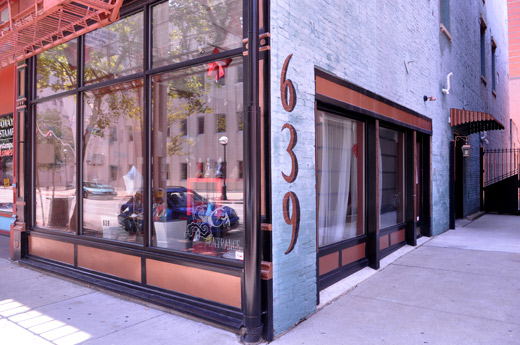
L&L Creative Shoe Boutique has joined the downtown Cincinnati retail scene with a store at 639 Main Street.  The new shoe boutique fills the 465 square-foot space left behind when The Little Mahatma relocated to Over-the-Rhine's Gateway Quarter in 2008.Store owner Leslie Williams says that she first discovered the available store front while walking around downtown, but then approached Downtown Cincinnati Inc. for more information on the space.  Williams is working with friend and colleague Latrice Mason - the owners' first names give the store its name (Leslie & Latrice).  The two friends have worked together in Christ Hospital's emergency room, and decided that they wanted to invest in the shoe boutique."I used to run Deja Shoe on Calhoun Street, which prior to that was located on Race Street downtown," explained Williams.  "When we were on Race Street we did good business because of the wide variety of people you find downtown including business professionals, students and others."Inside customers will be treated to a comfortable atmosphere - Williams describes it as feeling more like trying on shoes in your living room than in a typical shoe store.  L&L Shoe Boutique has chairs and couches where customers can try on a variety of styles of women's shoes ranging from $19.99 to $39.99."We felt that right now there isn't a place to get nice shoes at a reasonable price downtown," Williams said.The store has only been open since August 2, 2010, but Williams says that once they get fully settled in that they will begin selling other fashion accessories and purses.  She also says that customers will soon be able to pre-order their products from a catalog.Williams says they have signed a one-year lease on the store front, with a three-year lease option.  L&L Creative Shoe Boutique (map) is currently open Monday through Saturday from 11am to 7pm, and Sunday from 1pm to 5pm.  After the first few weeks they expect to expand Friday and Saturday hours until 10pm.  For more information, contact Leslie Williams at (513) 379-1232.Writer: Randy A. SimesPhotography by Scott BeselerStay connected by following Randy on Twitter @UrbanCincy


12th Street mural will connect the dots in OTR

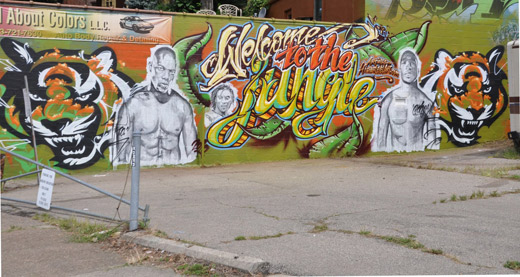
The asphalt of Twelfth Street in Over-the-Rhine will become a canvas for one of the world's largest paint-by-number projects this fall. Tonight the artists who will design the work are asking residents what that mural should be about.At a meeting in the lecture hall at the Art Academy, DAAP professor Michaele Pride will moderate a discussion between local residents and the five artists charged with designing the 12th Street painting. On September 26, the artists will draw a chalk outline on the street and oversee 500 volunteer painters during a one-day "paint party" on 12th Street from Main to Central Parkway.Organizers at the Fine Arts Fund (FAF) hope the "art mob" that paints the mural will set a world record for a paint-by-number event, but they also hope they'll create a finished product that will become an attraction for the neighborhood, FAF vice president for the Arts and Culture partnership Margy Waller said.The painting could also become a physical art-bond between the Main St. and Vine St. districts of Over-the-Rhine, and codify the neighborhood's status as Cincinnati's unofficial arts district with art schools, theatres, galleries and arts organizations lining either side of the street.The mural will have five or six "design bursts," or concentrated areas of color, as it stretches along seven city blocks. Waller said that street paintings typically last 6 months to 2 years, depending on the amount of street traffic, but added that streetcar construction could remove the mural before it has a chance to fade.The project comes with its share of hurdles; the street must be closed, 500 different creative personalities must be harmonized by 5 different lead artists and the design must address the topics du jour on local residents' minds while having curb appeal to make it an asset to the district.The five artists charged with the task of designing and executing the mural have a breadth of style and backgrounds, and years of experience creating public art in Downtown and Over-the-Rhine.Matt Dayler and Danny Babcock have been painting the south side of the Know Theatre for the last three years of the Fringe Festival, and recently received a flurry of press coverage for a mural of T.O., Ochocinco and Chris Henry on the side of All About Colors Autobody at the corner of Ravine and Central Parkway. Pam Kravetz, Carla Lamb, and Karen Saunders worked on the Fine Arts Fund bus murals last year, and designed the Artworks "art rack" bicycle rack in front of the downtown Coffee Emporium together.Volunteers who wish to join the "art mob" can sign up here and those who would like to share their ideas with the artists can do so between 5:30 and 7:30 p.m. at the Art Academy, 1212 Jackson Street.Writer: Henry SweetsPhotography by Scott Beseler

Cincinnati preservationist questions VBML program, suggests changes

Following a series of forums and community meetings, members of the Knox Hill Neighborhood Association located in North Fairmount have said that the city's Vacant Building Maintenance License (VBML) hurts neighborhood development.  Following increased fees passed in 2006, the VBML program has come under scrutiny from the very community in which it was meant to assist.The VBML program was originally created to deal with troublesome vacant buildings that pose public health and safety concerns.  According to city officials, the program requires building owners to bring properties into a general state of upkeep that preserves the integrity of the building, keeps it structurally sound for police and fire officials, and keep properties from sliding into serious states of blight.  However, some neighbors believe that the program needs to be reexamined."Essentially the VBML is no longer an effective tool. Given the foreclosure crisis and difficult economy, the market has changed," said Paul Wilham, President, Knox Hill Neighborhood Association.  "Obviously the City Vacant Building Task Force wants to keep the VBML as it generates limited revenue and they are reluctant to do the hard work of actual enforcement of our building codes as other cities do."Wilham, and the Knox Hill Neighborhood Association, believe that the VBML should be eliminated entirely and replaced by specific repair orders made by city inspectors.Edward Cunningham, Division Manager of Property Maintenance Code Enforcement for the City's Community Development Department, says that the license fees are used to offset the high costs of monitoring these at-risk properties, and that many of the fees can be refunded for those with rehabilitation plans in place."We try to inspect the properties every 30 days, and it costs a lot of money to deal with these structures," explained Cunningham.  "This program is about preserving properties and getting them used once again.  We're just trying to keep the buildings from deteriorating further."Under the program, building owners are required to pay an annual VBML fee until the property is brought up to code.  The fee starts at $900 for the first year, and doubles each following year with a maximum of $3,500 annually at year five.  According to Cunningham, the property owner gets a full refund for the current year in which the property is finally brought into code, and since 2008, owners are able to have fees suspended for the first two years with an appropriate rehabilitation plan in place."The program is not a silver bullet, but we've got to have a balance," Cunningham said.  "Vice Mayor Qualls is working with a task force that is looking at this program, and others, to determine how we can best preserve our historic building stock."In the mean time, Wilham is leading a petition drive, calling for the abolition of the VBML program, that will eventually be submitted to Cincinnati City Council.Writer: Randy A. SimesPhotography by Scott BeselerStay connected by following Randy on Twitter @UrbanCincy
New hybrid vehicles for Cincinnati Parks to cut costs, benefit environment

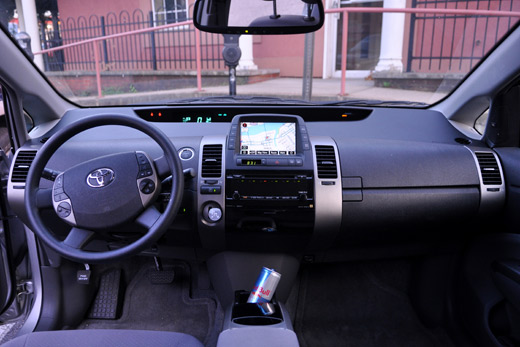
The Cincinnati Park Board is adding four hybrid vehicles to its fleet thanks to a $122,000 grant from Clean Fuels Ohio.  The new vehicles were obtained in partnership with the City of Cincinnati Department of Public Services, Fleet Management Division.According to city officials, the new Toyota Prius hybrid cars are replacing four sport utility vehicles that were at the end of their serviceable life cycle."We evaluated the benefits of the SUV versus their operational cost, and found that the winter benefits could not justify the much higher costs," explained Gerald Checco, Superintendent, Cincinnati Park Board.  "The upkeep and gas costs associated with the sport utility vehicles could not be justified by the five to ten days of snow conditions annually."Beyond the $3,000 of annual cost savings, the new hybrid vehicles are expected to make a considerable environmental improvement over the previous vehicles.  City officials estimate that a Toyota Prius emits an average of 3.4 tons-equivalent of CO2 annually, compared to 7.5 tons emitted by the previous sport utility vehicles.  The environmental benefit, officials say, is the clean air equivalent to planting a six-acre forest."Our research found the Prius is especially liked because of its stellar fuel economy, relatively uncompromised driving and acceleration characteristics and reasonable price," said Checco who went on to say that the vehicles will be used by administrative staff.The new vehicles for the Cincinnati Park Board join a growing hybrid fleet for the City of Cincinnati.  Most recently, the City added six hybrid Toyota Highlanders to the Police Department's fleet, and another four hybrid vehicles for its Public Services division.  City officials are also now researching the use of hybrid aerial boom trucks.Park Board officials state that eight trucks powered by propane fuel will be added later this year to further incorporate "green" initiatives outlined in Mayor Mallory's Green Cincinnati Plan.  To date, the Cincinnati Park Board has installed solar-powered trash cans, rain gardens, geothermal units, and 28 other "green" park projects.Writer: Randy A. SimesPhotography by Scott BeselerStay connected by following Randy on Twitter @UrbanCincy
Reformed Cincinnati parking policy increasing rates while upgrading system

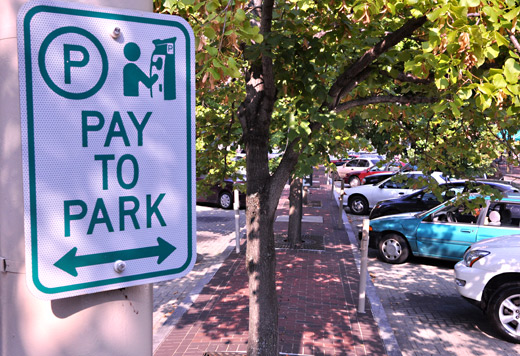
Last week, the City of Cincinnati made significant changes to its parking policy that includes increased rates all across the city.  In most areas the rate is doubling in an effort to upgrade the city's parking infrastructure, while also becoming more cost competitive with private rates.The changes come following analysis of a 2009 parking report completed by Walker Parking Consultants.  The report outlined that Cincinnati's off-street parking facilities, and on-street meters, were priced "well below market rate."  The report will help the City in planning for the following.Increase parking needs as the city continues economic development effortsAddress predicted shortage of the city budget's parking fundProvide for increased efficiency in the parking system's administrationThe rate increases will make on-street meters in downtown Cincinnati $2 per hour, while city-owned parking garages will also see varying increases.  In six neighborhood business districts, on-street meters will double from 25 cents an hour, to 50 cents an hour.Even with these increases, more may be on the horizon as the 2009 Walker Parking report called for the city to price its parking spaces within 5 percent of the private market.  The basis for this recommendation is two-fold as studies indicate that often times public parking spaces are priced artificially low at the detriment of nearby businesses and the immediate environment.Donald Shoup, Professor of Urban Planning at UCLA, has studied this subject matter extensively, and found that higher parking rates actually benefit local businesses by creating higher turnover.  At the same time, the higher rates, Shoup contends, deters drivers from circling blocks in search of that cheap parking space.  This, in turn, reduces direct emissions and reduces congestion on local roads.City officials report that the increased meter rates are the first increases in more than ten years, and places Cincinnati within the lower range of of comparable cities like Louisville, Pittsburgh, Columbus, and Cleveland.The increased rates will reportedly help cover maintenance costs associated with parking facilities, and upgraded on-street parking equipment that will include new solar-powered pay/display stations like those currently found on Court Street and Second Street in downtown Cincinnati.  City officials say that the new pay/display stations will make parking services more efficient, while also reducing maintenance costs long-term. Writer: Randy A. Simes Photography by Scott Beseler Stay connected by following Randy on Twitter @UrbanCincy
Soapicks August 10-16

Artistic and eye-opening luncheons, all-American family fare and an enlightening selection of art exhibitions provide solace from the thick heat of August in Cincinnati. 

Our Partners

Taft Museum of Art

Common Ground Is Brewing

Support local stories and receive our signature roast straight to your door when you join at the Standard level (or above).

Drink Better, Read Local

Close the CTA

Don't miss out!

Everything Cincinnati, in your inbox every week.

Close the CTA

Already a subscriber? Enter your email to hide this popup in the future.