
Growing pains: How small farms persist despite big obstacles
When more than half of the small farms in the country are losing money, why would any sound-minded person choose the agricultural path?
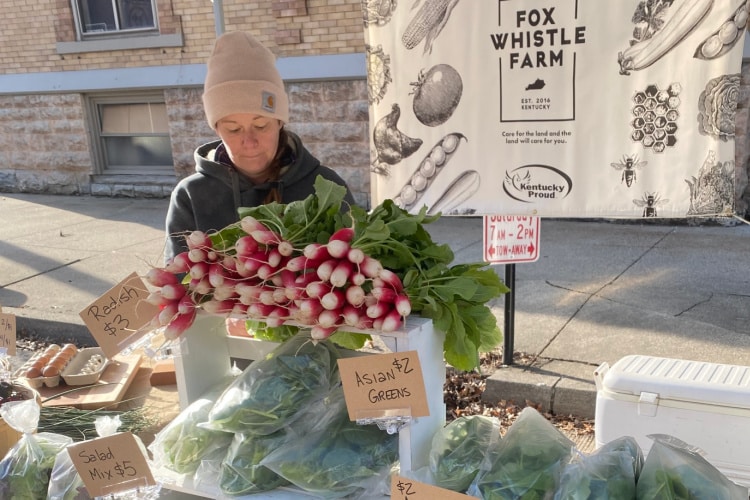
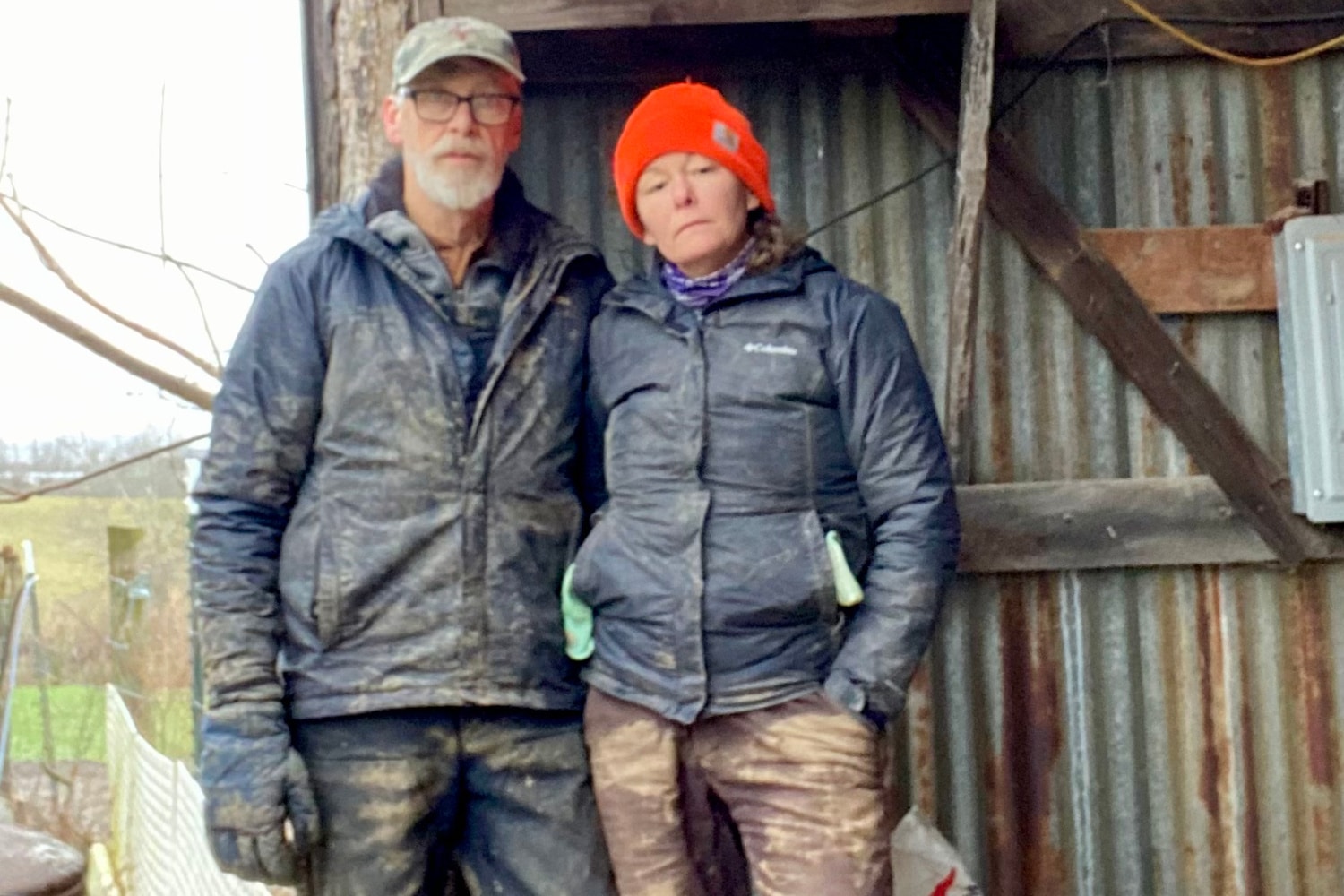
This is the first entry in a series that highlights the region’s agricultural producers and the difficulties they face to keep their communities fed. If you or someone you know is a local farmer with a story to share, please reach out to Soapbox.
Farming, as a concept, is simple: sow the seed, tend the garden, reap the harvest and repeat. However, the economic burden for even the tiniest market garden complicates matters. A recent study by the US Department of Agriculture’s Economic Research Service reports that the median annual income of a small farm is a loss of $900.
“Given the broad USDA definition of a farm,” the report states, “many small farms are not profitable even in the best farm income years.” The USDA defines a farm as “any place from which $1,000 or more of agricultural products were produced and sold, or normally would have been sold, during the year.”
When more than half of the small farms in the country are losing money, what is the incentive for farmers to keep on farming? Why would any sound-minded person choose the agricultural path?
Meet Sara Kinney, Fox Whistle Farm (Owen County, KY)
For Sara Kinney of Fox Whistle Farm, growing fruit and vegetables is more than just a source of income, it’s a way to connect with the community: “Food is life,” Kinney says, “and being a part of feeding a small percentage of people is immensely gratifying.”
Kinney’s life changed in 2016 not because of a job opportunity, but because of a book. While working in advertising and fashion in New York City, Kinney read Michael Pollan’s The Omnivore’s Dilemma, which left her, in her words, “absolutely mind blown.”
The book sparked an epiphany, helping her comprehend the inherent wastefulness and hidden carbon footprint of everyday foods. It became absurd to consider bananas being flown thousands of miles, only to end up rotting and uneaten on kitchen counters. Her eyes were opened to a disconnected food system.
That epiphany pushed her to begin eating locally. She joined a community-supported agriculture (CSA) program and began shopping at farmers markets. The next step, as she puts it, was to ignore a lot of good advice.
“I quit my job, left my marriage,” which she insists was amicable,” and I did what everyone said I couldn’t do: I bought a 20-acre farm in rural Kentucky and that’s when I started to farm.”
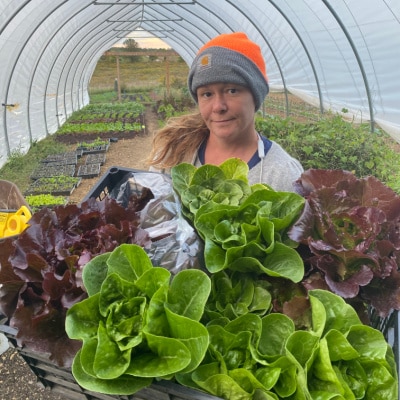
A steep learning curve
It was a rough start, as most major life shifts tend to be. Kinney, who comes from the advertising world, had minimal farming experience at the onset in 2016.
“I always leap without looking. I didn’t come from a farm family, I was raised in the suburbs, we didn’t even have a backyard garden,” she recalls. “I ate potatoes out of a microwave box. I hadn’t driven a car or even owned or mowed grass in 15 years and here I was trying to farm on 20 acres. To say the learning curve was steep is an understatement.”
Kinney attributes a lot of her early education to YouTube farming tutorials, often viewed under the shade of a tree by her garden. She also attended a number of classes for beginning farmers hosted by local extension offices, which helped Kinney’s gardening career bloom.
Kinney says her biggest hurdle was teaching herself to farm. Coming from the ad world, marketing the farm was easy: she had a farm logo in multiple lockups before ever planting a seed.
When it comes to resources that both new and experienced farmers should consider, Kinney recommends getting familiar with local extension offices and USDA Farm Service Agency offices, so they can apply for grants.
“There’s a ton of money available, you just need to apply for it,” she explains. “If you can fill out a 3-4 page PDF, you can have free money.”
A decade of change, learning to farm plus a side hustle
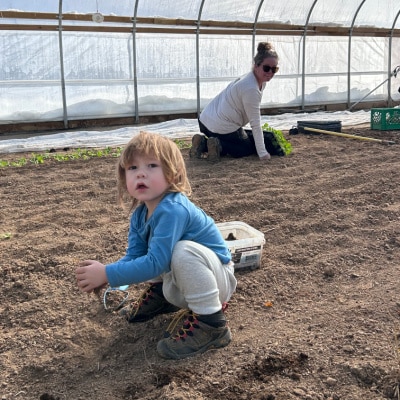
A lot has changed for Kinney since 2016. She’s mastered many elements in the garden, has remarried, and is raising a 3-year-old. Kinney and her Fox Whistle Farm family can be found at the Covington Farmers Market every Saturday, May through October.
Even with a solid customer base of CSA subscribers, who pick up a weekly vegetable allotment, paired with the retail sales at the farmers market and wholesale accounts to restaurants, money is always an urgent issue that must be considered in the farmer’s life and side hustles are an inescapable reality in the pursuit of dream jobs.
“Advertising makes way more money for our family, and transparently, I still have to do it on the side in order to fund this farm,” Kinney says. She explains that the downside to small scale farming is that it’s hard to make a living off of it. “Even if you have multiple years in the green, it can take only one bad weather year to ruin a farm. Without an off farm job, you are putting everything on the line every year.”
The additional income enables Kinney to invest in equipment that ultimately makes their farming life easier.
“We are at the point where we have all the expensive tools purchased and our out-of-pocket each year is basically seed, soil, and organic fertilizers,” she says. “So, maybe one year soon we will actually take a salary for ourselves!”
To learn more, visit foxwhistlefarm.com.
Author

Related Articles
Cincinnati technology talent stands out in Next25
The inaugural Next25 list from Ohio Tech News underscores local reputation as a hub for startup talent and technology innovation.

Where to eat well in Middletown
A guide to four independent restaurants shaping the city’s growing dining scene.
New to the farming community? You are not alone
A chat with Megan Ayers of Unvarnished Farm.