
Coming Clean: 5 questions with fashion designer Allison Ross
A move back to Cincinnati after 15 years in NYC, combined with her growing interest in the upcycle movement, led to creation of her own brand, Rephrase.
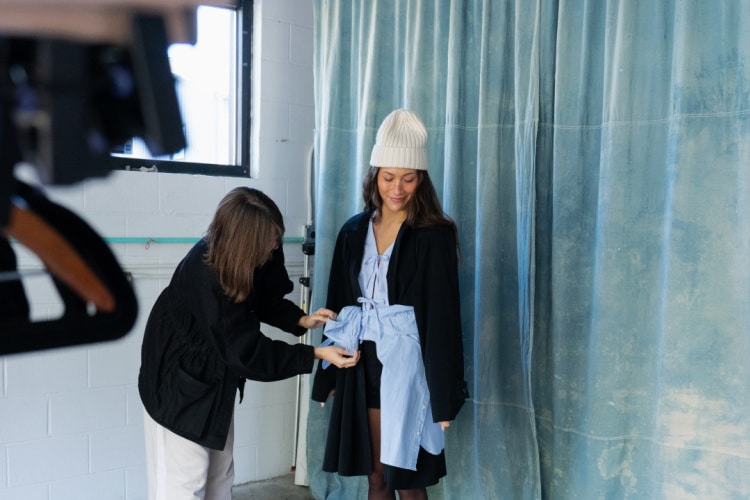
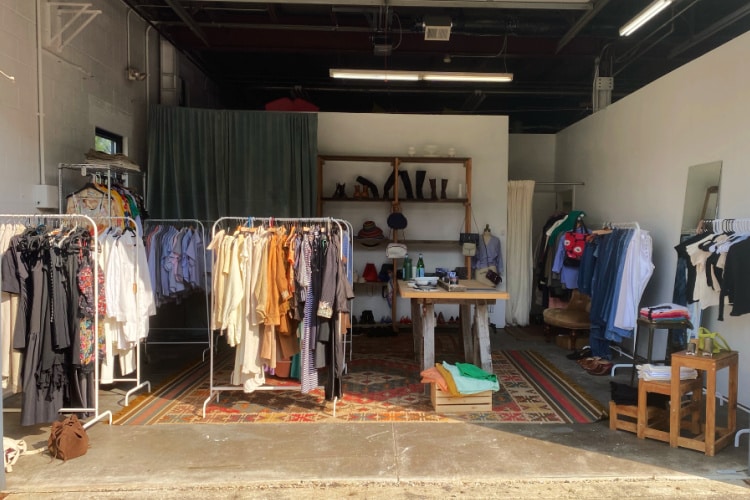
After spending 15 years working in New York, Allison Ross moved back to Cincinnati to work remotely for Walmart’s Free Assembly fashion brand during the COVID-19 pandemic. She had long wanted to launch her own brand but was put off by the high front-end, financial risk of the traditional production process.
Her interest sparked by the emerging upcycled movement, Ross started experimenting with tailoring men’s shirts for herself. She set a goal to launch an upcycled brand with a $2,500 investment.
Ross spent $800 on branding, and put the rest toward product development and her first production run at Sew Valley, a local zero waste garment factory. In 2022, her brand Rephrase was born. She recouped her investment within the first year. Rephrase has been paying for itself and slowly growing ever since.
We checked in with Ross about sustainability in the fashion industry.
Here’s what she had to say:
1) What apparel does Rephrase offer?
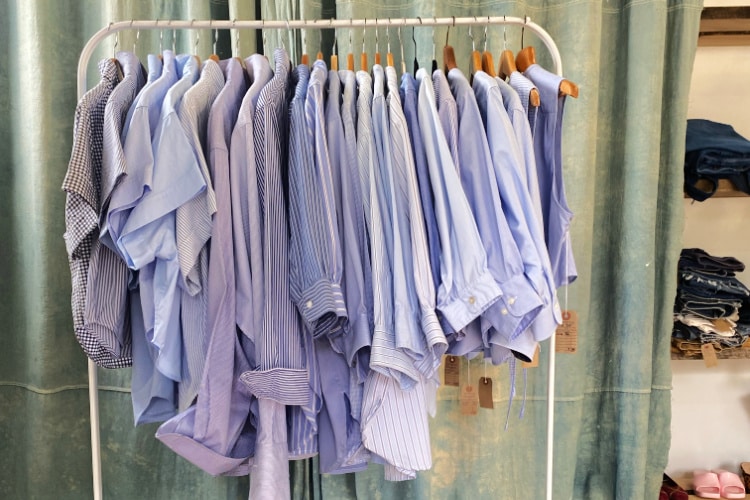
We offer upcycled, tailored shirts that are sourced and sewn locally. This reduces shipping and associated carbon emissions, saving clothing from landfills and reducing material waste.
We have a small batch production process so we can meet the needs of our customers without overproducing. All shirts are remade in the USA at a registered 501(c) 3 factory.
2) Where did you get the inspiration to work with previously owned clothing?
Thrifting was my way into personal style and fashion. Growing up on the west side in the ‘90s, I didn’t have access to designer goods. Even after moving to New York in 2006, I would swear that the best shopping was at the old St. Vincent de Paul in Price Hill.
If you develop your eye for quality construction and fabrics, it’s easy to find vintage clothing that will last longer in your closet the second time around than lots of things you’ll find new in the market. I really believe in fashion as a craft, and craftsmanship is getting harder to find.
3) Why is it important to you to reduce fashion’s carbon footprint?
The fashion industry is one of the largest producers of carbon emissions on the planet. I have worked for some of the biggest companies in the industry and have seen firsthand how small decisions can lead to big effects.
A commitment to sustainability has to be baked into a company’s DNA. My goal with Rephrase is to offer wardrobe staples with as close to zero carbon emissions as possible. Everything we do is hyperlocal, sourced, sewn and sold within the I-275 loop.
4) What do you like most about working in the fashion industry?
Fashion people are my favorite people. Big personalities and opinions.
I’m also obsessed with fit. I love fitting, refitting and perfecting. I like that fashion is never done. There is always something to re-evaluate and improve.
5) If you were tossing a coin into the Tyler Davidson Fountain regarding the fashion scene in Greater Cincinnati, what would your wish be?
In Cincinnati, we are fortunate to have a community that stands behind local small businesses. I would love to see more opportunities for local talent. In the fashion industry, it is extremely challenging to launch a business without substantial financial backing. I think the University of Cincinnati’s DAAP program graduates talented, well-rounded designers who have to leave town to find work. I wish there were more investment capital to keep that talent local.
Author’s note: One idea for making Ross’s wish come true would be for large Cincinnati-based companies that sell clothing to have a design arm here in the Queen City. Kroger is one example of a local company that has started to offer in-store private-label apparel. Imagine the jobs that could be created if that clothing were manufactured here in town.
To check out Ross’s upcycled styles, visit Rephrase.
Author

Related Articles

Cincinnati technology talent stands out in Next25
The inaugural Next25 list from Ohio Tech News underscores local reputation as a hub for startup talent and technology innovation.

From capital to community: SparkHaus is powering the growing entrepreneurial scene
A collaboration between Northern Kentucky public entities and the private sector made the project possible.
Triple Moon Coffee brews community spirit in the heart of Middie City
Entrepreneur Heather Gibson builds success with a community-first space where creativity, conversation, and caffeine keep customers coming back.