
Building startups at UC: Inside the 1819 Innovation Hub where students are turning ideas into companies
With support from the Venture Lab and a growing entrepreneurial ecosystem, classroom ideas grow into real businesses.
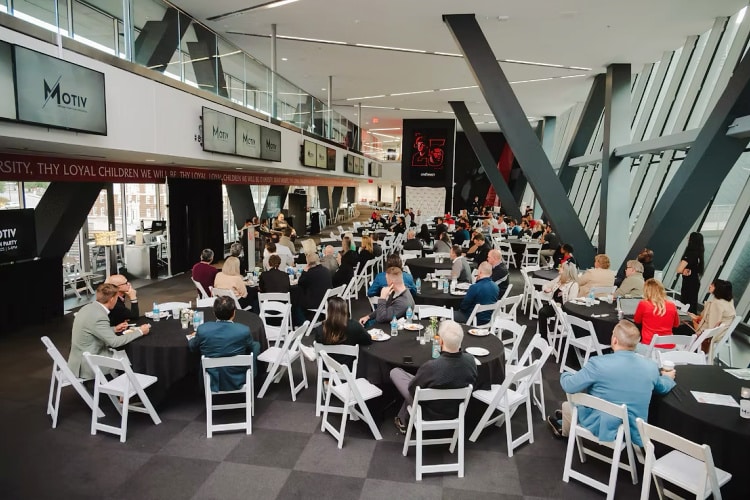
On any given day inside the University of Cincinnati’s 1819 Innovation Hub, students move between classrooms, coworking areas, and meeting rooms where ideas are tested, challenged, and refined. It is a space designed not just for learning, but for building. For many Bearcats, it has become the launchpad where academic interests turn into real companies with customers, funding, and long-term growth potential.
The 1819 Innovation Hub, located in Cincinnati’s Innovation Corridor, serves as the university’s central home for entrepreneurship, industry collaboration, and experiential learning. Within the hub, the Venture Lab plays a critical role in helping students and early-stage founders move from concept to execution. Through mentorship, pre-accelerator programs, funding opportunities, and connections to industry partners, the Venture Lab supports founders at nearly every stage of their journey.
That pipeline has helped shape a growing list of student-led startups emerging from the university, including Motiv, a sports management software company founded by UC students Noelle Scheper and Jaden Walton. Their path reflects how the hub is designed to meet students where they are and support them as ideas evolve.
A space built for student founders
Unlike traditional entrepreneurship programs that focus primarily on coursework, the 1819 Innovation Hub emphasizes applied learning. Students can explore ideas while still enrolled, often using co-op semesters to work directly on their own ventures. Venture Lab programming is structured to guide founders from early ideation through customer discovery, product development, and eventually, investment readiness.
According to Walton, that step-by-step support is what sets the hub apart.
“They really walk you through the entire process,” he said. “It is not just some grant organization that helps you once you already have five employees. They mentor you from the inception of the idea all the way to connecting you with actual venture investors.”
Students often begin with foundational guidance, learning how to validate an idea, understand financial statements, and identify a target market. From there, they may move into pre-accelerator programming, pitch competitions, or Venture Lab Next, a program that provides early funding and weekly mentorship as teams begin building products and acquiring users.
That structure has helped foster a steady stream of student innovation coming out of UC. Recent university profiles highlight founders working across software, consumer products, healthcare, and education technology, many of whom credit the hub with helping them navigate early challenges and avoid common startup pitfalls.
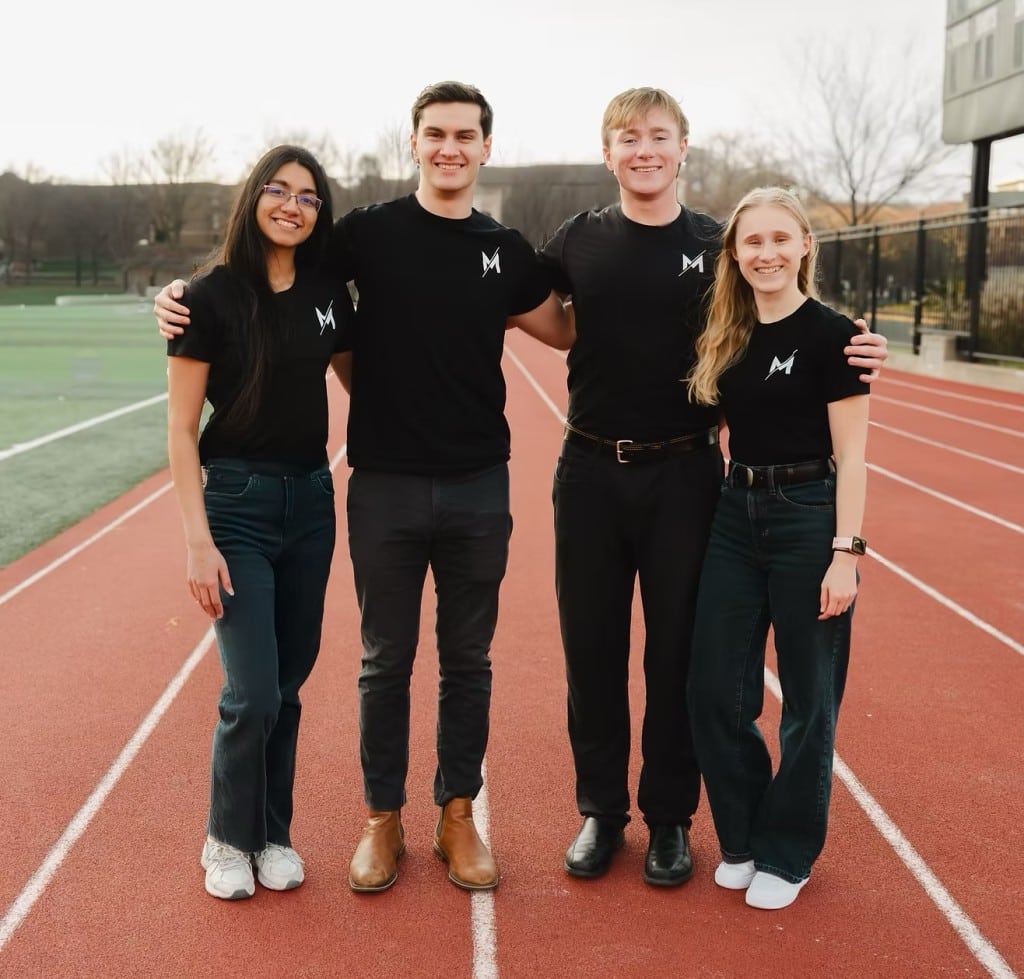
Motiv’s beginnings
Motiv was born out of Walton’s experience as a high school track coach. While balancing coaching with a demanding academic schedule, he saw firsthand how difficult it was for athletic departments to manage communication, scheduling, and compliance across large teams.
“There were 140 athletes,” Walton said. “As a sprint coach, that is just overwhelming. So, I started automating things, and then other coaches started asking if they could use it too.”
What began as simple automation quickly revealed a larger opportunity. Schools and athletic directors expressed interest in tools that could centralize communication and administrative tasks, while also meeting strict data privacy and compliance requirements.
Scheper joined the project after connecting with Walton through UC’s Center for Entrepreneurship. Originally in another major, she shifted her academic path after starting a small photography business and discovering an interest in sales, marketing, and venture building.
“I realized I was definitely in the wrong major,” she said. “Once I switched, I got more ingrained with the Center for Entrepreneurship, and we knew we worked really well together.”
Their shared background in athletics and coaching helped shape Motiv’s focus. Rather than building a generic communication platform, the team designed the software specifically for schools, accounting for state-by-state regulations, federal privacy laws, and the realities of how athletic departments operate.
Building with support from the Venture Lab
Through the 1819 Innovation Hub and Venture Lab, Scheper and Walton were able to test and refine Motiv while remaining full-time students. The university’s co-op structure allowed them to work consecutive semesters on their own company, giving them the time and flexibility needed to build a viable product.
“That is how we have been able to still be students but give everything to this,” Scheper said.
Venture Lab staff helped connect the team with mentors, pitch competitions, and customer discovery programs that expanded their understanding of the market. Walton said the exposure went far beyond Cincinnati.
“They sent us to Texas, California, New York, even Canada,” he said. “Not just to pitch, but to learn about our customers and how this problem looks in different regions with different regulations.”
Those experiences shaped Motiv’s growth strategy and product design. Today, the platform is used by schools in multiple states, including Ohio, Indiana, New Jersey, Texas and California. The team has onboarded more than 100 teams, with adoption continuing to grow as new sports seasons begin.
In one notable effort to build credibility and industry relationships, Motiv hosted its own athletic director conference at Nippert Stadium, drawing approximately 200 attendees. Rather than focusing on sales, the event centered on discussions about the future of high school athletics, technology and data.
“We wanted to offer something that was missing,” Walton said. “A genuine interest in where the industry is going.”
A broader impact on campus and beyond
Motiv’s story mirrors that of many startups emerging from UC’s innovation ecosystem. Students are encouraged to explore interdisciplinary collaboration, often bringing together business, engineering, and design perspectives through initiatives like the university’s Innovation Challenge.
“That is actually where Motiv was born,” Walton said. “Engineers and business students came together and turned a problem into a company.”
The presence of corporate partners and research institutions within the 1819 Innovation Hub further strengthens that ecosystem. Students can learn from established companies while applying those insights to their own ventures, blending real-world experience with entrepreneurial ambition.
Scheper said the culture at UC has been instrumental in making that possible.
“They really promote going all in,” she said. “If you want to host a conference for 200 people, you can do that. All you have to do is ask.”
As UC continues to invest in entrepreneurship through the 1819 Innovation Hub and Venture Lab, stories like Motiv’s highlight the university’s role in shaping Cincinnati’s startup pipeline. For students with ideas and the drive to pursue them, the path from classroom to company is not just encouraged, it is actively supported.
Author

Related Articles

How Cincinnati universities are embracing AI while prioritizing ethics
Colleges are integrating artificial intelligence into curricula and research, balancing innovation with ethical responsibility.
An ode to Crosley Tower
Time is up for the infamous, Brutalist building on UC's campus. Adoring and appreciative fans are creating a legacy that will live on.
Partner Partner Content Life sciences talent find education opportunities, resources and support
Employment in the life sciences industry in Northern Kentucky is projected to grow 21.5% through 2029.