Author

Soapbox

Soapbox's Latest Articles

10K grant supports new riverfront bike, mobility center

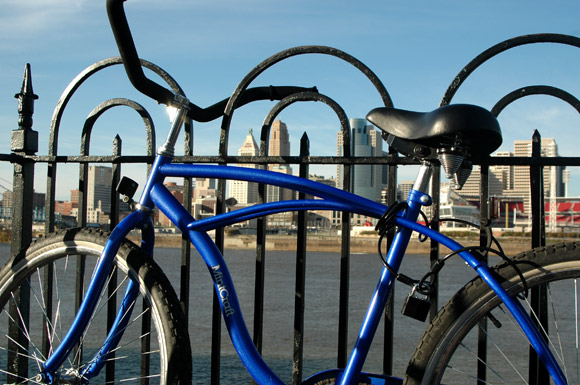
What do politics, cycling, charitable support and BMX stunts have in common? They were all part of a riverfront celebration of new funds to help Cincinnati Parks build a bike and family-friendly Smale Riverfront Park. At the event, representatives of Coca-Cola presented a $10,000 grant to build a bike and mobility center at the park. Park visitors will be able to rent bikes and equipment, and bike commuters will have a safe place to shower and store their cycling gear."It's just going to be phenomenal what that park is going to do for connecting Cincinnati," says Coca-Cola Vice-President of Sales Mark Rahiya, Sr.Congresswoman Jean Schmidt, an avid marathoner, sees the facility as a powerful tool to help fight the growing problem of unhealthy, sedentary lifestyles by making it easier for families to take part in active recreation. "We have to find ways to get people excited about becoming mobile," she says.One of the event's keynote speakers, professional BMX rider Bill Nitschke, pointed out that cycling goes far beyond simply getting people in shape. "When we're on a bike, we get to slow down in this fast-paced world and see what we want to see," he says. "This center's going to help a lot of people out, more than you can imagine."Cincinnati Parks Director Willie Carden accepted the grant, and then noted another grant program from the beverage manufacturer: the 'America is your Park' campaign that will award a $100,000 grant to a park or park system that receives the most votes by Sept. 6. Rather than calling for Cincinnatians to vote for the city's park system, he asked that they vote for the Minot, North Dakota, park system. Many of that system's parks suffered heavy damage this summer due to massive flooding."We have huge hearts in Greater Cincinnati," he said. "I want those to support them."By Matt Cunningham
On The Run Cleaners moves in to OTR

A new Cincinnati business aims to clean up in Over-the-Rhine, literally. As part of the movement to attract more service-oriented businesses to the Gateway Quarter, On the Run Cleaners, a dry cleaner, will occupy 1332 Vine St. in the Gateway Quarter. Owned by Paul Nguyen, who grew up in Bond Hill and currently resides in the Pendleton district of Over-the-Rhine, the shop will be a full-service drop-off and pick-up point for OTR residents needing dry cleaning – a service Nguyen decided to bring to the neighborhood after talking to residents and hearing about the demand for it, he says. "I thought, 'Why don't we open something that the people of OTR can use and cater to the residents of OTR?' " Nguyen says. "Why not start now, while OTR is in the rebuilding process?" Nguyen will move into the Vine Street space Oct. 1 and hopes to have the business fully operational by mid-November. "It's a good opportunity to give back to the community," he says. The drycleaner joins Capital Shoe Repair and Shine Parlors at 1344 Vine St. as the newest service-oriented businesses in Over-the-Rhine – part of the plan, says Christy Samad, spokesperson for the Cincinnati Center City Development Corporation (3CDC), to revitalize Over-the-Rhine and turn it into a mixed-development, mixed-income neighborhood. "The whole goal is for it to be an area where you can essentially work, live and play," Samad says. The news of On the Run joining the Gateway Quarter community is one step in that process, she says. "We definitely want all of that mixed development," she says. "We have lots of commercial interests, restaurants and service-oriented businesses interested (in Over-the-Rhine)." Roughly 68 percent of the 91,000 square feet of commercial space in the Gateway Quarter has been leased to this point, she adds. "Hopefully there will be more (service-oriented) businesses moving into the area," she says. Brian Tiffany, president of the Over-the-Rhine Chamber of Commerce, praises development efforts by 3CDC to make the neighborhood one of a diverse, mixed-income population. "We're embracing that diversity as our strength," Tiffany says. The makeover of Over-the-Rhine was needed, he adds. "We needed to see a total paradigm shift (regarding the neighborhood)," Tiffany says. "We realized we had to do something." Tiffany cites the store MiCA 12V, located at 1201 Vine St., as an example of what the revitalization efforts in the neighborhood has accomplished. "It used to be a convenience store that had 400 calls for service (to police)," Tiffany says. "Since MiCA opened, it's had none." But while such niche businesses as MiCA 12V are vital in creating a shopping destination for visitors in the city, developers cannot forget about attracting businesses that provide services for the residents of the neighborhood, Tiffany says. "Be aware of the folks that have lived here for 30 or 40 years," Tiffany says. Eateries, delis, clothing stores and a grocery store besides Findlay Market are just some of the examples of businesses Over-the-Rhine could use, Tiffany says. "I still think that on the south side of Liberty Street we could still use those types of goods and services that really serve the neighborhood," Tiffany says. "We're doing well on coffee shops." Regardless of the type of business, however, all new business has played a role in the neighborhood's makeover, Tiffany says. "Clearly revitalization has been the most effective tool in making the neighborhood safer and cleaner." By James Sprague

Cincinnati second test market for Stampt

Frequent patrons of popular downtown locations like Iris Book Café and sustainable retailer Park+Vine may be spending less time rummaging through their wallets at the checkout counter. That's because these retailers, along with a small but growing list of Cincinnati merchants, now offer iPhone-based loyalty cards through Stampt, a young startup with deep roots in Cincinnati.Stampt takes the long-time staple of coffeehouses and small shops, the frequent buyer card, and merges it with mobile technology. Stampt co-founder and president Trey Kelly says the application's ability to precisely track loyalty card use for merchants and its ability to help consumers find and patronize Stampt merchants in their immediate vicinity take the app far beyond the typical "buy 10, get the 11th free" loyalty stamp cards merchants have used for years."Merchants in Cincinnati can benefit from customer interactions and insights that were never before available," he says. "They can finally know the effect of their loyalty programs and can interact with their customers.""All of these georeference apps are so useful for small business districts," says Stampt Cincinnati sales representative David White, noting that he's focused so far on neighborhoods with walkable retail centers, such as Over-the-Rhine and Northside.Although Stampt is based in San Francisco, co-founders Brian Kelly and Trey Kelly hail from Cincinnati. White (Brian Kelly's brother-in-law) says there was little doubt of location when the company went looking for a second test market to complement its research in San Francisco."They thought Cincinnati would be perfect," White says. "It gives you two completely different markets."So far, he notes, about 10 Cincinnati merchants are using Stampt. The app is gaining footholds in other cities where its founders have connections, and White says he's optimistic it will take off as word about it spreads. It's a free service for both consumers and merchants, after all, and heavy frequent shoppers only have so much room in their wallets and purses for loyalty cards."I think once merchants see the press, and the people coming in and asking for the product, it will turn on for them," White says.

Northsiders approve Virginia Place project

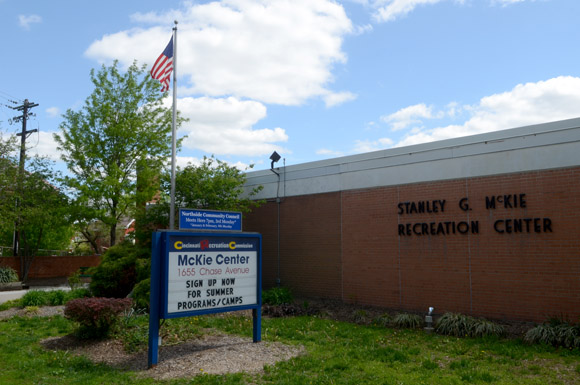
About 60 Northside residents filled McKie Recreation Center on Aug. 15 to talk about bringing change to a long-vacant section of that neighborhood: Virginia Place near the intersection of Virginia and Colerain Avenues. Developer In-Line Development, which built the Rockford Woods development in Northside, presented a plan to build 85 new single-family homes on a site where the Ohio Department of Transportation once planned to build an expressway connector off of Interstate 74. That plan, which was originally developed in the 1950s, fell through, but not before ODOT razed some 200 homes and businesses along the route.Former Northside Community Council president Tim Jeckering said the neighborhood's residents organized in the late 1990s to produce a development plan for the area, which included the planned Northside Skate Park and residential development in the Virginia Place location. That plan was approved by the community in 2000, and earned ODOT and state approval as well. Its mix of residential development and greenspace became part of the city's Northside Comprehensive Land Use plan in 2007.But some residents in attendance at the Aug. 15 meeting raised contentious objection to the plan, much of which centered around one word: LEED.LEED, or Leadership in Energy and Environmental Design, is a green building certification program developed by the US Green Building Council. Although it is rapidly becoming a standard of measurement for the environmental friendliness of a building, it is a voluntary rating system: not every home that incorporates green features is LEED certified. Several residents called on David Wittekind of In-Line Development to mandate some or all of the houses built at the site to be LEED certified.Wittekind explained that, while he plans to promote energy efficient construction and appliances with the development's builders, mandating LEED certification would add $10,000 to $15,000 to home prices, making it difficult to offer homes in the planned range of $100,000 to $200,000.Nevertheless, some residents argued that In-Line's refusal to mandate LEED certification risked the development becoming something the neighborhood didn't want."To me, Northside is about old housing stock and greenspace," says NCC vice-president Chuck Brown. "We're taking a big leap of faith; what are we getting back?"Other residents at the meeting pointed out that the site of the planned development is an overgrown lot that has sat vacant since ODOT razed it, and that community members planned for it to become residential development in the 2000 plan."Most of the property set aside in the plan was for greenspace," argued one woman from the back of the room. "This little bit set aside for housing was what we agreed on. We passed it years ago. This is absolutely reasonable.""A lot of people in this room claim they support diversity and choices," said another attendee. "If you insist on [the LEED mandate], you're saying we're going to be really exclusive. To me, that goes against everything, a large part what this community is about."In the end, however, the measure passed with 26 votes in favor to eight opposed and eight abstentions. Many of the most vocal critics of the plan were unable to vote, as they were not actually members of the council. The plan for Virginia Place will go before City Council for further approval before groundbreaking begins, but Wittekind says the development could be ready to host CitiRama - a bid is underway and appears to have strong support - in September 2012. By Matt Cunningham

Innovative Card Solutions promotes digital commerce

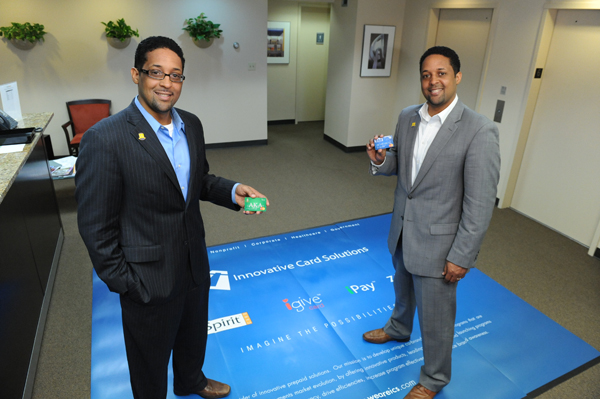
After 20 years of operating their own marketing agency with big-time clients including Cincinnati Bell, Kroger and Toyota, Cincinnati brothers Wade and Wyatt Goins are now making digital transactions easier for those without bank accounts. Twin brothers and the youngest in a family of nine from Greenhills, the Goins co-founded Innovative Card Solutions. With a $250,000 investment from local seed-stage investor CincyTech as well as local investors Ed Rigaud and Dave Dougherty, ICS is primed to make moves in the financial world. "About 70 million people in the U.S. do not use banks," says Wyatt Goins, chief operating officer, who has led the business development and operations since the company's inception. "Innovative Card Solutions was founded to help those people make safe, convenient purchases." ICS provides prepaid debit-based payment programs for niche target groups. Right now, the company is working exclusively with two markets: corporations that want to provide incentives and direct payment to employees without checking accounts and universities that want to help students manage money and access tuition refunds. By forming strategic relationships with MasterCard, FIS and Bankcorp, ICS's debit cards can be used anywhere that a debit MasterCard is accepted. The partnership with MasterCard also provides card holders with discounts at more than 235,000 retail stores nationwide. This fall, Florida Memorial University and the University of Evansville will distribute ICS MasterCards to their 2,200 and 2,900 students, respectively. Parents and students will be able to load money onto their cards as needed and also have the ability to budget and track their spending online. Also available online are 23 customizable training modules with topics ranging from monthly budgeting to managing college loans. "Our product allows universities to provide their students with custom-branded debit cards that serve as an alternative to traditional credit cards and cash-checking services that can often land young people in hot water financially," says Wade Goins, chief marketing officer. "We provide students and parents the peace of mind that they won't be able to overdraw their account, incur costly fees or have to worry about going into debt on top of already mounting student loans." ICS is also providing prepaid debit cards to Urbana University, Trine University and Wilmington College this fall, as well as a variety of staffing firms and payroll companies, to provide direct payment and money management options for their employees. By offering innovative products, leading-edge customizable designs and programs that reduce costs and teach financial literacy, ICS provides benefits to people of all levels of financial stability. "We invested in ICS at a good time," says Rahul Bawa, CincyTech CTO in residence. "The company has already passed some of the barriers to entry in this market, has great business partners in place, has worked out the regulatory issues, and has a strong technology platform." By Sarah Blazak for CincyTech

Green Learning Station programs set to bloom

When the Civic Garden Center of Greater Cincinnati cuts the ribbon Aug. 20 to open its Green Learning Station, it will do more than add a new exhibit to its facility on Reading Road. The nonprofit center, which has provided horticultural education and resources to green-thumbed Cincinnatians since the 1940s, will offer new services, education and scientific information.The $1.2 million Green Learning station showcases a wide range of environmentally friendly technology, including a composting facility, a green roof and pervious pavers to control water runoff."We've got all of this technology concentrated in a very small area," says CGC program manager Ryan Mooney-Bullock. The technology allows the CGC to expand its educational offerings. Along with its traditional programs focused on growing flowers, fruits and vegetables, the center can now offer courses on composting, rainwater management as well as other environmental topics that shape quality of life. Consequently, the center's long-standing field-trip programming now includes options for middle-and high-school students, and Mooney-Bullock says professional development courses are being created for landscape architects, builders and green professionals.CGC board member and Green Learning Station project manager Betsy Townsend says this spirit of going above and beyond springs from the very process that launched the station. Input from the variety of granting agencies that funded the project, such as the Metropolitan Sewer District, which supported the project through a $400,000 grant, helped determine its final focus."The details of the project expanded," Townsend says. "We were able to incorporate elements that weren't in our original budget." Some of those elements include research, a new avenue for CGC to pursue with its facilities. Environmental sensor supplier UrbanAlta provided equipment and expertise that turned the Green Learning Station's exhibits into measurable test pieces for environmental technology. Mooney-Bullock explains that students from the University of Cincinnati and environmental engineers are using the sensors to track how the station's green roof, pervious pavers and other rainwater control measures perform on a near-real-time basis. The data collected could help improve the city's runoff management, a major issue for the MSD. "They really need that data to make the case to install the technology on a wide scale, and to support policy changes," she says.Townsend adds that the Green Learning Station will continue the CGC's mission of public education as well, through self-guided tours. And as this year's plants take root and begin to flourish in 2012, she says the CGC will work to reach out to more members of the public than ever."That's a piece we will really be pushing next spring," she says. By Matt Cunningham Follow Matt on Twitter @cunningcontent

Localgreatdeals in 75 cities by year’s end

Scott Bailey, CEO of Loveland-based localgreatdeals.com, says the web company will reach 75 cities by December. The company has a network of city-based websites that offers free coupons and deals from small and medium businesses, primarily those that are not chains. Coupons and deals include discounts on auto, entertainment and pet services; in Cincinnati, dining is the largest category, with more than 200 coupons available."I saw an opportunity for three clusters of the market: Online consumers looking to save, businesses looking to promote themselves and uniquely advertise themselves; and media companies that could present an offering that will drive traffic to their website," Bailey says.The Indian Hill resident launched the Cincinnati installation of localgreatdeals.com in March 2010. To date, the company has installations in 40 cities, including Cleveland and Columbus. It partners with radio stations and affiliates of NBC and Fox. Its Cincinnati partner is WLWT-TV (Channel 5). "In terms of metrics, we have served over 7,000 businesses, and created over half a million leads for businesses," he says.Bailey recently launched dealsthatgiveback.com, an offshoot of localgreatdeals.com. When a consumer purchases a deal, 10 percent of the sale goes to a local charity. Cincinnati Public Radio and Drake Planetarium are among the 80 participating charities in Cincinnati."We're very focused on local businesses and local charities," Bailey says. "They are places that need the help most."Localgreatdeals.com and dealsthatgiveback.com are relatively new faces in the world of Groupon, LivingSocial and Half Price Fun. Allison Kulage of Cincinnati's Bare Knuckle Marketing says businesses are advertising on these high-traffic sites "to create recognition, drive traffic to a storefront or move a large quantity of a specific product."But there are risks for some businesses, she says. "If the lawn care guy that has one guy, one truck and one mower gets 500 calls, he's not going to look very good to the majority of those people because he can't service all of them." By Rich Shivener

BIOSTART moves toward service-based model

Fifteen years after opening its doors, BIOSTART, Cincinnati's life sciences start-up center, is changing the way it does business. In order to remain competitive in a fast-changing business market, it is closing its lab space and moving from its location near the University of Cincinnati.BIOSTART President Carol Frankenstein says the organization will focus exclusively on business services, making the hard shift as its closes its current facility at the Hoxworth Blood Center in September. She says the change was both a business and a strategic decision."Today, companies, even at the very early stages, are outsourcing their commercialization and development activity. That includes clinical and preclinical work, development and manufacturing," Frankenstein says. "That increase in outsourcing reduces the cost of getting a product to market. That makes lab space less necessary. Because of the economy, there is so much low-cost and even free space available; our companies have the ability to benefit from that."BIOSTART serves life sciences entrepreneurs in health care service and product development. Since 1996, it's helped 125 companies launch their business and raise $180 million. Three-fourths of those businesses have had successful exits or are currently in business, the organization reports.BIOSTART is working with local business advocates, including the Hamilton County Business Center, Uptown Consortium and CincinnatiUSA Regional Chamber to help its 18 tenant companies (which occupy about 65 percent of its space) to relocate. Frankenstein said BIOSTART is looking for a new space downtown. She will remain with the organization as will three entrepreneurs in residence. The organization has received $500,000 in funding, half from the Ohio Department of Development and half from private sources, to aid in the transition."We're using the grant for the next 12 months to explore new service delivery models," she says.BIOSTART's current business services include helping companies put together a management team and connecting with and applying for funding sources.By Feoshia HendersonYou can follow Feoshia on Twitter @feoshiawrites

Bold Fusion puts ‘Genius Under Fire’

From an accidental creative to the minds behind the Old Spice guy and PNC's Virtual Wallet, this year's Bold Fusion marks its seventh anniversary with plenty of new energy. Hosted by he Cincinnati USA Regional Chamber's Harnessing Young Professional Energy (HYPE), Bold Fusion has grown into the largest YP summit in the region, an event for networking, creative inspiration and a chance for the city's young professionals to voice their thoughts about the city. Goals include increasing YP retention and sparking creativity among Cincinnati worker. The event is part of a larger, long-term effort. Cincinnati USA Chamber Marketing Manager Jennifer Young says the concept behind Bold Fusion came early in the city's drive to attract YPs."The first Bold Fusion was long before we had HYPE or other talent attraction initiatives," she says. "I think it was when people were just starting to use 'YP,' and they were looking for an event where they could make themselves heard."Attraction and retention remain central to its mission. "If folks are thinking about leaving Cincinnati, something like this might make them reconsider," says HYPE Program Manager Julie Bernzott. "They might learn something new or meet great people through networking."And that positive energy could extend deep into the business community, she adds."They might take that energy back to their companies, which then could lead them to more attraction efforts," she says. "This could be the first time they've heard of HYPE."This year's Bold Fusion takes place Aug. 18 at the Westin Cincinnati and focuses on the theme "Genius Under Fire." In addition to presentations, look for heavy Twitter activity by following the #cincyhype hashtag, part of a continued social media push. "We find that adds to the conversation," says Cincinnati USA Chamber Director of Public Relations Chris Kemper.Kemper says Bold Fusion, along with HYPE's other efforts, impact the city's demographics. The Greater Cincinnati region lost 14 percent of its 25- to 34-year-olds from 1990 to 2005, but reversed that trend to add more than 10,000 YPs - a 3.9 percent increase - to the region between 2005 and 2010."We're starting to see the fruits of that labor," he says.By Matt CunninghamFollow Matt on Twitter @cunningcontent

Local bookstores fill niches as national chains falter

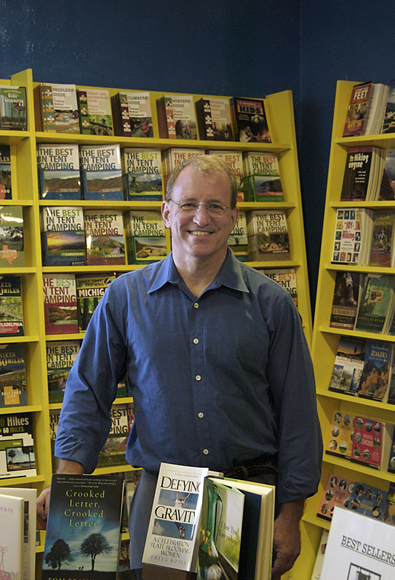
The publishing and bookselling industries bore witness to the death of a giant last week when Borders ran out of options to stay in business. But as the second largest bookstore chain in the nation closes its doors for good, a new generation of the stores it once replaced say the future looks bright.Richard Hunt, co-founder of Roebling Point Bookstore in Covington, says the year-old store is gaining a steady following of patrons who appreciate its focus on travel and outdoor recreation titles, as well as its large selection of books on local topics and by local authors."We wanted to be a resource for people here," he says. "Our grand aspiration is to be the best resource for these categories."Hunt says the bookstore is expanding to add a community meeting room, more shelf space and possibly a coffee shop. That may not be much different from the features of the large chain bookstores, but he notes that Roebling Point's knowledge of local authors, and its ability to find the niche books desired by its patrons, give it a leg up in the market."That's one of the things the bigger bookstores don't focus on so well," he says.Serving profitable niches is a specialty of another successful independent bookstore in Cincinnati: Blue Manatee Children's Bookstore in Oakley. Events Coordinator Kelli Gleiner says the small store's deep knowledge of its customers is a huge tool in keeping the business vibrant."We're such a small store with a small staff, that most of our customers know the staff well," she says. For Blue Manatee, that means providing programming that customers won't find in big-box bookstores. The store offers the story times one might expect, but also hosts weekly yoga classes and brings in authors for book signings with the frequency one might only expect for a store catering to adult readers. Again, it's simply a response to customer demand, Gleiner says."We have to know what they want, otherwise we wouldn't be here," she says.Ben Vore, general manager at Joseph-Beth Booksellers in Norwood, says the parallel themes of greater customer awareness and adaptability to customer desires are more than just good marketing plans for independent bookstores."I think that, to me, is the only way we're going to continue to survive, and to thrive," he says. "With Borders going down, I feel that, with fewer bookstores out there, we're going to really need to be very rooted in the community and in tune to what's going on around town."Story and photos by Matt Cunningham Follow Matt on Twitter @cunningcontent

Our Partners

Don't miss out!

Everything Cincinnati, in your inbox every week.

Close the CTA

Already a subscriber? Enter your email to hide this popup in the future.